


Flame Mahogany Pembroke Table
A flame mahogany pembroke table brings extraordinary grain and folding leaves to a room, offering compact practicality that expands when needed.
Flame Mahogany Pembroke Table
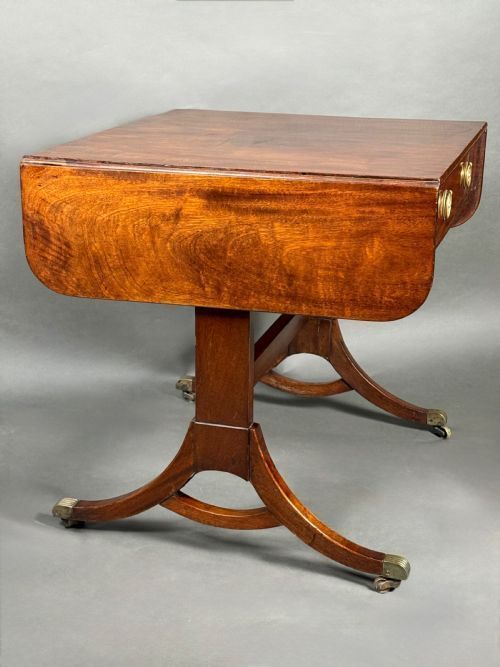
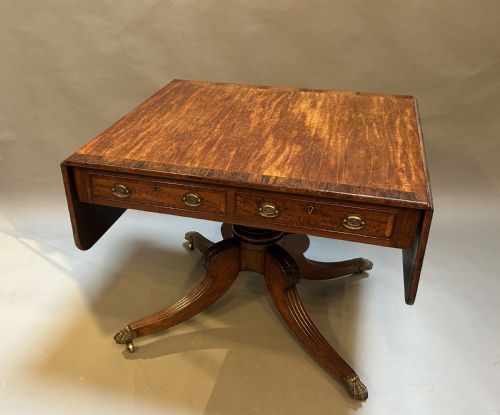
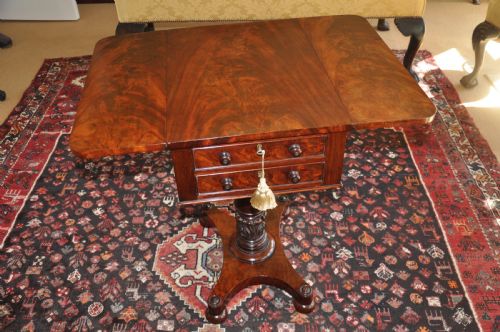
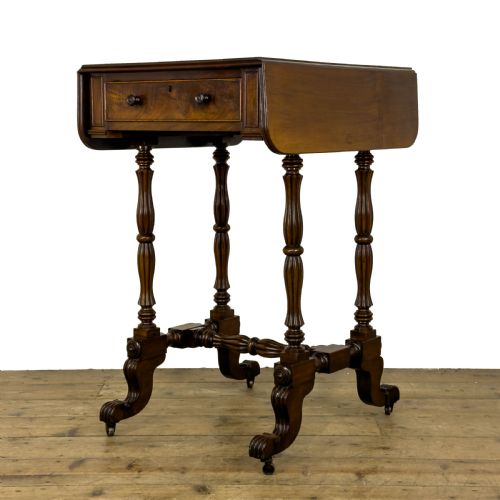
A flame mahogany pembroke table is a drop-leaf occasional piece defined by figured timber and folding flaps supported by hinged rule joints. The examples gathered here span the Georgian, Regency, George IV, and Victorian periods, showcasing traditional British cabinet-making across the nineteenth century.
Most pieces encountered on this page belong to the Regency or Georgian eras, taking the form of pembroke tables or closely related sofa tables with drop leaves. These tables serve as versatile centre or side pieces, bringing distinct figured wood surfaces into domestic spaces.
How they were made
Cabinet-makers constructed these tables using solid wood and wood veneer, selecting figured timber to create striking grain patterns across the top and flaps. Flame mahogany yields a distinctive fiery ripple that workshops arranged symmetrically to catch the light.
Detailing often included brass fittings and contrasting ebony inlay to accent the edges and drawers. These materials were worked by hand to create smooth drop leaves and stable frames that endured decades of daily lifting and lowering.
Form variations on this page include pembroke tables, sofa tables, side tables, and work tables.
What varies in quality
Quality rests principally in the selection and matching of the veneer, where superior pieces display bold, unbroken flame figures across every leaf and flap. Lesser examples utilise plain timber or exhibit mismatched grain patterns that disrupt the visual flow of the surface.
Construction refinement also separates standard production from finer cabinet work, evident in the crispness of inlay and the precision of the drop-leaf hinges. Tables retaining original brass hardware and well-fitted drawers demonstrate superior workshop execution.
The Flame Mahogany Pembroke Table Glossary
- Flame mahogany
- A veneer cut from the fork of the mahogany tree where branches meet the trunk, producing a rippled, flame-like pattern. This prized figure is central to the visual appeal of Regency and Georgian furniture.
- Pembroke table
- A small drop-leaf table with hinged flaps on opposite sides, typically fitted with a drawer. It was designed for multipurpose use in sitting rooms and parlours.
- Sofa table
- A long, rectangular drop-leaf table traditionally placed in front of a sofa. These pieces often feature trestle supports or dual pedestals rather than four simple legs.
- Drop leaf
- A hinged flap attached to the main table top that can be raised to extend the surface area or lowered when space is constrained. It relies on folding brackets or rule joints for support.
- Ebony inlay
- Thin strips of dark ebony wood inserted into recesses on the table surface to create contrasting borders and geometric patterns. This decorative technique highlights the edges of drawers and tabletops.
Flame Mahogany Pembroke Table: Frequently Asked Questions
What is a flame mahogany pembroke table?
A flame mahogany pembroke table is a small drop-leaf table featuring highly figured, rippled wood grain and hinged flaps on two sides. These tables were built during the Georgian, Regency, and Victorian periods for versatile use in entertaining and daily living.
Cabinet-makers used book-matched veneer to create striking patterns across the top. They function today as side tables or compact dining surfaces in traditional and modern interiors alike.
How do I distinguish a Georgian pembroke table from a Regency one?
Georgian pembroke tables, particularly those from the late eighteenth century, often feature straight tapered legs and restrained classical proportions. They emphasise understated elegance and fine structural joinery.
Regency examples tend to incorporate bolder architectural details, such as reeded legs, brass lion paw casters, or richer ebony stringing. Comparing the leg turnings and hardware styles helps separate the earlier Georgian pieces from the later Regency interpretations.
How were pembroke tables used historically?
Historically, these tables served multiple domestic purposes, moving easily from a parlour corner to the centre of a room for writing or card games. The drop leaves allowed them to sit flat against a wall when floor space was needed.
They also functioned as breakfast or tea tables for single occupants or small gatherings. The addition of small drawers provided convenient storage for letters and sewing implements.
Can I use a pembroke table every day?
You can live with these tables daily by treating the polished wood surfaces with care and using coasters to protect the antique finish. The drop leaves operate smoothly on their original hinges when handled gently.
Placing the table away from direct heat sources and strong sunlight preserves the veneer and prevents the timber from drying out. Regular dusting keeps the flame mahogany figure looking rich and clear.