

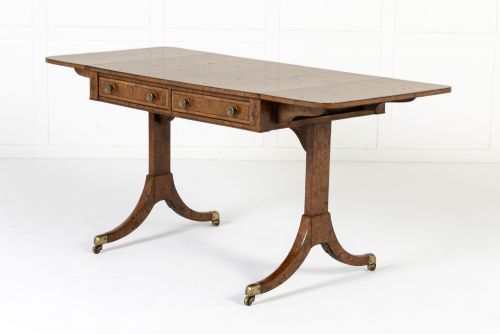


Splayed Leg Drop Leaf Table
A splayed leg drop leaf table brings refined timberwork and versatile folding leaves into a room, offering both compact storage and generous surface space.
Splayed Leg Drop Leaf Table
When searching for a splayed leg drop leaf table, a buyer encounters a variety of classic forms including sofa tables, Pembroke tables, and occasional dining pieces. These items originate predominantly from the Georgian, Regency, and nineteenth-century periods, showcasing the enduring popularity of folding leaf designs.
The most common examples on this page are sofa tables and Pembroke tables constructed in mahogany, often featuring drop leaves designed to expand surface area when required. These pieces function historically as centre tables, serving tables, or compact writing surfaces within traditional interiors.
Materials and construction methods
Cabinet makers relied heavily on solid mahogany and Cuban mahogany, frequently embellishing surfaces with contrasting veneers of satinwood, rosewood, and ebony. Inlaid stringing and banded borders define the visual discipline of the better examples.
Metal mounts in brass, alongside traditional pedestal supports and splayed leg configurations, provide structural stability to the hinged drop leaves. Joinery techniques from the eighteenth and nineteenth centuries ensure the pivoting flaps remain balanced under regular use.
Splayed Leg Drop Leaf Table Retail Price Guide 2026
Typical asking prices for splayed leg drop leaf table among the pieces listed under this phrase on Sellingantiques today, from the lower quarter to the upper quarter. They describe what is for sale here now, not the wider market.
Current listings span the Georgian, Regency, and Victorian eras, dominated by mahogany timber and occasional rosewood or satinwood.
Distinctions in craftsmanship
The division between standard workshop production and superior cabinet making rests in the selection of figured timber and the precision of inlaid details. Dense Cuban mahogany and crisp brass mounts elevate a piece above simpler domestic versions.
Proportion and the handling of secondary timbers indicate the maker's intent, where restrained classical lines and balanced proportions separate utilitarian furniture from high-status drawing-room pieces.
Gillington of Dublin·Duncan Phyfe
The Splayed Leg Drop Leaf Table Glossary
- Sofa table
- A rectangular occasional table designed to stand in front of a sofa, typically featuring two drop leaves and end supports.
- Pembroke table
- A small table with hinged flaps on either side, introduced in the eighteenth century for breakfast or writing use.
- Drop leaf
- A hinged section of a tabletop that folds down to reduce the footprint of the furniture when not in use.
- Satinwood
- A pale, dense timber prized for its lustrous grain, used extensively for decorative stringing and contrasting inlay.
- Cuban mahogany
- A heavy, dark variety of mahogany valued for its rich patina and stable grain structure.
Splayed Leg Drop Leaf Table: Frequently Asked Questions
Where did people use these tables?
These versatile pieces served primarily in drawing rooms, sitting rooms, and parlours as writing surfaces, work tables, or serving consoles.
Their folding leaves allowed households to adapt room layouts quickly for tea, dining, or needlework.
How do I spot a Regency example?
Regency pieces often display classical restraint, featuring dark mahogany contrasted with brass inlay, sabre legs, or central pedestal bases.
Cabinet makers of this era drew inspiration from classical antiquity, favouring clean architectural lines over heavy carving.
How should I care for the timber?
Protect antique mahogany and rosewood surfaces by keeping them away from direct sunlight and maintaining stable room humidity.
Apply a traditional wax polish occasionally to nourish the grain and preserve the historic finish.
Can these tables still seat guests?
Larger sofa and Pembroke variants can accommodate diners comfortably when both leaves are fully raised and supported.
Ensure the leaf hinges and leg supports are stable before setting heavy items on the extended surface.