


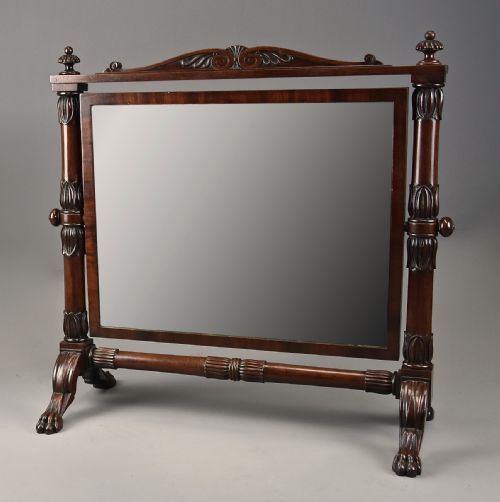
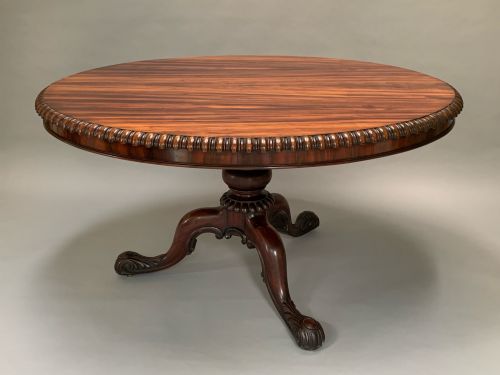
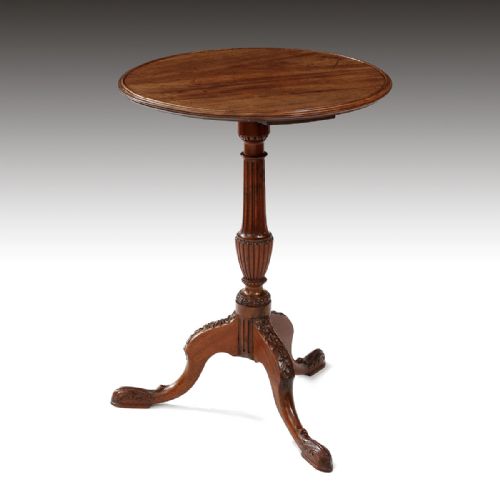
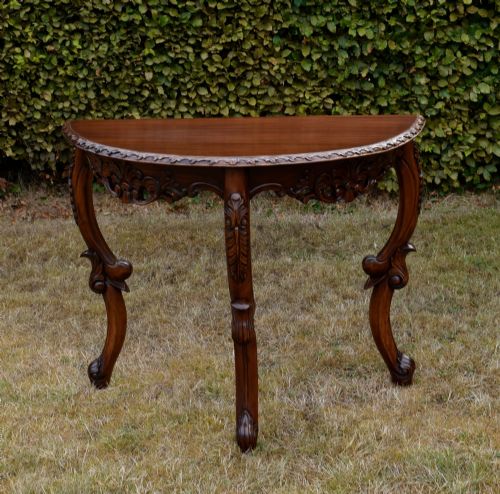
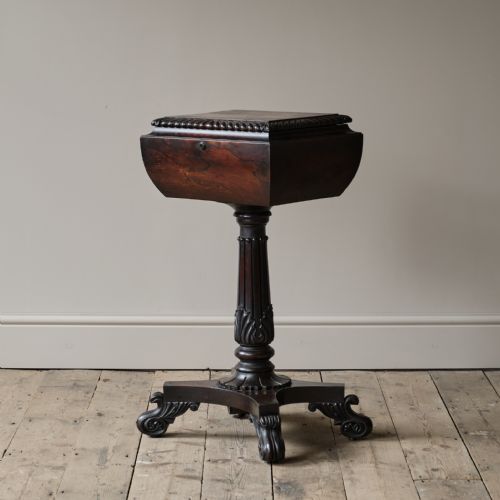
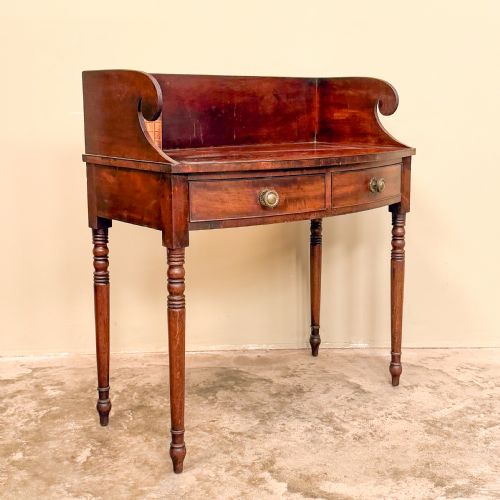
Regency Carved Mahogany Table
A regency carved mahogany table brings solid timber grain and crisp architectural lines into a room, offering practical surface space rooted in the nineteenth century.
Regency Carved Mahogany Table
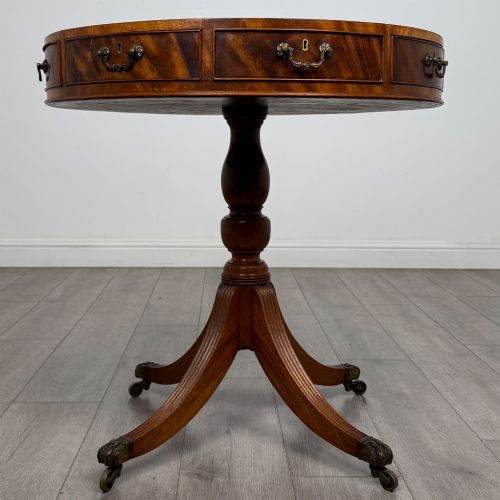
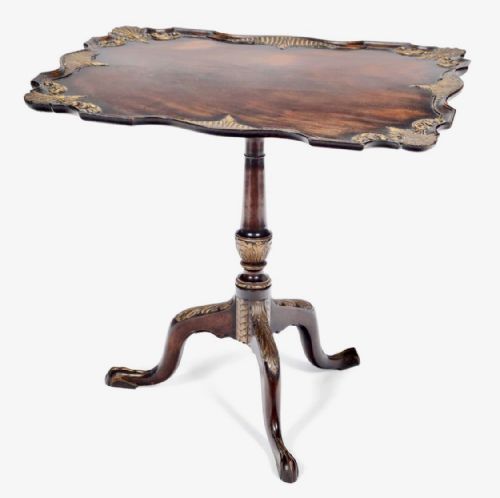
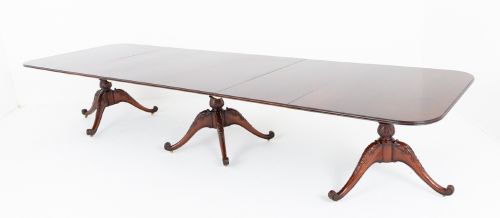
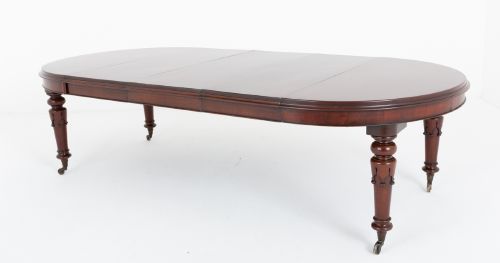
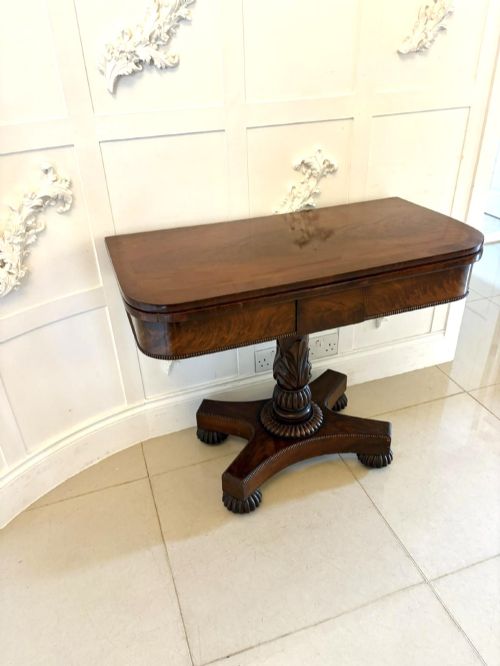
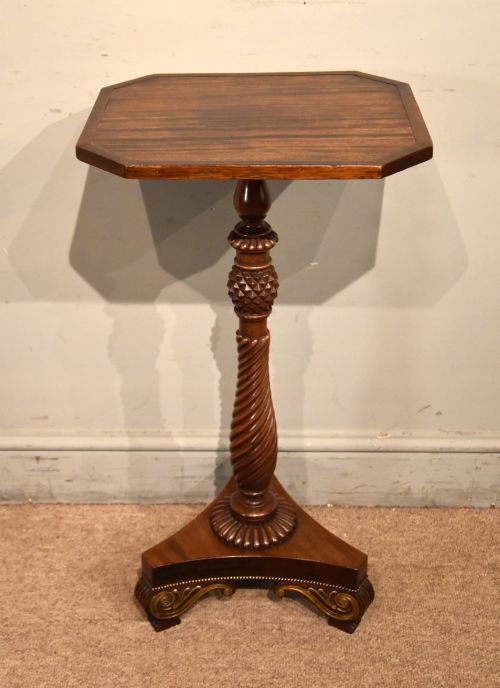
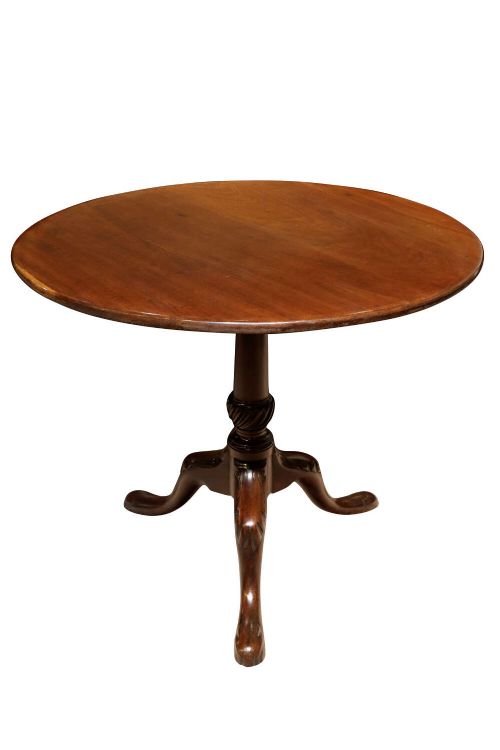
A regency carved mahogany table covers a broad domestic spectrum, ranging from expansive multi-pedestal dining formats to compact tilt-top tripod designs and folding tea tables. Pieces originate primarily across the nineteenth century, including Georgian and William IV iterations alongside later twentieth-century revivals.
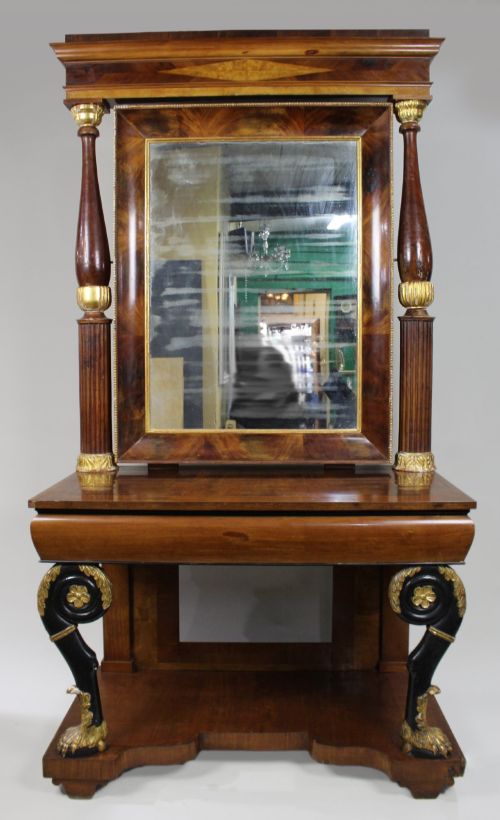
Dining and console tables dominate the available forms, accompanied by specialised pieces such as library tables, writing desks, and occasional side tables. Buyers encounter original period items alongside revival pieces built in the style of the early nineteenth century.
How They Were Made
Cabinet makers utilised dense timbers like Cuban mahogany and rosewood, frequently incorporating flame mahogany veneers to create rich surface patterns. Structural stability relied on sound joinery, while decorative enrichment involved hand-carved details, brass fittings, and occasional parcel gilt highlights.
Secondary materials such as leather inserts, marble tops, and glass elements appeared on specialised library, console, and gueridon tables. Construction techniques accommodated expanding mechanisms on dining formats and tilting mechanisms on tripod bases.
Regency Carved Mahogany Table Retail Price Guide 2026
Typical asking prices for regency carved mahogany table among the pieces listed under this phrase on Sellingantiques today, from the lower quarter to the upper quarter. They describe what is for sale here now, not the wider market.
Listings feature mahogany, rosewood, brass, leather, glass, fabric, and parcel gilt across console, dining, occasional, and library tables.
What Varies in Quality
The standard of a regency carved mahogany table rests upon the crispness of the timber carving, the choice of figured grain veneers, and the integrity of the original construction. Superior examples display deeply articulated paw feet, acanthus leaves, or reeded columns carved directly into solid wood rather than applied in composition.
Proportion and balance dictate the aesthetic success of each piece, distinguishing ambitious cabinet work from simpler vernacular output. The presence of secondary elements, such as original brass castors, matched table leaves, or integrated leather writing surfaces, elevates the standing of an individual table.
Gillows·P & MA Nicholson·William and Gibton·George Smith
The Regency Carved Mahogany Table Glossary
- Mahogany
- A durable tropical hardwood prized for its deep reddish-brown colour and stable grain. Cabinet makers selected this timber for its capacity to take sharp carved details and high polish.
- Tilt-top
- A tabletop hinged to a central pillar, allowing the surface to fold vertically when not in use. This mechanism saved domestic space in nineteenth-century drawing rooms.
- Parcel Gilt
- A decorative technique applying thin gold leaf to specific carved portions of a wooden surface. It highlights architectural details against dark mahogany.
- Monopodia
- Furniture supports carved in the form of a single animal leg, often ending in a paw or claw. Makers frequently used this classical motif on heavy library and console tables.
- Teapoy
- A small box or chest mounted on a central pillar or legs, designed to store loose tea leaves. These containers reflect the high social value placed on tea in period households.
Regency Carved Mahogany Table: Frequently Asked Questions
How do I spot a true period table?
Examine the timber shrinkage, joinery methods, and the weight of the mahogany used in the construction. Period pieces exhibit hand-cut joints and timber ageing consistent with the early nineteenth century.
Compare the carving style and secondary woods against documented examples from the same decade. True pieces show tool marks and wear patterns appropriate to their age.
What is a pembroke table?
A pembroke table is a small occasional table featuring drop leaves on either side supported by hinged brackets. It served versatile functions for breakfast, writing, or needlework in smaller rooms.
Most examples include a single small drawer and slender legs fitted with castors for easy movement across carpets.
Can I use an antique dining table daily?
These tables were built from sturdy hardwoods designed for robust domestic service. Routine use requires sensible precautions like coasters, mats, and occasional wax polishing to protect the finish.
Extension mechanisms on larger dining tables operate smoothly when kept clean and properly aligned during setup.