
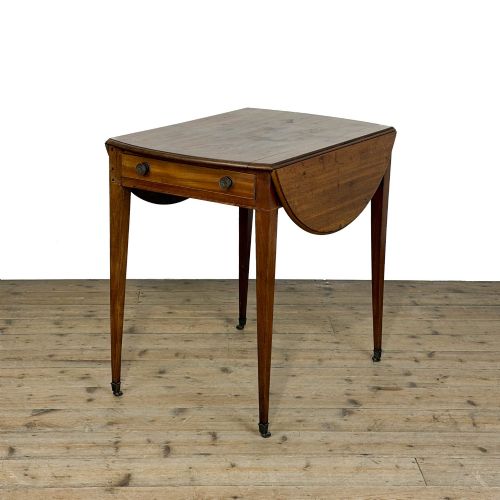
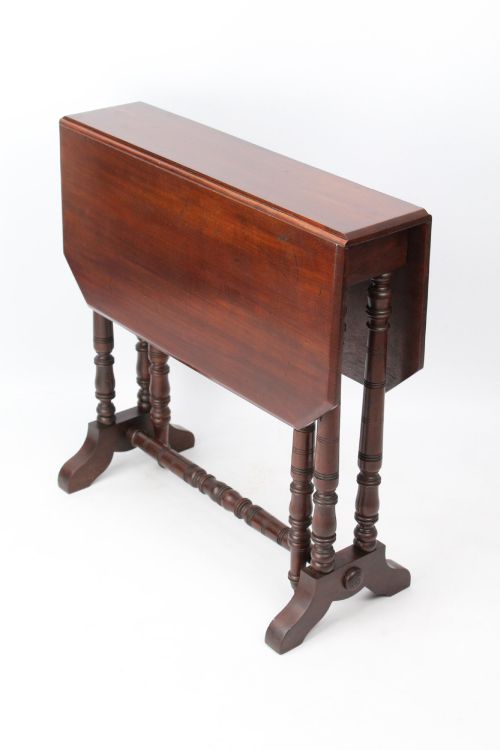
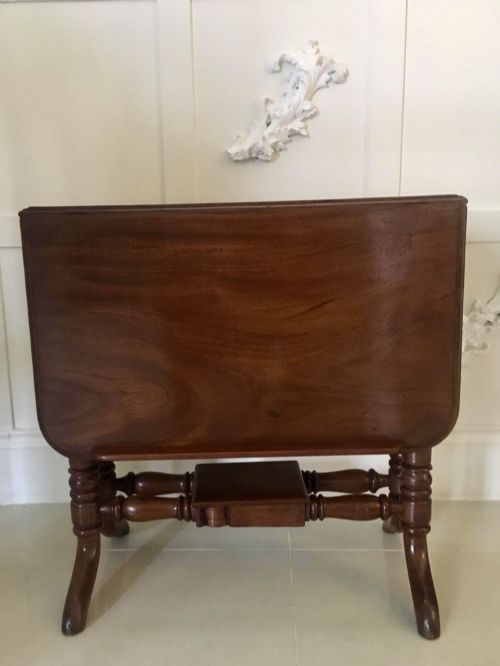
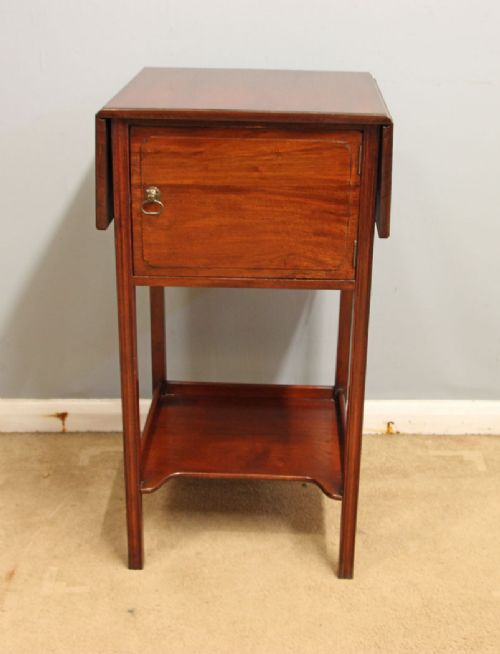

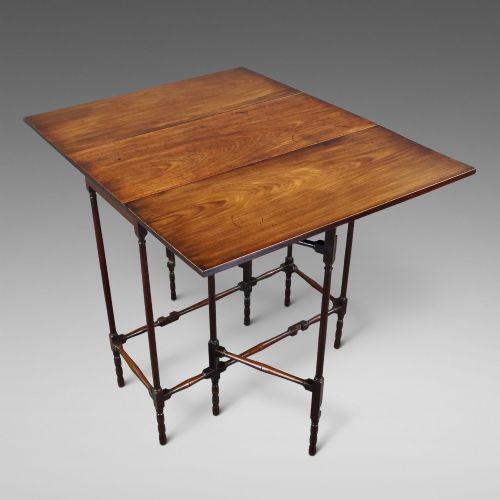
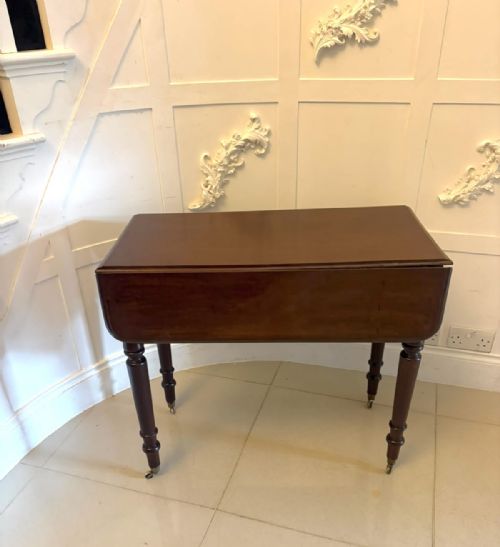
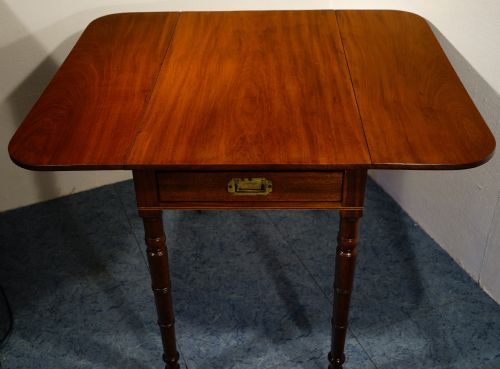
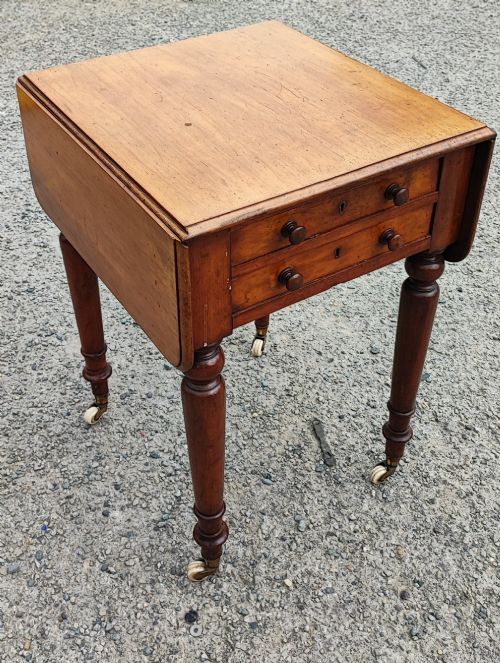
Small Mahogany Drop Leaf Table
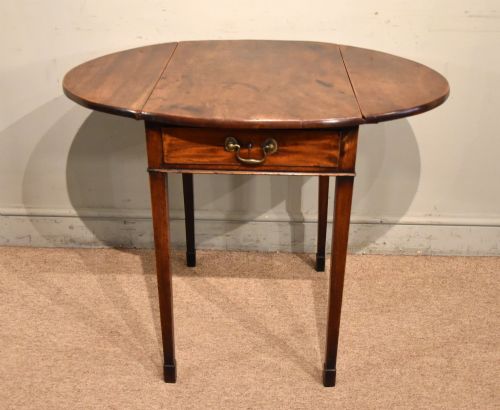
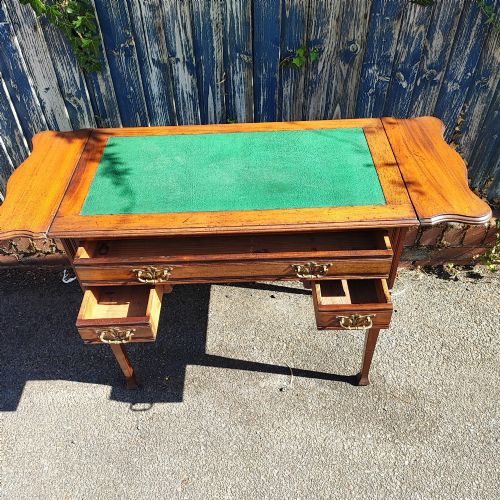
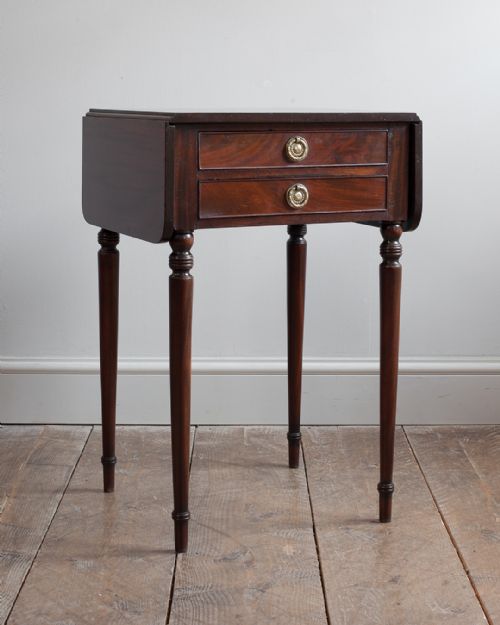
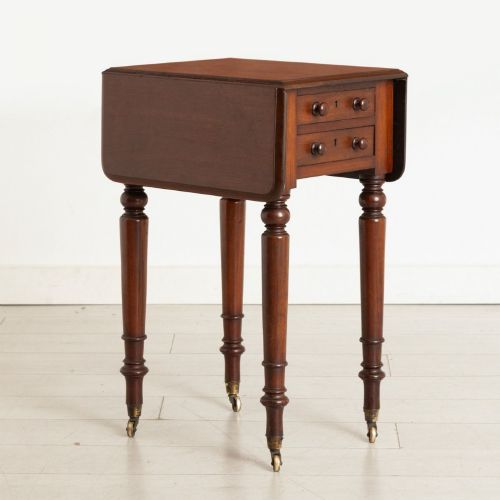
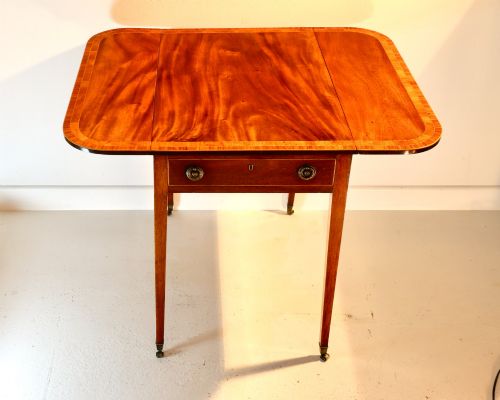
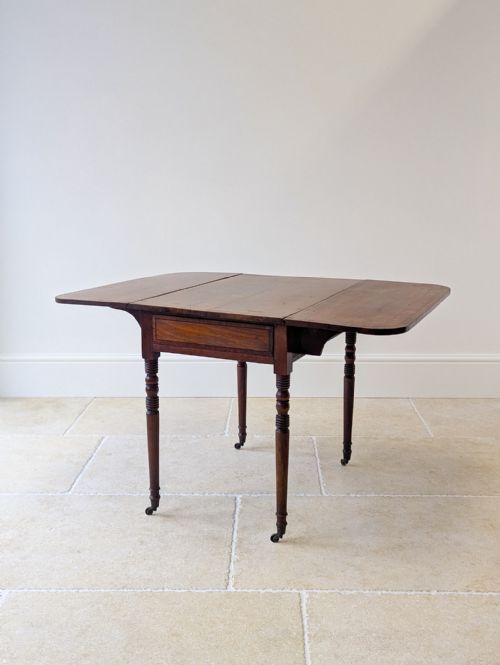
A small mahogany drop leaf table offers folding flaps for flexible living space, combining rich timber grain with practical compact design.
Small mahogany drop leaf table
A small mahogany drop leaf table serves versatile roles as a Pembroke, occasional, lamp, or work table across the Georgian, Regency, and Victorian periods. Buyers encounter compact forms designed for dining, sewing, or bedside use with hinged flaps that expand the surface area when needed.
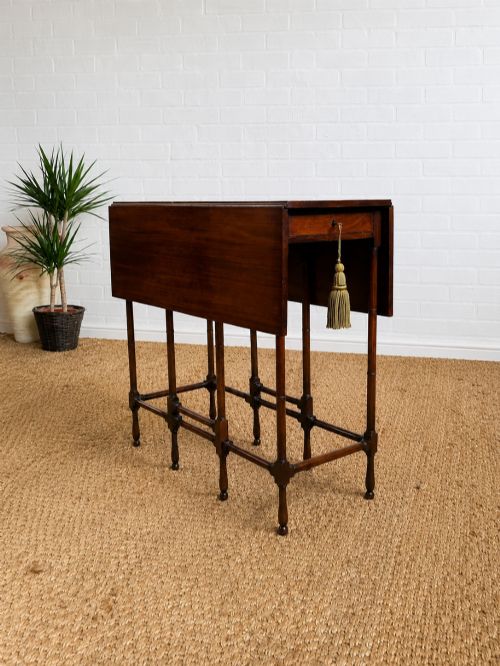
The selection ranges from early gate-leg dining pieces to refined Regency pedestal designs and slender Edwardian Sutherland tables. These versions reflect how domestic spaces evolved from large formal rooms to adaptable multi-purpose interiors.
Originating primarily from English workshops, these items utilise dense hardwoods suited to folding leaves and narrow legs. The forms span oval, rectangular, and round tops supported by spider legs, pillars, or traditional gate-legs.
Construction and Materials
Cabinetmakers constructed these pieces using solid mahogany and Cuban mahogany, sometimes paired with rosewood or brass fittings. Timber selection prioritised rich grain figures and structural stability for the hinged drop leaves.
Joinery techniques included sturdy gate-leg mechanisms, dovetailed drawers, and pivoting rule joints to support the extending flaps. Turning and tapering formed the slim legs, from pad feet to pedestal bases.
Retail Price Guide 2026
Typical UK retail prices for small mahogany drop leaf table, calculated from the Sellingantiques database of over a million retail prices indexed since 2003. This retail price guide relies exclusively on Sellingantiques data; no external sources or auction records are used, so the figures do not describe the wider market.
Some work tables hide secret compartments, keeping clandestine letters or lost thimbles safe beneath the folding top.
Distinctions in Quality
The finest examples display superior timber selection with deeply figured mahogany boards that match seamlessly across the top and folding leaves. Lesser pieces utilise plain or secondary woods with less attention to grain continuity.
Master cabinetmakers executed crisp mouldings, fine rule joints, and smoothly operating drawers or secret compartments. Rougher construction shows in clumsy hinge placement and heavy, unrefined leg turnings.
Gillows
The Small Mahogany Drop Leaf Table Glossary
- Pembroke table
- A small drop leaf table featuring two hinged flaps on opposite sides, frequently fitted with a single drawer. This form gained popularity during the eighteenth century for breakfast and writing.
- Rule joint
- A rounded moulding joint connecting the table top to its drop leaf, designed to hide the gap and hinge mechanism when open. It provides a clean finish from every angle.
- Gate-leg table
- A table with hinged legs that swing outward like a gate to support the drop leaves. This design allows for a large surface area while folding down compactly.
- Sutherland table
- A narrow drop leaf table characterised by very thin folding leaves and slender legs. It often includes a low platform base and folds down to a fraction of its open width.
Frequently Asked Questions
What is a Pembroke table?
A Pembroke table is a compact drop leaf form with short side flaps and typically one drawer underneath. It served as a versatile piece for breakfast, writing, or needlework in smaller rooms.
Cabinetmakers designed them with pivoting rule joints so the leaves sat flat when raised. They often stood on slender tapering legs or delicate casters.
How do gate-leg tables work?
Gate-leg tables use hinged wooden legs that pivot outward from the central frame to support the folding leaves. This mechanical action allows a small surface to expand into a larger dining table.
The swinging leg locks into position beneath the leaf to bear weight safely during meals.
Where were these tables used?
These tables found places in bedrooms, parlours, and drawing rooms as lamp stands, sewing tables, or occasional desks. Their folding leaves allowed owners to reclaim floor space when entertaining.
Larger versions functioned as auxiliary dining surfaces in modest homes or country houses.
How do I spot a Regency piece?
Regency pieces often feature architectural elements like pedestal columns, brass paw feet, and reeded edges. The timber choice frequently includes dark, finely figured Cuban mahogany.
They also tend to show cleaner lines and bolder geometric proportions compared to earlier Georgian designs.