

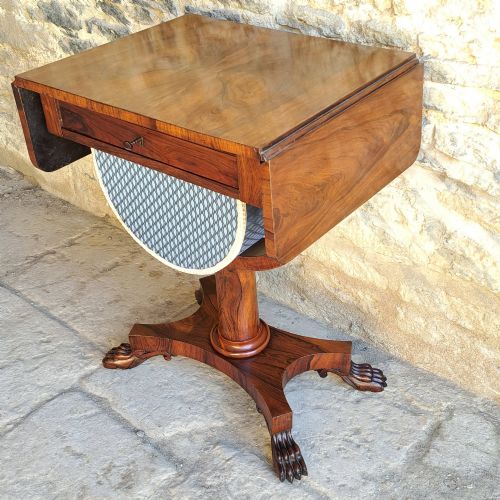

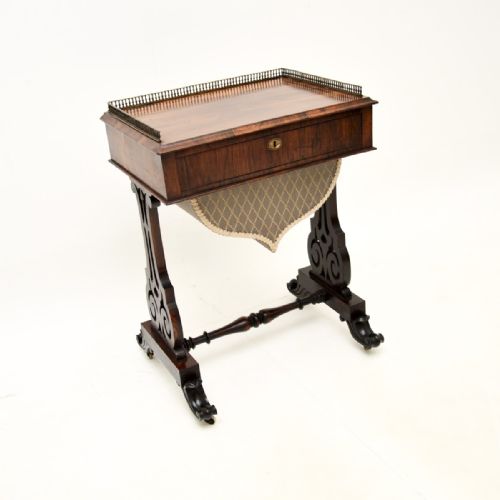


Antique Sewing Well Table
An antique sewing well table combines a refined surface for occasional use with a specialised interior compartment for needlework.
Antique Sewing Well Table
An antique sewing well table is primarily a multifunctional piece designed for needlework and small domestic tasks, frequently appearing under names such as work table, sewing table, or occasional table. These pieces emerge predominantly from the nineteenth century, spanning the Georgian, Regency, William IV, and Victorian periods.
The form typically incorporates a drop-leaf or foldover top above a suspended fabric bag or timber box intended to hold sewing paraphernalia. Many examples double as games tables or writing desks, reflecting the versatile interior domestic architecture of the era.
Rosewood, burr walnut, and mahogany form the structural backbone of these tables, often enhanced with marquetry inlay or delicate wood turning. Most options encountered on this page date from the Victorian era or earlier nineteenth century, presenting varied timber grains and compartment layouts.
Materials and construction methods
Cabinet makers utilised dense hardwoods including rosewood, walnut, burr walnut, and mahogany to build the carcasses and legs of these tables. Pollard oak and palisander also appear in specific Regency and nineteenth-century examples, providing varied surface textures and rich natural colour.
Interior compartments frequently incorporate tailored fabric elements alongside fitted wooden work boxes to secure sewing tools. Marquetry inlay and drop-flap mechanisms demand precise joinery, allowing surfaces to convert between writing, games, and sewing functions without compromising structural stability.
Burr walnut and rosewood dominate the material selection, frequently paired with inlaid marquetry and fabric work bags.
Distinctions in quality and execution
The grade of timber used for the outer surfaces dictates much of the visual merit, with highly figured burr walnut veneers and richly grained rosewood commanding greater attention. Finer examples display meticulous marquetry inlay and well-executed turning on the pedestals and supports.
Interior organisation separates standard items from exceptional ones, particularly where fitted work boxes retain their original compartments and delicate fabric wells. The seamless operation of drop-leaf mechanisms and foldover tops also indicates the original standard of cabinet making.
The Antique Sewing Well Table Glossary
- Marquetry
- The art of applying decorative veneer pieces of different woods to a structure to form geometric or floral designs. It adds ornamental detail to nineteenth-century work tables.
- Drop-leaf
- A table top design featuring hinged flaps that raise to extend the surface area or drop down when space is restricted. This mechanism appears on numerous sewing tables.
- Palisander
- A dense tropical timber related to rosewood, valued for its deep colour and durability in Regency and nineteenth-century cabinet work.
- Workbox
- A self-contained box, often integrated into the frame of these tables, designed to store threads, needles, and small tools.
Antique Sewing Well Table: Frequently Asked Questions
What is an antique sewing well table?
An antique sewing well table is a nineteenth-century small table designed for needlework, featuring a compartment or fabric bag beneath the top.
These pieces also served as writing desks, lamp tables, or occasional tables in period sitting rooms.
How were these tables used originally?
They provided ladies with a portable station for embroidery, mending, and other textile crafts within the parlour.
The top surface often doubled as a space for reading, writing letters, or playing cards.
What woods are commonly found on them?
Cabinet makers predominantly used rosewood, mahogany, and burr walnut for the primary exterior surfaces and legs.
Some Regency examples incorporate pollard oak or palisander to achieve distinct grain patterns.
How do I distinguish between periods?
Regency and William IV pieces lean towards architectural pedestals and dark rosewood, whereas Victorian examples frequently showcase burr walnut and elaborate marquetry.
Construction details and leg turnings shift across the decades from about eighteen hundred to the late nineteenth century.
Can I use one as a regular side table?
Yes, their compact proportions make them suitable for use beside chairs or sofas as lamp or occasional tables.
The internal well simply remains closed while the top surface holds everyday decorative objects.