
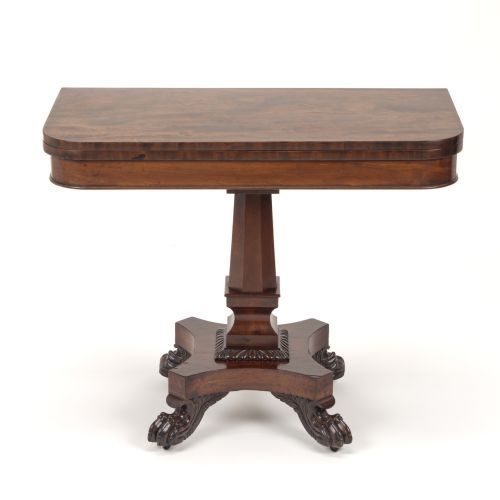
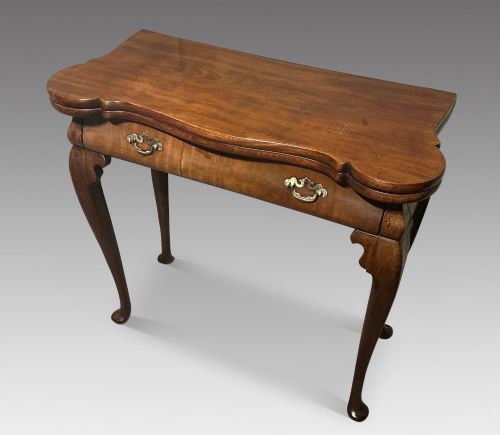
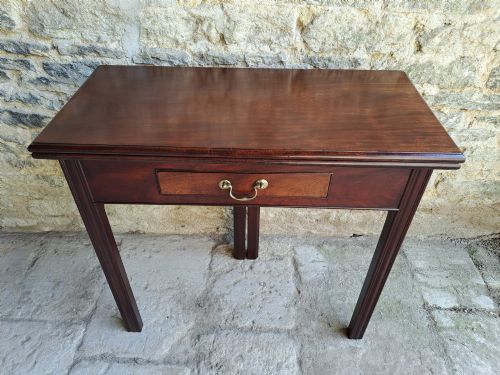

Mahogany Flip Top Table
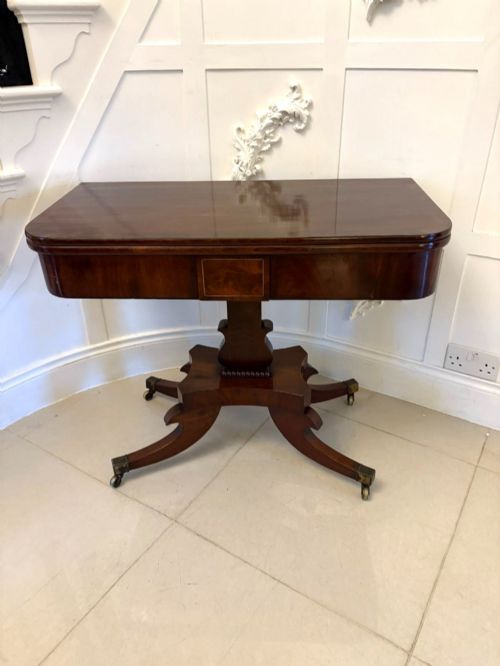
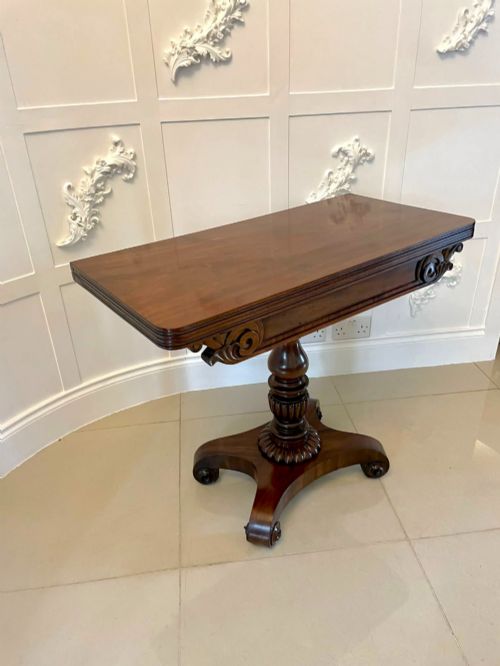
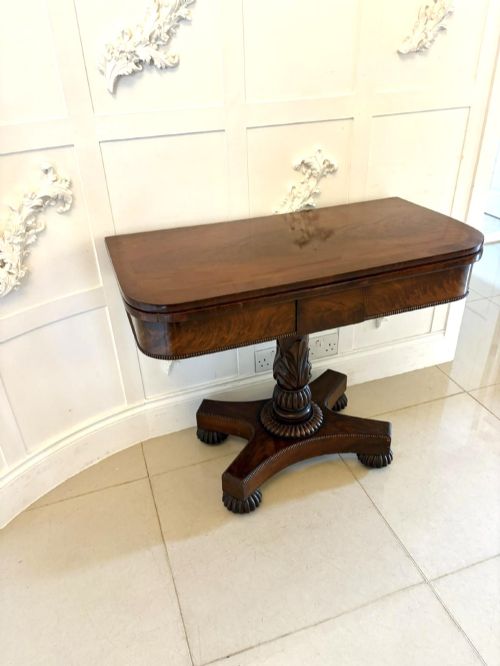
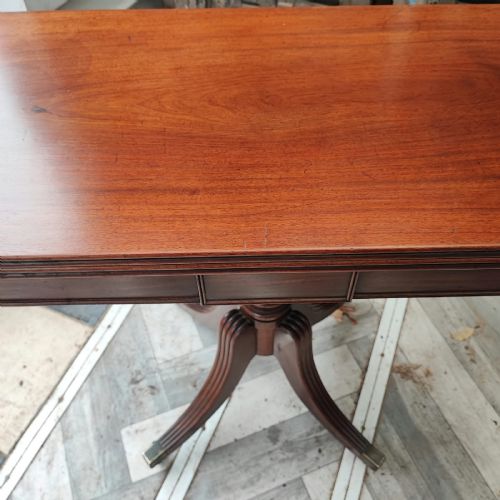
Mahogany flip top table designs offer clever folding mechanisms that transform compact console furniture into generous serving surfaces.
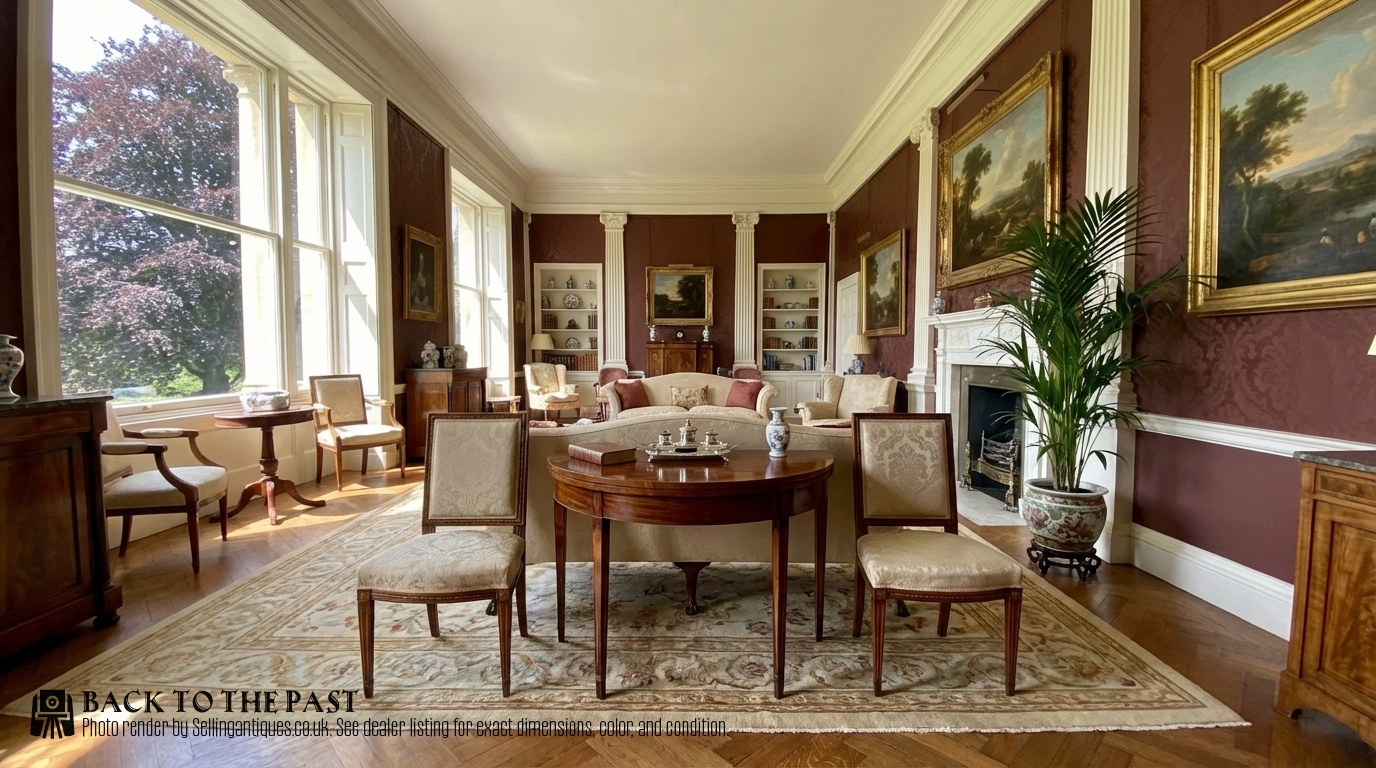
Mahogany Flip Top Table
A mahogany flip top table serves multiple domestic functions, operating primarily as a tea table, card table, or games table that folds out when guests arrive. These versatile items appear frequently in Georgian, Regency, and William IV iterations across the inventory.
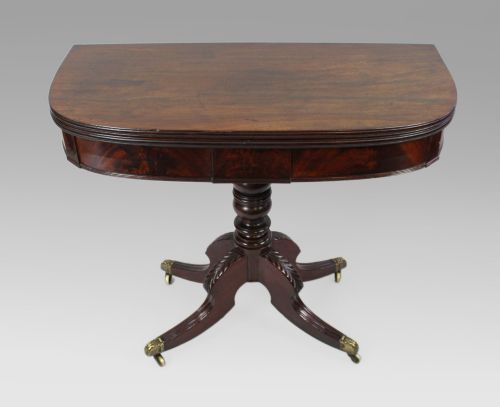
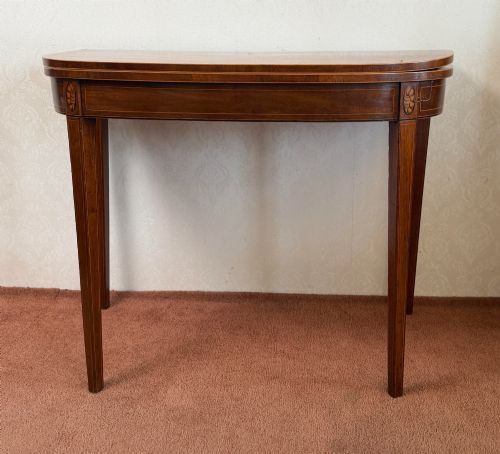
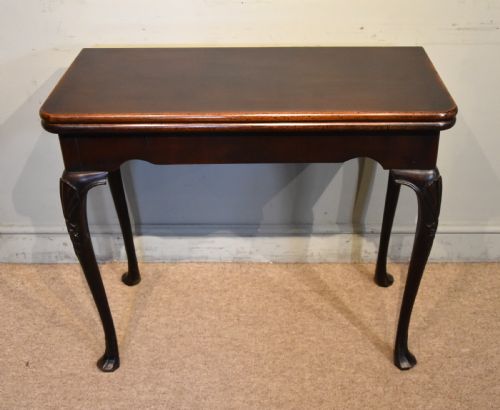
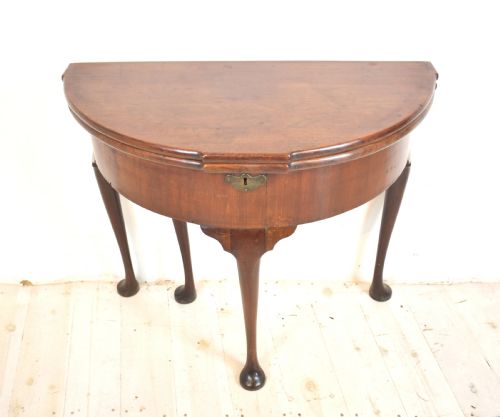
Buyers encounter numerous D-shaped and fold-over formats, alongside concertina action card tables and occasional wine tables. The selection ranges from early eighteenth century examples through to nineteenth century turn-over side tables.
Makers designed these pieces to sit flat against a wall until needed, at which point the hinged top rotates or unfolds to reveal a baize-lined playing surface or a polished timber top.
How they were made
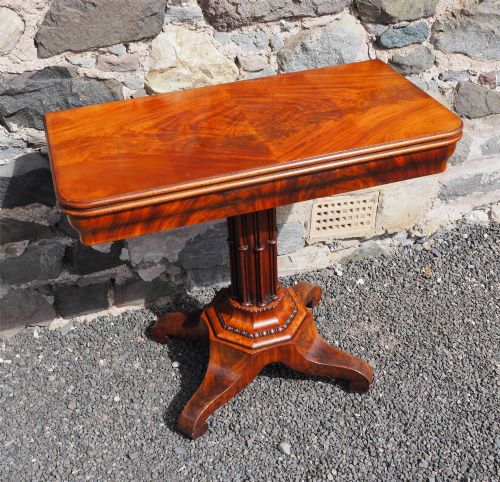
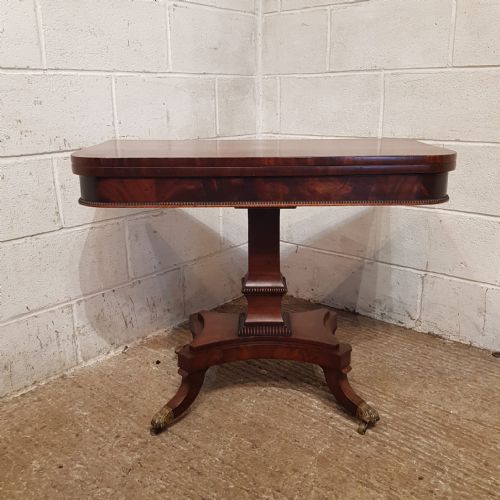
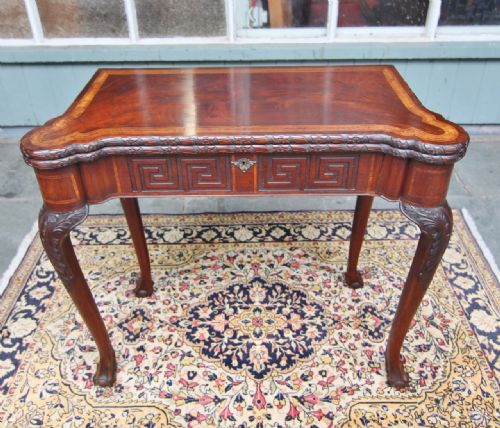
Cabinet makers utilised dense timbers such as Cuban mahogany, Honduras mahogany, and standard mahogany, frequently applying flame mahogany veneer to create striking grain patterns on the folding surfaces. Satinwood inlay and contrasting satinwood stringing often accent the borders.
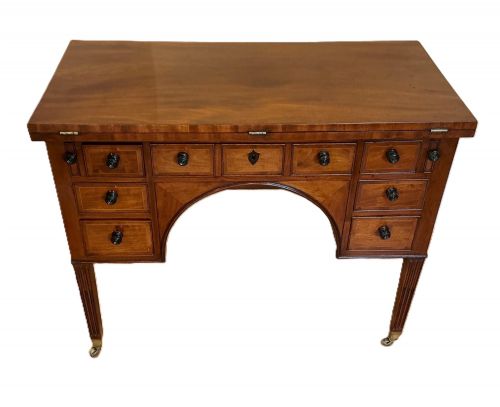
Structural integrity relied on sturdy framing, sometimes incorporating concertina action rails or rotating pivots to support the extended leaf. Workshops also integrated brass mounts, gilded brass details, and carved paw feet on later Regency and William IV pieces.
Mahogany Flip Top Table Retail Price Guide 2026
Typical asking prices for mahogany flip top table among the pieces listed under this phrase on Sellingantiques today, from the lower quarter to the upper quarter. They describe what is for sale here now, not the wider market.
Materials recorded across the inventory include Cuban mahogany, solid mahogany, satinwood, rosewood, and brass mounts.
What varies in quality
The choice of timber heavily dictates the grade of the piece, moving from plain solid boards up to highly figured flame mahogany veneers and intricate satinwood inlay. Superior examples display careful book-matching on the fold-over top so the grain mirrors seamlessly when opened.
Engineering of the folding mechanism separates standard production from finer cabinet work, with concertina actions and smooth pivot joints representing superior construction. The crispness of carved details, such as paw feet or edge moulding, further distinguishes workshop standards.
The Mahogany Flip Top Table Glossary
- Concertina action
- An expanding frame mechanism that pulls outward on all four sides to support a folding table top evenly. This construction is typically found on mid-eighteenth century card tables.
- Flame mahogany veneer
- A thin slice of timber cut from where branches join the main trunk, producing a distinctive flickering flame pattern. Cabinet makers applied this to the most prominent display surfaces.
- D-shaped
- A description of a table top that forms a half-circle or semi-ellipse when closed against a wall. The straight edge sits flush while the curved front faces the room.
- Turn over side table
- An alternative term for a fold-over table where the top leaf rotates on a pivot and rests flat upon the base framework. This action doubles the surface area.
- Satinwood inlay
- Contrasting blonde wood inserted into recesses cut into the darker mahogany surface. It creates decorative borders and geometric stringing lines.
Mahogany Flip Top Table: Frequently Asked Questions
How did people use a mahogany flip top table?
Households utilised these pieces against drawing room walls for daily display and ornamental placement. When evening arrived, servants or residents unfolded the top to host card games or serve tea.
The dual functionality saved valuable floor space in period homes. A single piece transitioned smoothly from a side console into a functional dining or gaming surface.
What is the difference between a tea table and a card table?
Tea tables generally feature plain polished timber surfaces designed to hold porcelain and silver tea services. Card tables frequently conceal a baize or felt lining beneath the fold to muffle the sound of dice and playing cards.
Card tables also often incorporate small corner recesses or rule joints specifically sized for counters and coins. Their internal framing required more complex concertina actions to bear the weight of leaning players.
How do I tell a Georgian table from a Regency one?
Georgian pieces from the eighteenth century lean toward restrained classical lines, sometimes featuring Chippendale carved details or straight legs. Mahogany tones tend to be deeper and warmer through age and patina.
Regency examples from the early nineteenth century introduce bolder styling, including sabre legs, carved paw feet, and brass inlays. These later designs often employ striking flame mahogany veneers and heavier pedestal bases.