
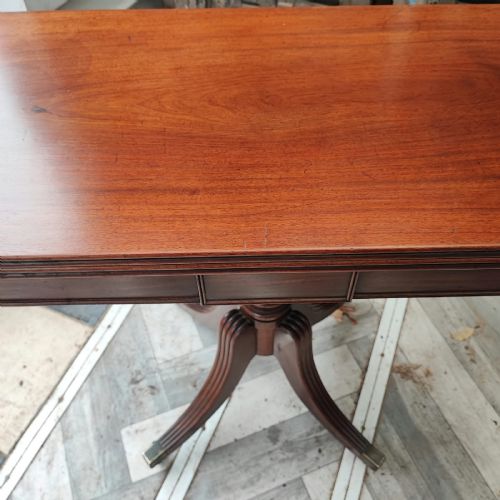
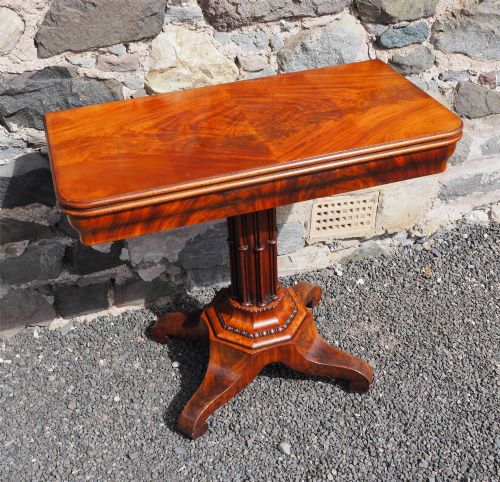
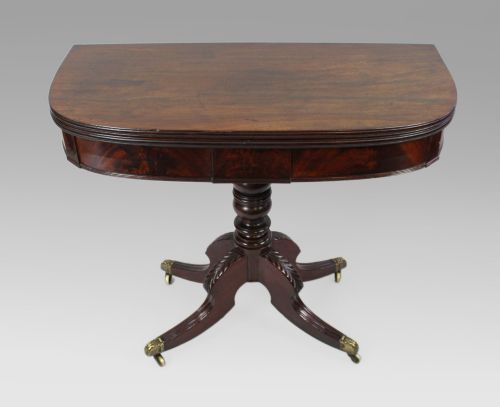
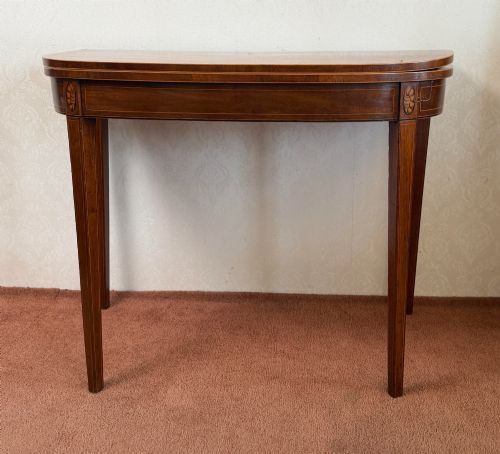




Georgian Flip Top Card Table
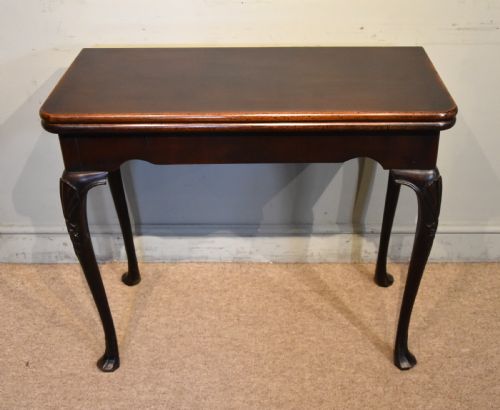
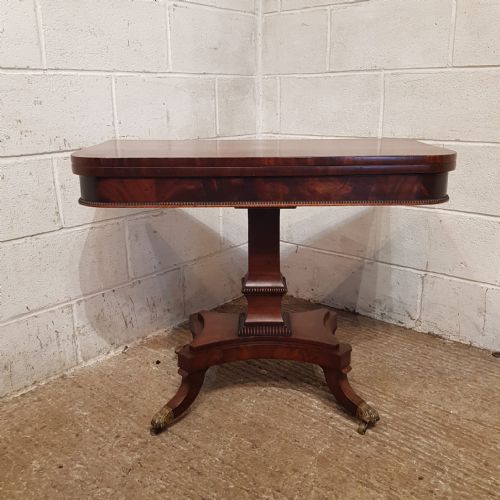
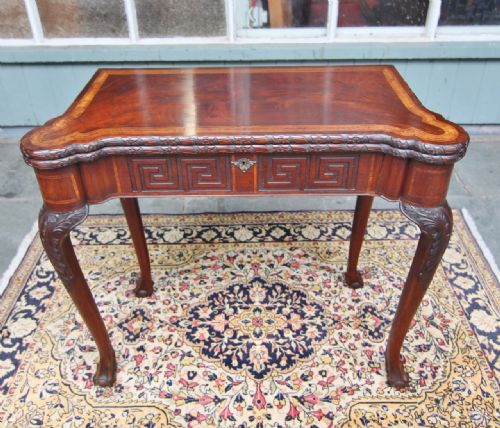
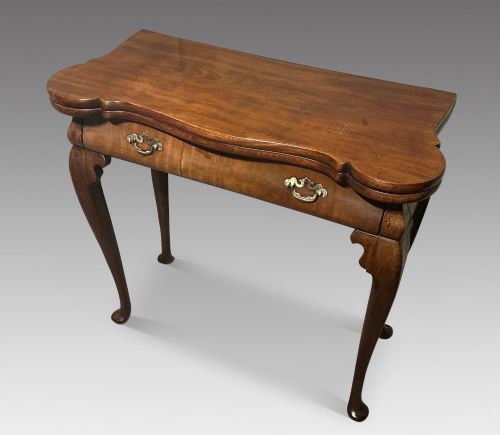
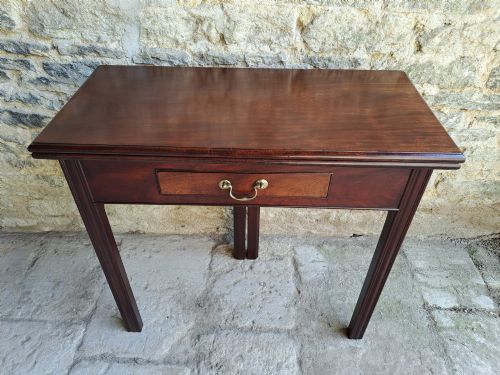
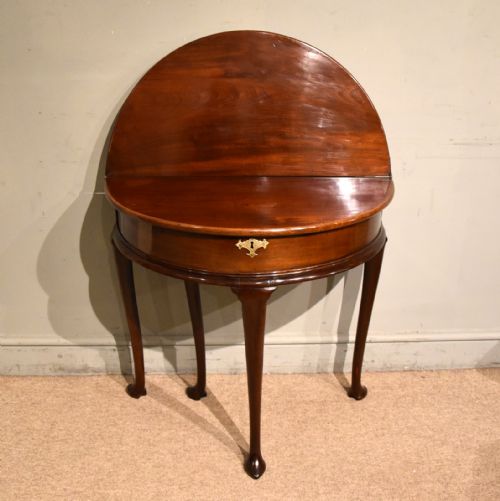
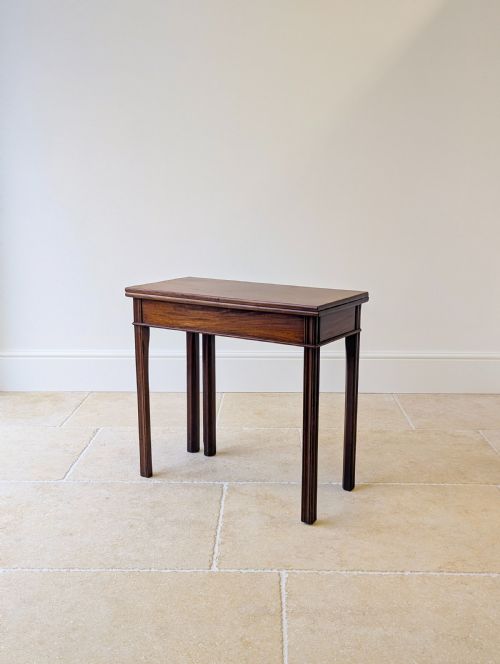
A georgian flip top card table brings versatile fold-over timber surfaces into a room, offering both compact console use and expanded space for evening games.
Georgian Flip Top Card Table
A georgian flip top card table serves as a dual-purpose item designed to stand against a wall until opened for play or social gatherings.
The pieces on this page span the Georgian, Regency, and 19th Century periods, often adopting George III, George II, Sheraton, and Chippendale styles.
Materials and Technique
Cabinet makers constructed these tables primarily from solid timber and veneers, favouring Honduras and Cuban mahogany alongside rosewood and walnut.
Decorative surface enrichment relied on boxwood and satinwood inlay, hand painted details, and gilded brass mounts.
Action mechanisms included folding leaves and concertina frames to support the pivoted top when extended.
Listings feature mahogany, rosewood, walnut, and satinwood, spanning the 18th, 19th, and early 20th centuries in Georgian and Regency styles.
Markers of Excellence
Excellence rests on the choice of timber, where deeply figured mahogany or rich rosewood grain elevates the visual weight of the top surface.
Structural refinement shows in the precision of the concertina action, the crispness of carved details in the Chippendale manner, and the integration of brass mounts.
William Trotter of Edinburgh
The Georgian Flip Top Card Table Glossary
- Concertina action
- An expanding frame mechanism that pulls out to support all four corners of a fold-over top when opened. This design requires complex joinery to maintain stability.
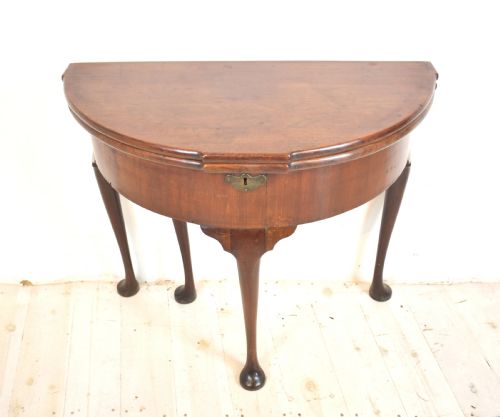
- Demi lune
- Half-moon shaped furniture designed to sit flush against a wall. These tables often feature inlaid borders.
- Patination
- The surface sheen and colour developed by aged timber through handling, polish, and time. Good examples display deep warmth.
- Sabre leg
- A concave sweeping leg form curving outwards and upwards, typical of Regency pieces. It provides both grace and sturdy floor contact.
Georgian Flip Top Card Table: Frequently Asked Questions
How do you use a card table?
These tables were historically placed in parlours for card games, tea service, and social assembly.
The folded leaf swings open on hinges to reveal a finished surface, sometimes lined for play.
How do I spot a George III table?
George III pieces often display mahogany construction with Chippendale or Sheraton stylistic influences.
Look for carved bracket feet, straight legs, or delicate inlay work characteristic of the late eighteenth century.
What is a concertina action?
A concertina action is an expanding table frame that pulls outward to support the unfolded leaf symmetrically.
This sophisticated mechanism allows all four legs to move in harmony when opening the table.