


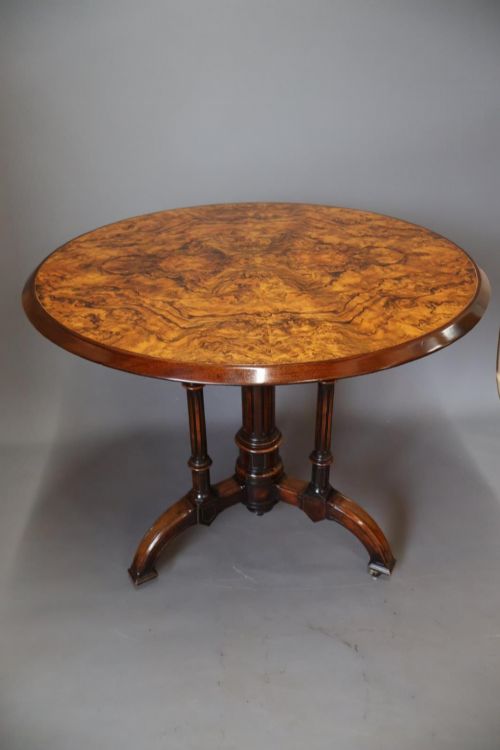


Burr Walnut Foyer Table
A burr walnut foyer table brings rich grain and presence to an entrance, spanning Victorian craftsmanship to Art Deco design.
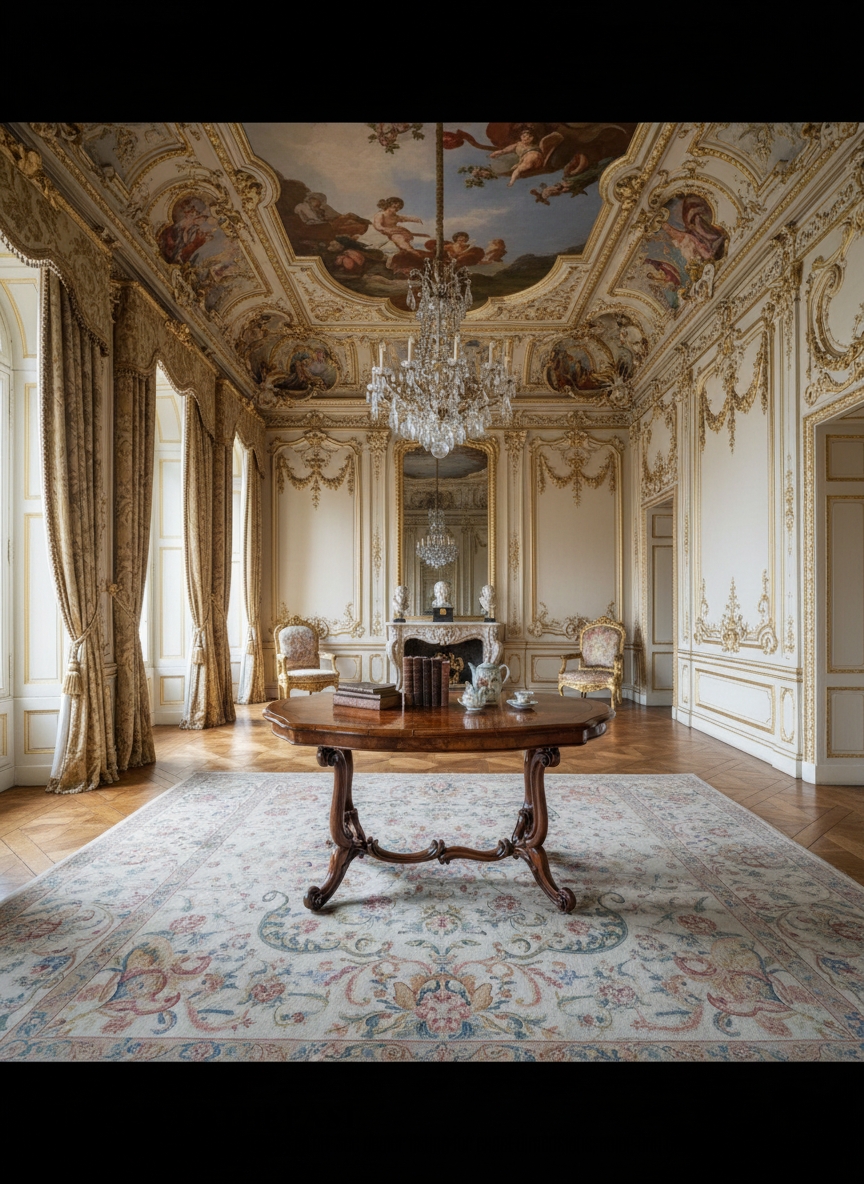
Burr Walnut Foyer Table
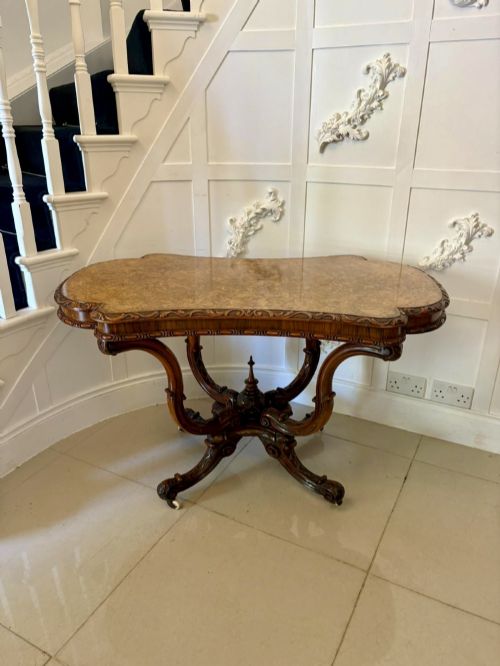
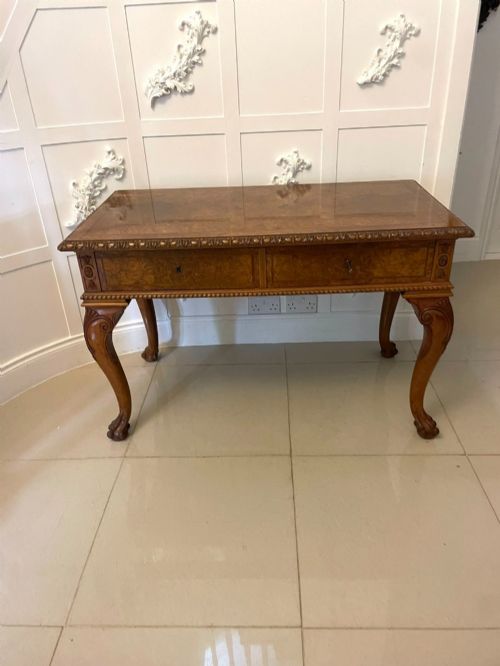
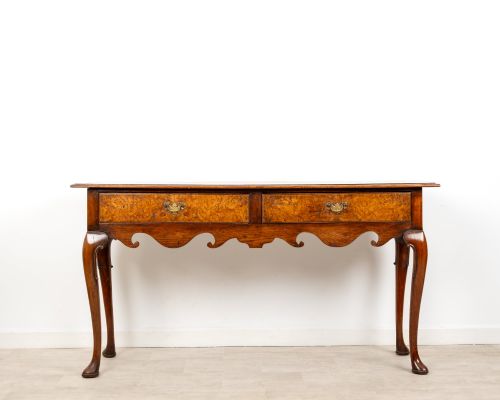
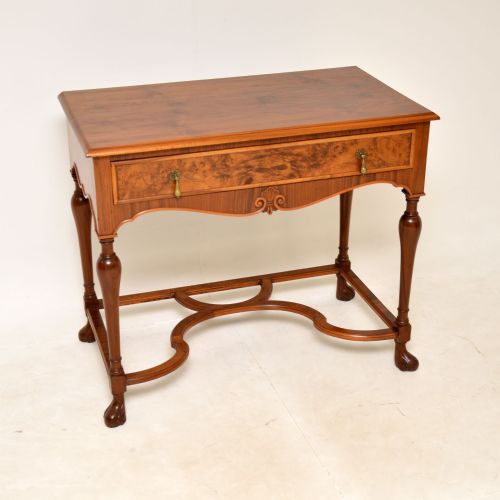
A burr walnut foyer table is a statement piece designed for an entrance hall or reception space, frequently taking the form of a centre table, console table, or side table. These tables ground a hallway with distinctive form and function, serving as a surface for lamps or decorative objects.
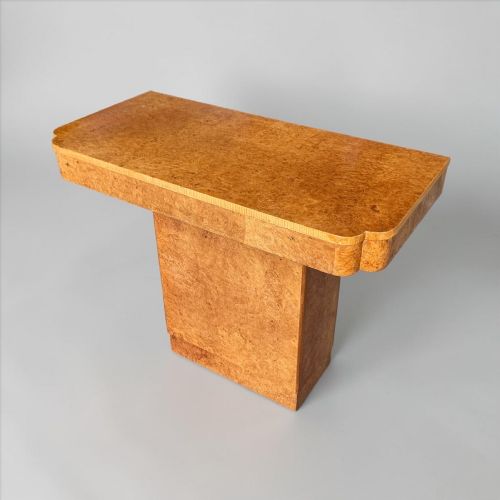
The selections span 19th Century and Victorian eras through to the Edwardian period and 1930s Art Deco. Victorian centre tables and later console variations dominate the available pieces.
Origins include English workshops alongside French examples, incorporating styles such as Queen Anne Revival, Aesthetic Movement, and Victorian Rococo Revival alongside clean-lined Art Deco forms.

How they were made
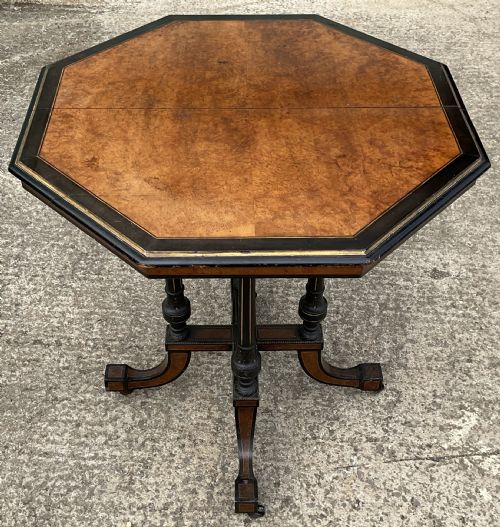
Makers utilised burr walnut veneer for its swirling, highly figured grain patterns, laid over solid wood foundations such as pine or mahogany. This timber was often paired with boxwood inlay, marquetry inlay, or contrasting ebonised details.
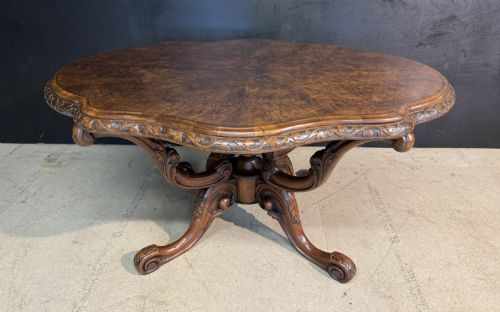
Structural elements incorporated carved wood, pedestal bases, basket bases, and occasional brass fittings or ceramic castors. Cabinetmakers employed precision joinery to stabilise the decorative veneers across shaped and oval tabletops.
Object forms span centre tables, console tables, side tables, and occasional tables in styles from Queen Anne Revival to Art Deco.
What varies in quality
Quality rests in the density and dramatic movement of the burr walnut grain selected for the top, alongside the precision of any boxwood or marquetry inlay. Finer examples display meticulous hand-carving on the pedestals and skirts.
Attribution to documented makers such as Hille, Maple and Co, or Holmes Baldock elevates a piece. The structural integrity of freestanding forms and the crispness of revival styling further separate standard production from exceptional work.
Hille·Holmes Baldock·Maple and Co·Holland and Sons
The Burr Walnut Foyer Table Glossary
- Burr walnut
- A veneer sliced from the gnarled wart or burl of a walnut tree, prized for its complex, swirling grain patterns. This material forms the primary decorative surface on these tables.
- Centre table
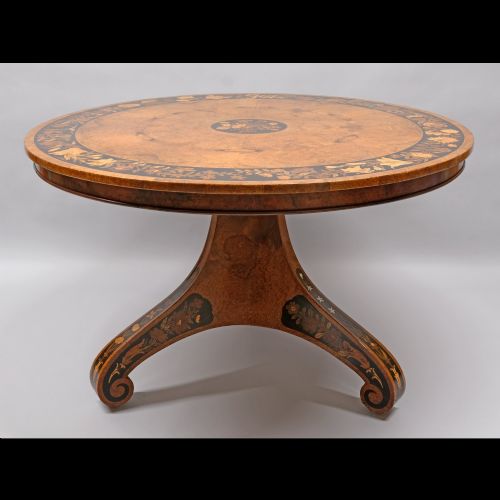
- A freestanding table designed to be viewed from all sides, frequently placed in the middle of a room or a large foyer. These pieces often feature elaborate pedestal or pillar bases.
- Console table
- A table designed to stand flat against a wall, sometimes secured to it for stability. They serve as slim surface options in narrow hallways.
- Marquetry
- The art of applying pieces of veneer to a structure to form decorative patterns and pictures. In these pieces, floral or geometric motifs decorate the tabletops.
- Aesthetic Movement
- A late 19th-century design style emphasising visual beauty over narrative content. Pieces in this taste often lean towards refined lines and contrasting woods.
Burr Walnut Foyer Table: Frequently Asked Questions
Where should I place a centre table?
A centre table works best where it can be walked around freely, making a grand entrance hall or a spacious landing its natural home. Because many of these pieces are finished on all sides, they hold presence away from walls.
Ensure you measure your clearance carefully so doors and traffic flow remain unobstructed around the pedestal or base.
How do I identify Art Deco style?
Art Deco pieces from the 1920s and 1930s discard heavy Victorian ornamentation in favour of streamlined silhouettes and geometric symmetry. The burr walnut grain on these tables provides the primary visual decoration.
Look for clean edges, smooth curved consoles, and unadorned surfaces that reflect modernist interior tastes.
What is a console table used for?
A console table sits flat against a wall to provide a convenient surface in narrow spaces like hallways and foyers. Historically, they held lighting, visiting card trays, or decorative ornaments.
In a modern home, they offer a practical drop-zone for keys and post without crowding the floor area.
How do I date a Victorian table?
Victorian tables often display rich timber tones, substantial carved pedestals, and occasionally elaborate marquetry or basket bases. Mid-19th-century examples frequently lean into Rococo Revival curves.
Compare the construction methods underneath and the style of the timber framing to distinguish mid-Victorian pieces from later Edwardian revivals.