





Antique Poker Table
An antique poker table gathers players around mahogany, walnut, and rosewood surfaces lined with wool baize for long evenings of cards.
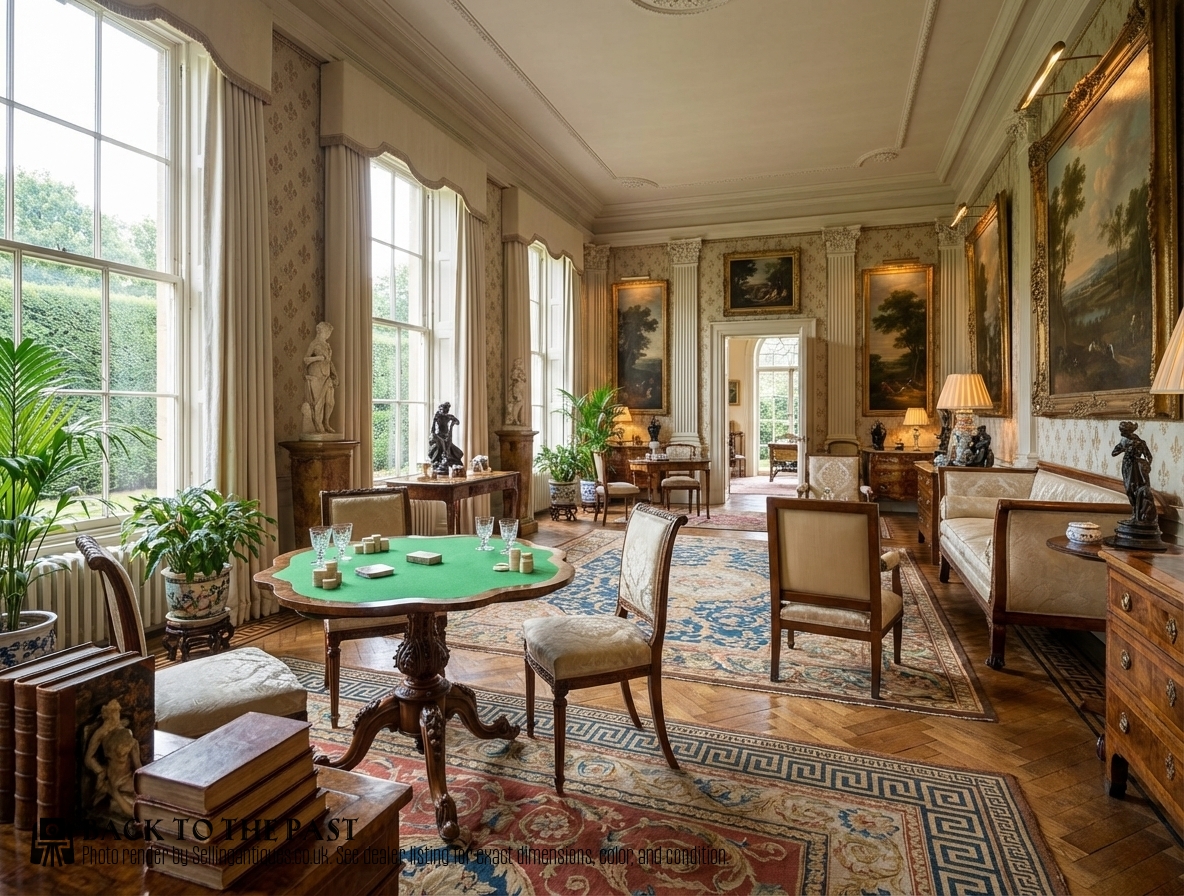
What an antique poker table is
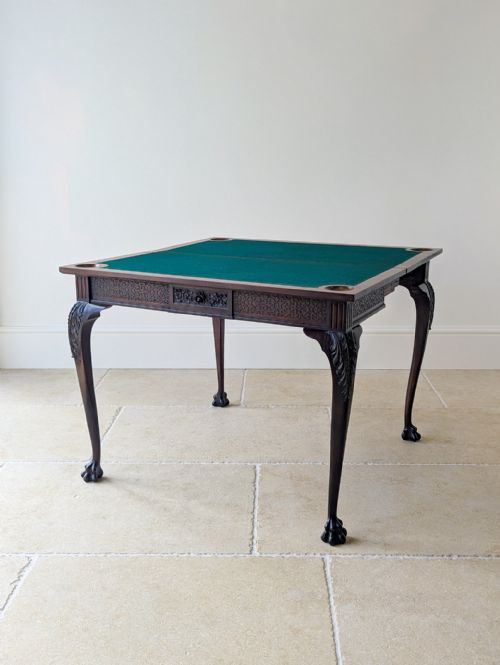
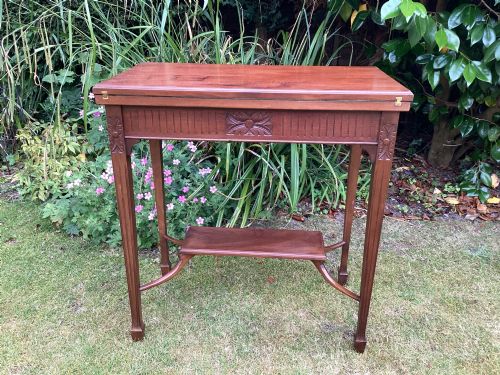
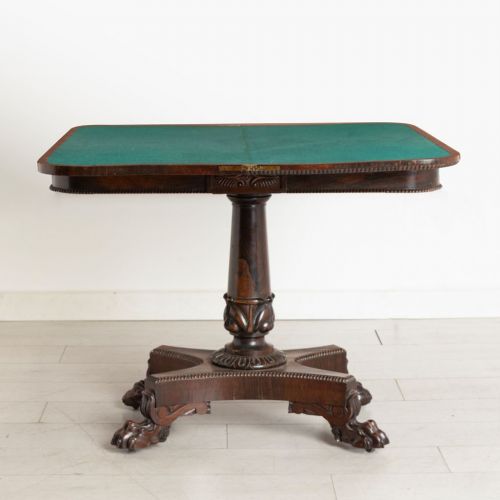
An antique poker table is a specialised surface designed for card games, appearing across periods from the nineteenth century into the twentieth century in forms like games tables and card tables.
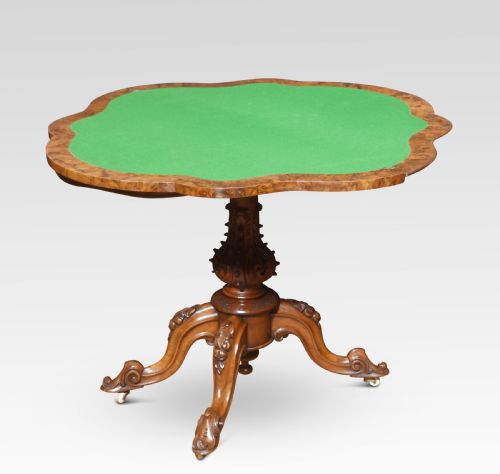
The versions met on this page include Victorian mahogany card tables, burr walnut folding examples, Edwardian brass inlaid envelope card tables, and Arts and Crafts walnut cards tables.
Makers such as James Shoolbred and Co. produced these pieces alongside various unnamed workshops working in styles ranging from Regency and Victorian Chippendale Revival to French Louis XV Revival.
How they were made
Cabinetmakers utilised solid timbers and veneers of mahogany, walnut, burr walnut, rosewood, and oak, often enriching the framework with boxwood stringing and brass inlay.
Table tops were engineered to swivel, fold over, or open into octagonal configurations supported by specialised hinges and pivoting mechanisms.
Interior playing surfaces were lined with wool baize or green cloth, providing a cushioned and tactile ground for cards and chips.
Retail Price Guide 2026
Typical UK retail prices for poker table, calculated from the Sellingantiques database of over a million retail prices indexed since 2003. This retail price guide relies exclusively on Sellingantiques data; no external sources or auction records are used, so the figures do not describe the wider market.
Listings feature 19th Century, Victorian, Edwardian, and 1900 periods using mahogany, walnut, burr walnut, rosewood, and oak.
What varies in quality
Quality rests upon the selection of timber figures, where rich burr walnut and figured rosewood elevate the visual weight of the piece above plain secondary woods.
The precision of the cabinet work shows in the tightness of swivel joints, the crispness of brass inlay, and the seamless alignment of fold-over leaves.
Maker attribution to firms like James Shoolbred and Co. elevates a piece through documented provenance and superior structural refinement.
James Shoolbred and Co
The Antique Poker Table Glossary
- Baize
- A coarse woollen fabric used to line the playing surface of card and games tables. It provides a soft, durable texture that prevents cards from sliding.
- Envelope card table
- A square table with four triangular flaps that fold inward to cover the baize top like an envelope. Rotating the top reveals internal storage compartments.
- Burr walnut
- Timber taken from the warted growths on walnut trees, yielding highly figured patterns with swirling grain. Cabinetmakers prized it for decorative veneering.
- Swivel top
- A table top designed to pivot horizontally on its base, allowing the upper leaf to turn and open out to reveal a larger playing surface or concealed well.
Frequently Asked Questions
What is an antique poker table?
An antique poker table is a dedicated piece of furniture built to facilitate card games through clever folding leaves or rotating tops.
These tables frequently incorporate storage wells for counters and chips beneath their baize-lined surfaces.
How do envelope card tables work?
Envelope card tables feature four triangular leaves that fold over one another to seal the playing area.
Opening the table involves lifting and rotating the top so the flaps unfold automatically into position.
What woods were used for these tables?
Cabinetmakers constructed these tables using dense hardwoods including mahogany, walnut, burr walnut, and rosewood.
Details were often added using lighter contrasting timbers such as boxwood alongside brass inlay.
How do you date an antique card table?
Dating relies on identifying the prevailing style, construction methods, and timber choices recorded across different decades.
Victorian, Edwardian, and Regency examples each display characteristic leg forms, edge mouldings, and hardware designs.