





Shaped Top Games Table
A shaped top games table combines social history with exceptional cabinet-making, offering a folding surface designed for card playing and polite entertainment.
Shaped Top Games Table
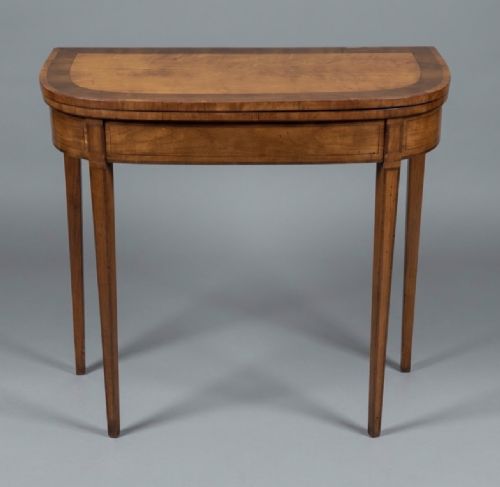
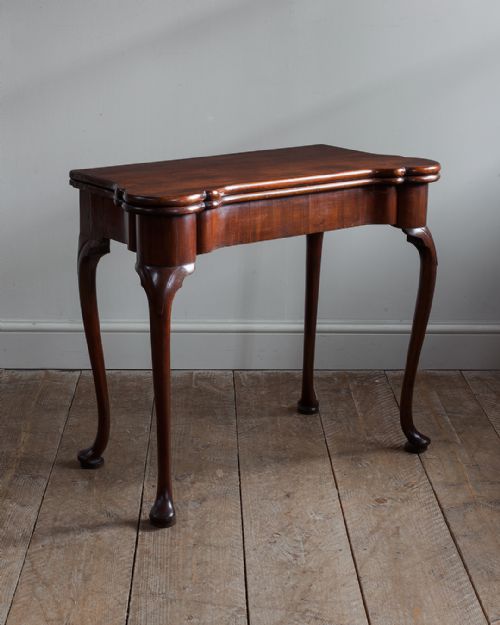
When buyers search for a shaped top games table, they encounter versatile furniture pieces designed primarily for evening entertainment across the eighteenth and nineteenth centuries. The listings show forms spanning the Georgian, Regency, and Victorian periods, often taking card tables, tea tables, and worktables as their base.
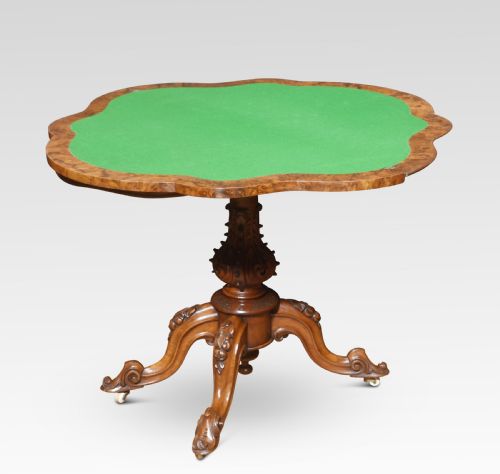
The most common formats on this page feature mahogany or walnut timbers shaped into 'D' outlines, demi-lune silhouettes, or serpentine curves. These pieces frequently employ a fold-over mechanism that doubles the surface area when opened for play.
Materials and construction
Cabinet-makers relied heavily on dense tropical hardwoods like mahogany and rosewood, alongside figured veneers including burr walnut and satinwood. These timbers were selected for their stability and grain pattern.
Surfaces intended for card games were traditionally lined with baize, while the structural frames utilised precise joinery to support the pivoting or folding top mechanisms.
Shaped Top Games Table Retail Price Guide 2026
Typical asking prices for shaped top games table among the pieces listed under this phrase on Sellingantiques today, from the lower quarter to the upper quarter. They describe what is for sale here now, not the wider market.
Trumpet-shaped worktables hide domestic sewing gear inside a flared wooden receptacle that resembles a musical instrument.
Assessing quality and execution
Quality in these pieces is dictated by the crispness of the timber moulding, the selection of figured veneer, and the fidelity of the period style. Superior examples display seamless alignment when the fold-over top is closed.
The refinement of the supporting legs, whether tapering straight supports or carved pedestal bases, distinguishes standard utilitarian items from higher workshop productions.
William Trotter of Edinburgh
The Shaped Top Games Table Glossary
- Baize
- A coarse woollen material used to line the playing surface of card tables. It provides a tactile texture that prevents cards from sliding.
- Demi-lune
- Having a half-moon shape with a curved front and a straight back edge. This silhouette sits flush against a wall when closed.
- Serpentine
- A shaped outline curving outward and inward in a continuous wave. This form demands skilled cabinet-making to execute successfully.
- Fold over
- A hinged top design that opens to reveal a finished surface double the size of the closed table. It allows dual utility as a side console and a game surface.
Shaped Top Games Table: Frequently Asked Questions
What is a shaped top games table?
A shaped top games table is a piece of antique furniture featuring a hinged top and a curved silhouette, designed to save space while serving multiple household functions.
These tables typically fold closed to function as side or console tables against a wall, opening up when required for social card games.
How were these tables used originally?
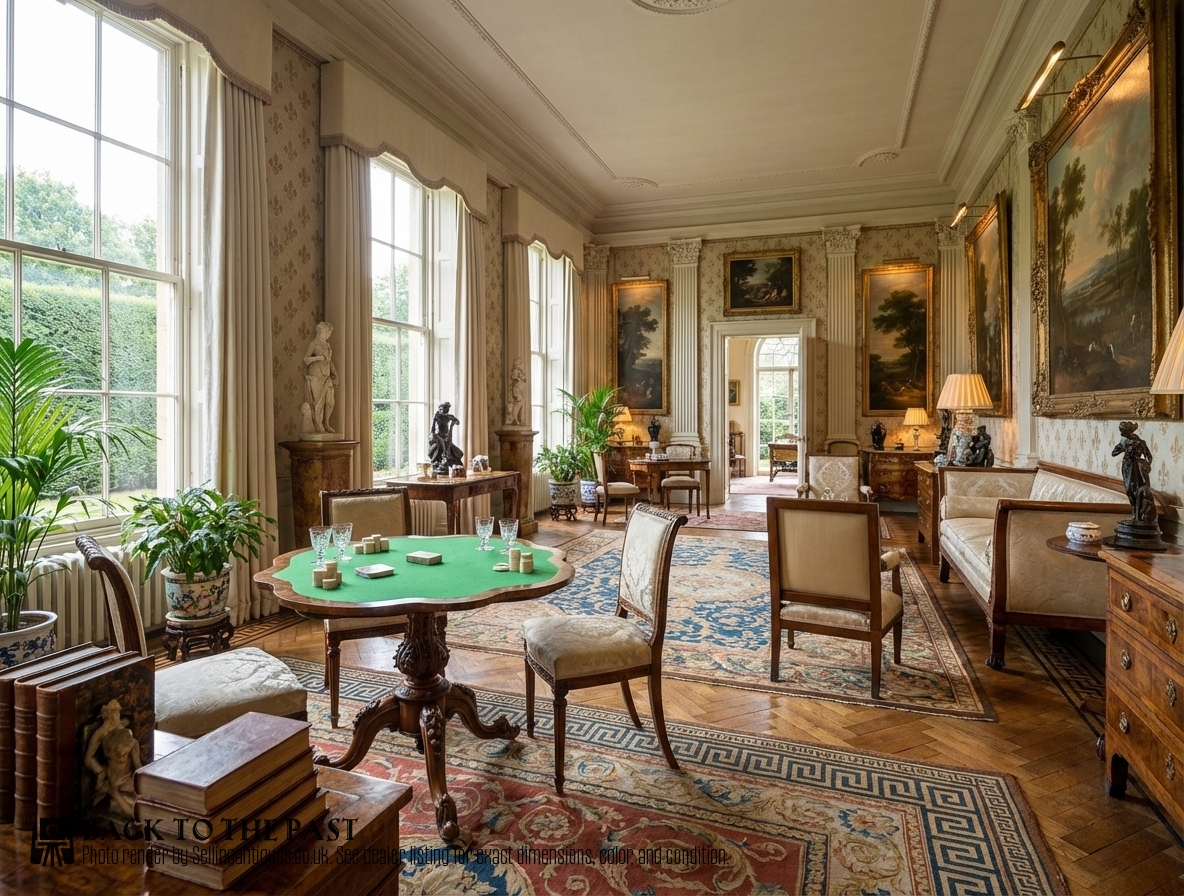
In period homes, these tables hosted evening card games, social gatherings, and polite conversation. The baize lining dampened the sound of dice and protected the wooden counters.
When not in use for gaming, the closed tables held decorative items, tea services, or writing materials in the drawing room.
How do I identify the period?
Dating relies on observing timber choices, leg profiles, and structural proportions. Georgian pieces often show straight mahogany legs, while Regency examples lean towards 'D' shapes and rosewood.
Victorian iterations frequently incorporate burr walnut veneers, serpentine shaping, and centralized pedestal bases with carved supports.
How do I care for the baize?
The baize lining requires gentle maintenance to preserve its texture and colour. Regular light vacuuming removes dust without pulling the woollen fibres.
Keep these tables away from direct sunlight and excessive moisture to protect both the delicate textile lining and the underlying timber veneers.