

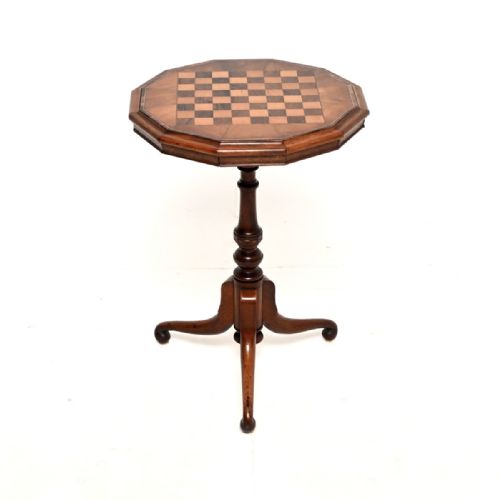
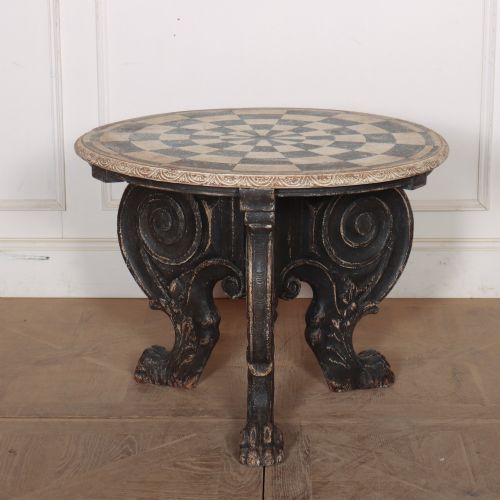


Pedestal Chess Table
A pedestal chess table brings serious play and rich timber into a room, offering a dedicated board surface raised on a sturdy central column.
Pedestal Chess Table
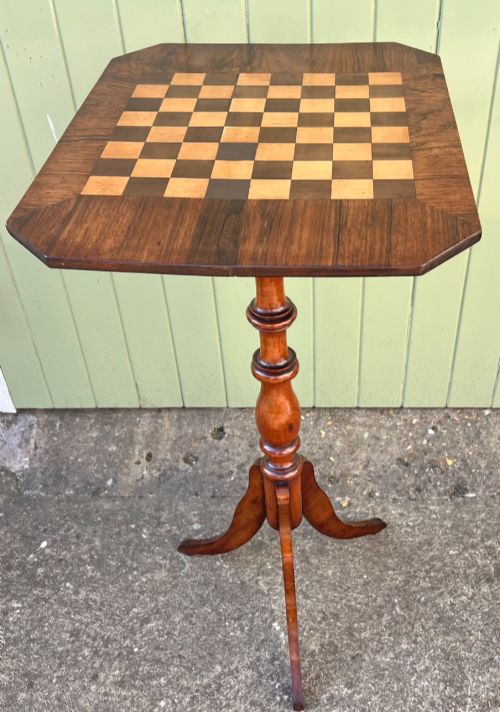
A pedestal chess table serves as both a functional playing surface and a refined piece of furniture, appearing frequently across the Regency and Victorian eras. These tables stand on a central column, often supported by a tripod base or a platform, which leaves ample legroom for players seated around the board.
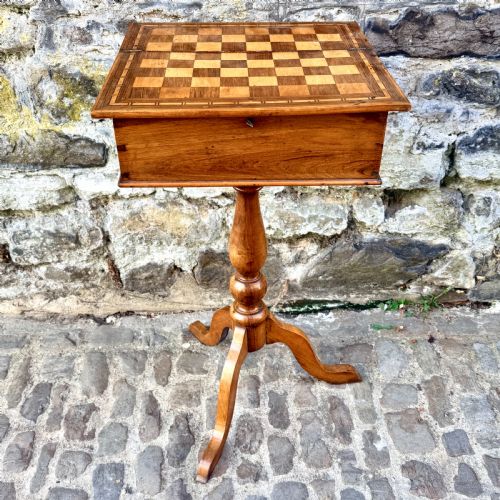
The pieces listed on this page span several decades of the nineteenth century, including Georgian, William IV, and French Provincial examples. Alongside dedicated chess boards, many of these tables double as games, sewing, or occasional tables, integrating storage compartments or reversible tops.
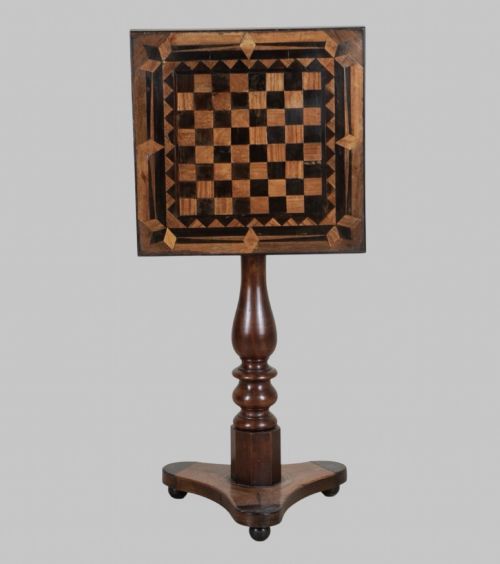
Materials vary widely across the inventory, ranging from dark rosewood and burr walnut to lighter birch and mahogany. Buyers frequently encounter inlaid chequer-boards utilising boxwood and satinwood to create the contrasting squares essential for play.
What varies in quality
Quality rests primarily on the crispness of the timber inlay and the selection of figured veneers, such as burr walnut or grained rosewood. Tables featuring intricate parquetry or specialised specimen woods sit comfortably above simpler, plain-timber versions.
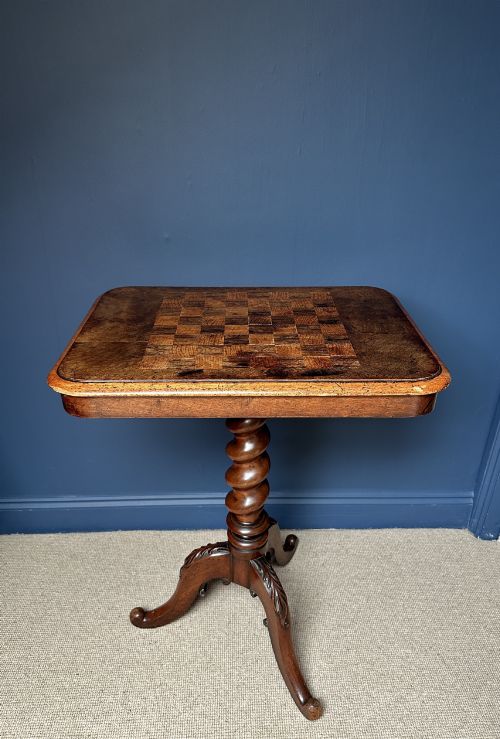
The structural integrity of the central column and its base dictates the daily durability of the piece. Superior examples exhibit harmonious proportions between the pedestal, the platform, and the top, alongside well-executed turning and carving.
Pedestal Chess Table Retail Price Guide 2026
Typical asking prices for pedestal chess table among the pieces listed under this phrase on Sellingantiques today, from the lower quarter to the upper quarter. They describe what is for sale here now, not the wider market.
The listings show nineteenth-century pieces spanning the Regency, William IV, and Victorian periods in walnut, rosewood, and mahogany.
George Merrifield
The Pedestal Chess Table Glossary
- Pedestal
- A structural support consisting of a central vertical column rising from a base, used here to elevate the tabletop.
- Chequer-board
- The alternating light and dark square grid inlaid onto the surface specifically for playing chess or draughts.
- Parquetry
- A geometric mosaic of wood pieces used for decorative surfaces on floors and tabletops.
- Penwork
- A decorative technique using ink to draw fine, intricate designs directly onto a wood surface, seen on specific Regency pieces.
- Tripod base
- A three-legged support system radiating from the bottom of the central column to ensure stability.
Pedestal Chess Table: Frequently Asked Questions
What is a pedestal chess table?
A pedestal chess table is a freestanding item of nineteenth-century furniture featuring a central column and a dedicated board surface for playing chess. Many examples also incorporate sewing compartments or act as versatile occasional tables.
These pieces were designed to sit within a parlour or drawing room, combining leisure utility with decorative cabinetmaking.
How do I tell Regency from Victorian tables?
Regency tables often display rosewood, brass mounts, and refined penwork decoration, reflecting classical influences from the early nineteenth century. Victorian pieces tend to utilise burr walnut and heavier proportions, frequently incorporating sewing bags or multi-functional compartments.
Looking at the timber selection and base turning usually clarifies the specific period of manufacture.
Were these tables used only for chess?
Many tables listed across these periods served multiple functions within the home, doubling as worktables, sewing tables, or general lamp tables. Reversible or removable tops often concealed storage wells for game pieces, sewing threads, or fabrics.
This adaptability made them practical household items rather than single-purpose novelties.
How do I care for antique veneer?
Antique rosewood and walnut veneers require stable room humidity and protection from direct sunlight to prevent drying and fading. Regular dusting with a soft, dry cloth maintains the finish without needing harsh chemical polishes.
Keeping the timber nourished with appropriate wax preserves the depth of the grain.