


Green Marble Centre Table
A green marble centre table brings solid stone and classical form into a room, offering a striking surface built for display.
Green Marble Centre Table
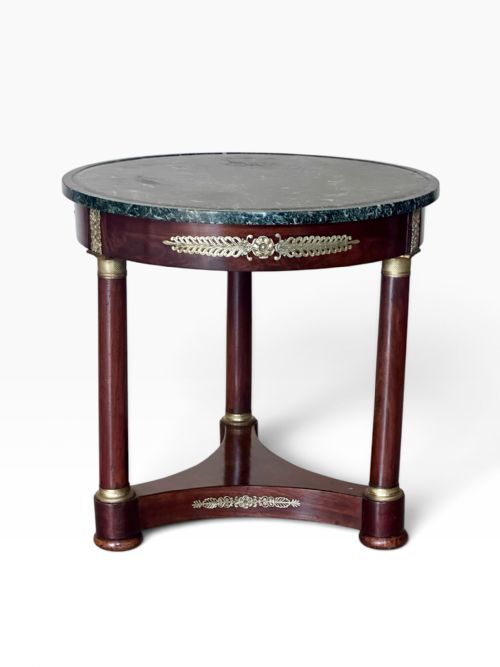
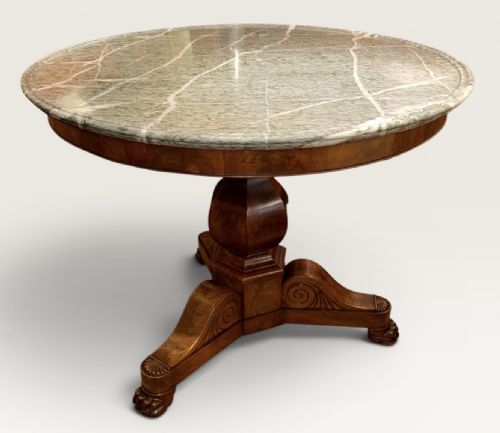
A green marble centre table is a freestanding piece designed to sit in the middle of a room or serve as an anchor for a seating area. These tables take various forms across the inventory, ranging from classic French gueridons and side tables to occasional and coffee tables spanning the eighteenth century through to the mid-twentieth century.
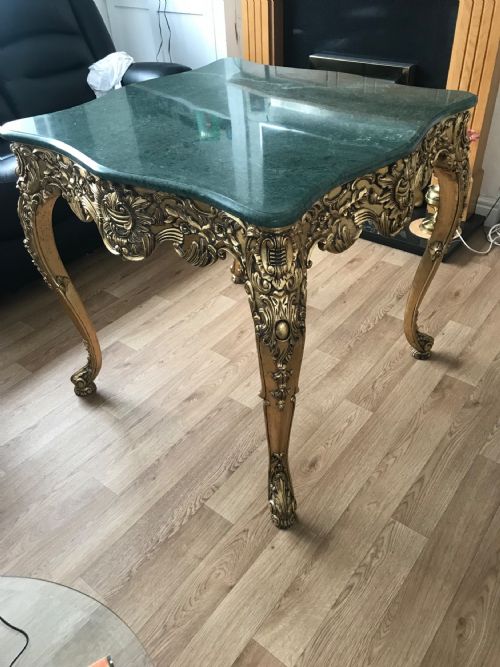
The most common version encountered here is the French style, often drawing on Empire, Neoclassical, or Rococo revival aesthetics. Such pieces typically feature a polished green marble slab set atop a richly detailed base of mahogany, giltwood, brass, or painted wood.
Origins stretch across European workshops, with French and Italian influences predominating. Alongside formal nineteenth-century examples, the selection includes twentieth-century interpretations that maintain the traditional emphasis on heavy stone tops and decorative frames.
How they were made
Makers constructed the primary frames of these tables using dense timbers such as mahogany and burr walnut, alongside carved giltwood and painted wood. Bronze and ormolu ornaments, brass mounts, and patinated bronze details frequently embellished the structure beneath the stone.
The defining feature is the heavy marble top, cut and polished to a smooth finish. This slab rests upon the wooden or gilded base, secured by its substantial weight or internal framing, often paired with cast bronze or ormolu mounts that accent the apron and legs.
Green Marble Centre Table Retail Price Guide 2026
Typical asking prices for green marble centre table among the pieces listed under this phrase on Sellingantiques today, from the lower quarter to the upper quarter. They describe what is for sale here now, not the wider market.
Some tables require several pairs of hands just to lift the green stone top before the base can even be moved across the room.
What varies in quality
The quality of a green marble centre table depends largely on the depth of hand-carving in the wooden or giltwood base and the precision of the cast bronze or ormolu mounts. Finer examples display crisp detail in the foliage, claw feet, or neoclassical motifs rather than soft or repetitive casting.
Selection of the stone itself also separates tiers of work. A deeply figured, well-polished solid green marble top with clean bevelling and secure seating within the frame demonstrates superior craftsmanship compared to simpler assemblies.
The Green Marble Centre Table Glossary
- Gueridon
- A small French table, often round and supported by a single central pillar or slender legs. These forms frequently serve as centre tables in period interiors.
- Ormolu
- Gilded bronze used extensively for decorative mounts and ornaments on French furniture. The technique involves applying a mercury and gold amalgam to bronze.
- Giltwood
- Timber that has been coated with fine gold leaf or powder. This finish appears frequently on frames influenced by French neoclassical and baroque styles.
- Side table
- A piece of furniture designed to stand against a wall or function within a room layout. They share similar proportions to centre tables but often feature finished backs suited for perimeter placement.
Green Marble Centre Table: Frequently Asked Questions
Where should I place a green marble centre table?
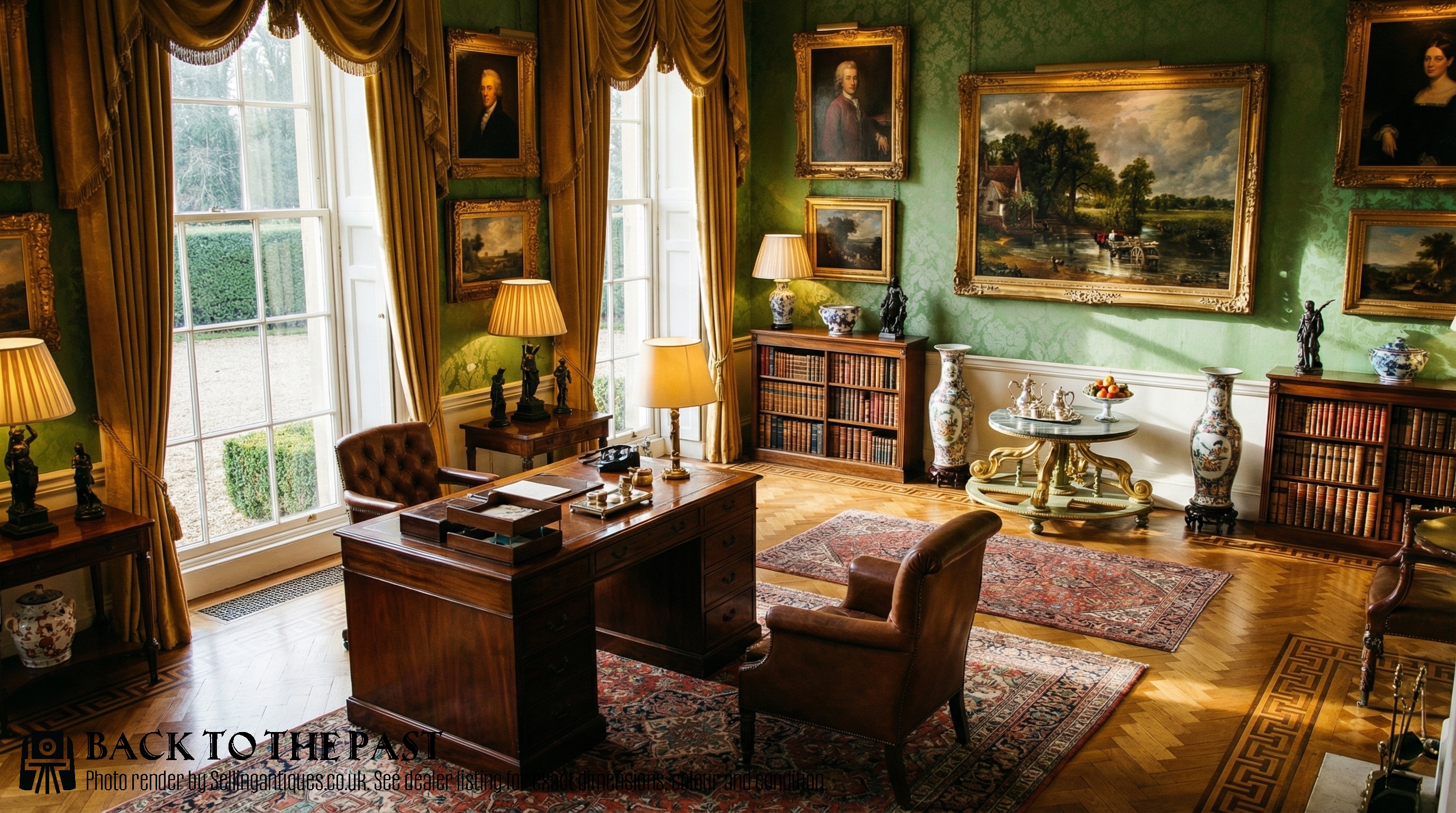
These pieces suit positions where they can be viewed from all sides, such as the middle of a principal reception room or a spacious hallway. They also function effectively as substantial coffee tables in a larger drawing room.
Ensure the floor is level and capable of supporting the considerable weight of the stone top. Positioning the table away from direct, harsh sunlight helps protect vulnerable giltwood or painted finishes.
How do I care for the marble top?
Clean the polished stone surface regularly with a soft, damp cloth and a mild, neutral soap. Avoid acidic liquids like vinegar or citrus juice, which can etch the marble.
Using coasters and placemats protects the polished finish from rings and scratches. Professional sealing can also help guard against staining from accidental spills.
How can I tell the period of the table?
Dating relies on examining the construction methods, tool marks on the timber, and the style of the mounts. Earlier nineteenth-century pieces often display hand-cut joinery and heavy mahogany or giltwood frames.
Twentieth-century examples may incorporate different internal bracing while mimicking earlier French Empire or Rococo revival designs. Comparing the patination of the wood with the wear on the bronze ornaments offers further clues.
Are these tables sturdy enough for daily use?
The substantial weight of the green marble top anchors the piece firmly in place. Most frames are built from dense hardwoods designed to bear heavy loads.
While robust, pieces with delicate giltwood or intricate ormolu mounts benefit from gentle treatment. Avoid dragging the table across the floor to prevent stressing the legs and joints.