


French Empire Occasional Table
A french empire occasional table brings classical proportion and striking veined marble into a room.
French Empire Occasional Table
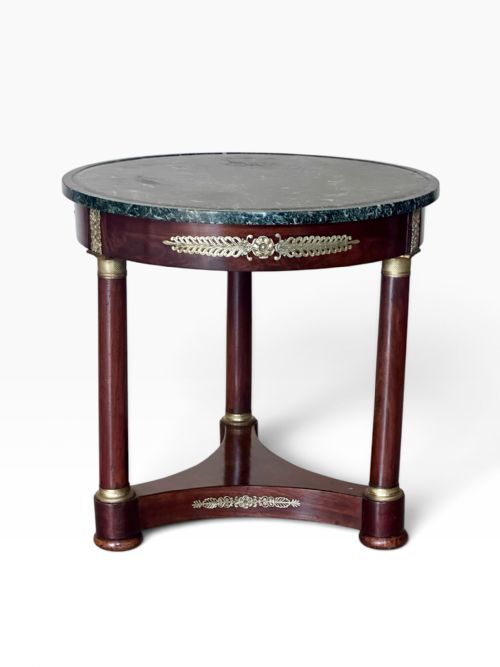
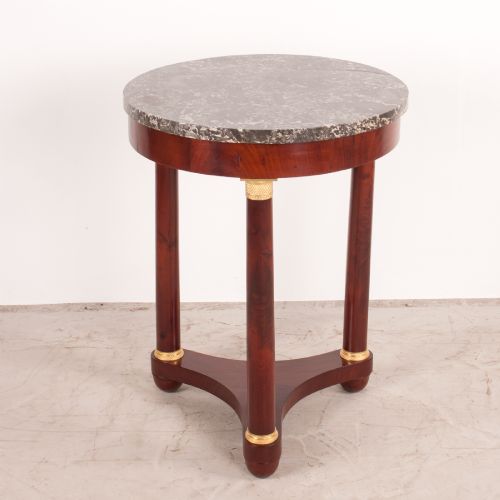
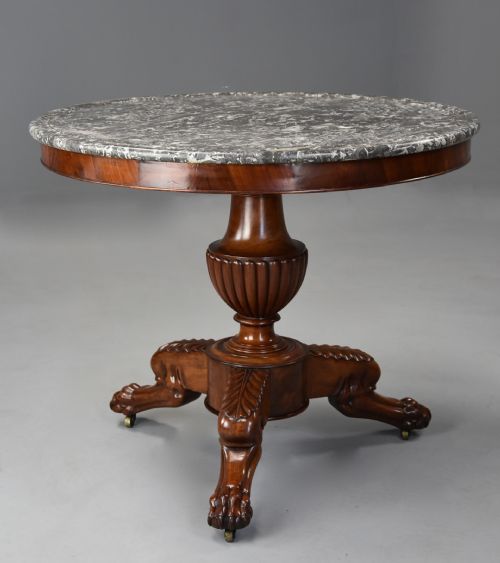
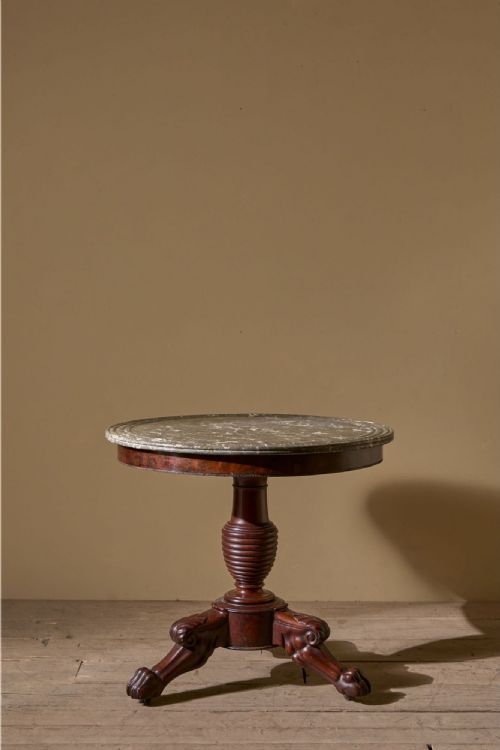
A french empire occasional table is typically encountered as a circular guéridon or centre table resting on a central column or tripod base. These forms draw directly from classical antiquity, often featuring proportions suited to display or bedside use.
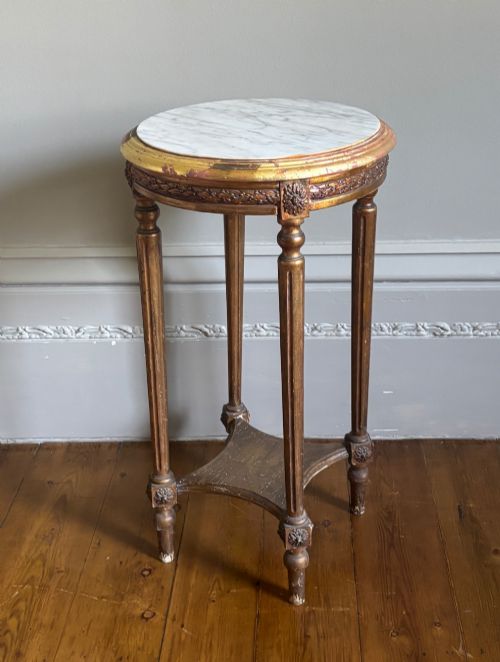
The selections span the nineteenth century and later revivals, crossing from early nineteenth-century mahogany pieces to later Napoleon III and Edwardian adaptations. Side tables, coffee tables, and two-tier variants appear alongside traditional occasional pieces.
How they were made
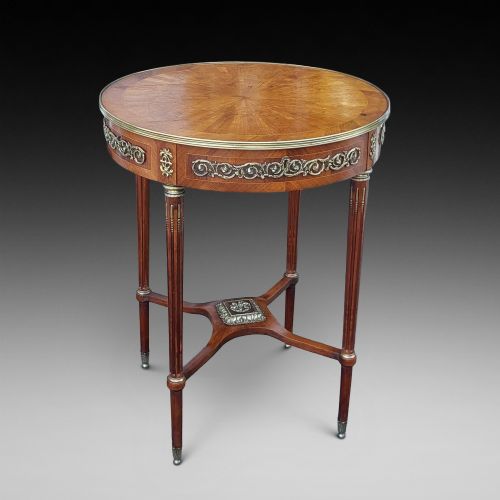
Cabinetmakers utilised dense timbers like mahogany, walnut, kingwood, and rosewood, frequently building circular tops designed to receive inset slabs of grey or black marble. Structural frames often incorporate ebonised wood or burr elm veneers.
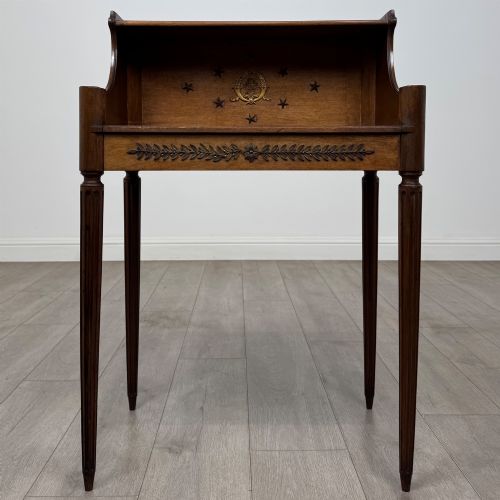
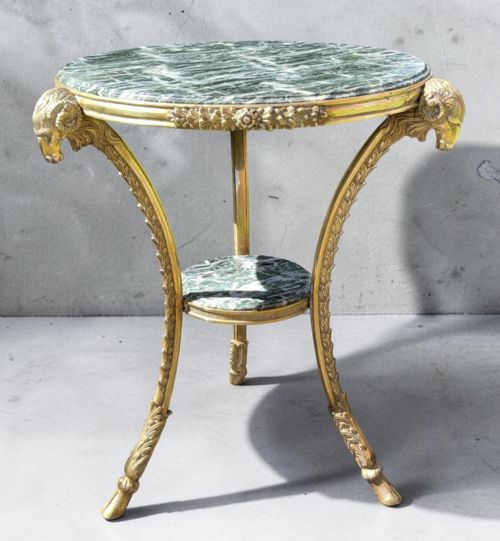
Metal ornamentation defines the decorative vocabulary, using cast brass, ormolu, and gilt bronze mounts. Details such as rams heads, swans, and strung brass lines complete the classical aesthetic.
Listings feature woods such as mahogany, walnut, kingwood, rosewood, and coromandel.
What varies in quality
The distinction between tiers of quality rests upon the crispness of the cast metal mounts and the choice of timber figure. Heavier ormolu detailing and deeply figured burr veneers separate standard production from superior examples.
Construction methods and the integration of original stone tops dictate the integrity of each piece. Superior tables maintain a balanced weight distribution across the base, while lesser examples rely on simpler turned columns without metallic enrichment.
The French Empire Occasional Table Glossary
- Guéridon
- A small circular table on a central pillar or column. This form originated in seventeenth-century France and remains the primary shape for these tables.
- Ormolu
- Gilded bronze applied as mounts and decorative highlights. The technique involves fusing gold to a copper and zinc alloy.
- Restauration
- A French design period bridging the early nineteenth century. Pieces from this era often feature restrained classical lines prior to later revival styles.
- Marquetry
- Inlaid wood patterns forming decorative motifs on table surfaces. Craftsmen assemble contrasting veneers to create geometric or pictorial designs.
French Empire Occasional Table: Frequently Asked Questions
What is a guéridon table?
A guéridon is a specific type of small circular table supported by a central column and a tripartite base. These pieces function as occasional tables, centre tables, or lamp stands.
Originating in France, they frequently incorporate marble tops and brass mounts that reflect classical architectural motifs.
How do I style an empire table?
These tables suit placement beside seating or as freestanding centre pieces in a room. Their circular marble tops provide a durable surface for lamps, books, or decorative objects.
Pairing the dark mahogany or walnut timber with traditional or contemporary interiors highlights the architectural lines of the base.
Are these tables solid mahogany?
Most examples utilise timber veneers applied over a stable secondary wood core. This technique prevents warping across large circular table tops while displaying decorative grain patterns.
Solid mahogany typically appears on structural elements such as columns, legs, and edge mouldings.
How do I identify the period?
Dating relies upon timber selection, construction methods, and the style of the metal mounts. Early nineteenth-century pieces display refined classical proportions and fine brass stringing.
Later revival pieces from the late nineteenth and early twentieth centuries often feature heavier castings and broader stylistic influences.