


French Empire Marble Table
When you trace the clean lines of a french empire marble table, you hold a piece of nineteenth-century architectural symmetry.
French Empire Marble Table
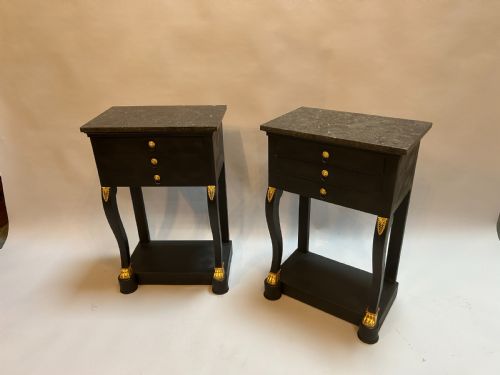
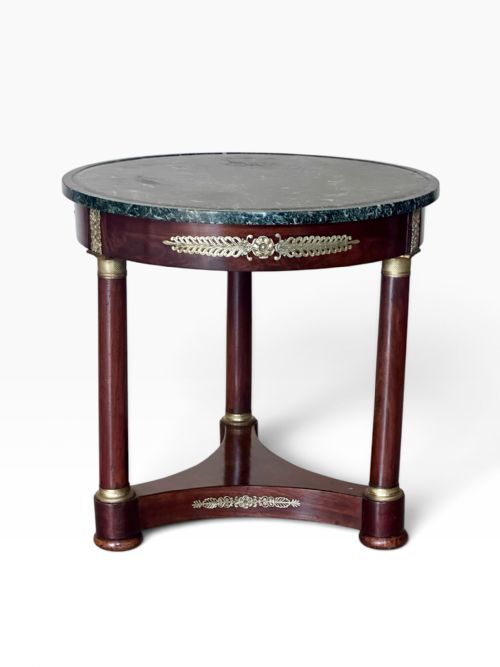
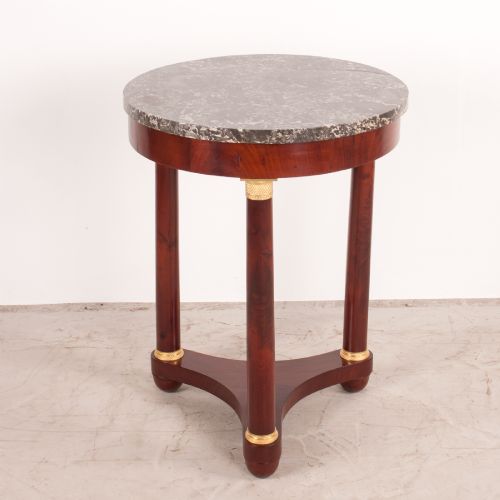
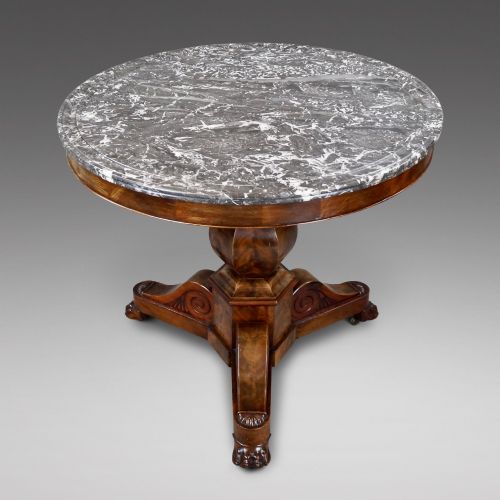
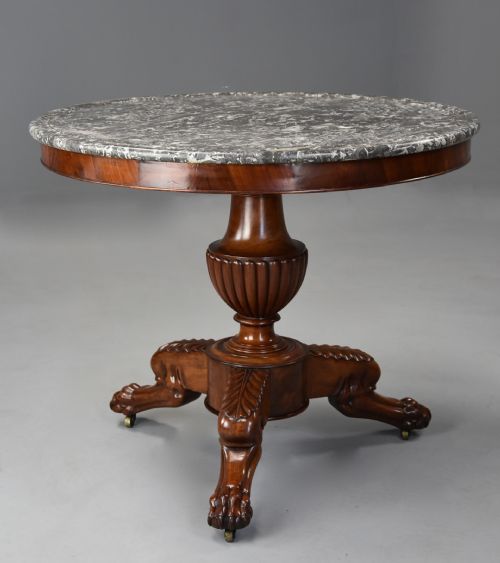
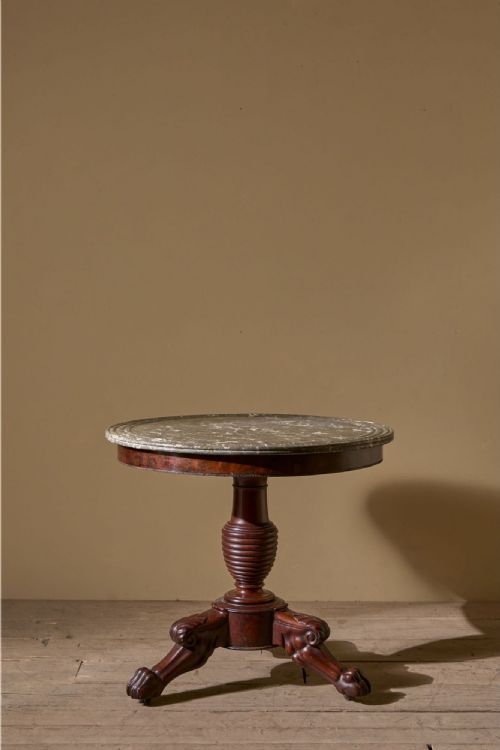
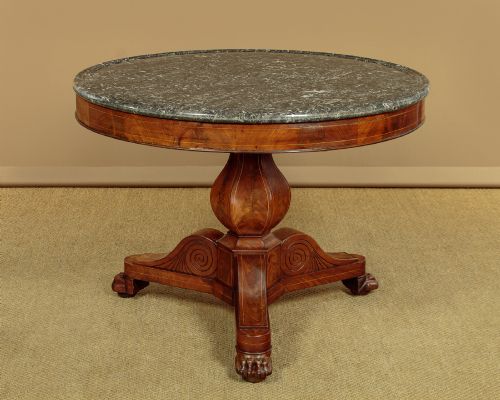
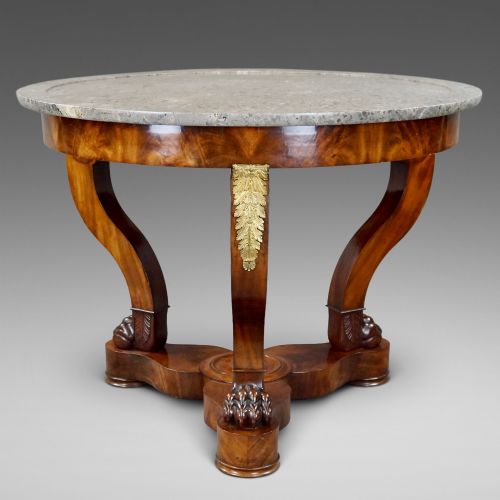
A french empire marble table typically manifests as a circular centre table or gueridon, supported by mahogany timbers and topped with veined stone. These pieces originate primarily from nineteenth-century France, spanning the early decades through the Second Empire and later Victorian revivals.
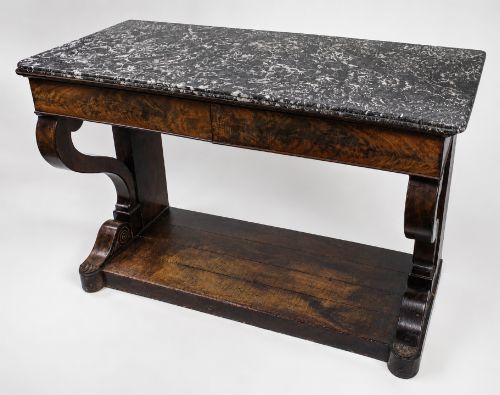
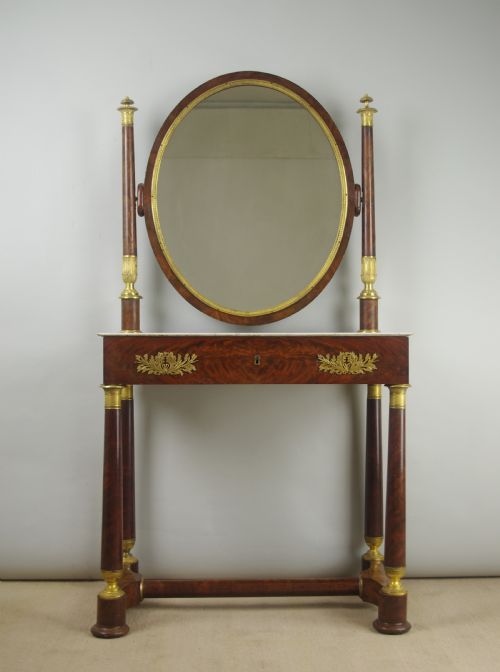
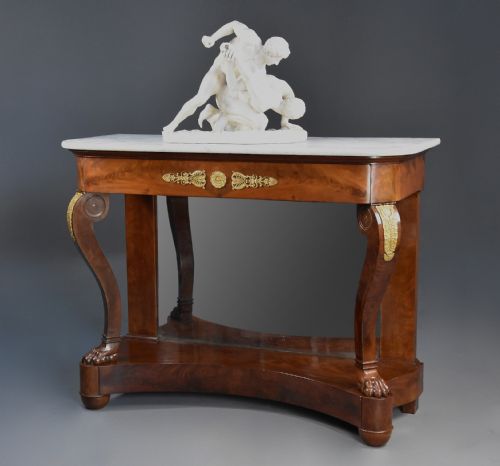
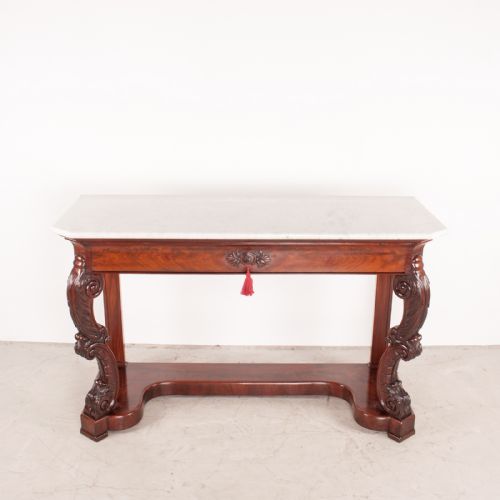
Beyond the central pillar tables, buyers frequently encounter console tables designed for wall placement, alongside occasional, bedside, and dressing variants. The combination of dense dark woods and cold stone surfaces defines the domestic scale of this search phrase.
Evaluating the Pieces
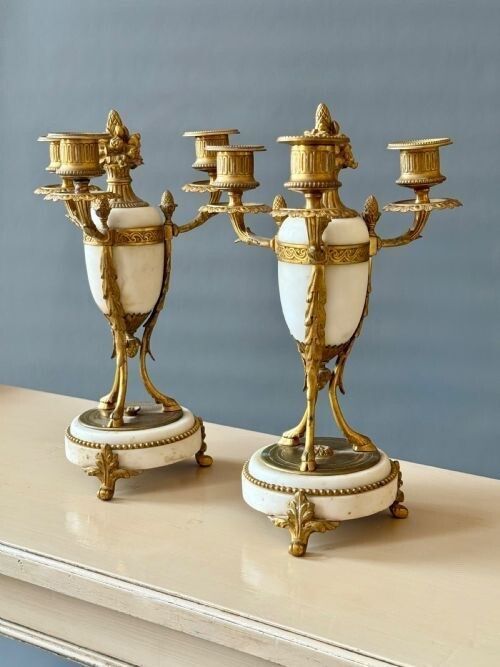
Quality reveals itself in the weight and precision of the cast ormolu mounts, where crisp chisel work distinguishes superior workshops from standard production. The selection of the marble top, particularly those with complex natural veining or specimen layouts, dictates the higher tier of these tables.
Timber selection and timber figure also set examples apart, with rich flame mahogany or burr elm veneers showing deeper chatoyancy. Structural integrity in the central column and the original fit of the stone slab remain central to the overall standard.
Listings feature mahogany, rosewood, burr elm, and satinwood paired with white, red, green, and fossil marble slabs.
Siffel and Cartier·Krieger Paris·Jacob·Japy Freres
The French Empire Marble Table Glossary
- Gueridon
- A small circular table on a central pillar or pedestal. This form dominates the nineteenth-century French seating arrangements on this page.
- Ormolu
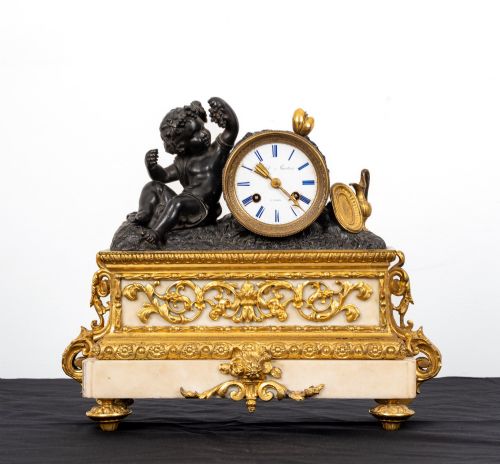
- Gilded bronze applied as decorative mounts to furniture and clocks. The technique involves an amalgam of mercury and gold.
- Console table
- A table designed to stand against a wall, frequently secured with brackets. These often feature mirror backs in neoclassical interiors.
- Neoclassical
- A style reviving classical antiquity, characterised by strict symmetry and restrained ornamentation. It forms the bedrock of the Empire aesthetic.
- Specimen marble
- A top assembled from multiple varieties of coloured marble arranged in geometric patterns. It represents a more ambitious level of stonemasonry.
French Empire Marble Table: Frequently Asked Questions
How are gueridon tables used?
These circular pedestal tables serve primarily as centrepieces in large rooms or as display surfaces for lamps and mantel clocks.
Their proportions allow movement around the perimeter, making them practical for central placement rather than hugging a wall.
Where should a console table go?
Console tables find their natural home against flat walls in hallways, entryways, or living rooms, often positioned beneath a mirror.
Because their backs can be plain or finished for open placement, checking the rear construction guides the placement decision.
How do I care for the marble?
Marble surfaces require prompt wiping of spills to prevent staining, particularly on porous varieties like white or coloured stone.
Using pH-neutral cleaners preserves the polish without stripping the historical surface finish.
How to tell Empire from later revivals?
Early nineteenth-century pieces adhere strictly to austere classical proportions, utilising genuine fire-gilt bronze and dense Santo Domingo mahogany.
Later Victorian and Second Empire interpretations introduce heavier proportions, altered brass alloys, and broader revival styling.