
Grey Marble Table
A grey marble table combines cold stone with warm timber frames, offering a surface built for display and daily use.
What grey marble tables are
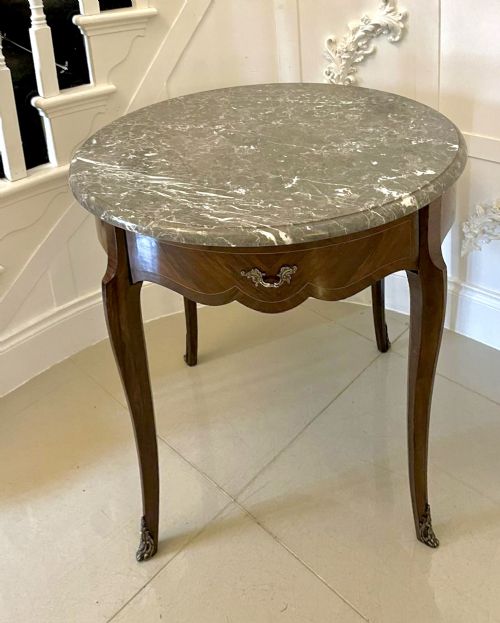
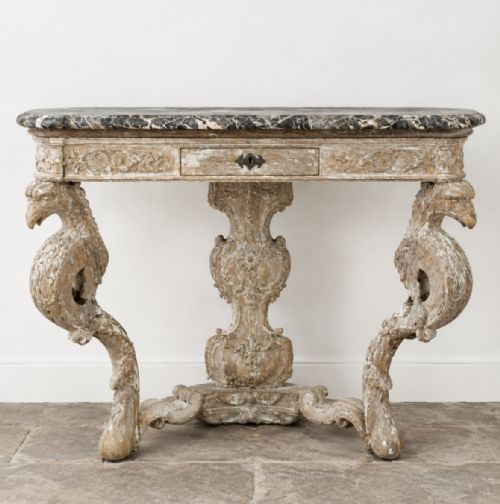
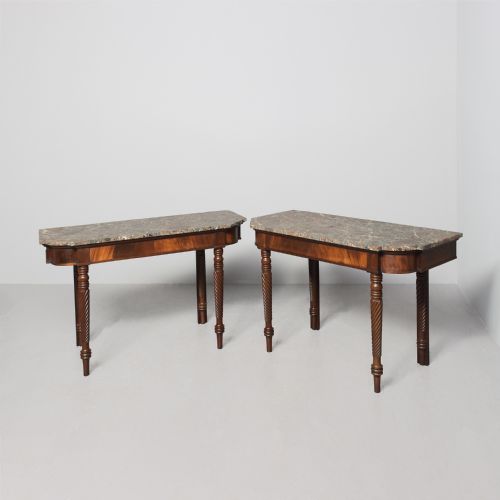
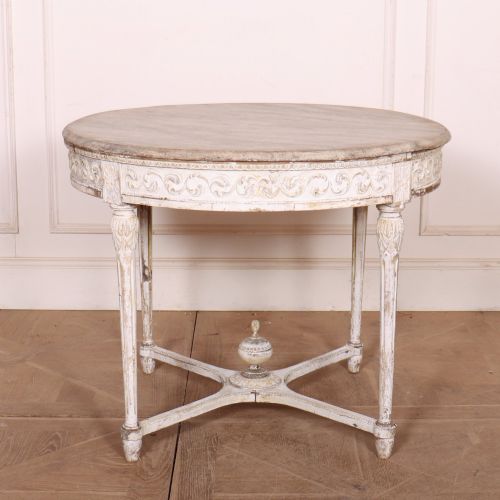
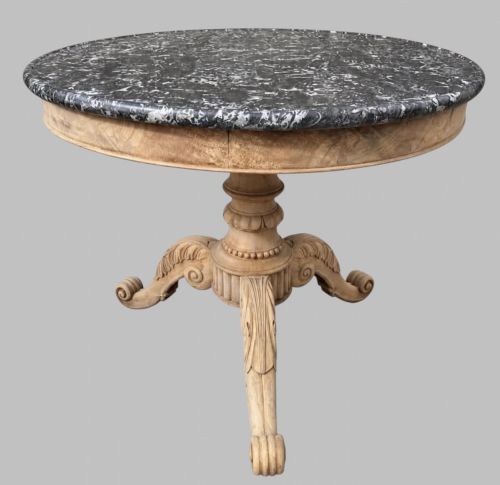
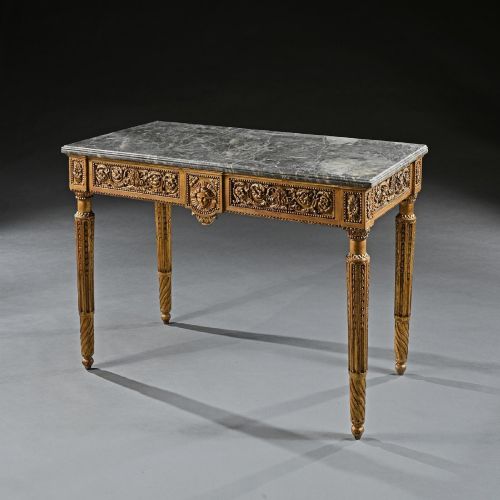
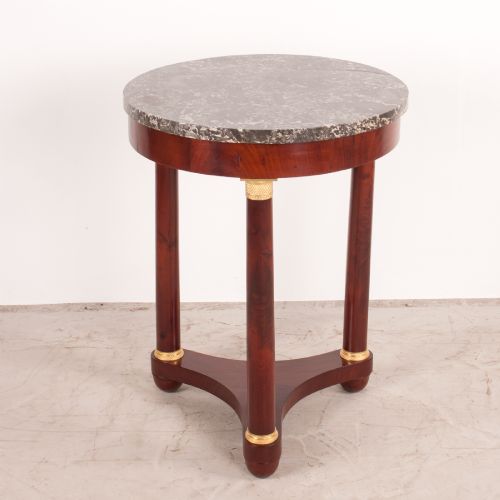
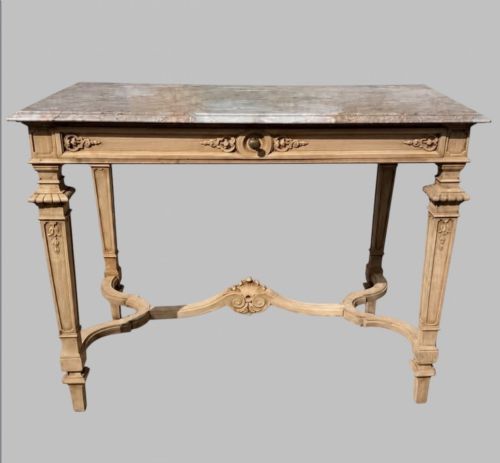
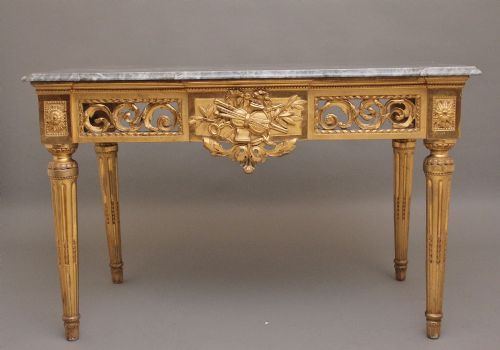
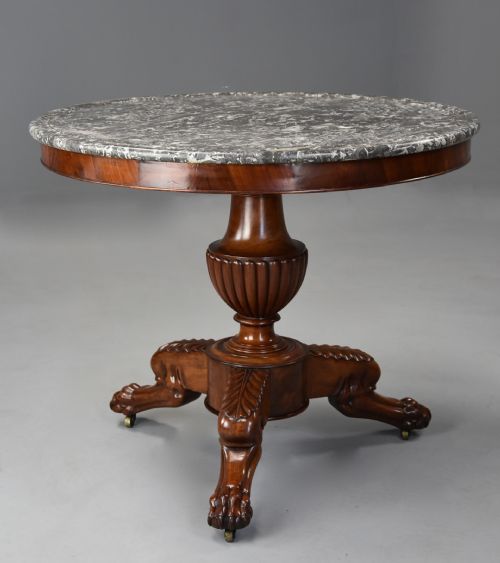
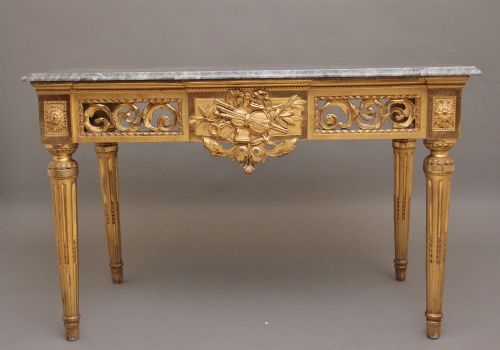
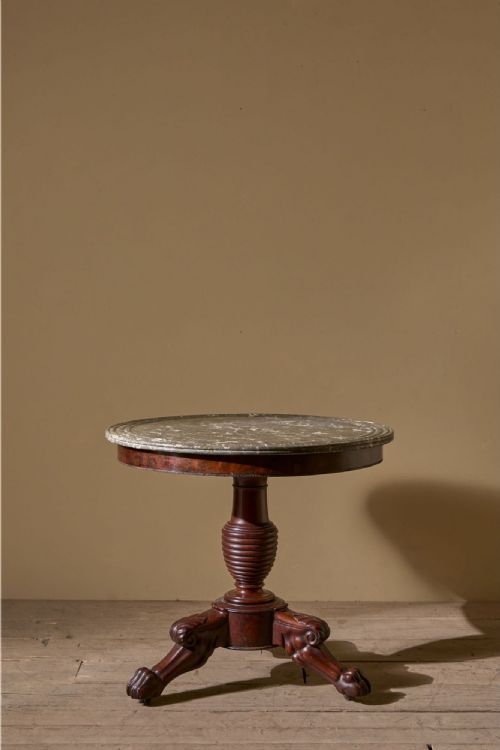
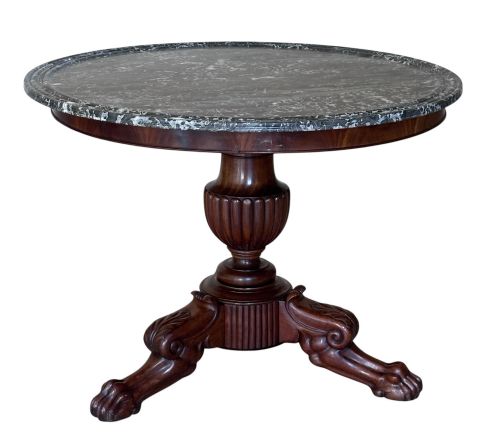
A grey marble table appears most frequently as a French centre table, gueridon or console table dating from the nineteenth century. These forms reflect French Empire, Neoclassical and Restauration styles designed for prominent rooms.
Makers utilised timber frames such as mahogany, flame mahogany, walnut and oak to support heavy stone slabs. Both freestanding centre tables and wall-mounted or freestanding console tables survive from this era.
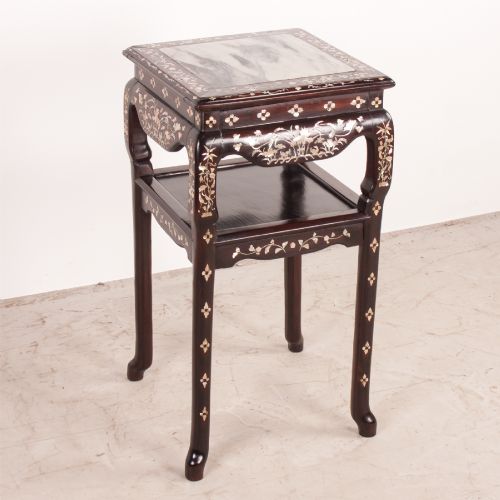
The evidence shows examples ranging from early nineteenth-century workshops to twentieth-century oak pieces. Buyers encounter round gueridon tables alongside rectangular console and side tables.
How they were made
Cabinetmakers constructed the structural bases from hardwoods like mahogany, walnut, flame mahogany and oak, occasionally incorporating giltwood or ormolu mounts. Tops were cut from solid stone, featuring grey marble, grey vein marble, or pale pink-grey varieties.
Joinery techniques matched the period, securing heavy stone tops directly onto timber aprons or pedestals. Turning, carving and veneering shaped the wooden supports beneath the polished stone surfaces.
Retail Price Guide 2026
Typical UK retail prices for grey marble table, calculated from the Sellingantiques database of over a million retail prices indexed since 2003. This retail price guide relies exclusively on Sellingantiques data; no external sources or auction records are used, so the figures do not describe the wider market.
Listings feature nineteenth-century and early twentieth-century pieces, spanning French Empire, Restauration, Neoclassical and provincial styles.
What varies in quality
Quality rests in the selection of timbers and the depth of the stone figuring. Finely figured flame mahogany or rich walnut paired with clean, decorative marble sections elevate a piece above simpler oak or softwood carcasses.
The execution of carving, the integration of ormolu mounts and the stability of the timber frame define the standard of manufacture. Pieces designated as exhibition quality display superior joinery and more ambitious Neoclassical or French Empire styling.
The Grey Marble Table Glossary
- Gueridon
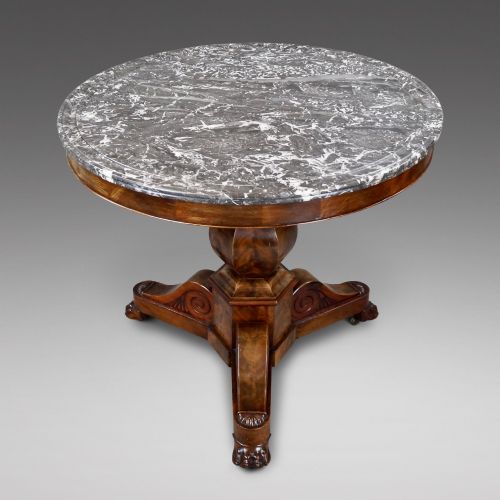
- A small round table, usually supported by a single central pillar or tripod base, originating in France during the seventeenth century. These tables frequently feature inset marble tops.
- Console table
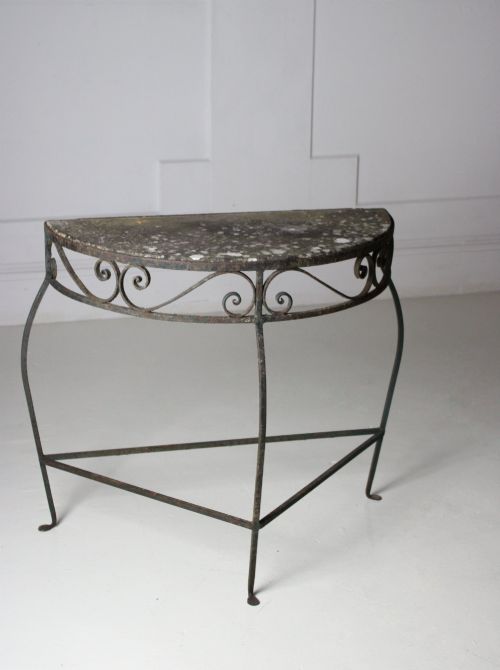
- A table designed to stand against a wall, historically supported by brackets or console legs rather than four independent vertical posts.
- Centre table
- A freestanding table intended to be viewed from all sides, placed in the middle of a room rather than against a wall.
- Flame mahogany
- Mahogany timber cut to reveal a distinctive flickering flame-like grain pattern, highly prized for high-end nineteenth-century furniture facades and tabletops.
- Ormolu
- Gilt bronze ornamentation applied to furniture mounts and decorative objects, popular in French Empire and Neoclassical design.
Frequently Asked Questions
Where were grey marble tables placed?
These tables served primarily in principal reception rooms, hallways and parlours of nineteenth-century homes. Centre tables occupied the middle of the room for display, whilst console tables stood against walls.
Smaller occasional and bedside versions found placement in private chambers and sitting rooms. Their stone surfaces provided practical resistance to liquids and daily wear.
How do I identify French Empire style?
French Empire pieces display classical architectural influences, often incorporating heavy mahogany or walnut timbers. Ormolu mounts and restrained geometric lines define the aesthetic.
Tables from this tradition emphasise structural solidity and classical proportions, frequently pairing dark woods with grey marble.
What is a gueridon table?
A gueridon is a circular freestanding table supported by a central column or pedestal base. This form allows movement around the piece in the centre of a room.
Nineteenth-century makers often fitted these tables with inset marble tops to create durable, decorative surfaces.
Are these tables heavy?
The combination of dense hardwood frames and solid stone tops makes these tables substantial in weight. Moving them requires care to protect both the timber joints and the marble slab.
The stone top typically rests upon the wooden base, sometimes secured with fixings underneath.