

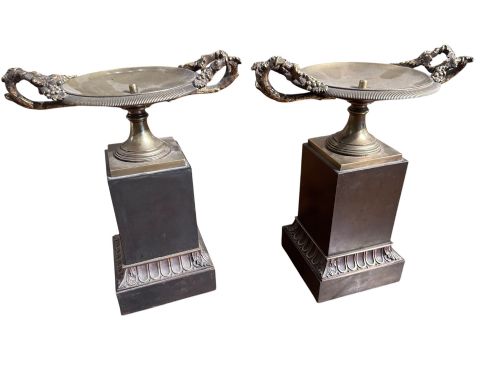


Empire Pedestal Table
An empire pedestal table brings classical proportion and striking circular form to a room, anchoring a space with refined wood and polished stone.
Empire Pedestal Table
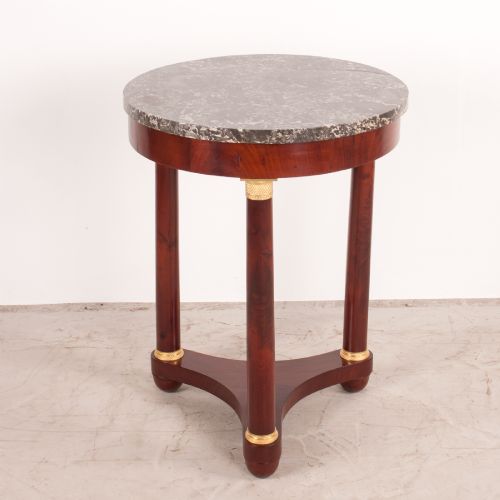
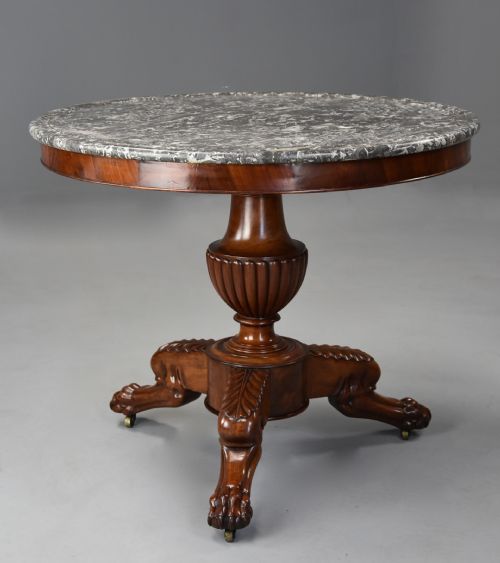
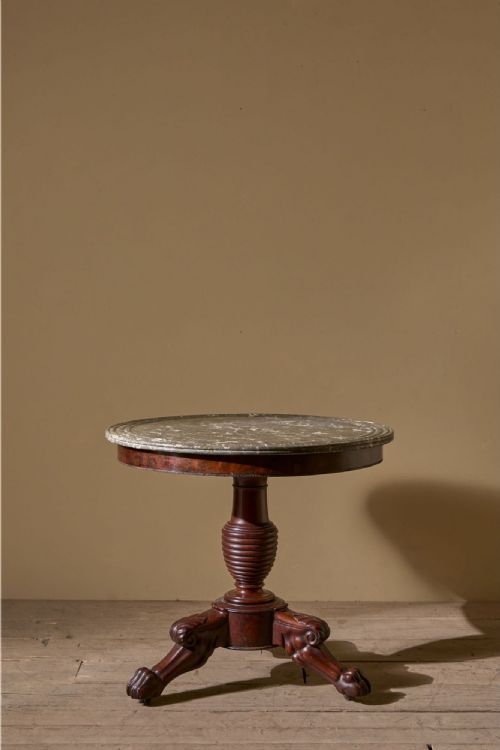
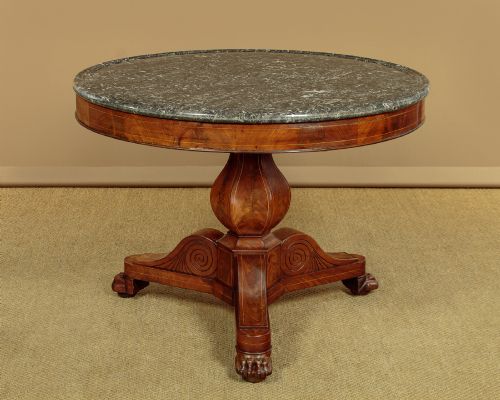
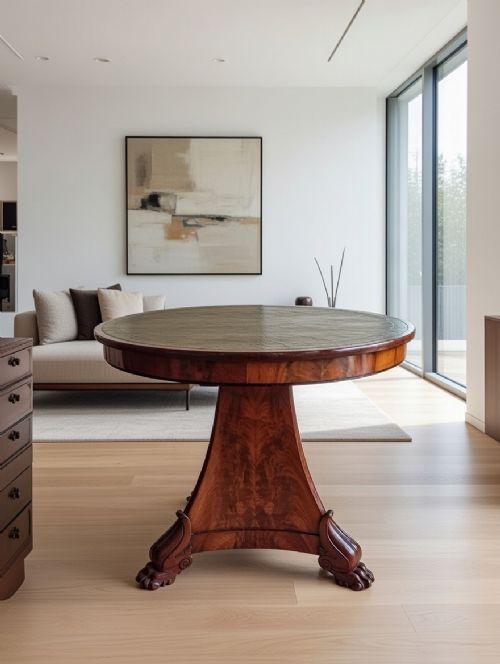
An empire pedestal table typically takes the form of a round gueridon or centre table supported by a central column and a sturdy plinth base. These pieces draw on French Empire, Charles X, and Biedermeier traditions from the nineteenth century, alongside later revival pieces.
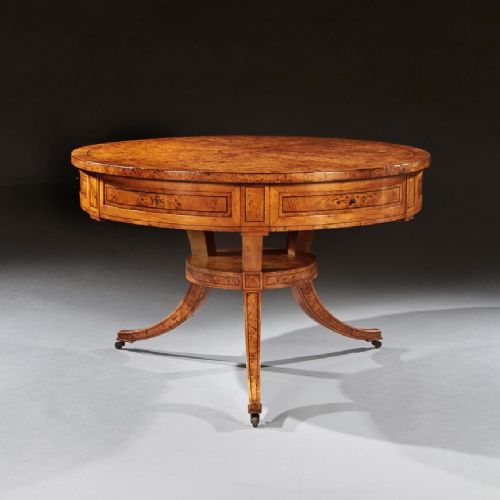
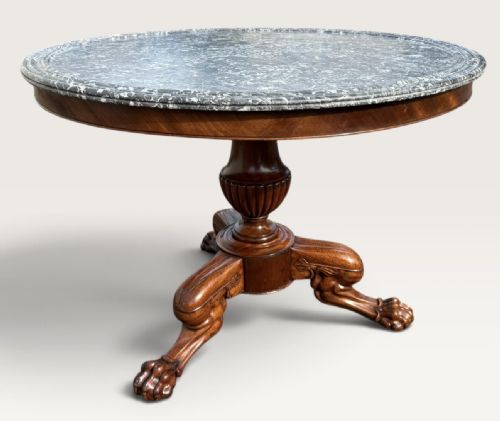
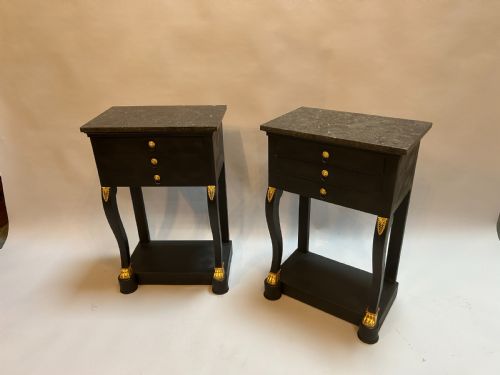
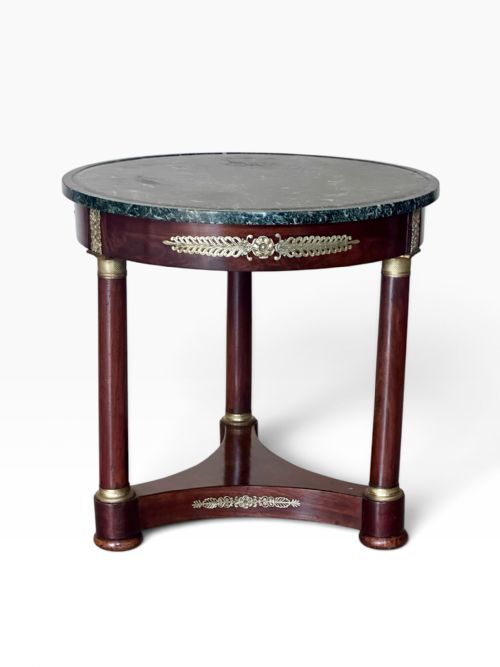
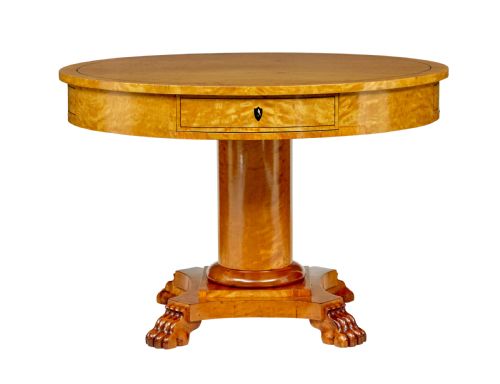
The version most commonly met on this page is the nineteenth-century French mahogany gueridon, often finished with an inset marble top and standing on a tripartite or circular pedestal base. Alongside these stand Scandinavian birch and burr root maple examples, together with desks and bedside cabinets reflecting the same neoclassical vocabulary.
Materials and Construction
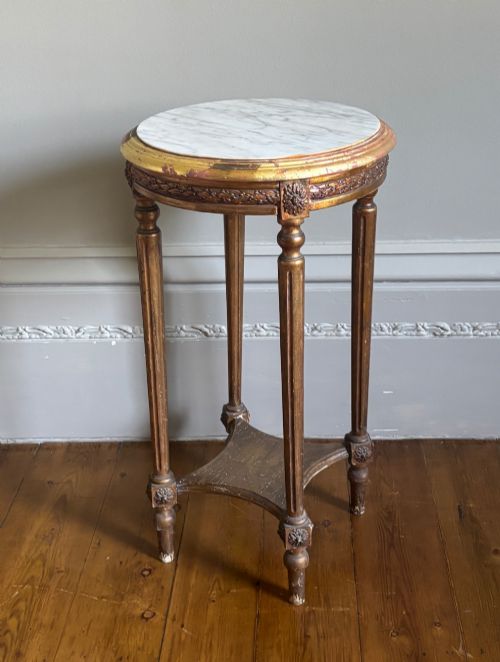
Cabinetmakers constructed these tables using dense timbers such as mahogany, birch, and burr elm, frequently applied as flame veneers over stable secondary woods. Tops were routinely fitted with heavy grey or veined marble slabs, providing a cool, smooth surface that contrasted with the warm grain of the wood.
Cast bronze and ormolu mounts punctuate the timber structures, secured with pins to accentuate the classical architectural lines. Brass inlay and ebonised details also appear, demonstrating the precise joinery and metalworking standard of the period.
Standard of Craft
The distinction between tiers rests upon the choice of timber and the crispness of the cast metal mounts. Tables utilising highly figured flame mahogany or Karelian birch display a depth of grain that elevates the piece beyond standard stock.
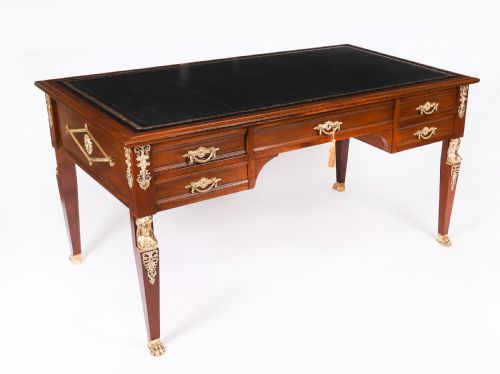
Ormolu mounts that retain their original fire gilding and sharp, chased detailing separate superior examples from later or more commercial productions. Similarly, the integration of an original veined marble top fitted flush to the wooden rim indicates a higher level of workshop execution.
The Empire Pedestal Table Glossary
- Gueridon
- A small circular table on a central pillar, frequently topped with marble and designed to stand in the centre of a room. This form serves as the primary manifestation of the empire pedestal table.
- Ormolu
- Gilt bronze mounts applied to furniture to provide ornamental contrast against dark timbers. The technique involves coating bronze with a gold amalgam and heating it to drive off the mercury.
- Biedermeier
- A Central European style dating from the early nineteenth century that prioritised clean lines and utilitarian grace over excessive ornamentation. It often utilised native woods like birch and ash.
- Bureau Plat
- A kneehole writing desk featuring a flat top, commonly fitted with leather inserts and mounted with bronze or brass hardware. These desks share the classical vocabulary of empire pedestal tables.
- Charles X
- A French decorative style bridging the gap between the full Empire period and later Victorian tastes, known for lighter wood tones and restrained classical detailing.
Empire Pedestal Table: Frequently Asked Questions
What is an empire pedestal table?
An empire pedestal table is a freestanding circular or rectangular table supported by a central pillar, rooted in nineteenth-century neoclassical design.
These pieces frequently feature mahogany or birch timbers paired with marble tops and cast ormolu mounts.
How were gueridon tables used?
Gueridons functioned primarily as centre tables in grand reception rooms, used for holding lamps, decorative objects, or serving tea.
Their freestanding design allowed them to occupy the middle of a room rather than sitting flush against a wall.
How do I care for a marble top?
Marble surfaces require gentle cleaning with a damp cloth and mild soap, avoiding acidic substances that can etch the polished stone.
Using coasters and mats protects both the porous marble and the underlying wood structure from moisture.
How can I tell the period?
Dating relies on examining construction methods, timber selection, and the quality of the ormolu casting against known historical styles.
Nineteenth-century examples display hand-cut joinery and dense native or imported woods, whereas later revivals often utilise machine-made components.