


Restoration Period Table
A restoration period table brings together French polish, figured mahogany, and cool marble surfaces that anchor a room with architectural weight.
Restoration Period Table
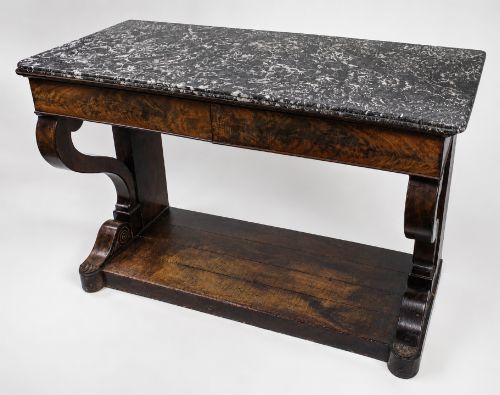
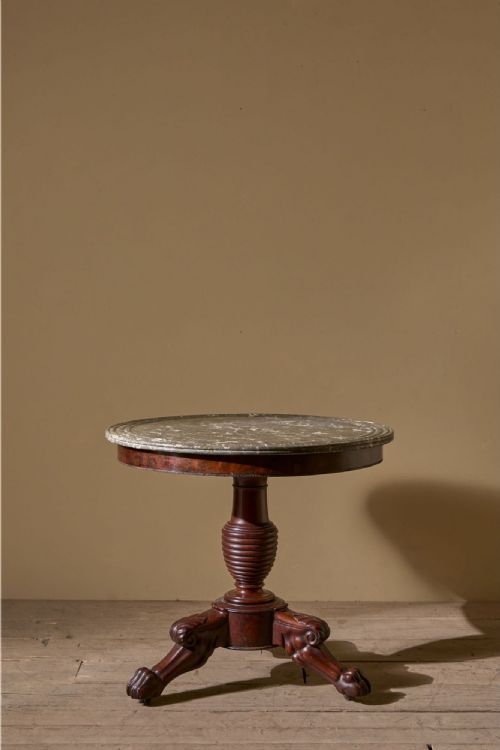
A restoration period table typically refers to French designs from the early nineteenth century, particularly those associated with the Charles X and Louis-Philippe reigns. These pieces lean heavily on mahogany, often topped with white carrara or grey marble, and serve primarily as console or gueridon tables.
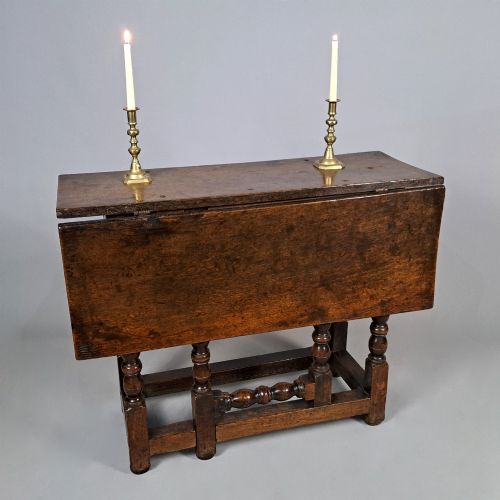
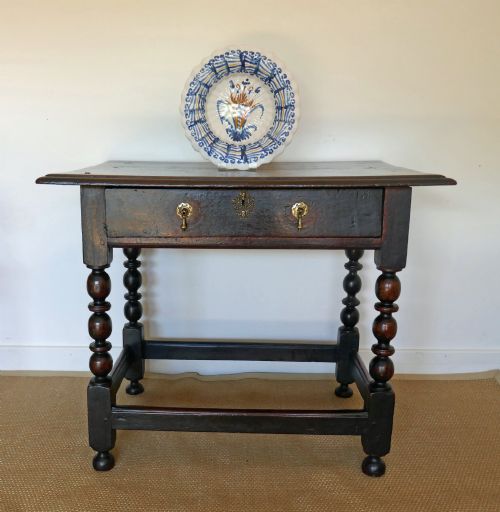
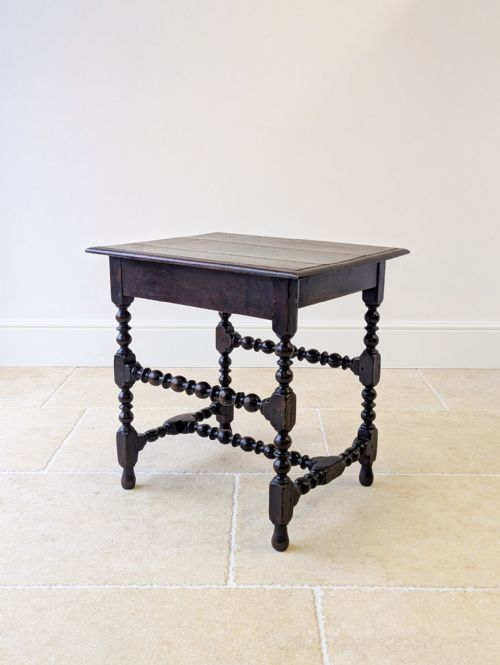
The inventory also bridges disparate eras through seventeenth-century English oak side tables and William and Mary walnut or oyster-veneered pieces. Such designs emphasise structural timber and turned legs rather than the sleek veneers of later French workshops.
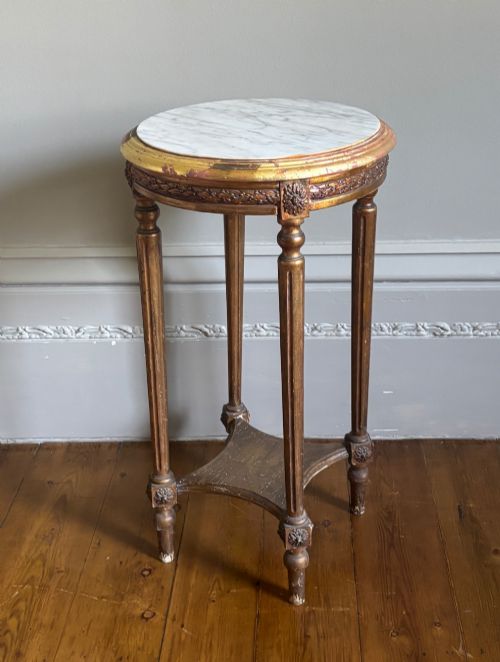
Buyers will encounter round gueridon tables meant for the centre of a room alongside rectangular console tables designed to stand flat against a wall. The French examples frequently incorporate gilt bronze mounts or ormolu details alongside dark wood.
Materials and construction
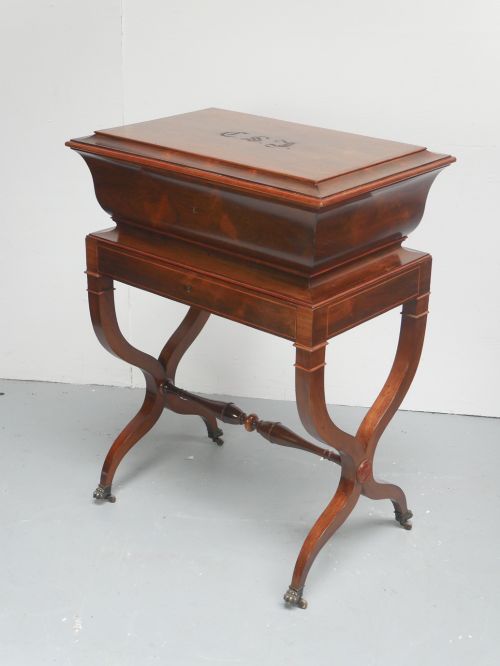
Cabinetmakers of the nineteenth century built these tables upon sturdy oak or pine carcases, subsequently laying rich mahogany, rosewood, or coromandel veneers across the visible surfaces. Marble slabs, particularly carrara and grey varieties, were heavily utilised for top surfaces to provide a durable and cool finish.
Gilt bronze and ormolu mounts were cast and chased by hand, then applied to the corners and friezes of French console and gueridon tables. Earlier seventeenth-century pieces rely instead on solid oak, intricate bobbin-turning, and elaborate oyster veneer laid in geometric patterns of olive and holly.
One unexpected side table hides a silver trefid spoon in its timeline.
Distinctions in quality
Quality rests upon the depth of the timber figuring and the precision of the veneer work, where superior examples exhibit seamless grain matching across entire tabletops. The weight and crispness of the cast ormolu mounts separate standard production from workshop pieces commissioned by discerning patrons.
Structural integrity of the marble top and the trueness of the pedestal or leg joints dictate long-term durability. Tables retaining their original French polish and untoched mercury gilding command greater appreciation among collectors.
Thomas Langley·Lesage·Canaillor of Paris·William Speakman·Ravrio
The Restoration Period Table Glossary
- Gueridon
- A round table designed to stand in the centre of a room rather than against a wall. These pieces frequently feature a central pillar supported by a tripod base.
- Console table
- A wall table supported by console brackets or front legs, traditionally paired with a matching wall mirror. They often feature heavy marble tops.
- Ormolu
- Gilt bronze ornamentation applied to furniture and clocks during the eighteenth and nineteenth centuries. The technique involves applying a mercury and gold amalgam to cast bronze.
- Oyster veneer
- Slices of wood cut transversely from small branches to produce circular or oval patterns resembling oyster shells. This technique was popular during the late seventeenth century.
- Bobbin-turning
- A method of lathe-turning timber into a series of spherical or cylindrical shapes resembling bobbins. It appears frequently on seventeenth-century English oak furniture.
Restoration Period Table: Frequently Asked Questions
Where should I place a gueridon table?
A gueridon table functions best as a freestanding centrepiece in a hallway or drawing room, where light can catch the marble top and polished mahogany veneer from all angles.
Because these round tables lack a flat edge to push against a wall, they require adequate floor space to allow movement around them without crowding the room.
How do I care for marble tops?
Marble surfaces require prompt wiping of liquid spills to prevent staining, particularly from acidic substances like wine, citrus, or vinegar.
Avoid abrasive cleaners and harsh chemical sprays, relying instead on a damp cloth and mild soap to maintain the polished finish safely.
What is the difference between a console and a pier table?
A console table is designed to fix against a wall, frequently supported by decorative front legs while relying on wall brackets for total stability.
Pier tables share a similar wall-facing form but traditionally occupy the wall space or pier between two windows beneath a large mirror.
How do I date an English oak side table?
Seventeenth-century oak tables display peg-joined frames, hand-planed board surfaces, and distinct structural markers like bobbin-turnings or geometric mouldings.
Examining the underside and drawer construction reveals tool marks and timber shrinkage consistent with seventeenth-century workshop practices.