



French Empire Console
A french empire console brings architectural presence and classical dignity to a room through dark woods and gleaming mounts.
French Empire Console
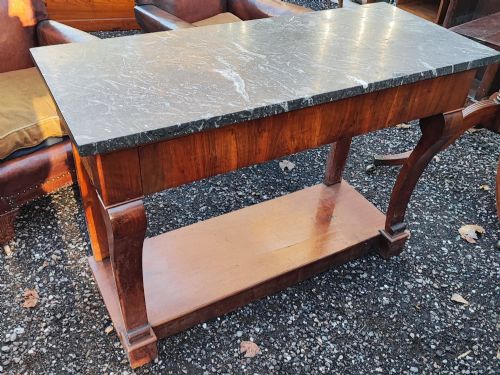
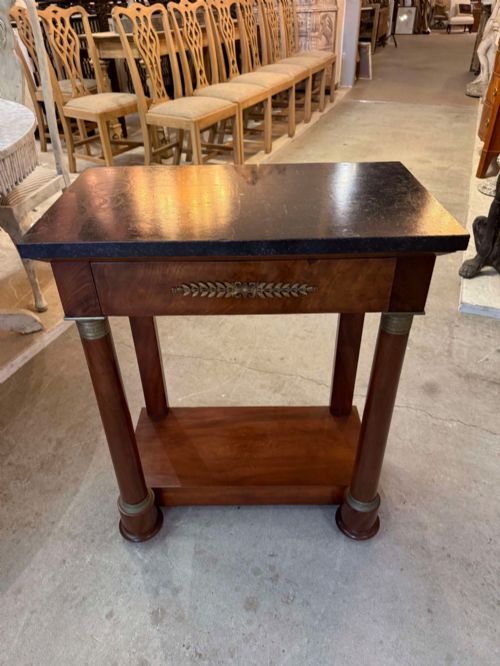
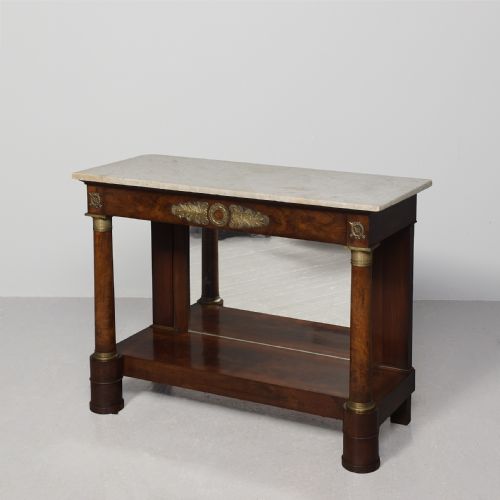
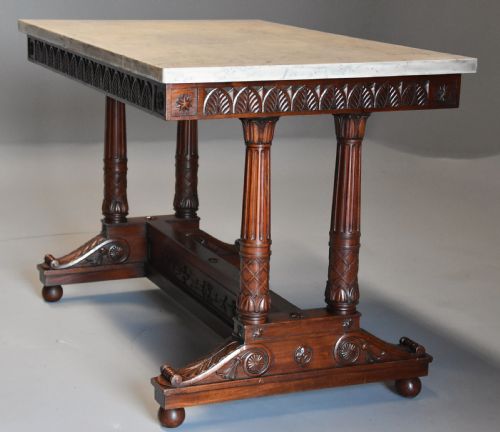
A french empire console is a substantial piece of furniture designed to sit flat against a wall, frequently paired with a matching wall mirror to reflect light and proportion. The form originates from the strict classical revival of the early nineteenth century, drawing heavily on ancient Roman and Greek motifs.
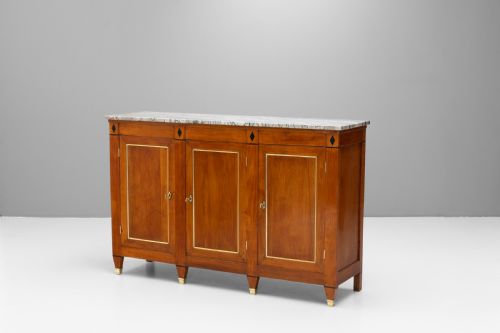
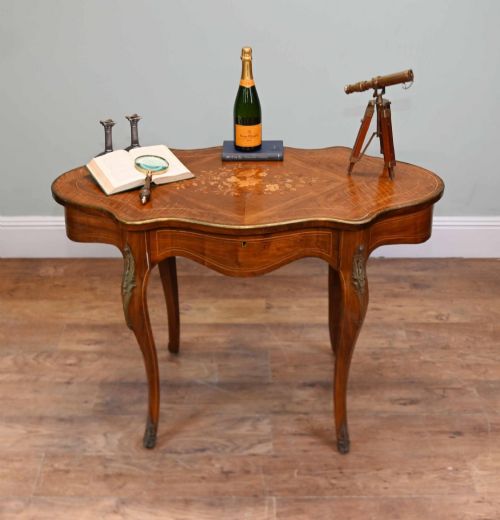
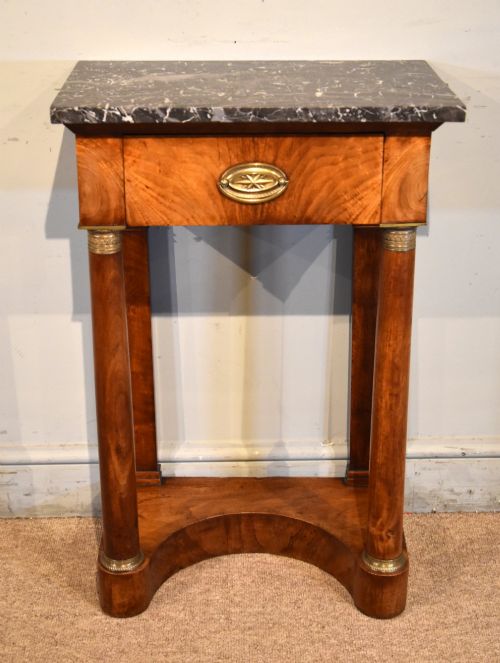
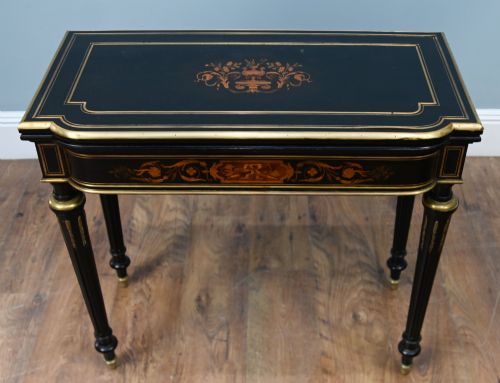
Buyers browsing this selection will most frequently encounter mahogany examples featuring heavy stone slabs, alongside later nineteenth-century revival interpretations in walnut, rosewood, and parcel gilt. The inventory spans straightforward pier tables, drop-leaf side variations, and elaborate pieces incorporating architectural columns or figural supports.
The typology also encompasses related forms such as centre tables, chiffoniers, and dressing tables that share the vocabulary of the style. These tables served both decorative and functional roles in grand reception rooms, often acting as a focal point beneath large wall glasses.
Materials and construction
Makers utilised dense timbers like flame mahogany, burr birch, and walnut as the primary structural bodies, often applying veneers over sturdy oak or pine carcases to achieve rich surface patterns. Solid mahogany and fruitwood were also turned into robust columns and legs supporting the heavy upper frames.
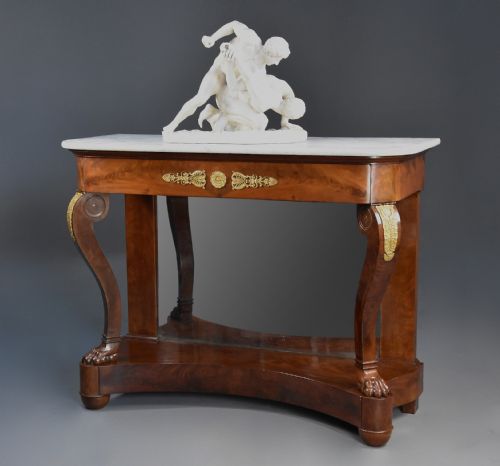
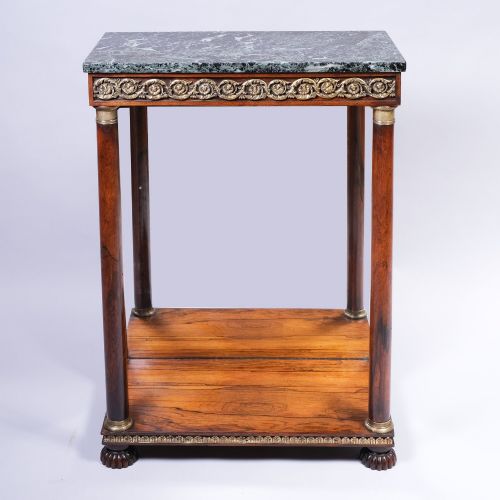
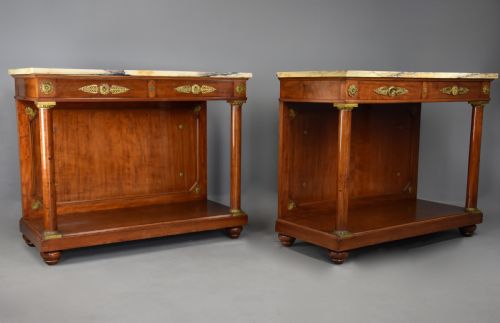
Contrasting metal elements define the aesthetic, with fire-gilded or mercury-gilt ormolu and polished brass mounts pinned directly onto the timber to highlight architectural lines. These cast mounts take the form of classical wreaths, rosettes, swans, and military trophies.
Heavy marble tops, including fossil varieties and white carrara, sit loose or fixed upon the timber bases to provide a cool, reflective surface. The stone is often deeply bevelled or moulded at the edge to match the rigorous geometry of the base.
French Empire Console Retail Price Guide 2026
Typical asking prices for french empire console among the pieces listed under this phrase on Sellingantiques today, from the lower quarter to the upper quarter. They describe what is for sale here now, not the wider market.
Several tables feature stern cast-metal swans and mythological satyrs standing guard beneath the heavy stone tops, keeping a watchful eye on the hallway.
Evaluating the standard of work
The grade of a piece rests heavily on the selection and matching of timber veneers, where flame or plum pudding figures are laid symmetrically across the apron and columns. Inferior examples rely on plain, unfigured mahogany with flat, uninspired grain patterns.
Casting quality in the metal mounts separates standard production from exceptional studio output, with superior ormolu showing crisp chisel work, deep relief, and bright original gilding. Lower-tier mounts appear soft in detail, flat in profile, and dull in finish.
Structural integrity and the retention of original stone slabs dictate value, as replaced marble tops or altered bases diminish historical cohesion. The presence of authentic maker stamps adds substantial weight to a piece's pedigree.
Krieger Paris·JACOB·Jean Joseph Chapuis
The French Empire Console Glossary
- Ormolu
- Gilt-bronze decorative mounts applied to furniture. This technique involves coating cast bronze with a finely ground gold-mercury amalgam before heating to drive off the mercury.
- Pier table
- A table designed specifically to stand against a wall between two windows, usually placed directly beneath a tall pier mirror.
- Gueridon
- A small, round occasional table supported by a central pillar or multiple legs, popular during the neoclassical and empire periods.
- Flame mahogany
- Timber cut from the fork of the mahogany tree where the branch joins the trunk, producing a distinctive rippled, flamed grain pattern.
- Parcel gilt
- A finishing technique where portions of a wooden or gessoed surface are highlighted with gold leaf while the rest remains un-gilded or stained.
French Empire Console: Frequently Asked Questions
Where should I place a french empire console?
These tables are traditionally positioned flat against a wall in a hallway, drawing room, or dining space, often anchored beneath a large wall mirror.
Because of their flat backs and forward-projecting columns, they command visual weight without occupying excessive floor depth.
How do I care for the marble top?
Clean the stone surface regularly with a soft cloth dampened in warm water, avoiding acidic household cleaners that can etch the polish.
Use coasters under glasses and place felt pads beneath heavy decorative objects to prevent scratching the vulnerable stone.
How do I distinguish original empire from revival pieces?
Original pieces dating from the early nineteenth century generally display hand-cut joinery, old growth timber characteristics, and fire-gilded ormolu mounts with distinct hand-chased details.
Revival pieces from later decades often use machine-cut secondary woods and electroplated metal mounts with softer definition.
What is a mirror backed console?
A mirror backed console incorporates a tall glass panel fitted into the timber frame directly behind the supports of the table.
This design feature was intended to reflect light from candles or windows and visually double the decorative impact of the ormolu mounts.