
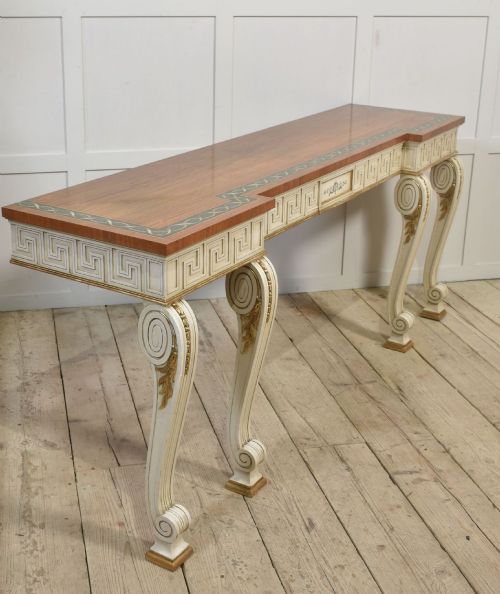
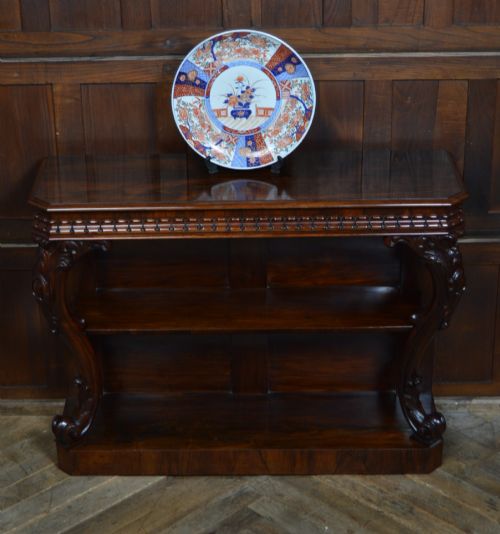

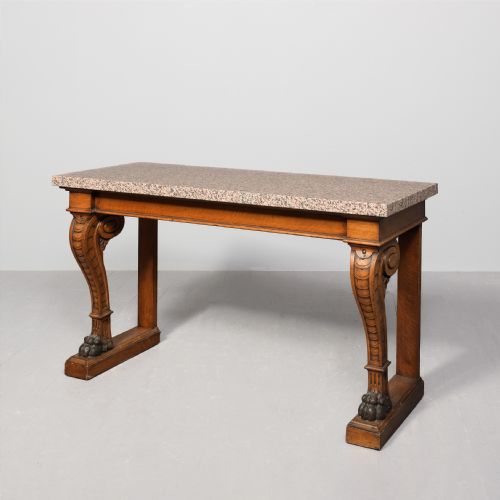
Scrolled Console Table
A scrolled console table anchors a hallway or reception room with characteristic architectural presence and fitted support against the wall.
Scrolled Console Table
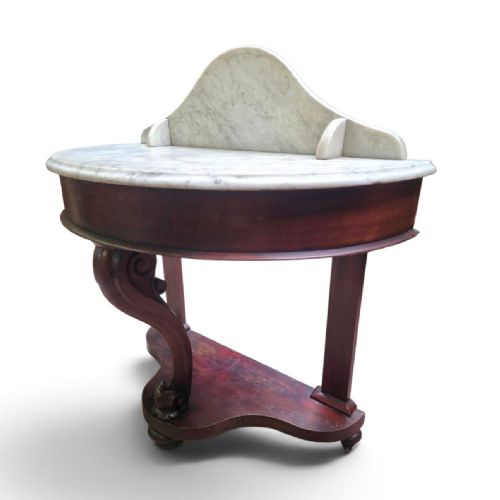
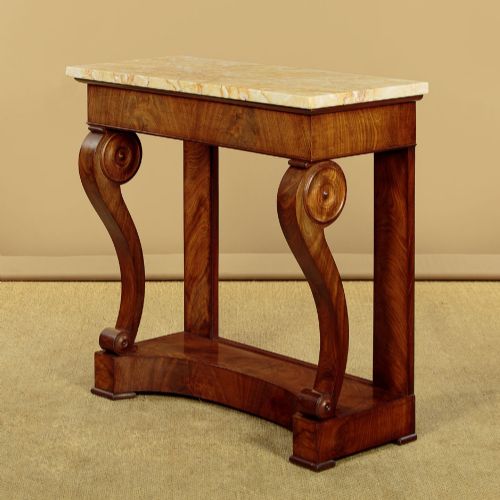
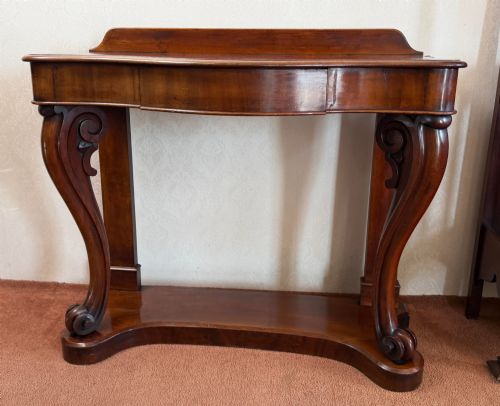
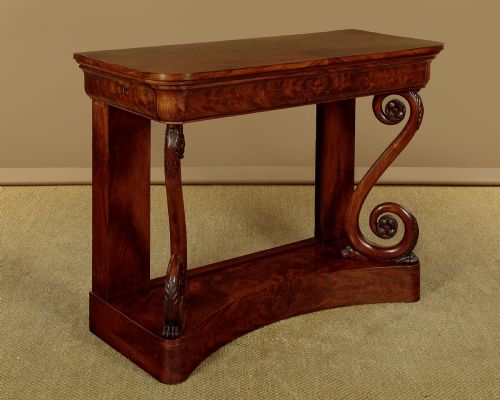
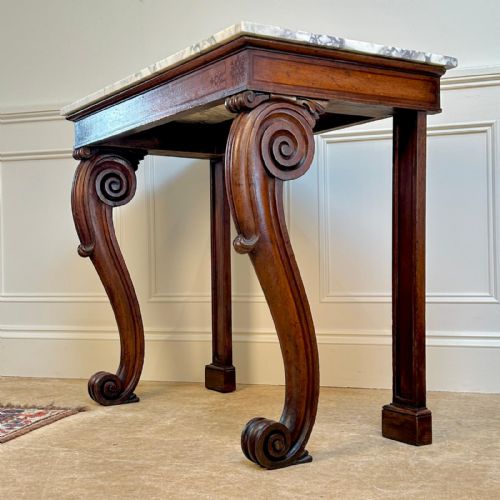
A scrolled console table is a narrow pier or wall-fitting piece designed to stand flush against a wall, frequently paired with a marble, granite, or wooden top. The evidence shows these pieces appearing across the nineteenth century, including Georgian, Regency, William IV, and Victorian periods, alongside early twentieth-century French examples.
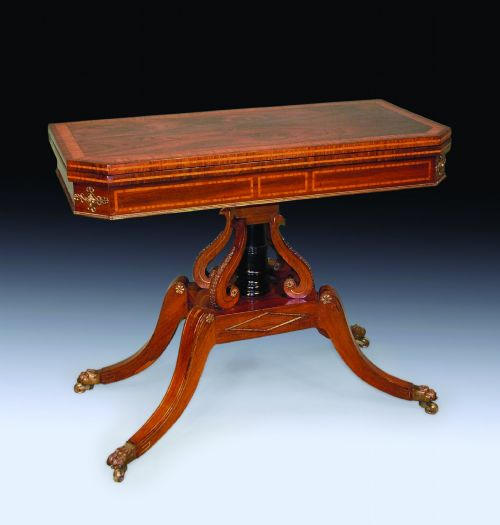
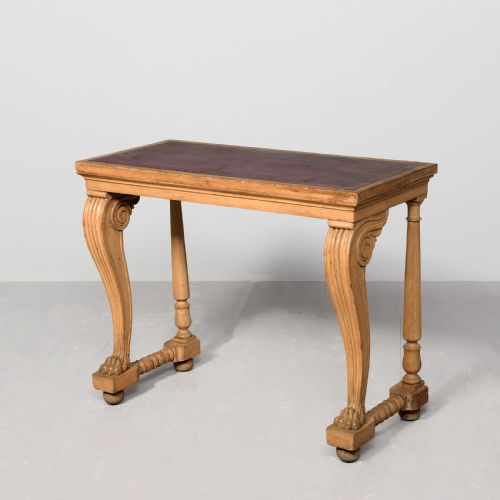
Forms span standard console tables, pier tables, and side tables, with several variations incorporating fold-over card tops, tea table mechanisms, or lower stretcher bases. Regional influences range from French provincial and Italian neoclassical to Anglo-Indian and Chinese hardwood designs.
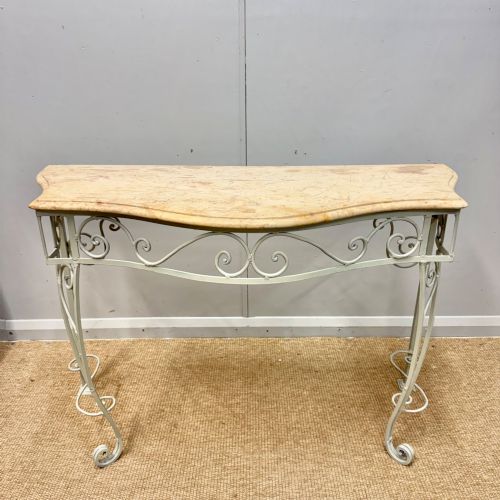
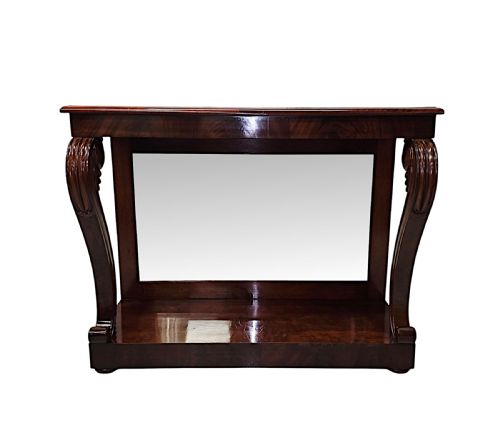
Buyers will encounter timber frames in mahogany, rosewood, walnut, and oak, often detailed with carved scroll pedestals or wrought iron supports. Many examples utilise a fitted mirror or stand as freestanding centre tables adapted to wall placement.
Materials and construction
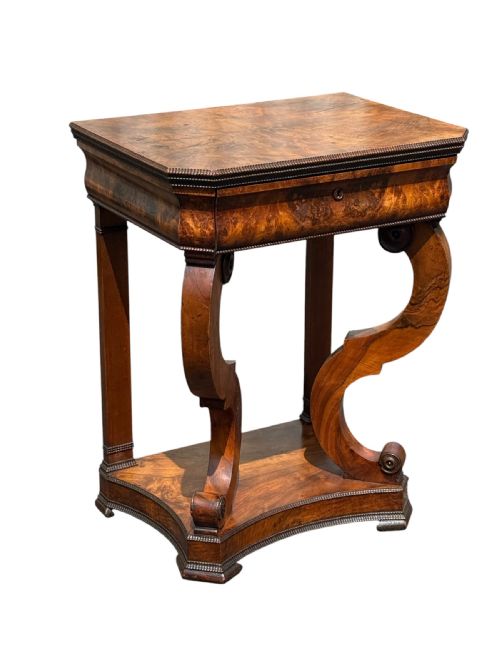
Cabinet makers built these tables using dense hardwoods like mahogany, rosewood, and walnut, frequently applying figured veneers to the frieze and top surfaces. Structural stability relied on substantial timber framing, sometimes augmented by wrought iron or brass elements in French and continental pieces.
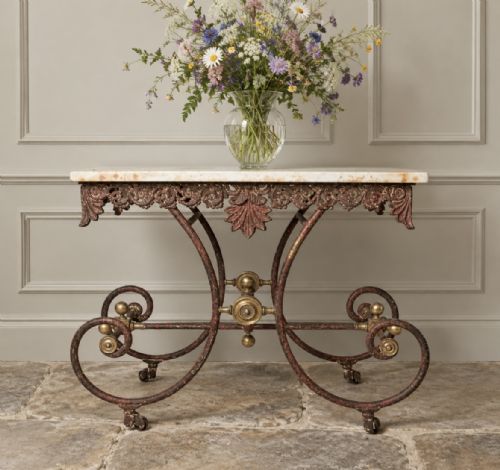
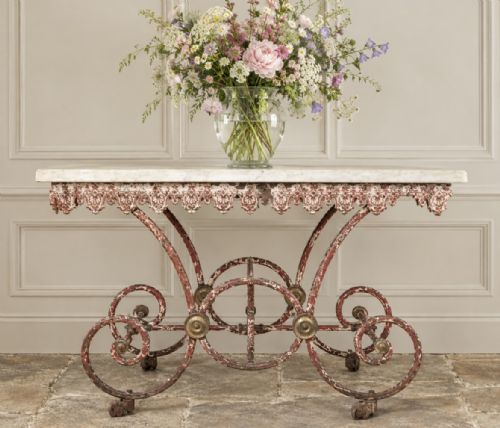
Heavy stone surfaces including marble and granite required robust underframes and sturdy scroll pedestals to bear the weight safely. Joinery techniques varied from traditional cabinet making to specialist metalwork found in baker tables and iron-framed consoles.
Several heavy marble-topped surfaces began life as utilitarian French butchers and bakers tables before finding a second home in domestic hallways.
Markers of distinction
Quality rests in the crispness of the carved scrollwork and the selection of timber veneers, such as figured mahogany or burr walnut. Finer pieces demonstrate precise joinery on pedestal bases and well-matched stone tops fitted flush to the wooden frame.
Maker attribution elevates certain examples, with recorded pieces bearing signatures or provenance linked to established cabinet makers and workshops. The integration of secondary materials like satinwood stringing, brass mounts, or original mirror plates further distinguishes superior pieces.
Gillingtons of Dublin·James Mein of Kelso·Robert Strahan·Alexander McKenzie of Glasgow·Thonet
The Scrolled Console Table Glossary
- Console table
- A table designed to stand against a wall, traditionally secured with brackets or supported by front scroll legs.
- Pier table
- A specific type of console table made to fit into the wall space between windows, often accompanied by a matching mirror.
- Scroll pedestal
- A curved architectural support carved in a spiral or C-scroll form, frequently seen on Regency and William IV bases.
- Frieze
- The broad horizontal band situated directly beneath the table top, sometimes housing a single drawer.
- Stretcher base
- A system of horizontal wooden or iron bracing connecting the legs near the floor to provide additional rigidity.
Scrolled Console Table: Frequently Asked Questions
Where should I place a console table?
These tables suit narrow entrance halls, corridors, or living rooms where floor space is limited. Because they traditionally stand against a wall, they provide a surface for lamps and decorative objects without obstructing pathways.
Matching them with a wall mirror or placing them beneath a window creates a balanced focal point in a reception room.
How do I care for a marble top?
Marble and granite surfaces require prompt wiping of spills to prevent staining, particularly from acidic liquids like wine or lemon juice. Use a damp cloth with mild soap rather than abrasive cleaners.
Applying a specialist stone sealer periodically helps protect the polished finish from everyday wear.
What is the difference between a console and a pier table?
Console tables are general wall-supported tables, whereas pier tables are specifically proportioned to sit against the wall space between two windows. Pier tables frequently incorporate a mirror above or below the surface to reflect natural light.
Both forms utilise scrolled legs or pedestals in the examples recorded here.
How do I identify a William IV table?
William IV pieces date from the 1830s and typically feature heavy, robust proportions in mahogany, rosewood, or oak. Look for bold carved scrolls, platform bases, and recessed frieze drawers.
They often carry substantial marble tops supported by architectural column or scroll leg configurations.