



French Restoration Console
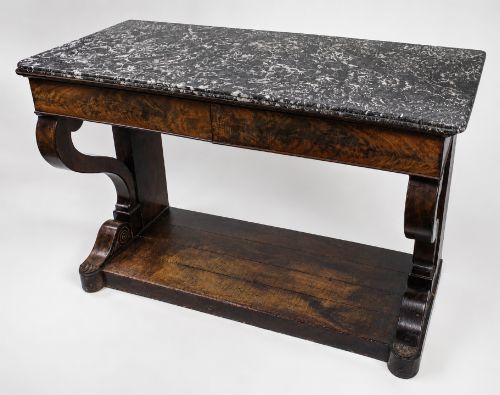
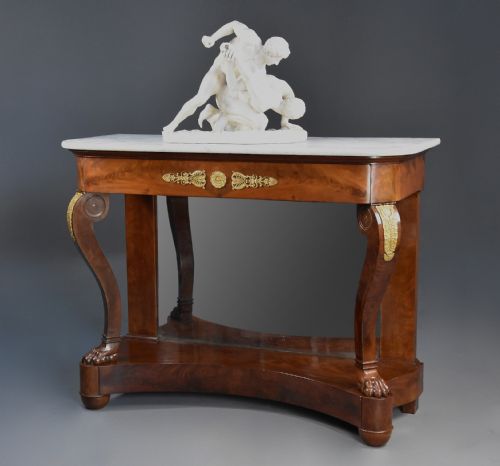
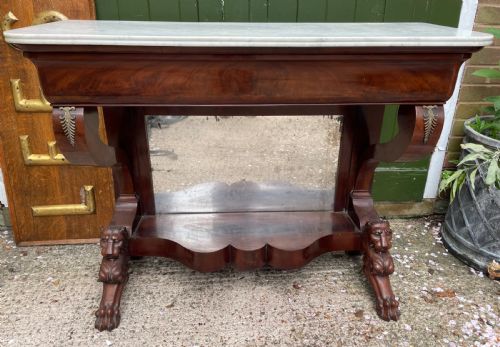
A french restoration console brings architectural grace and rich timbers into a room, offering a surface of marble atop finely figured mahogany or walnut.
French Restoration Console
When you search for a french restoration console, you encounter nineteenth century furniture designed with clean architectural lines and classical restraint. These pieces serve as striking side tables or pier tables, often set against walls beneath matching mirrors.
The versions most commonly met on this page belong to the Charles X and French Empire styles. They display rectangular or subtly curved timber frames that showcase the natural grain of the wood.
Surviving examples span simple walnut and mahogany constructions to more elaborate pieces featuring satinwood or fossil tops. Each console reflects the distinct cabinet-making traditions of nineteenth century France.
How they were made
Cabinet makers of the nineteenth century built these consoles using solid woods and supportive framing, applying veneers of figured mahogany, walnut, or satinwood to the primary surfaces. Wood inlay added subtle geometric or linear decoration without overpowering the natural grain.
Heavy stone tops, particularly white carrara marble and fossil stone, were fitted precisely to the wooden carcasses to provide a durable and cool working surface. Metal mounts in bronze and ormolu occasionally highlighted the corners and structural joints.
Many of these tables were constructed to pair directly with tall trumeau mirrors, creating a unified decorative scheme for nineteenth century interiors. Joinery techniques relied on traditional mortise and tenon methods to ensure structural stability.
Listings span the nineteenth century, featuring materials such as mahogany, walnut, satinwood, marble, bronze, and fossil stone.
What varies in quality
Quality in a french restoration console rests primarily in the selection of the timber veneers and the handling of the stone top. Finer pieces display exceptionally well-figured mahogany, walnut, or satinwood with book-matched grains that flow evenly across the front.
The integration of the marble or fossil top also distinguishes superior examples. A heavy, thick stone slab that fits flush with the wooden frame without excessive bedding plaster represents higher standards of original craftsmanship.
The French Restoration Console Glossary
- Carrara marble
- A type of white or blue-grey marble quarried in Italy, frequently used for the heavy tops of nineteenth-century console tables.
- Console table
- A wall-mounted or flat-backed table supported by legs at the front, designed to stand against a wall.
- Ormolu
- Gilded bronze detailing applied to furniture mounts and decorative accents during the nineteenth century.
- Trumeau mirror
- A decorative wall mirror, often featuring a painted or carved panel above the glass, designed to sit directly above a matching console table.
French Restoration Console: Frequently Asked Questions
Where should I place a french restoration console?
These tables work well in entrance hallways, living rooms, or dining spaces where surface space is required against a flat wall. Their shallow depth allows them to sit comfortably in narrow passageways without obstructing movement.
Pairing a console with a matching mirror creates a balanced focal point in a reception room. They also function effectively as serving surfaces or display areas for decorative objects.
How do I care for the marble top?
Marble requires gentle cleaning with a soft cloth and warm water, avoiding acidic or abrasive household cleaners that can etch the polished surface. Using coasters and placemats helps protect the stone from liquid rings and scratches.
Applying a specialised stone wax can help maintain the sheen of older marble tops. Regular dusting prevents everyday particles from dulling the finish over time.
What is the difference between Charles X and Empire styles?
The French Empire style, popular in the early nineteenth century, tends to feature heavier proportions and prominent classical ornamentation inspired by antiquity. It often incorporates bold ormolu mounts and dark, dramatic timbers.
Charles X furniture, which followed shortly after, leans toward simpler, more restrained lines. This later aesthetic emphasises the natural beauty of figured wood veneers like mahogany and satinwood rather than heavy metal decoration.
Can these tables support heavy objects?
The solid wooden construction and heavy stone tops provide a stable surface for everyday decorative items like lamps, vases, and books. However, they are primarily designed as decorative architectural furniture rather than heavy-duty work surfaces.
Because many nineteenth-century consoles were designed to rest against walls for added stability, positioning them correctly ensures the piece remains secure during daily use.