



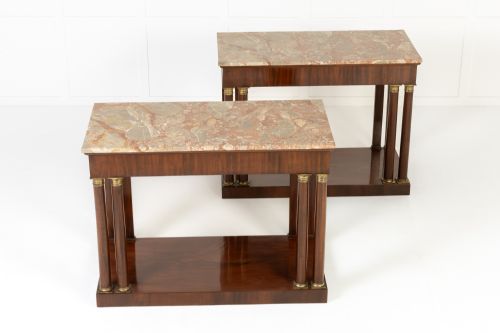
Dark Marble Hall Table
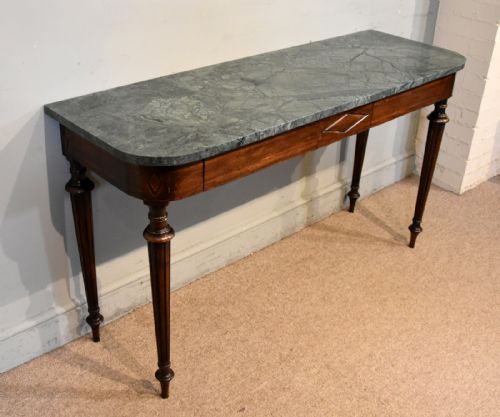
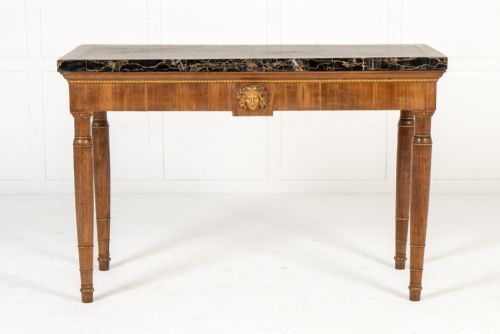
A dark marble hall table anchors an entrance hall with substance, pairing cool stone tops with timber frames from the eighteenth and nineteenth centuries.
Dark Marble Hall Table
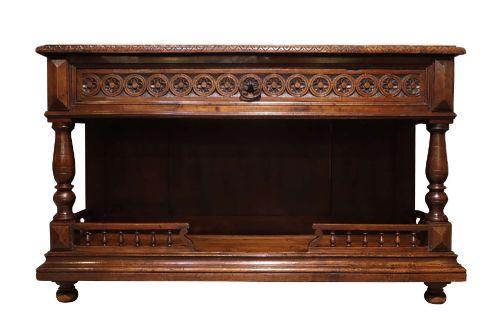
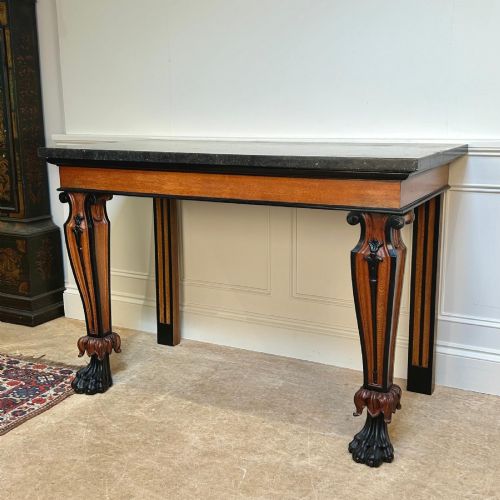
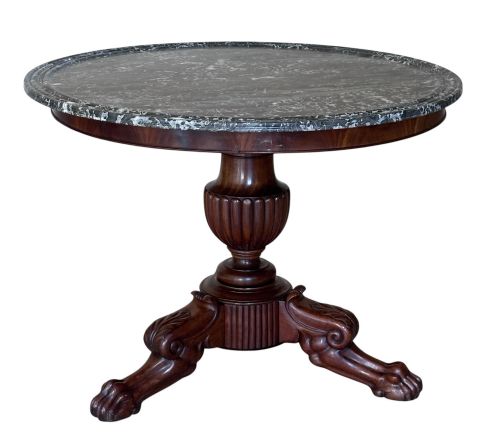
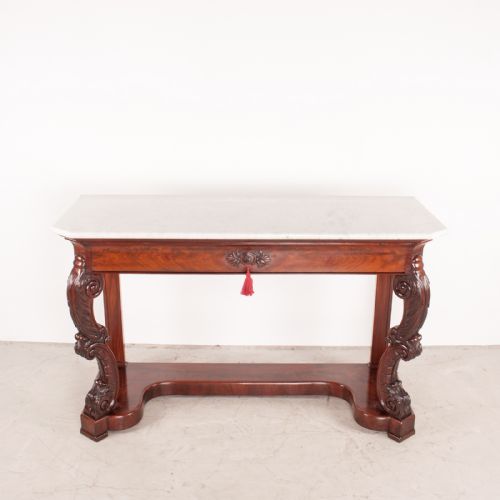
When searching for a dark marble hall table, buyers encounter console tables, pier tables, and gueridons designed to stand against walls or in open spaces. The selection relies heavily on nineteenth-century pieces, alongside select eighteenth-century and early twentieth-century examples.
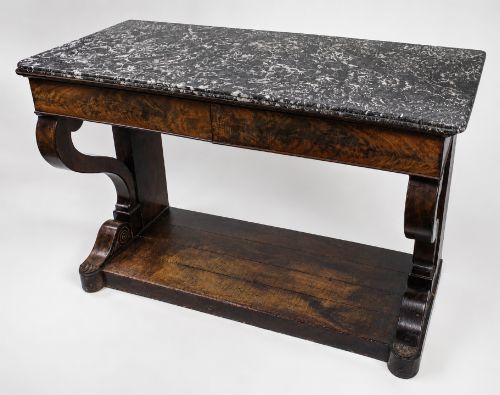
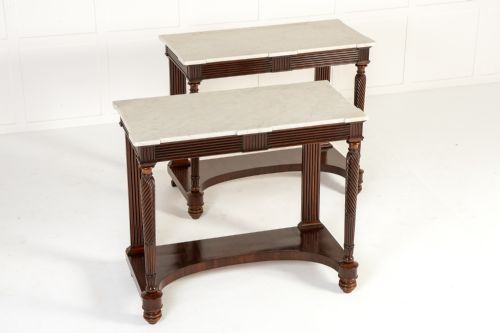
Console tables dominate the forms, frequently topped with dark or fossil marble and supported by mahogany, walnut, or rosewood frames. French and Italian workshops generated many of the surviving items, while Regency and Victorian English cabinet makers produced robust alternatives.
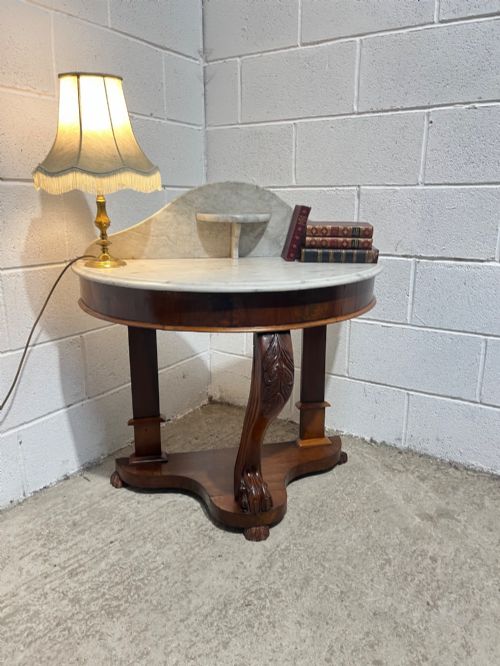
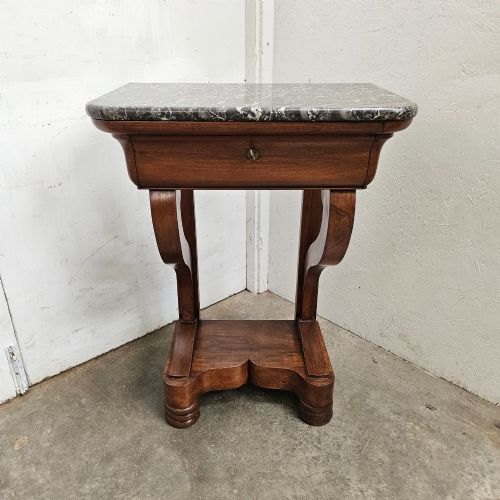
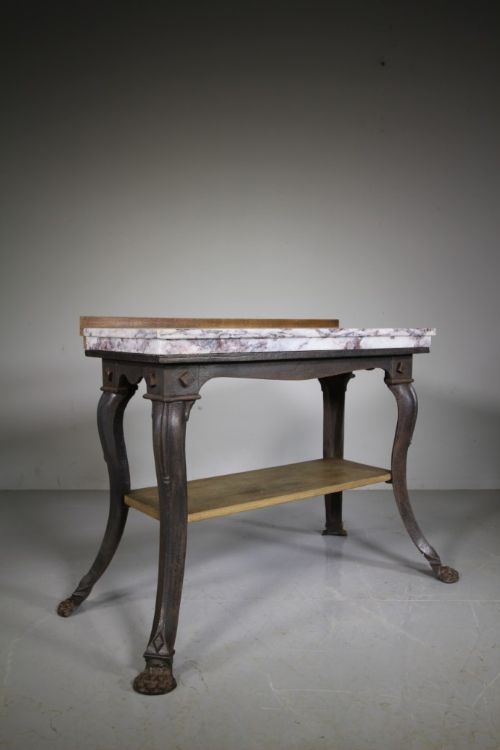
The assortment also includes washstands, hall stands, and centre tables sharing the characteristic stone surfaces. These varied object types served different domestic functions yet share the substantial presence expected in a grand hallway.
How they were made
Cabinet makers utilised dense hardwoods including mahogany, walnut, rosewood, oak, and hardwood to construct the heavy load-bearing frames. These timbers were frequently carved, polished, or shaped to mirror prevailing styles such as French Empire, Rococo Revival, and Italian Neoclassical.
Heavy marble slabs, including dark and fossil varieties, were shaped to fit the upper surface of each console or pier table. Iron, brass, and glass elements occasionally appear alongside the primary wood and stone components to complete the structures.
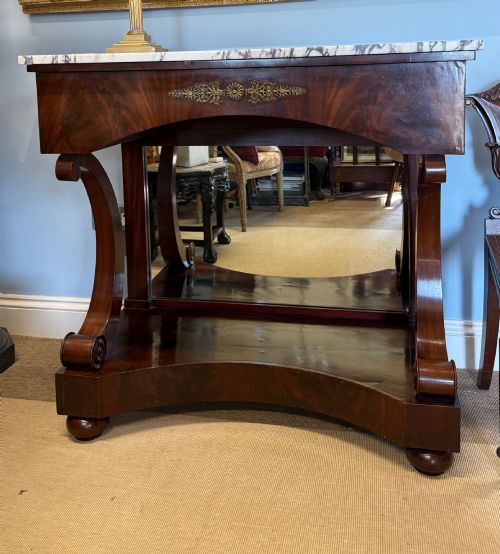
Several tables include hidden mirror backs, perhaps intended to reflect hall candlelight and double the glow of an entrance.
What varies in quality
The calibre of a piece rests upon the depth of the timber carving and the geological character of the marble top. Finely figured mahogany and walnut paired with distinct fossil or dark marble distinguish the more ambitious pieces from standard workshop output.
Proportion and stylistic coherence define the upper tier of the range. Tables executed with balanced proportions, sophisticated veneer work, and crisp decorative carving demonstrate the highest standards of period craftsmanship.
Jean Joseph Chapuis·Gillows
The Dark Marble Hall Table Glossary
- Console table
- A table supported by wall brackets or legs, designed to stand flat against a wall. These tables often featured heavy marble tops.
- Gueridon
- A small circular table on a central pillar, frequently utilised as a centre table in nineteenth-century interiors.
- Pier table
- A table designed to stand against the wall between two windows, typically positioned beneath a mirror.
- Fossil marble
- Limestone containing distinct organic fossils, polished to form a decorative and dark stone surface for furniture tops.
- Regency
- An English design period spanning the early nineteenth century, known for classical restraint and refined proportions.
Dark Marble Hall Table: Frequently Asked Questions
Where should I place a console table?
These pieces suit entrance halls, reception rooms, and narrow corridors where wall space allows a shallow footprint.
Their flat backs enable them to sit flush against plasterwork, supporting lamps, mirrors, or decorative objects without obstructing pathways.
How do I care for marble tops?
Marble requires gentle cleaning with warm water and mild soap to protect the polished surface from acidic spills.
Avoiding harsh chemical cleaners preserves the dark figure and natural sheen of the stone over decades of domestic use.
What is a gueridon table?
A gueridon is a round freestanding table supported by a central pedestal or column rather than four corner legs.
Nineteenth-century makers often fitted these circular frames with heavy marble slabs to create stable centre tables for large rooms.
How do I identify Regency pieces?
Regency items date from the early nineteenth century, drawing inspiration from classical Greek and Roman design.
They frequently employ dark rosewood or mahogany timbers, subtle brass mounts, and restrained architectural lines.