
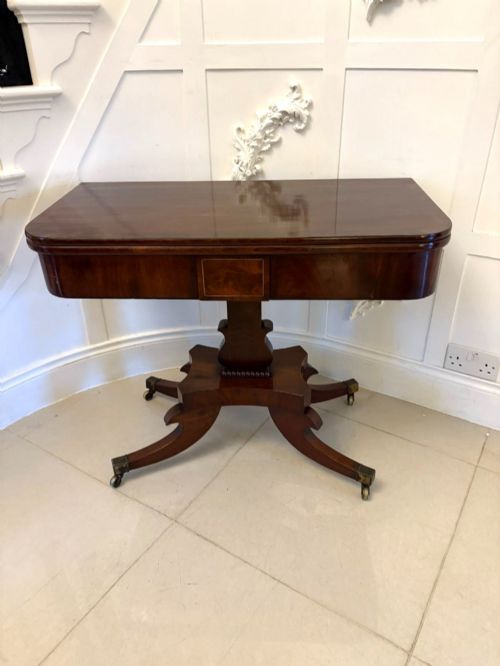
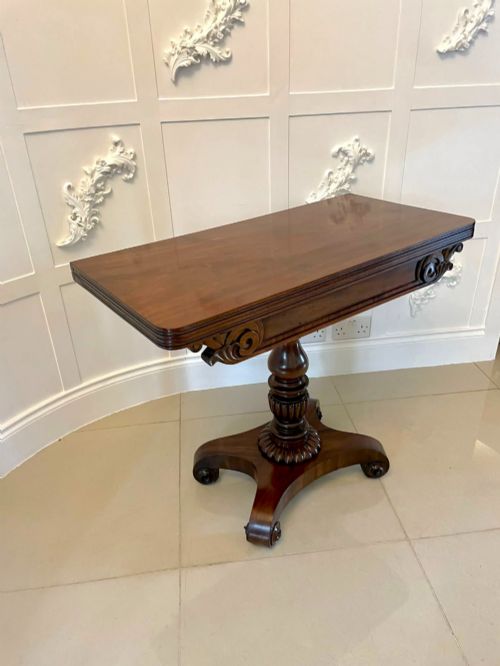


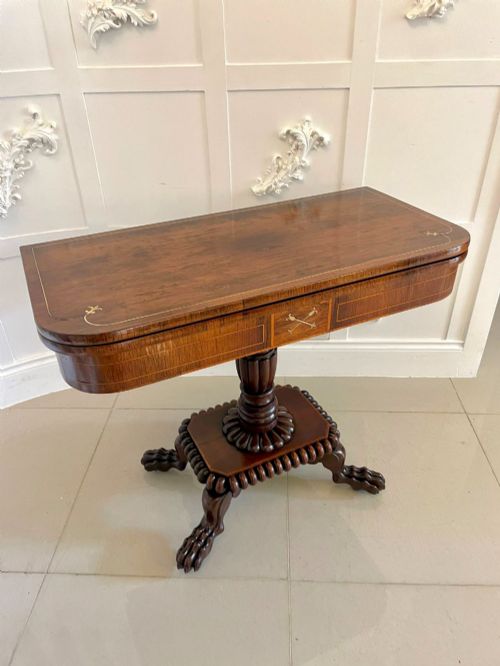
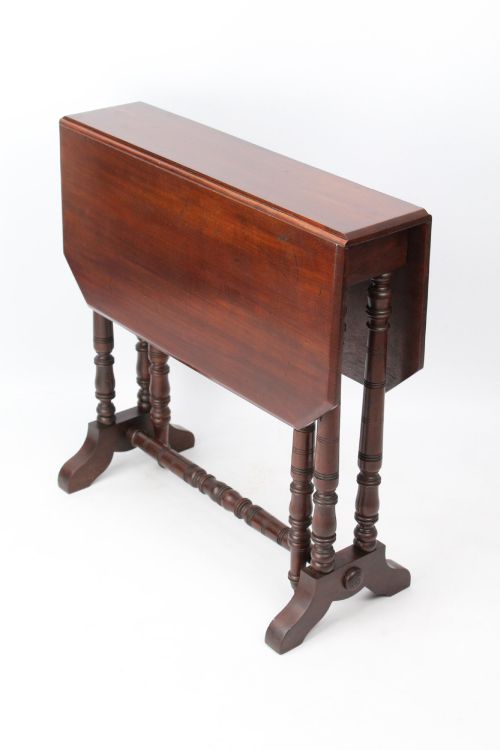
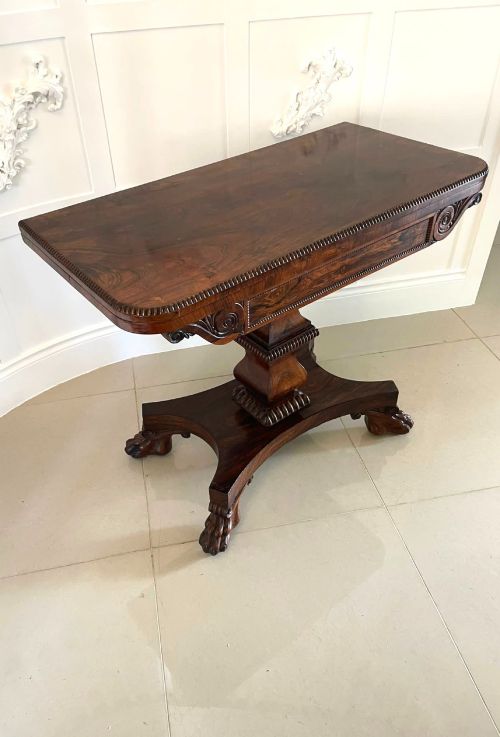
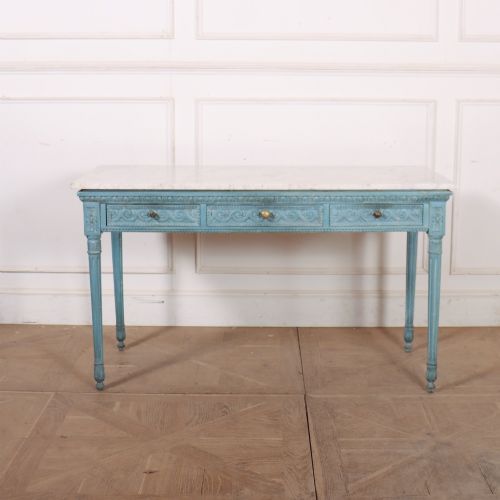
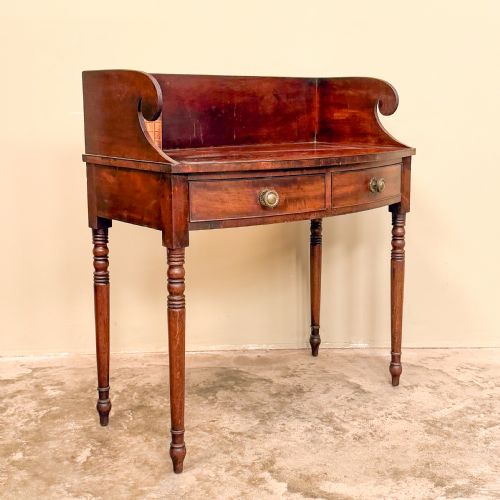
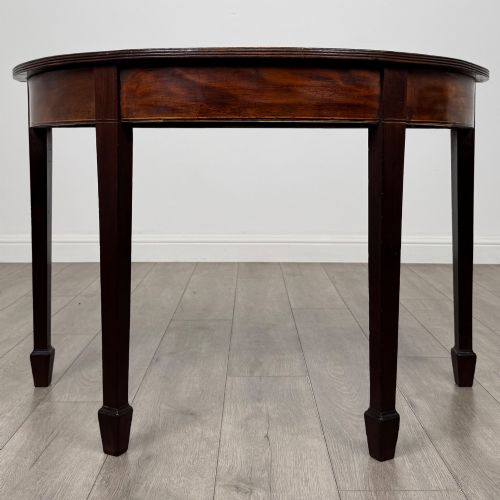
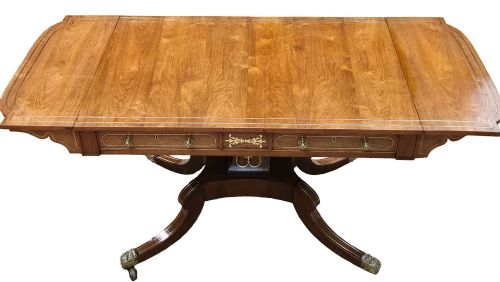
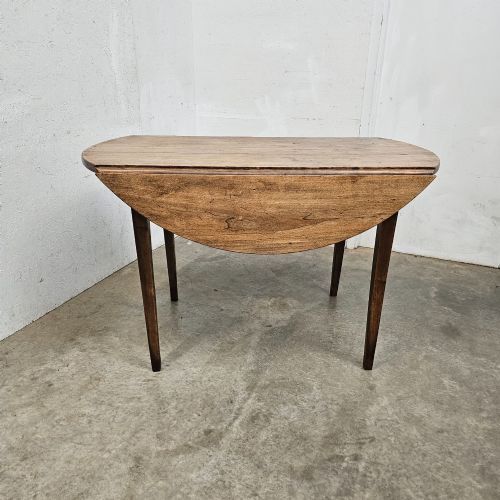
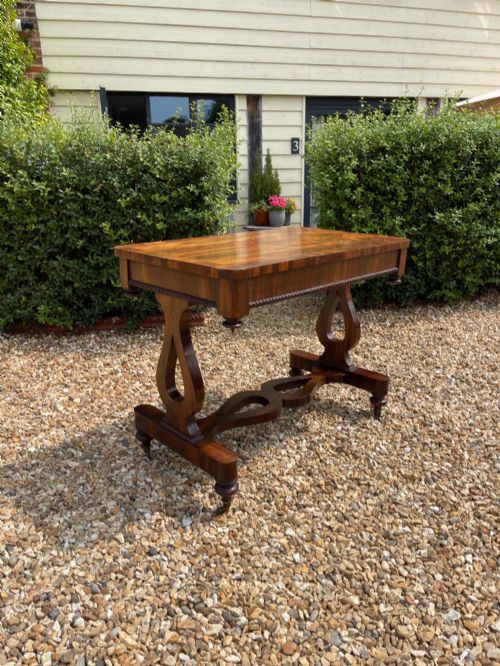
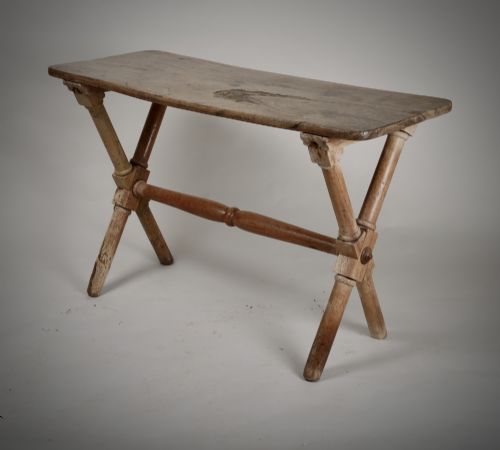
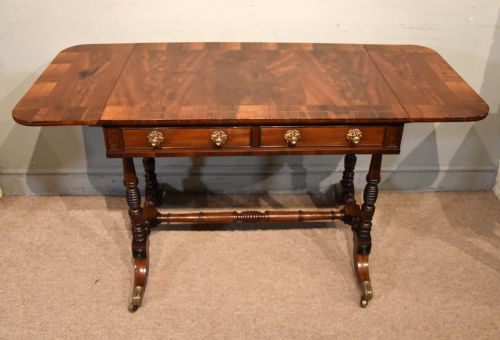
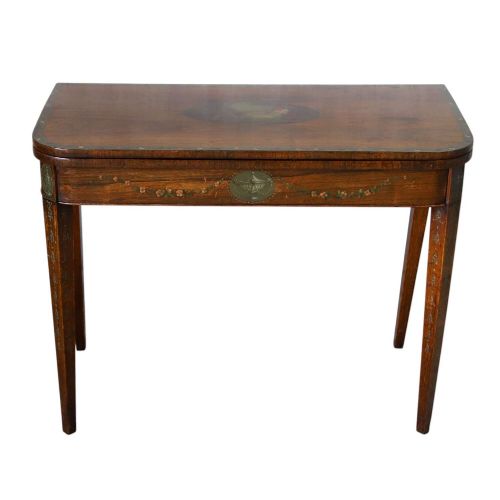
Nineteenth Century Console
A nineteenth century console brings architectural presence to a hall or drawing room, anchoring the space with rich mahogany, rosewood, or cool marble.
Nineteenth Century Console
A nineteenth century console sits flat against a wall or stands free in a principal room, often combining the functions of a side table, card table, or serving table.
The pieces appearing here span the Regency, William IV, and Victorian periods, alongside French Empire and rustic farmhouse forms.
Console tables and demilune side tables predominate, frequently taking the form of metamorphic tea or card tables with folding tops.
How they were made
Cabinetmakers utilised dense timbers like mahogany, walnut, and rosewood, often applying flame veneers or crossbanding to accent the grain.
Ormolu mounts, brass inlays, and carved dolphin bases add decorative contrast to the dark wood surfaces.
Marble tops in white Carrara provide heavy, durable surfaces on French and Italian console tables from the era.
Listings feature mahogany, rosewood, oak, and cherrywood alongside marble, brass, and ormolu mounts.
What varies in quality
The calibre of timber selection and the precision of brass inlay set finer examples apart from simpler utilitarian pieces.
Carved details such as dolphin supports or green man masks reveal the sculptor's hand and depth of relief.
Attribution to known makers elevates a piece through superior structural joinery and refined proportions.
George Bullock·François Linke·James Mein·William Trotter·Gillows
The Nineteenth Century Console Glossary
- Console table
- A table designed to stand against a wall, frequently secured with brackets or resting on carved front legs.
- Ormolu
- Gilded bronze used for decorative mounts and accents on French and English furniture.
- Demilune
- Half-moon shaped, commonly describing the plan of side and console tables designed to fit tightly against walls.
- Crossbanding
- A strip of veneer applied perpendicularly to the grain of the main surface to form a border.
- Sofa table
- A rectangular table intended to stand in front of a sofa, featuring drop leaves at either end.
Nineteenth Century Console: Frequently Asked Questions
Where should I place a nineteenth century console?
These tables suit entrance halls, drawing rooms, and dining spaces where floor space is limited. Their shallow depth allows them to sit neatly against a wall without obstructing traffic.
Pinned beneath a mirror or artwork, a console provides a surface for lighting, clocks, and decorative objects.
How do I distinguish Regency from Victorian pieces?
Regency pieces often display classical restraint, brass inlay, and rosewood veneers influenced by French Empire design.
Victorian furniture tends toward heavier proportions, darker walnut or mahogany, and exuberant carving like triple barley twist legs.
Were these tables meant to stand against walls?
Many console and pier tables were specifically designed to rest flush against a wall, sometimes anchored with wall fixings.
Freestanding sofa tables and centre tables differ by featuring finished timber on all sides for placement in the middle of a room.
How do I care for marble and wood surfaces?
Polished marble tops resist stains well but remain vulnerable to acidic liquids like wine and lemon juice. Wipe spills immediately.
Wax polished timbers benefit from occasional feeding with quality beeswax to maintain the lustre of the grain.