

Antique Mirror Back Buffet
An antique mirror back buffet brings deep timber and reflecting glass together into a commanding dining room centrepiece.
Antique Mirror Back Buffet
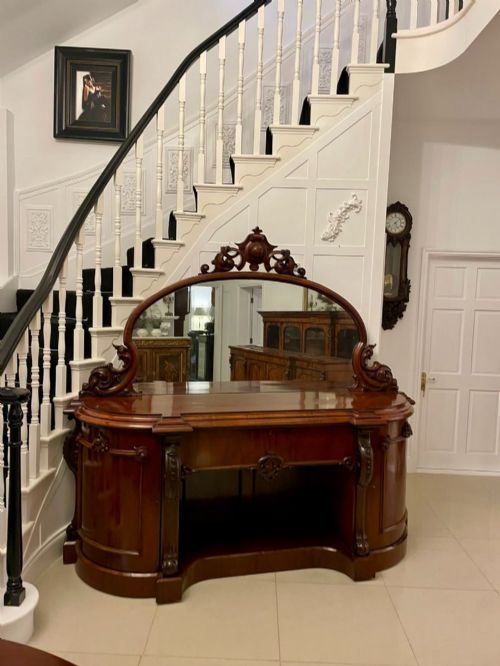
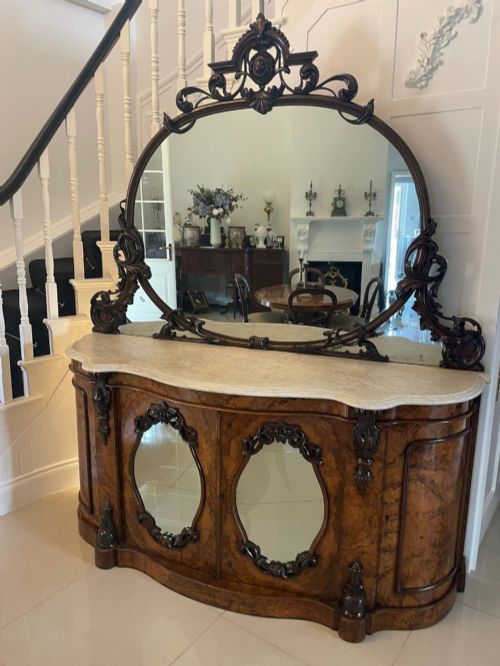
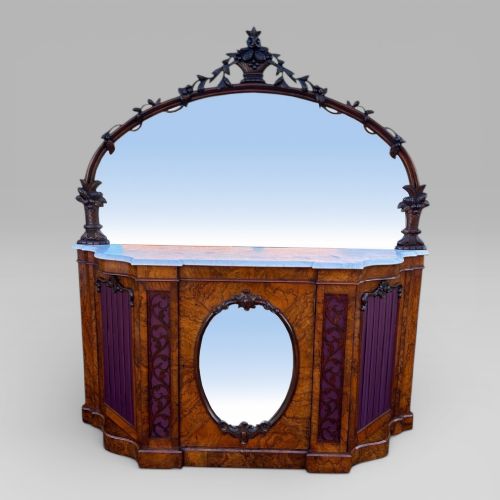
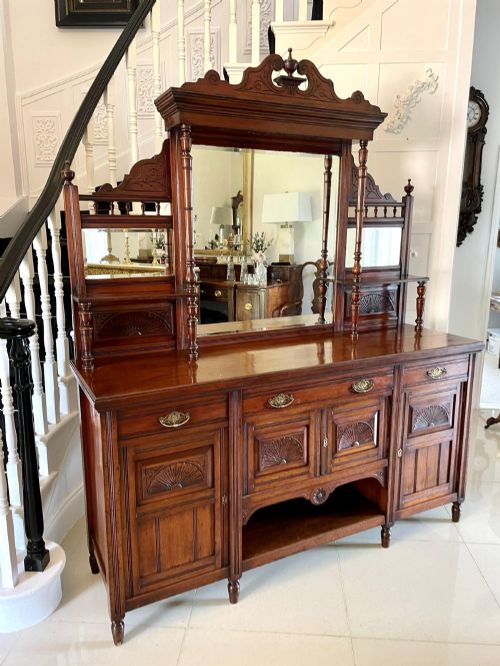
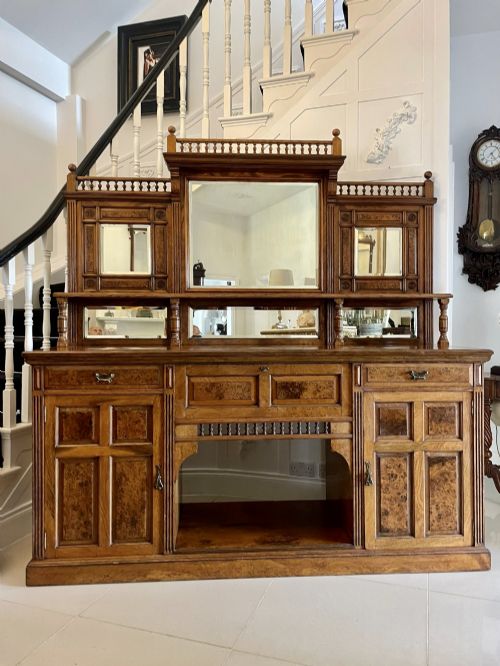
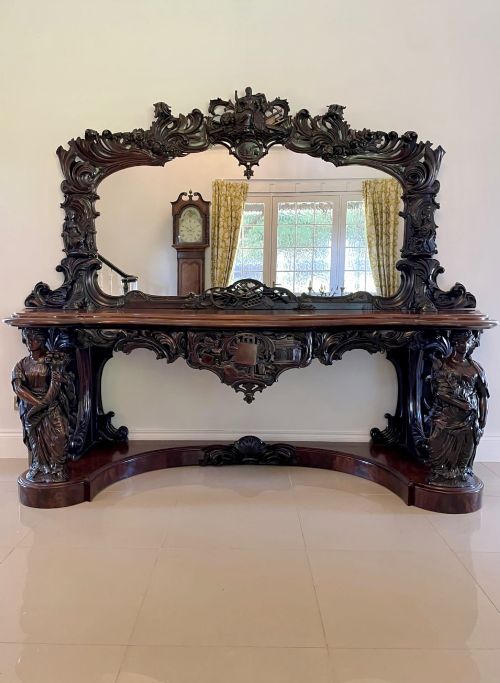
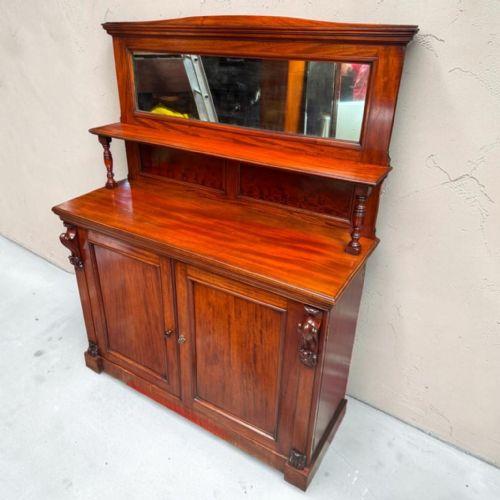
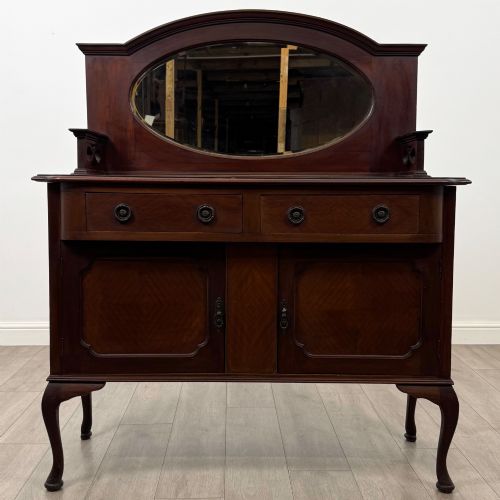
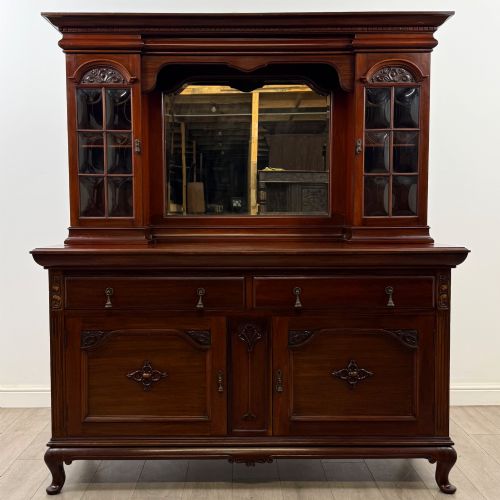
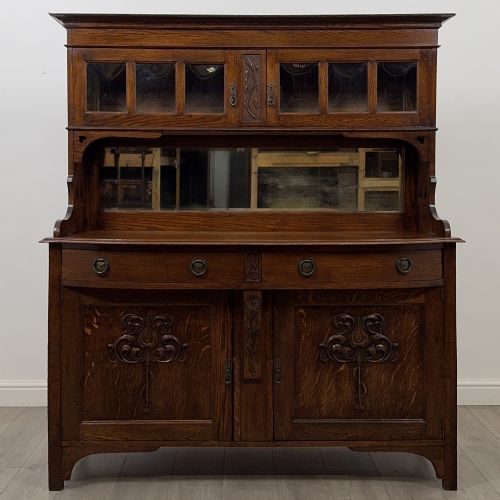
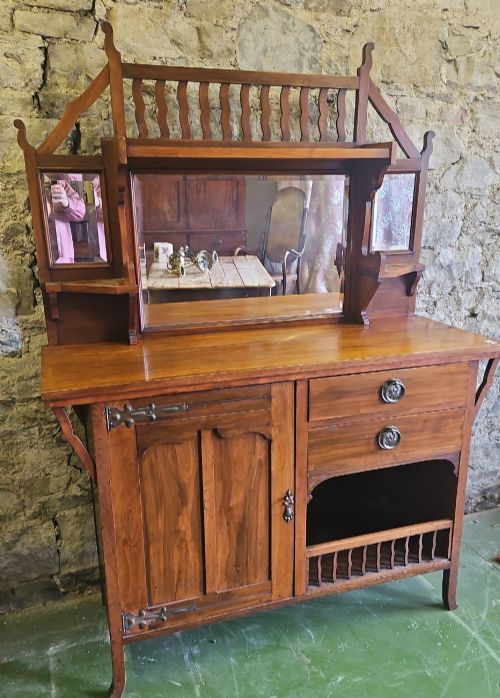
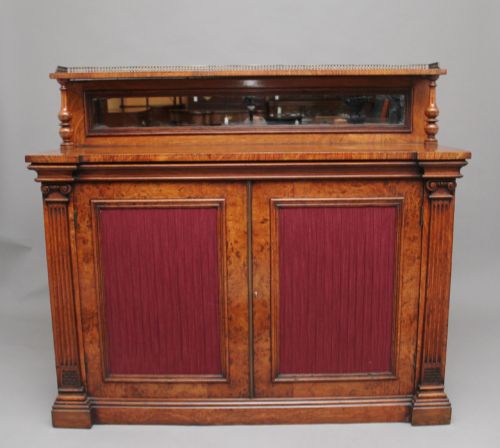
An antique mirror back buffet combines a low serving base with an integrated upright mirror superstructure, serving as both display furniture and practical storage. Buyers searching this phrase meet substantial nineteenth and early twentieth century forms designed for formal dining rooms.
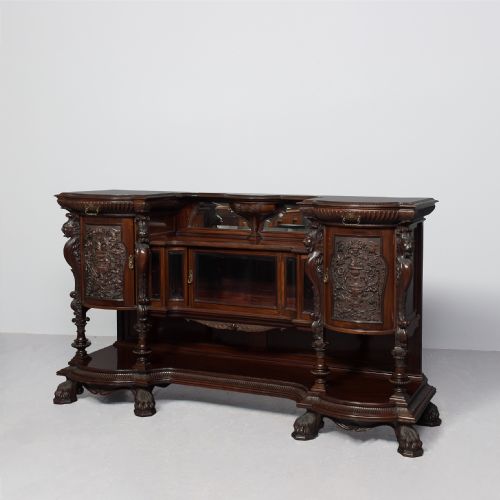
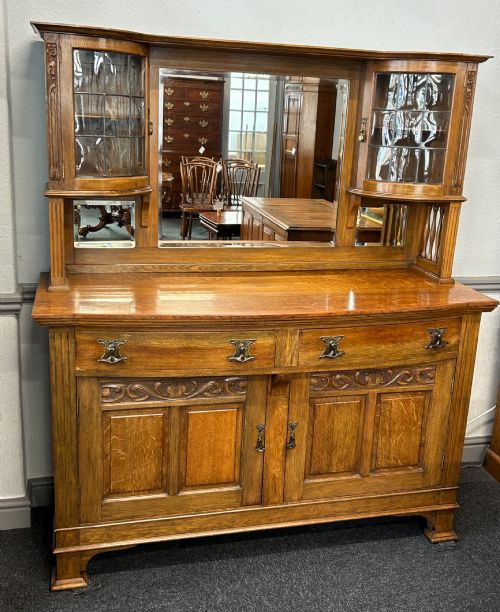
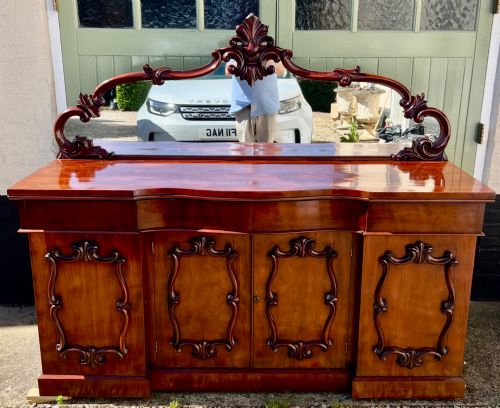
The pieces on this page span Victorian and Edwardian periods, stretching from mid-nineteenth century walnut and mahogany creations through to later Arts and Crafts oak designs. They appear as credenzas, sideboards, and cabinets featuring carved woodwork, marble tops, and brass hardware.
Victorian iterations often lean towards heavy carved mahogany and burr walnut, while Edwardian examples favour simpler oak constructions influenced by the Arts and Crafts movement. Every version provides enclosed cupboard space beneath an open surface suited for silver and china.
Materials and construction
Cabinetmakers utilised dense hardwoods like mahogany, oak, walnut, and pollard oak, often selecting burr veneers to create figured grain patterns across the main cupboard doors and drawers. These timbers formed robust carcasses capable of supporting heavy marble tops and substantial glass plates.
Mirror glass was set into carved wooden frames or integrated directly into the backboards above the serving surface to reflect room light and tableware. Brass hinges, handles, and locks secured the doors, while hand-carved detailing defined the pediments and friezes.
Antique Mirror Back Buffet Retail Price Guide 2026
Typical asking prices for mirror back buffet among the pieces listed under this phrase on Sellingantiques today, from the lower quarter to the upper quarter. They describe what is for sale here now, not the wider market.
Carved Green Man motifs occasionally peer out from nineteenth century oak panels, watching over the dining room with leafy expressions.
Distinguishing quality and craftsmanship
Superior examples display crisp, deep hand-carving and carefully matched wood veneers across the entire carcass rather than relying on surface mouldings. The weight of the timber, the thickness of the marble top, and the clarity of the original mirror glass separate standard workshop output from exhibition pieces.
Joinery execution dictates longevity, visible in the precision of drawer dovetails and the smooth operation of heavy doors. Maker attribution, through stamped signatures or documented construction traits, elevates certain pieces well beyond anonymous regional items.
T Simpson and Son·Shapland & Petter·Gillows
The Antique Mirror Back Buffet Glossary
- Credenza
- A sideboard or display cabinet often featuring a central cupboard flanked by curved or straight glass doors. Originating in Italy, the form became prominent in Victorian drawing rooms and dining spaces.
- Chiffonier
- A low sideboard or cabinet equipped with shelving or a mirror back. The term typically denotes a more compact form than a full dining room buffet.
- Pollard oak
- Oak timber taken from pollarded trees, yielding a dense wood with characteristic clustered knots and intricate swirling grain patterns. Cabinetmakers prized this material for decorative drawer fronts and panel inserts.
- Pedestal sideboard
- A large sideboard design featuring two substantial pedestals or cupboards flanking a central recessed section or drawer. This heavy architectural form dominated formal Victorian dining interiors.
Antique Mirror Back Buffet: Frequently Asked Questions
What is an antique mirror back buffet used for?
These large furniture items served as serving stations for food and drink during formal nineteenth century meals, while displaying porcelain and silver on the surface and within the cupboards.
The integrated mirror reflected candlelight and tableware, brightening dining rooms before electric lighting became common.
How do I date an antique mirror back buffet?
Dating relies on identifying stylistic markers such as Victorian Gothic revival carvings, Edwardian Arts and Crafts simplicity, or Regency rosewood details. Wood choices, handle styles, and construction methods also indicate the manufacturing decade.
Stamped maker marks or retailer labels provide definitive chronological reference points when present on the carcass.
Where should I place a mirror back buffet?
These pieces require a substantial wall in a dining room, hallway, or large living space to anchor their imposing height and width. Placing them opposite a window maximises the light reflected by the mirror glass.
Floor strength must support dense hardwoods like mahogany and oak, particularly variants featuring heavy marble tops.
How do I care for the mirror glass?
Original mercury or silvered mirror glass requires gentle cleaning with a soft cloth and a neutral glass cleaner applied sparingly to avoid seeping behind the plate. Preventing moisture contact along the edges preserves the silvering from oxidation and black spots.
Wooden frames surrounding the glass benefit from occasional application of appropriate furniture wax.