
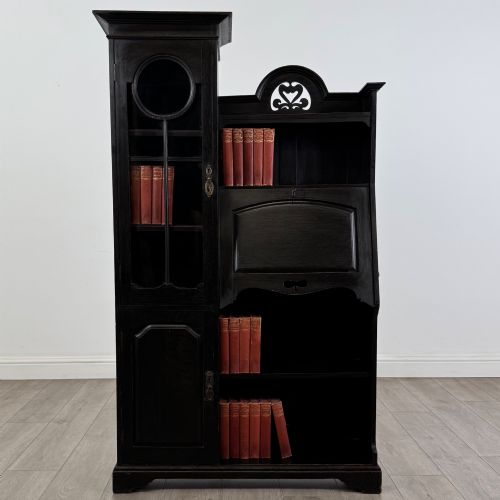
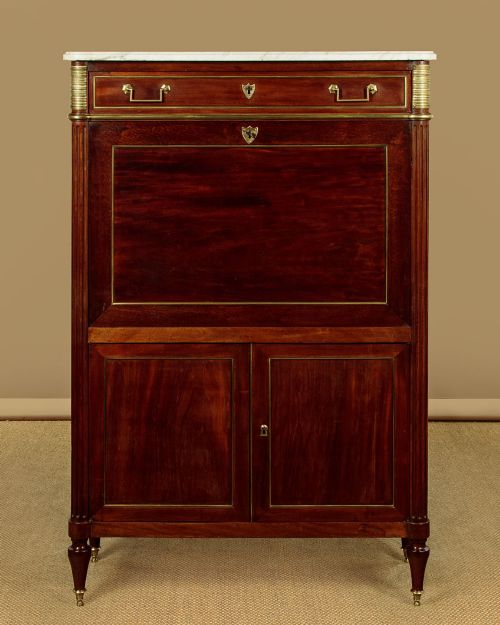
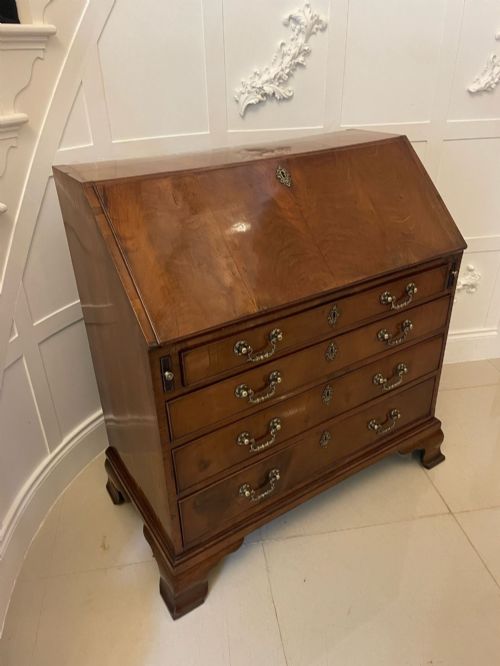
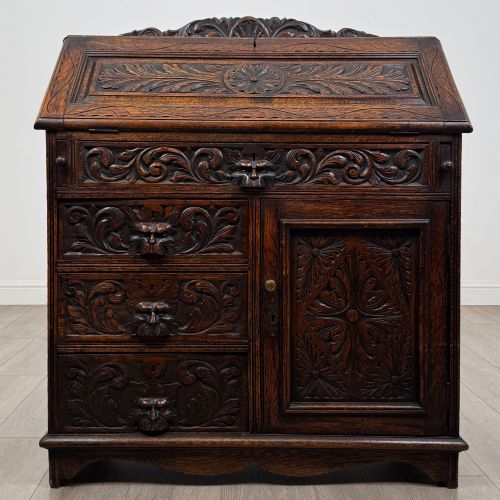
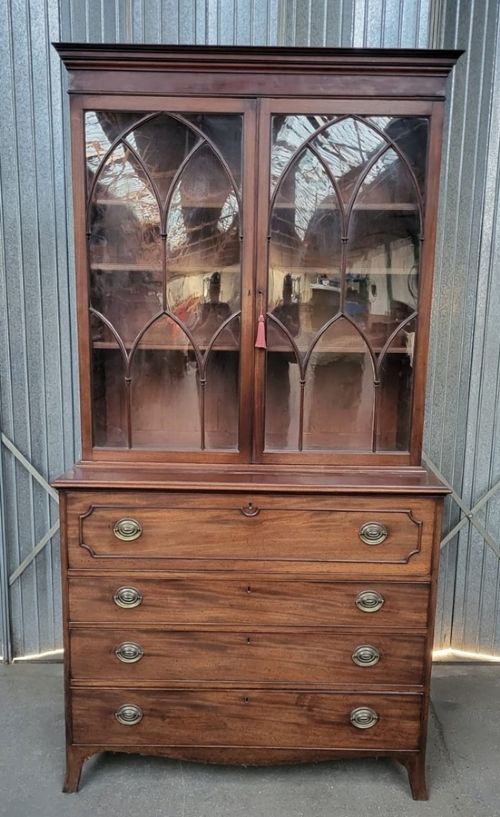

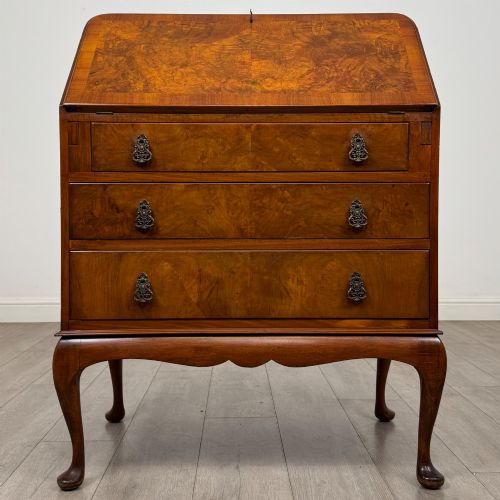
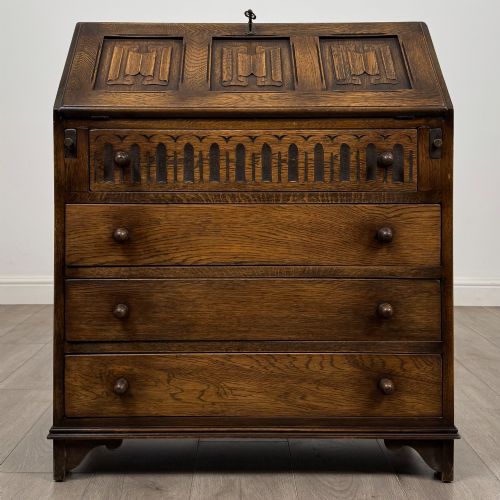
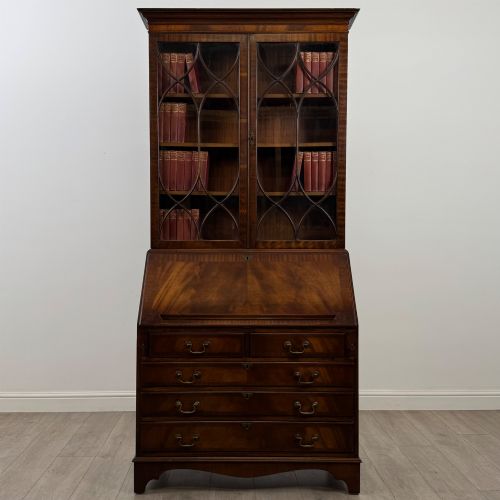
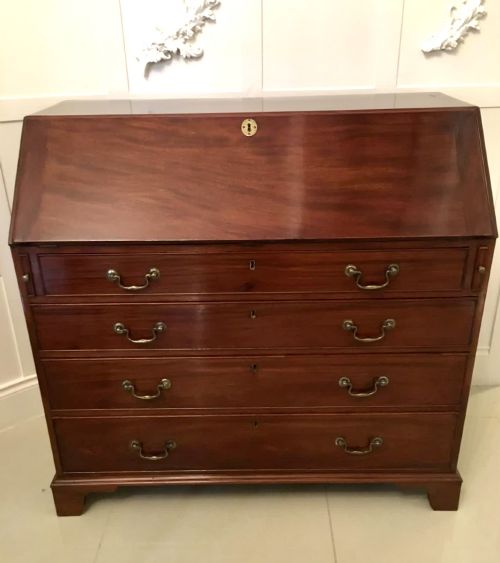
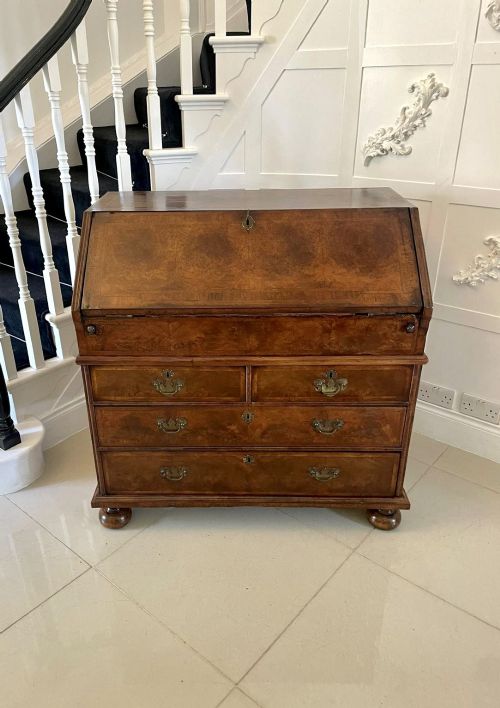
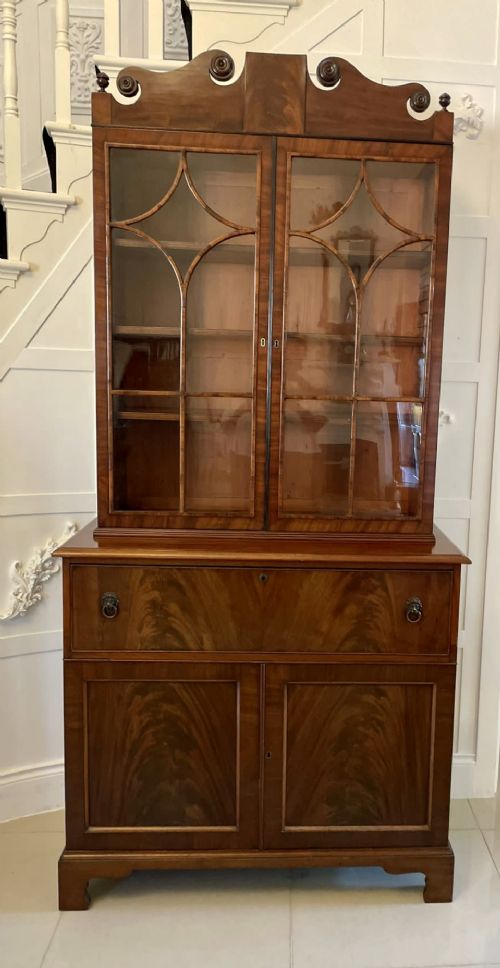
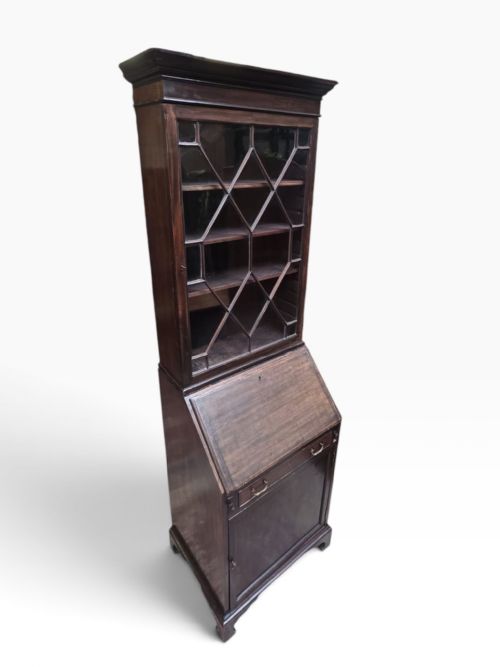
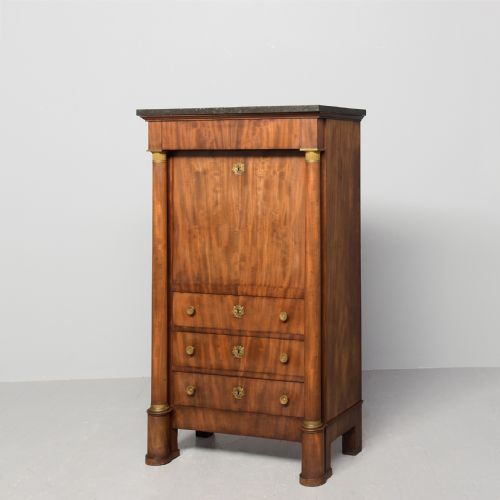
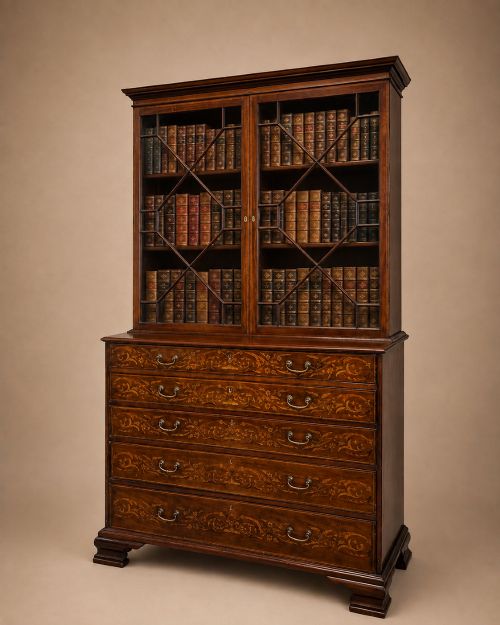
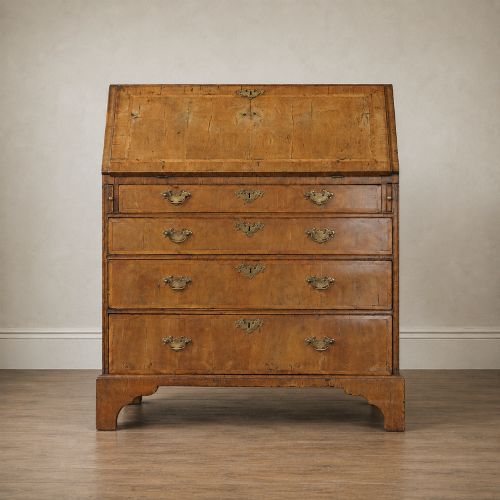
Drop Front Writing Cabinet
A drop front writing cabinet offers a hidden desk surface that folds away neatly when the correspondence is finished for the day.
Identifying a drop front writing cabinet
These pieces bridge the gap between cabinetry and workspace, appearing across multiple eras including Regency, Victorian, and Edwardian periods. Examples range from compact secretaire abattants to larger estate cabinets and bookcase combinations.
Styles vary from the clean lines of the Regency period to elaborate French Chateau influences, Jacobean Revival oak, and late Victorian craftsmanship. The primary function remains consistent: a vertical storage unit that conceals a writing surface and inner compartments.
Materials and construction methods
Cabinet makers utilised dense hardwoods such as mahogany, rosewood, oak, and kingwood, often enhanced with amboyna veneer to create striking exterior surfaces. These timbers provided the structural strength necessary for daily desk use.
Metal elements such as brass feature heavily in decorative inlay work, escutcheons, and structural hardware, while leather inserts frequently line the drop down writing surfaces. Glass also appears in upper cabinet doors where pieces double as bookcases.
Retail Price Guide 2026
Typical UK retail prices for drop front writing cabinet, calculated from the Sellingantiques database of over a million retail prices indexed since 2003. This retail price guide relies exclusively on Sellingantiques data; no external sources or auction records are used, so the figures do not describe the wider market.
Listings feature pieces spanning the Regency period, Victorian era, Edwardian years, and nineteen-twenty revivals, constructed in mahogany, rosewood, oak, and amboyna veneer.
Distinguishing quality across pieces
Quality separates through the choice of timber and the precision of veneer work, where exotic woods like amboyna or rosewood demonstrate superior craftsmanship. The intricacy of brass inlay and the seamless integration of interior pigeonholes and small drawers further define the upper tier.
Structural integrity of the hinged writing flap and the smoothness of the internal mechanisms indicate the standard of construction. Pieces associated with named makers or distinct stylistic revivals command attention through careful proportion and refined detailing.
Druce & Co.
The Drop Front Writing Cabinet Glossary
- Escritoire
- A small writing desk with a drop down front, typically fitted with drawers and pigeonholes inside. This term often appears interchangeably with bureau.
- Secretaire Abattant
- A tall vertical cabinet featuring a drop front writing surface that conceals an interior compartment. This form originates from French cabinet making traditions.
- Bureaux and Desks
- Furniture categories encompassing writing surfaces with enclosed storage compartments. They serve both clerical and display functions in traditional interiors.
- Amboyna Veneer
- A highly figured timber overlay sourced from the burl of the narra tree. It provides a rich, mottled pattern prized for decorative cabinet fronts.
- Wellington Chest
- A tall, narrow set of drawers secured by a locking side pilaster bar. It represents a specific form of case furniture often grouped with administrative cabinets.
Frequently Asked Questions
What is a drop front writing cabinet?
A drop front writing cabinet is a piece of furniture that combines vertical storage with a fold down writing surface. When closed, it resembles a traditional cabinet or chest.
When opened, the front flap lowers to reveal a flat desk area alongside small drawers and pigeonholes for stationery.
How do I date a drop front writing cabinet?
Dating relies on observing the prevailing style, timber choices, and construction techniques associated with specific periods. Pieces span from Regency rosewood designs to Victorian and Edwardian oak or mahogany formats.
Hardware details like brass inlay and the presence of specific veneers also help assign pieces to eras such as the nineteenth century or 1920 revival styles.
Where were these cabinets used?
These cabinets traditionally served in studies, libraries, and private drawing rooms where correspondence and record keeping took place. Their enclosed design kept private papers out of sight.
Today, they function well in home offices or living spaces as compact desks that conceal modern clutter when not in use.
What is the difference between a bureau and an escritoire?
A bureau typically refers to a desk with a sloping or drop front lid placed over a set of drawers. The term is widely used across British furniture history.
An escritoire often implies a lighter, more refined writing cabinet, frequently associated with French or Regency designs featuring amboyna or kingwood veneers.