

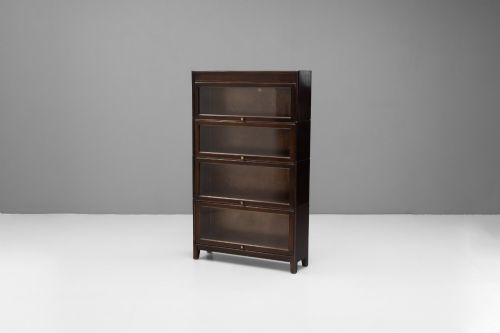
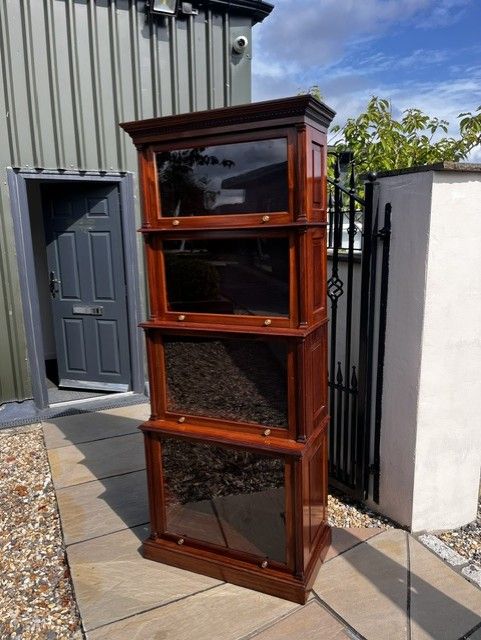
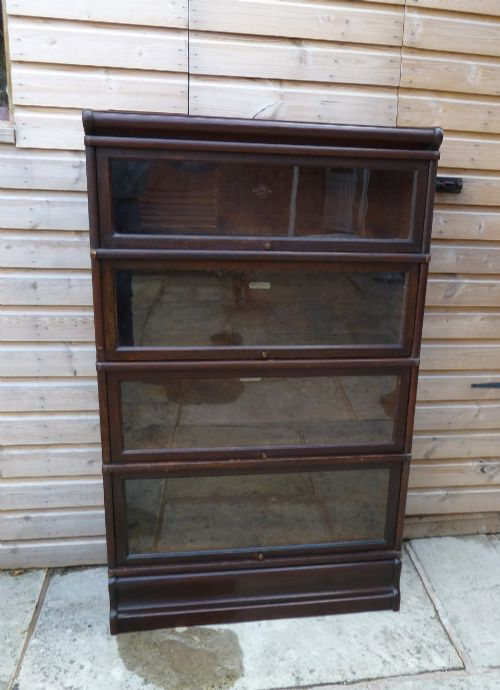
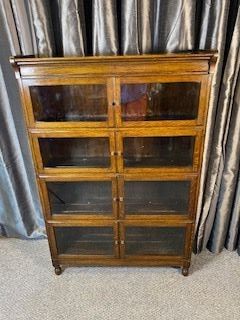
Edwardian Stacking Bookcase
These modular edwardian stacking bookcase designs combine practical library storage with ingenious glazed sections built to protect working volumes.
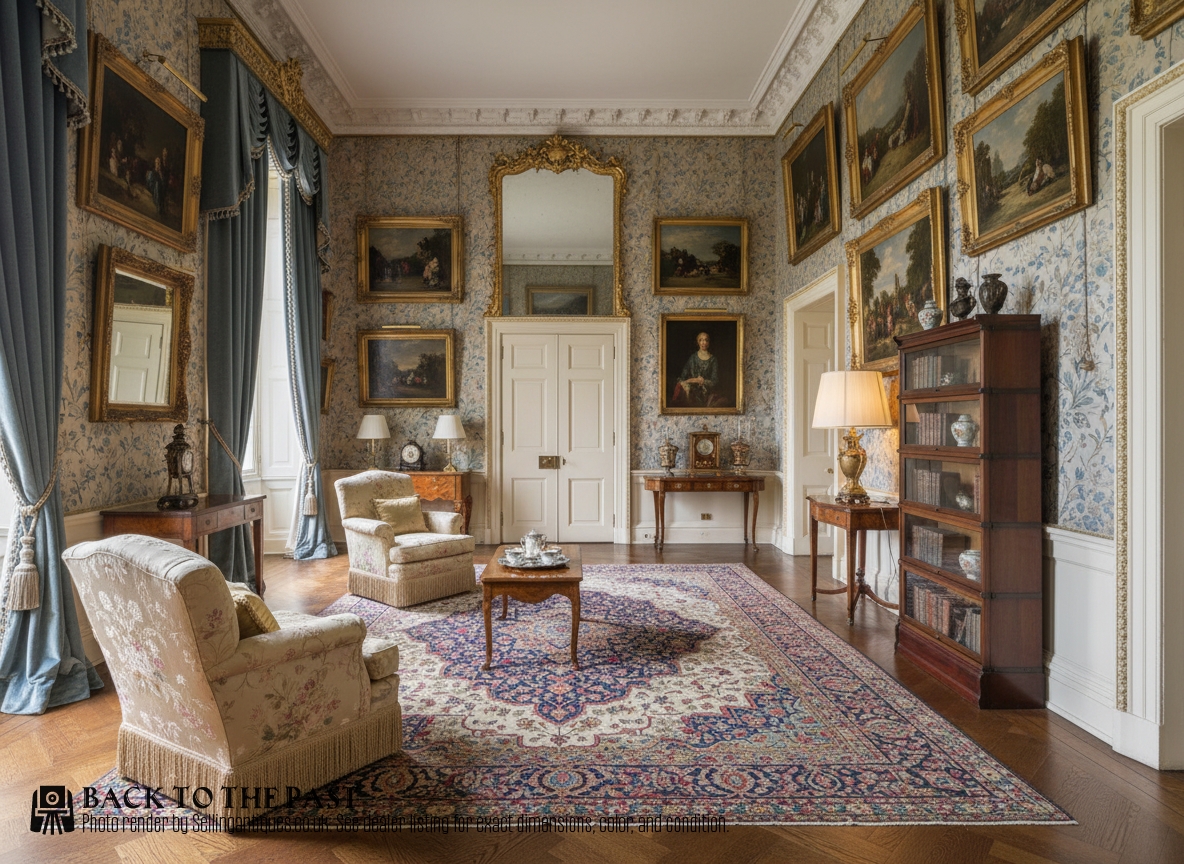
Edwardian Stacking Bookcase
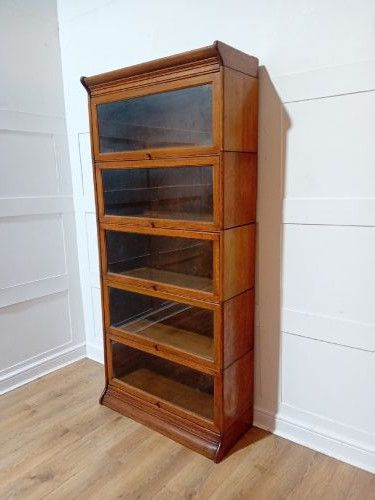
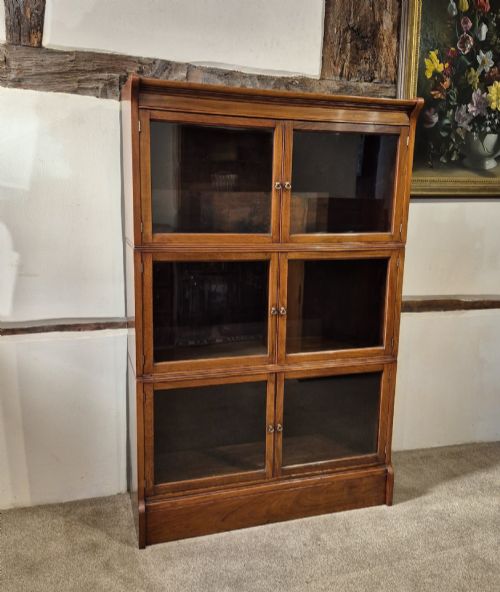
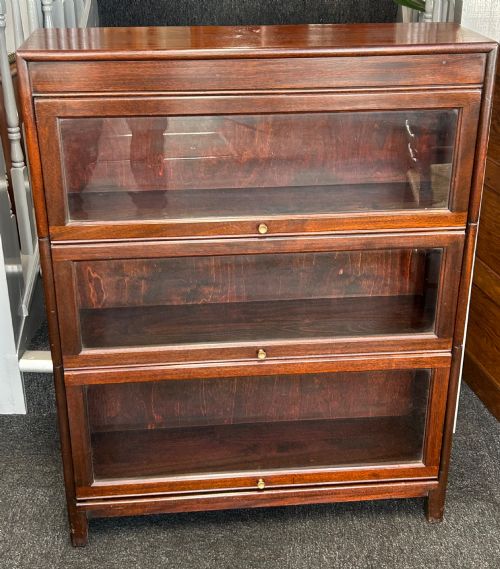
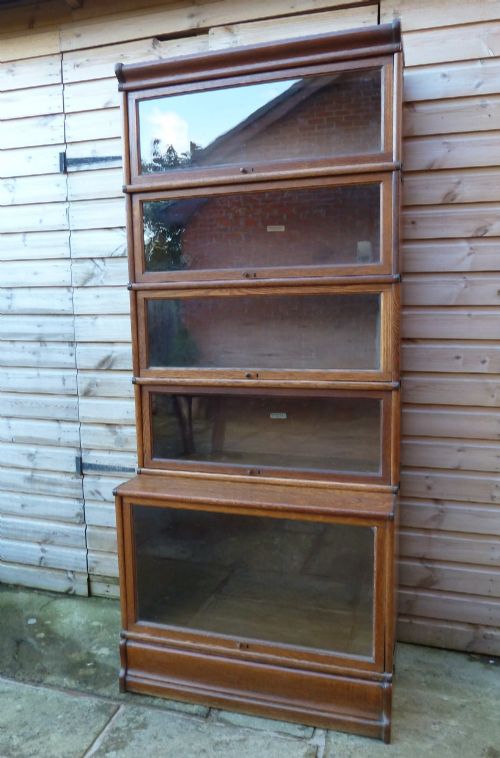
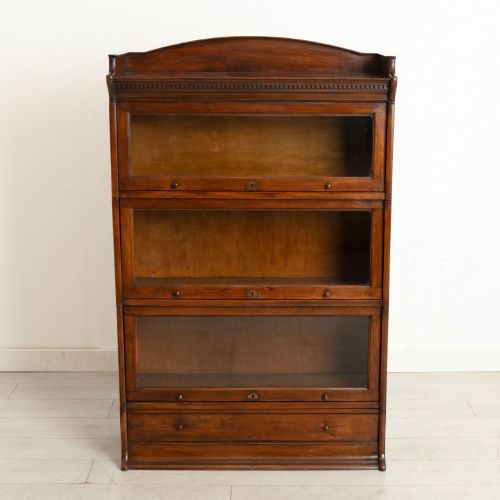
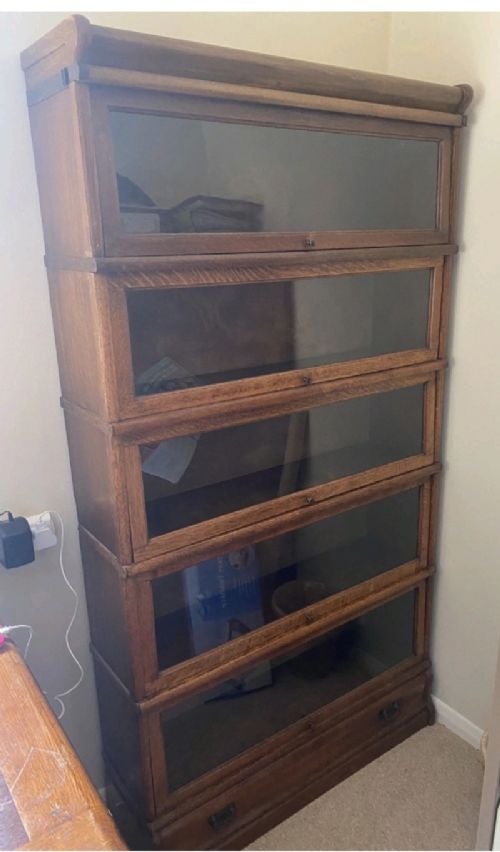
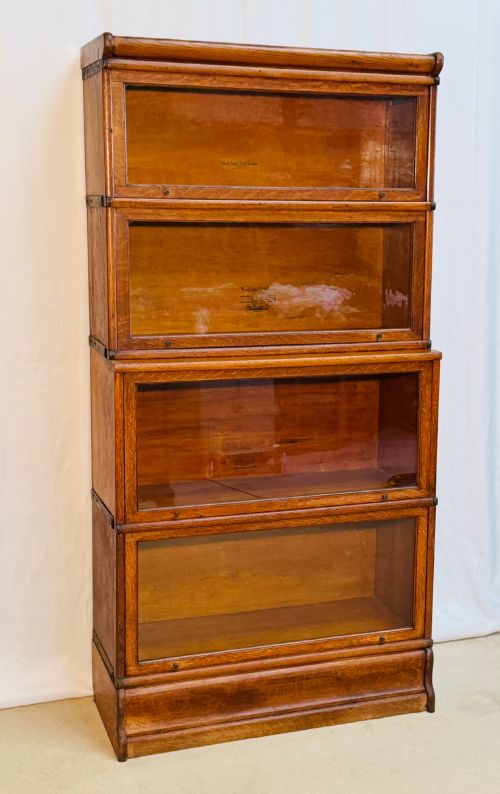
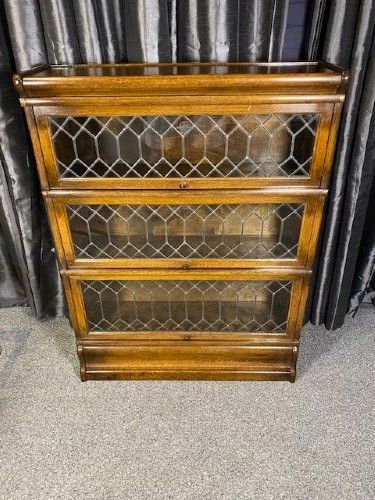
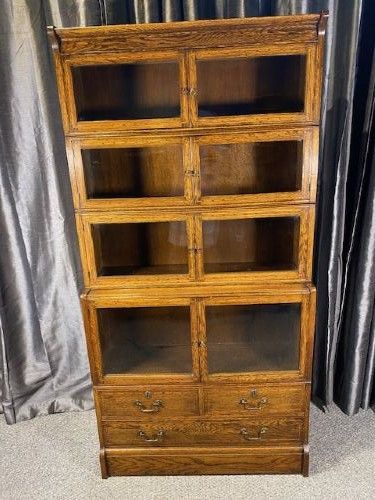
When you examine an edwardian stacking bookcase, you find modular compartments that lift and slide to enclose individual tiers of books. The surviving examples span the Edwardian period through to the nineteen thirties, drawing together office utilities and home library furnishings.
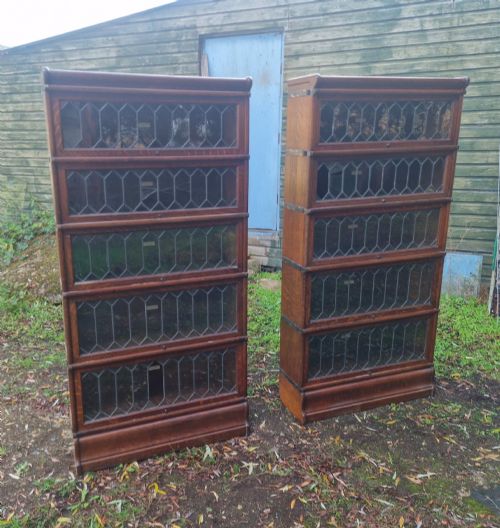
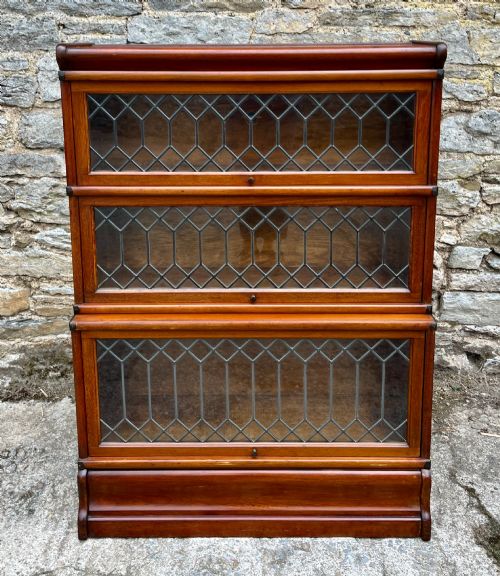
Oak and mahogany dominate the offerings, built either as single vertical stacks or matched pairs. You frequently encounter variations designated as barrister or lawyer variants alongside manufacturer stamped cabinets.
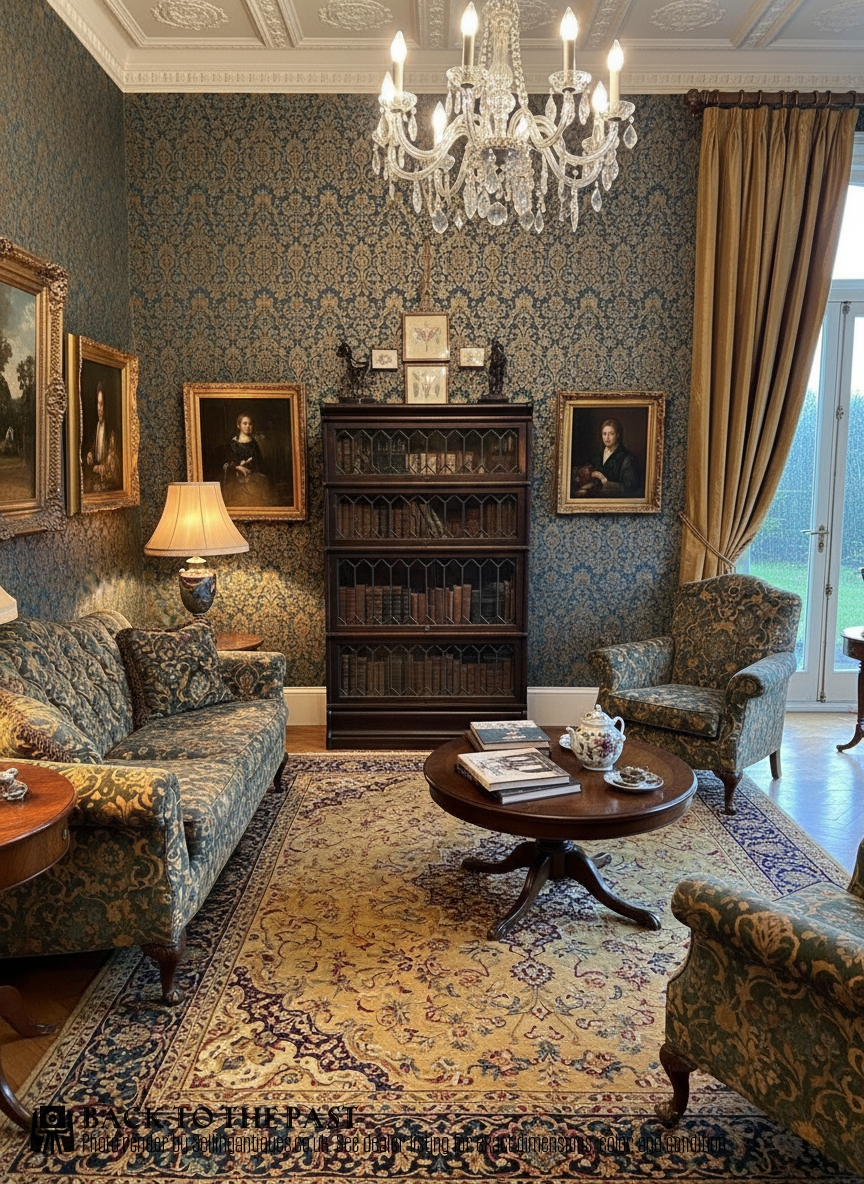
Materials and Construction
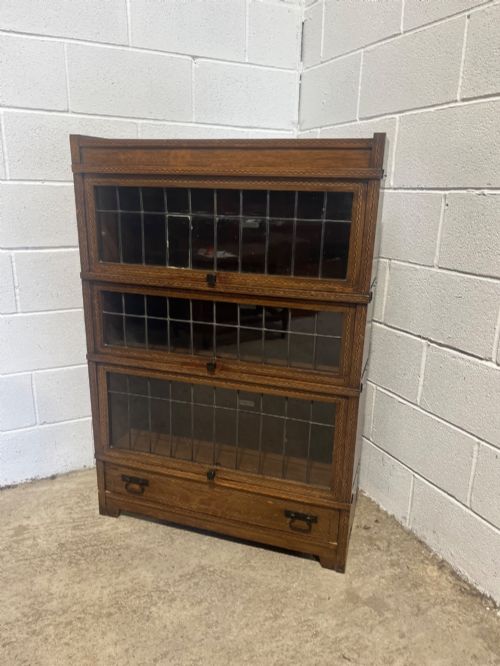
The construction relies heavily on solid oak and mahogany timbers, sometimes finished with inlay work or limed treatments. Glass panels, occasionally held together by lead cames, are fitted into wooden frames that pivot upwards on metal mechanisms.
Brass fittings appear on the hardware components, securing the modular sections vertically while allowing individual tiers to separate for transport.
Edwardian Stacking Bookcase Retail Price Guide 2026
Typical asking prices for edwardian stacking bookcase among the pieces listed under this phrase on Sellingantiques today, from the lower quarter to the upper quarter. They describe what is for sale here now, not the wider market.
Legal professionals originally relied on these stacking compartments so their mobile libraries could travel between courtrooms intact.
Gradations in Quality
The distinction between standard office utility pieces and finer examples rests on timber selection and decorative restraint. Matched grain patterns, specialised mahogany builds, and integrated brass hardware elevate certain variants above routine commercial storage.
Original matching tiers with working mechanical lifts demonstrate greater craftsmanship than later assembled units or those with replaced glass panels.
Globe Wernicke·Minty·Lebus·AMYL·Gunn·W.M Baker & Co
The Edwardian Stacking Bookcase Glossary
- Sectional bookcase
- A modular shelving unit built from separate stacking tiers that can be arranged or moved independently.
- Barrister bookcase
- A specific type of stacking cabinet designed with glazed doors that lift and slide inside the compartment above the books.
- Globe Wernicke
- A prominent maker name frequently associated with modular stacking office and library bookcases from the early twentieth century.
- Leaded glass
- Small panes of glass joined together by lead strips, commonly seen on arts and crafts period bookcase doors.
- Golden oak
- A bright warm timber finish applied to oak furniture popular during the Edwardian era.
Edwardian Stacking Bookcase: Frequently Asked Questions
How do the glass doors open?
The glass doors lift upwards on internal metal arm mechanisms and slide smoothly into the upper recess of each individual bookcase tier.
This clever design keeps the books protected from dust while allowing unobstructed access to the contents of each specific section.
Can the sections be separated?
Yes, the modular tiers simply stack one on top of another without permanent fixings, usually secured by side locking plates or brass brackets.
This construction method made transportation straightforward for working professionals who frequently relocated their libraries.
What is a barrister bookcase?
A barrister bookcase is a specialised stacking cabinet traditionally used by lawyers to transport and protect their working law reports.
The enclosed glass tiers kept valuable legal volumes safe from office dust and damp conditions.
How do I date an oak stacking bookcase?
Dating relies on observing construction details, timber types, maker stamps, and hardware styles associated with the Edwardian period and the early twentieth century.
Most surviving examples date from between nineteen hundred and nineteen thirty, often showing Arts and Crafts influences in their simpler lines.