

Leaded Glazed Bookcase
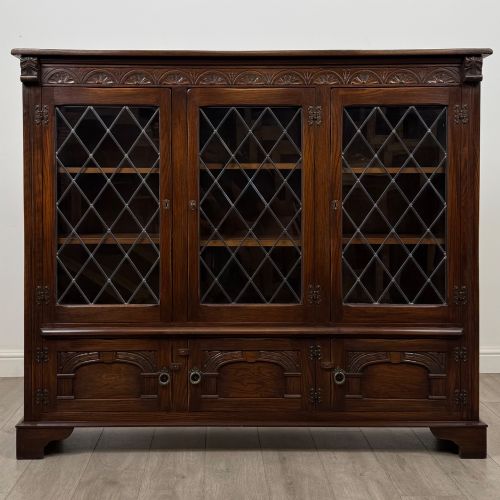
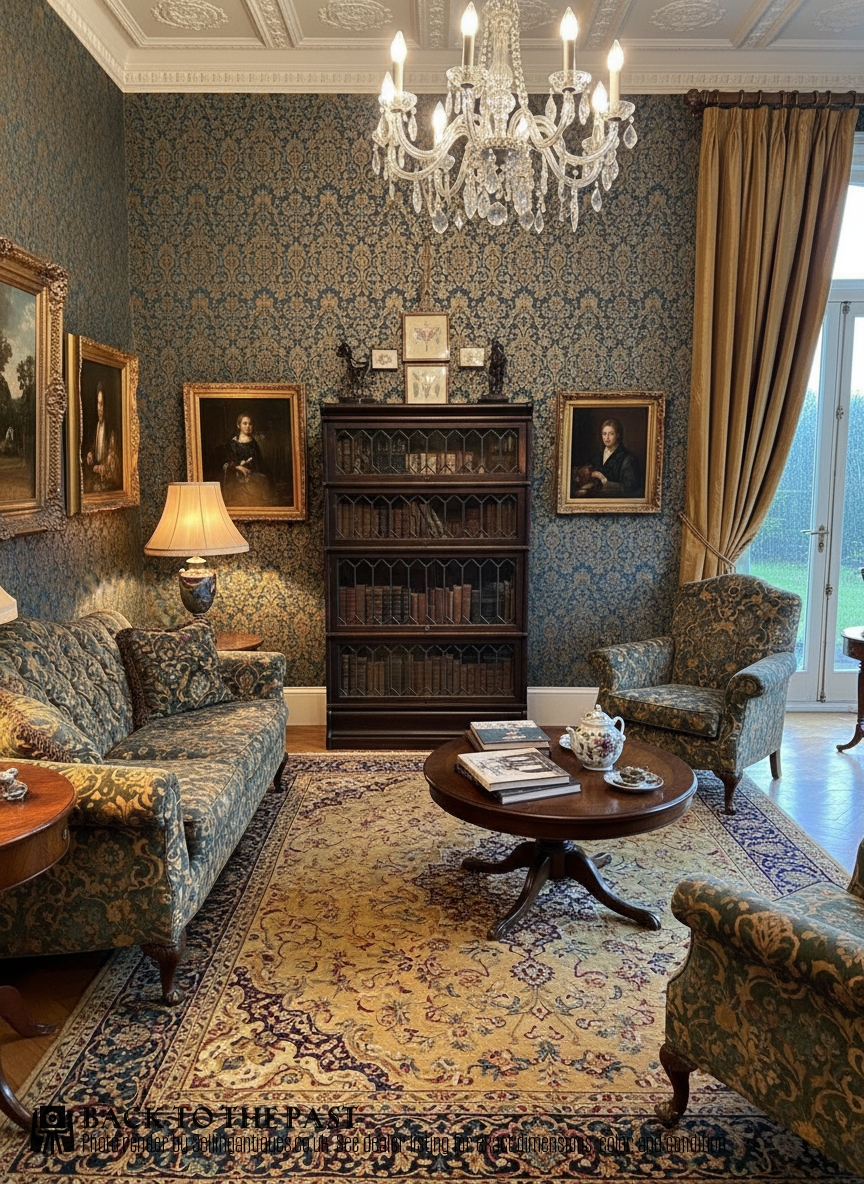
A leaded glazed bookcase organises a library behind small panes held together with lead cames, bringing texture and architectural weight to a room.
Leaded Glazed Bookcase
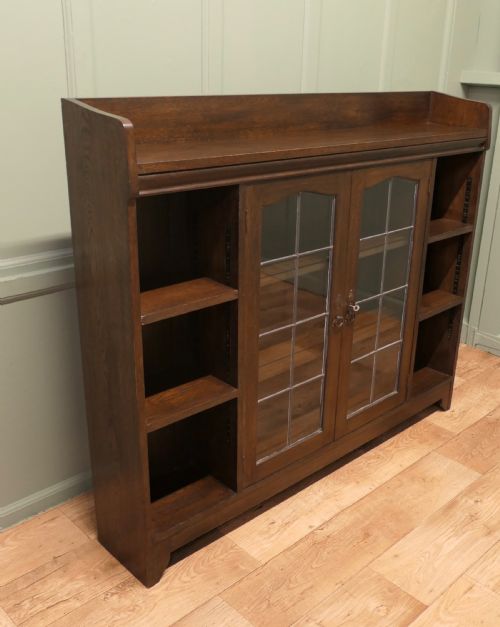
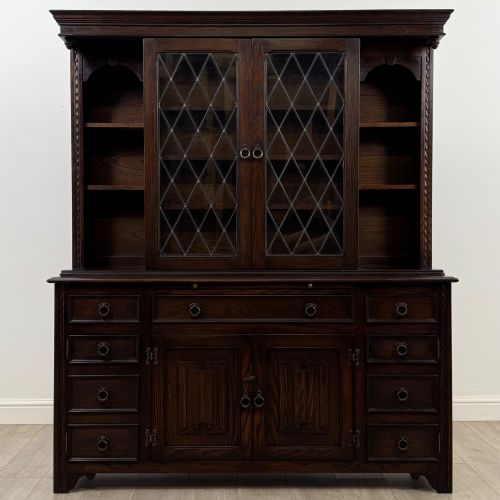
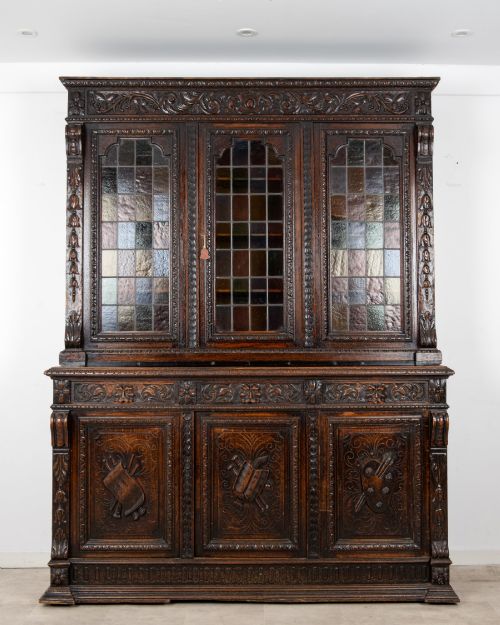
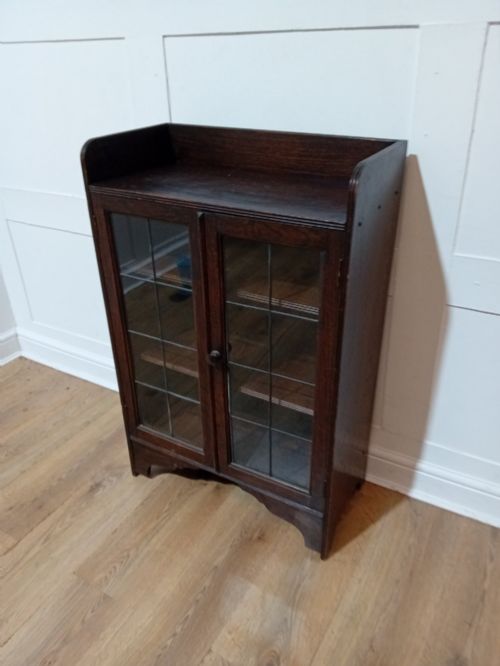
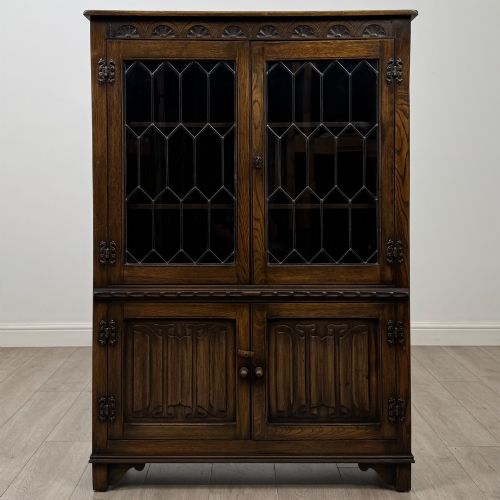
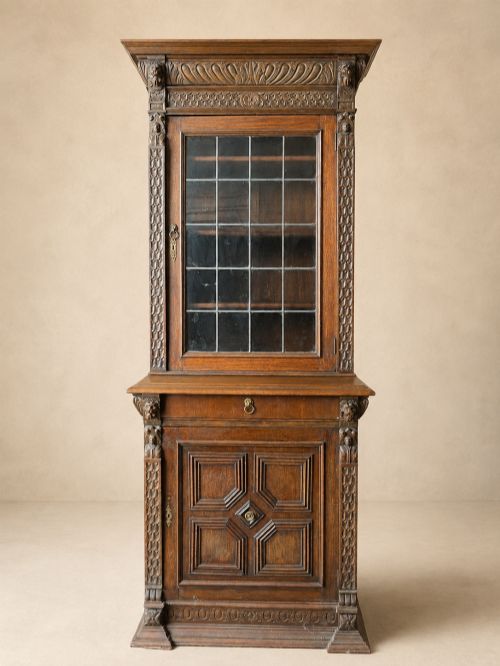
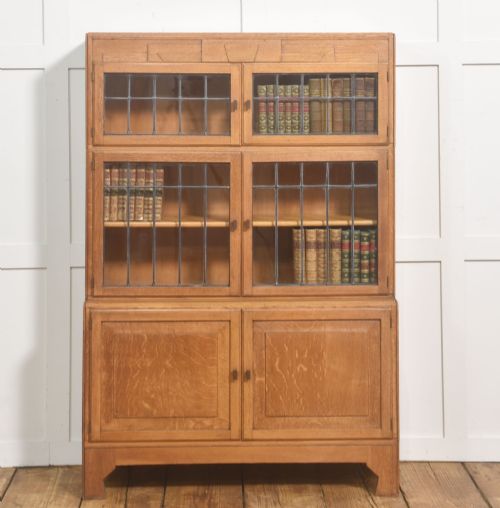
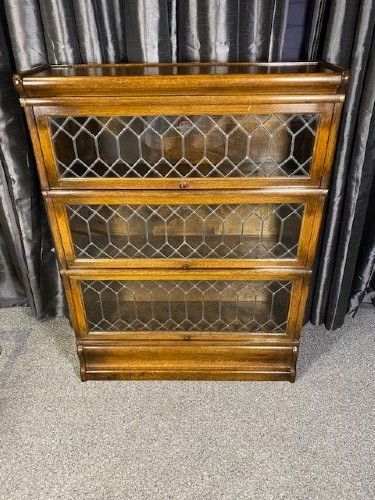
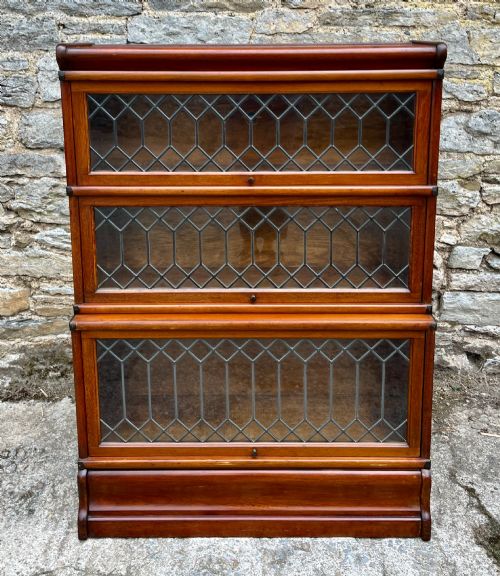
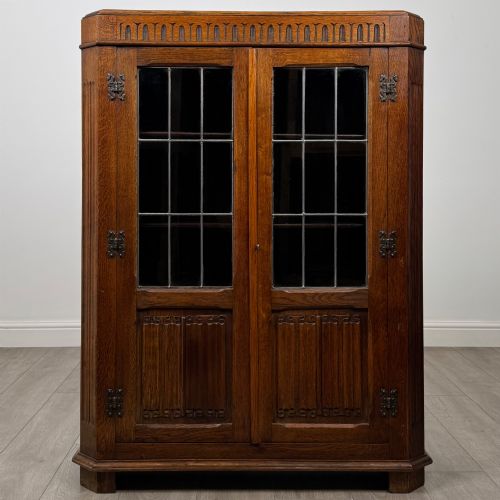
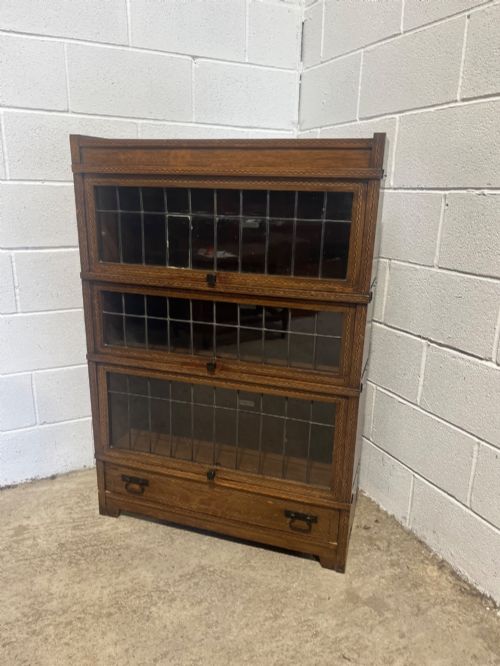
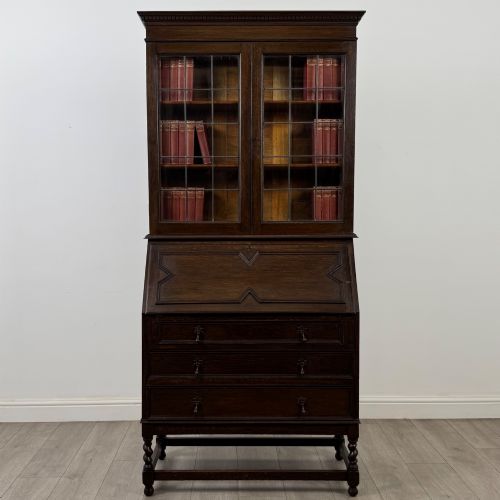
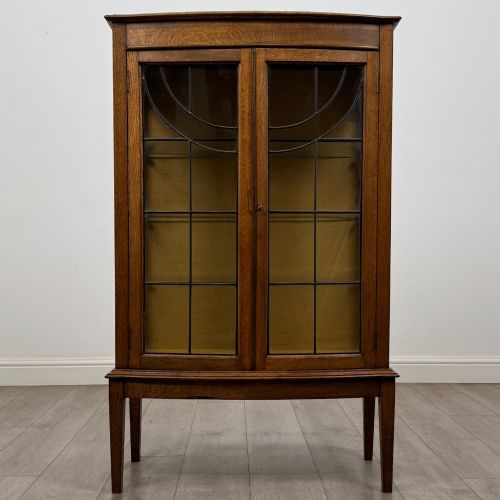
A leaded glazed bookcase typically appears as an upright cabinet, a bureau with a sloping desk flap, or a stacking modular design with lifting glass doors. The pieces span from the late nineteenth century through the Edwardian period and into the nineteen-twenties, drawing on styles such as Arts and Crafts, Jacobean Revival, and Art Nouveau.
Oak dominates the selection, appearing alongside mahogany and walnut, while the glazing uses lead strips to join individual panes of glass into geometric or decorative patterns. Cabinets take various proportions, from low dwarf units and slender uprights to tall multi-tier stacking sections designed to protect heavy volumes.
Materials and construction
Makers built these pieces primarily using solid oak or mahogany frames, incorporating glass held securely within flexible lead cames that accommodated the minor shifts of timber over time. Brass hardware, iron brackets, and inlaid details often finish the construction, particularly in modular stacking systems where individual tiers operate independently.
Timber surfaces received traditional polish, wax, or occasionally paint, while lead came work required precise soldering at intersecting joints to support the weight of the glass panels.
Listings feature oak predominantly, alongside mahogany and walnut, spanning the late Victorian period through the Edwardian era to the nineteen-thirties.
Distinctions in craftsmanship
Quality rests in the precision of the joinery and the integrity of the lead glazing, where heavier timber frames and tightly soldered cames separate robust examples from lighter alternatives. The smooth operation of stacking mechanisms in modular units or the refined carving on Edwardian uprights indicates the level of care invested by the maker.
Globe Wernicke·Minty·Maple & Co.·Liberty & Co.·Lambs of Manchester
The Leaded Glazed Bookcase Glossary
- Leaded glass
- Glass panes joined together by lead strips known as cames. This technique allows smaller pieces of glass to form larger windows or cabinet doors in geometric patterns.
- Globe Wernicke
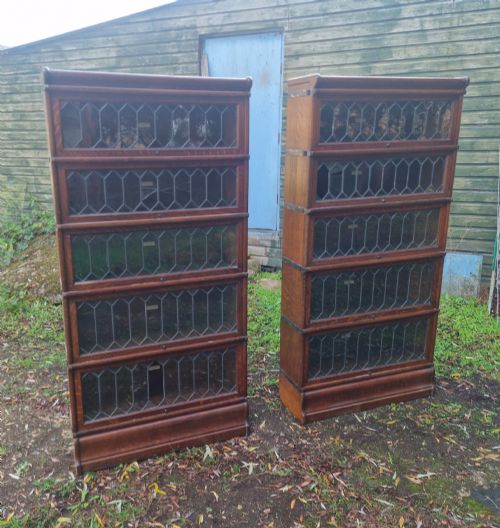
- A brand name that became synonymous with stacking barrister bookcases. These units feature modular tiers with glass doors that lift and slide inside the case.
- Secretaire bookcase
- A cabinet incorporating a pull-down desk drawer or flap combined with shelving above. It provides a writing surface alongside enclosed storage for books.
- Linenfold
- A carved wooden panel motif popular in revival styles that resembles folded cloth. It adds texture to the solid wooden sections of cabinet doors.
- Came
- A slender strip of cast lead with a channel profile used to hold glass panes in place. Soldered joints connect the network of cames across the door.
Leaded Glazed Bookcase: Frequently Asked Questions
What is a barrister bookcase?
A barrister bookcase is a modular shelving unit made of stacked sections with glass doors that lift and slide into the cabinet above each shelf. This design allowed travelling lawyers to transport their libraries securely.
The sectional format lets owners add tiers as a collection grows, keeping volumes protected from dust behind glazed panels.
Where should I place a glazed cabinet?
Position a leaded glazed bookcase away from direct sunlight to protect antique book bindings and wooden finishes from fading. Placing the unit on a level floor ensures that stacking doors glide smoothly within their frames.
Allow enough clearance in front of the cabinet if you choose a modular design with doors that swing upward before sliding inward.
How do I date an oak bookcase?
Dating relies on architectural details, hardware, and stylistic markers such as Arts and Crafts copper hinges or Jacobean Revival linenfold carving. Edwardian and early twentieth-century pieces often use machine-sawn timbers alongside traditional hand-finished joinery.
Maker stamps or labels on the reverse or inside the shelf tiers provide the most reliable indication of origin and period.