
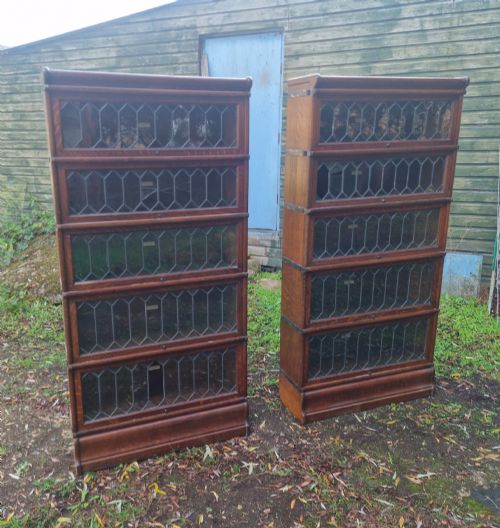
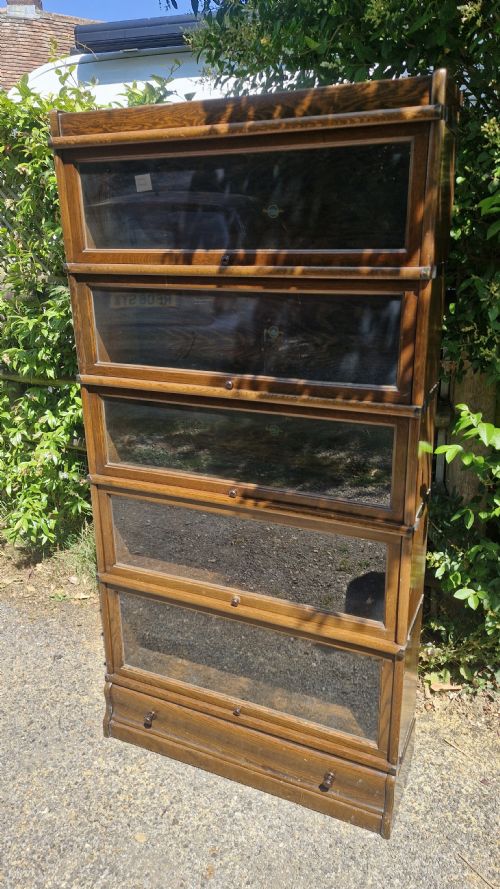


Five Tier Bookcase
A five tier bookcase offers modular display and storage, delivering classic Edwardian utility with individual glazed sections for your library.
What five tier bookcase means
A five tier bookcase brings together five stacked shelving compartments, most frequently seen in oak construction with glass doors from the Edwardian period. These modular pieces allow individual sections to be separated or rearranged while keeping volumes protected behind glazed fronts.
The format is heavily represented by Globe Wernicke style sectional cabinets, developed to house growing collections of books without requiring fixed shelving. Oak is the primary wood recorded in the evidence, complemented by occasional examples in mahogany.
How they were made
Cabinet makers utilised solid oak and mahogany to build the structural carcase of each modular tier, ensuring stability across five stacked compartments. Individual tiers incorporate leaded or clear glass panels fitted into wooden frames to form the lifting and sliding doors.
The sectional design relies on precision joinery so each tier locks securely onto the next without permanent fixings. Metal mechanisms allow the glass doors to lift and recess smoothly into the top of each compartment.
The clever lifting doors let you pretend you are operating the dashboard of a vintage steam train every time you grab a novel.
What varies in quality
Quality rests in the precision of the sectional fit and the clarity of the timber grain selected by the cabinet maker. Superior examples exhibit seamless stacking where joints align perfectly across all five tiers.
The refinement of the door action and the quality of the glass, including leaded work, distinguish finer pieces from standard utilitarian cabinets. Timber selection ranges from plain utility oak to richly figured grain.
The Five Tier Bookcase Glossary
- Sectional bookcase
- A cabinet built from separate modular tiers that stack vertically. This design allows the furniture to grow with a library.
- Globe Wernicke
- A prominent style of elastic bookcase featuring interlocking modular sections with lifting glass doors. It originated in the late nineteenth century and defined office and library storage.
- Leaded glass
- Small panes of glass held together by strips of lead cames within a door frame. This technique adds decorative pattern and structural rigidity.
- Edwardian
- The period of British design spanning the reign of King Edward VII until the First World War. Furniture from this era often lighter proportions than Victorian predecessors.
Frequently Asked Questions
How do sectional bookcases work?
Sectional bookcases operate through interlocking modular tiers that sit securely one upon another without fixed screws or glue. Each compartment has a lifting glass door that slides back into the unit.
Collectors can add or remove tiers depending on the size of their book collection.
What wood are they made from?
The recorded pieces utilise solid oak as the primary material, alongside occasional examples in mahogany. Oak provides the robust structure needed for heavy stacking.
Glass and lead components are integrated into the doors of each individual tier.
Are these bookcases Edwardian?
Many examples date from the Edwardian period and the early twentieth century, specifically around nineteen ten to nineteen twenty. The style aligns with the popularity of modular office and library furniture.
Construction methods from this era emphasise practical utility combined with neat quarter-sawn timber.