

Globe Wernicke Cabinet
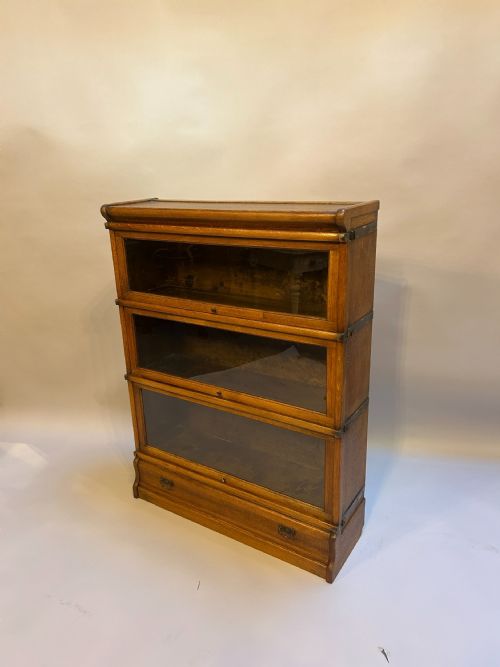
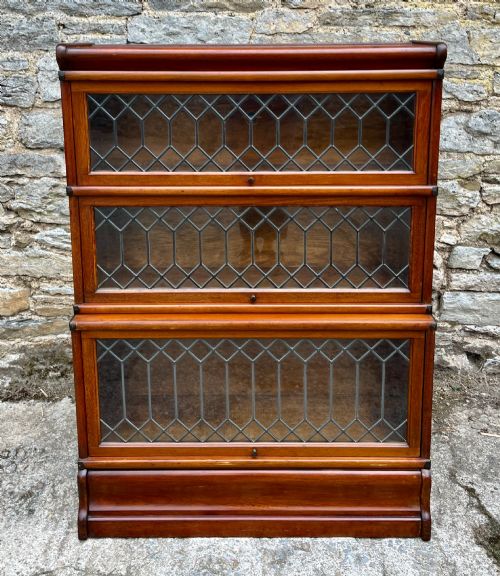
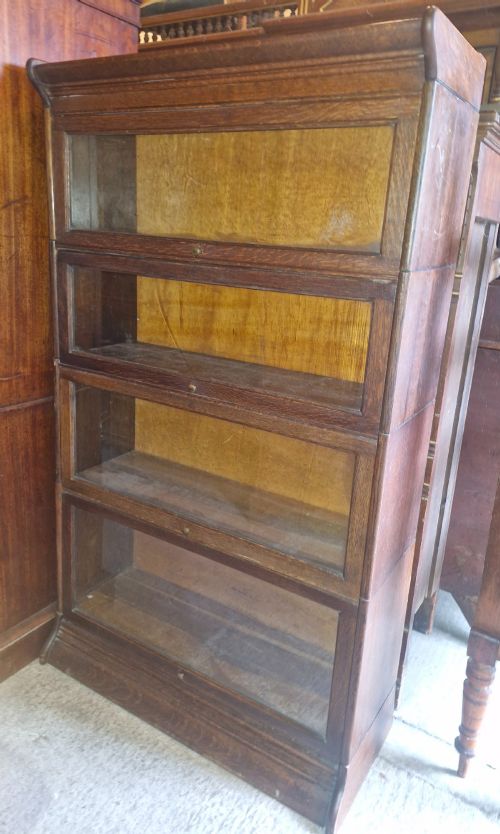
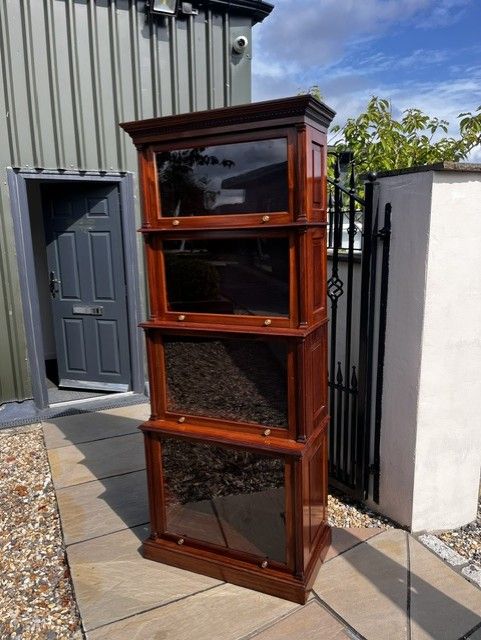
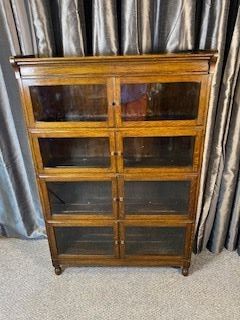
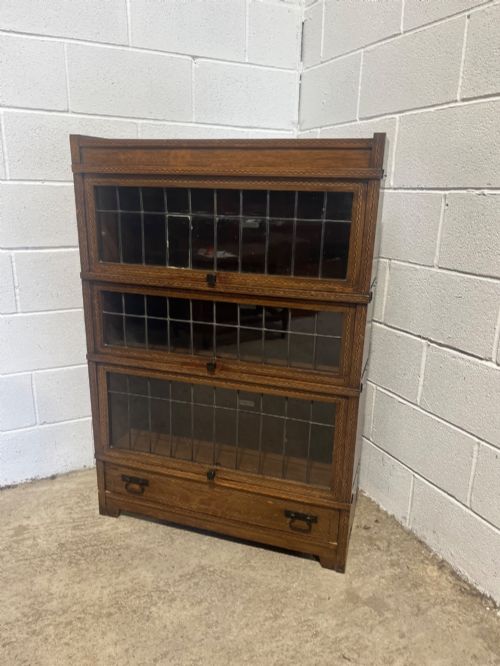
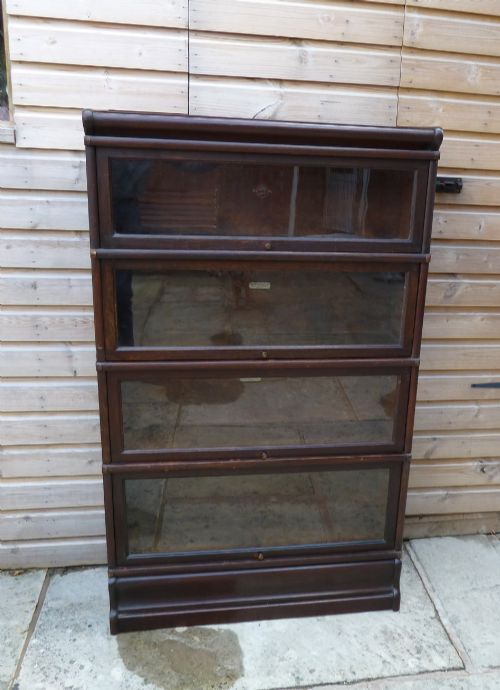
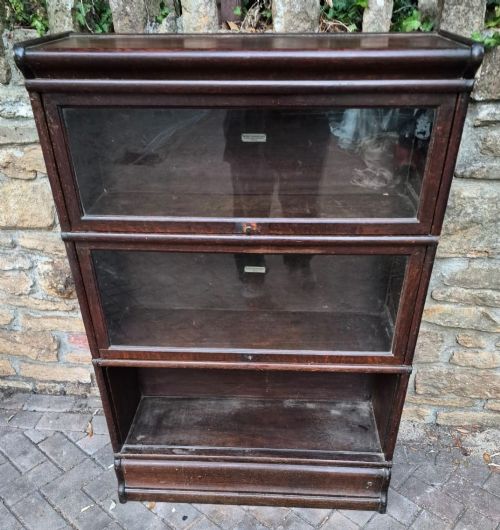
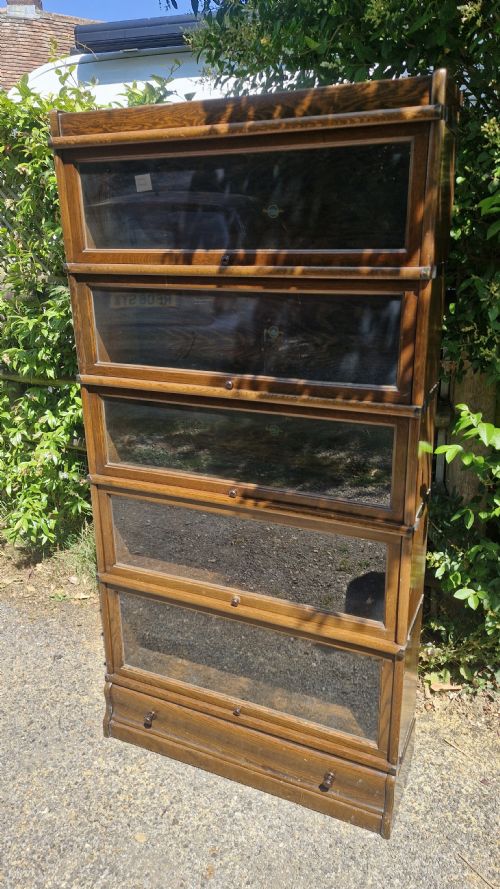
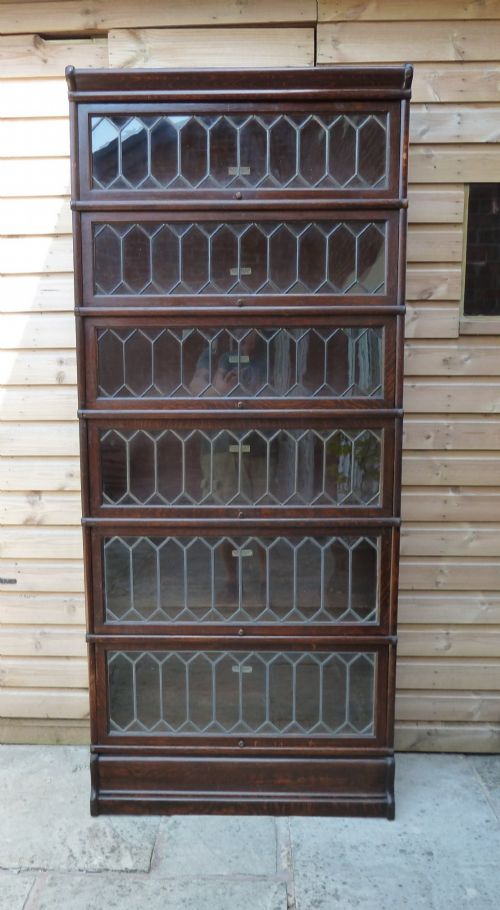
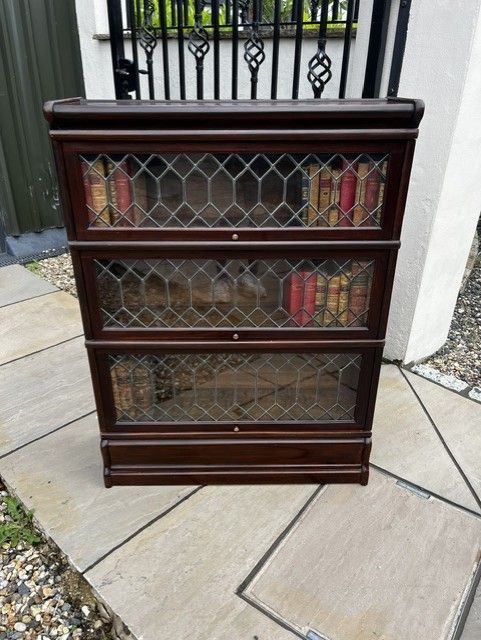
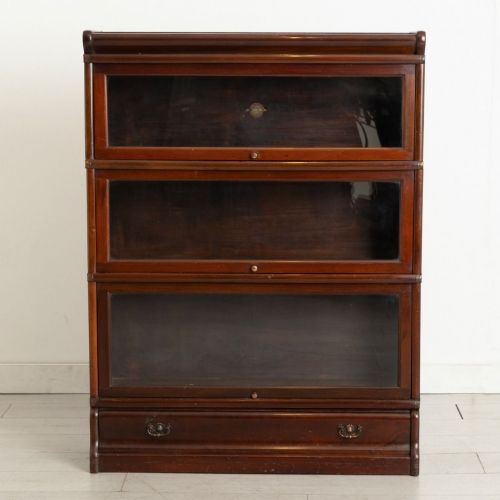
A globe wernicke cabinet is a modular stacking bookcase designed to protect volumes behind individual glazed lifting doors.
Globe Wernicke Cabinet
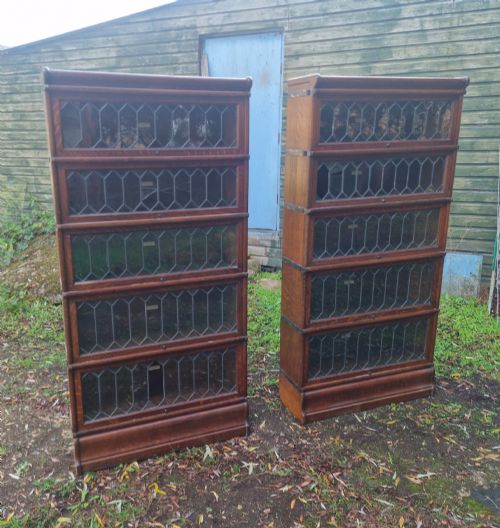
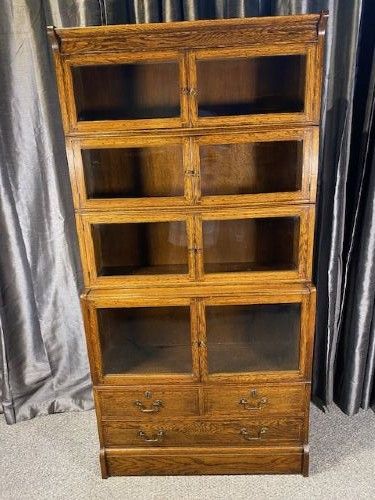
A globe wernicke cabinet consists of multiple independent tiers stacked vertically to form a functional bookcase or office cabinet. Most examples found here date from the Edwardian era through to the nineteen thirties, reflecting a period of robust commercial and domestic utility.
The form relies on a modular system where each shelf section, base, and cornice separate easily. Oak and mahogany dominate the listings, frequently housing books, files, or desk collections within domestic studies and professional offices.
How They Were Made
Cabinet makers utilised solid oak and mahogany alongside veneers, constructing individual tier boxes with integrated metal mechanisms to guide the lifting glass doors. Brass handles, brackets, and knobs provide the functional hardware necessary for the operation of each section.
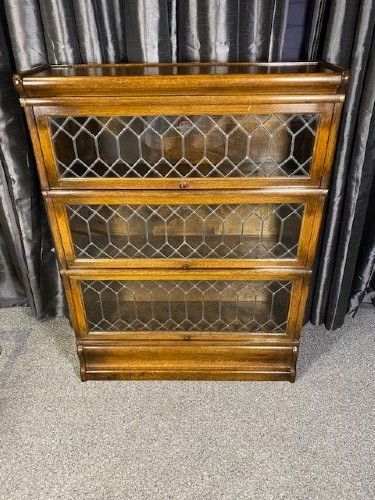
Glazing takes plain or leaded forms, set directly into wooden frames that pivot outward and slide into the recess above the books. Finished surfaces range from golden oak polishes to darker mahogany tones, maintaining the wood grain underneath.
Listings feature oak and mahogany predominantly, spanning the Edwardian period through to nineteen thirty.
What Varies in Quality
The refinement of the internal sliding mechanisms and the weight of the brass hardware distinguish standard office units from domestic parlor pieces. Heavier timber thicknesses and intricate inlay work indicate a higher grade of production.
Original matching cornices and plinths integrated across multi-tier stacks dictate the visual harmony of a cabinet. The clarity of the leaded glass and the seamless alignment of stacked tiers separate superior examples from more utilitarian variants.
Heals·Lebus·Minty·Gunn·AMYL
The Globe Wernicke Cabinet Glossary
- Sectional bookcase
- A piece of furniture built from separate, stackable tiers that lock together vertically. This design allows owners to add or remove shelves as their library grows.
- Barrister bookcase
- A specific name for a stacking cabinet utilised by lawyers to transport and house law books. The glazed lifting doors keep volumes dust-free in busy chambers.
- Cornice
- The decorative moulding fixed to the uppermost tier of a cabinet. It caps the structure and provides a finished architectural profile.
- Leaded glass
- Small panes of glass joined together by narrow strips of lead into geometric patterns. This technique appears frequently on Edwardian cabinet doors.
- Tier
- An individual stackable section of a modular cabinet containing its own shelf and door. Several tiers combine between a base and a cornice.
Globe Wernicke Cabinet: Frequently Asked Questions
Can I separate the stacked sections?
The modular construction means each tier, base, and top lift apart independently without permanent fixings. This design was originally intended to facilitate easy transport and expansion.
When rearranging or moving the cabinet, simply lift each tier off the one below it. The weight of the timber and the interlocking lips keep the sections stable when assembled.
What is the difference between oak and mahogany versions?
Oak examples usually display prominent grain patterns with golden or light brown finishes, suiting domestic studies and administrative offices. Mahogany variants offer a smoother, darker reddish-brown surface often associated with formal libraries.
Both timbers provide the structural rigidity required for stacking multiple heavy tiers. The choice between them depends entirely on the surrounding interior woodwork.
Were these cabinets only used for books?
Many units served as filing cabinets or storage for office documents rather than libraries. Shallower tiers housed correspondence, while deeper sections accommodated ledgers and reference books.
Filing configurations often included internal hardware or specialised drawers designed for administrative paperwork. This versatility explains their presence in both domestic and commercial historical settings.