




Globe Wernicke Style Cabinet
These globe wernicke style cabinet pieces are modular stacking bookcases designed to keep libraries orderly, offering adaptable storage with an unmistakable period silhouette.
Globe Wernicke Style Cabinet
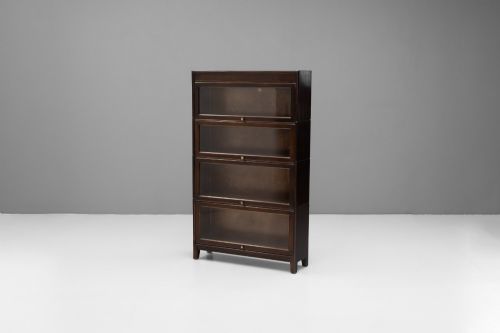
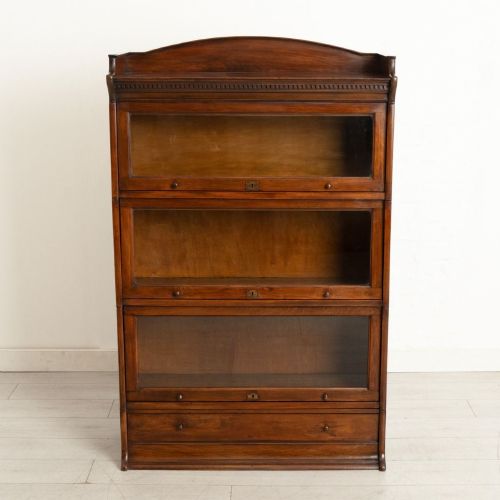
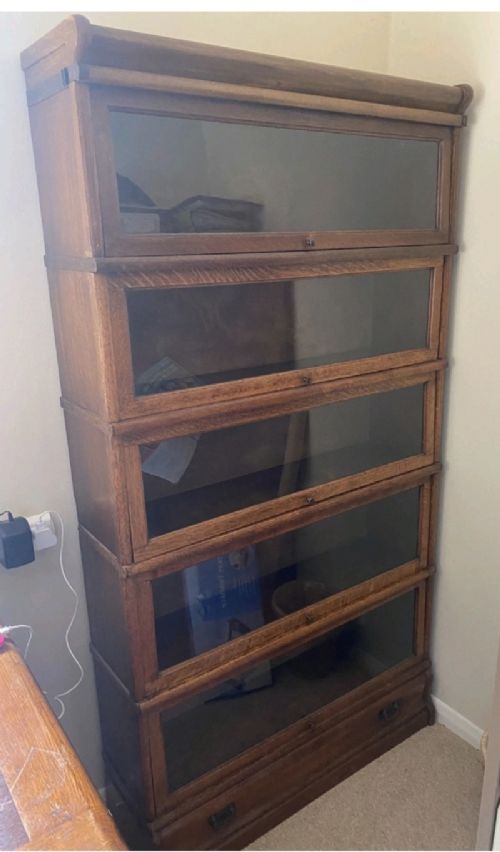
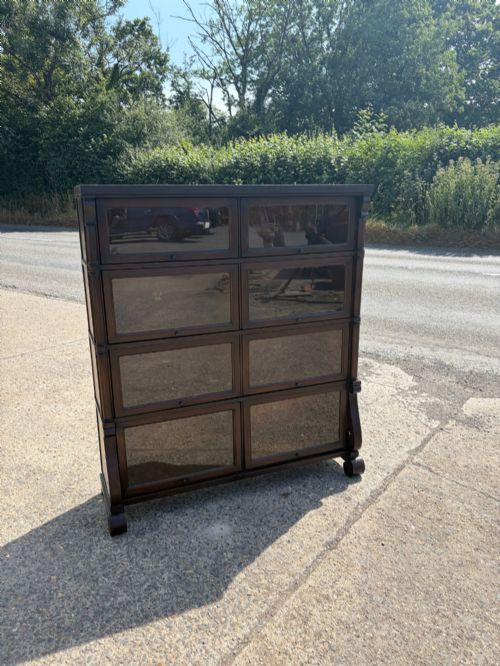
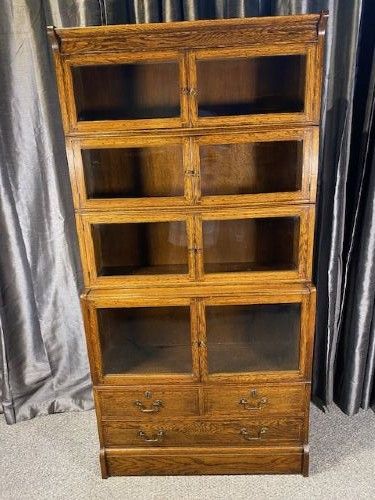
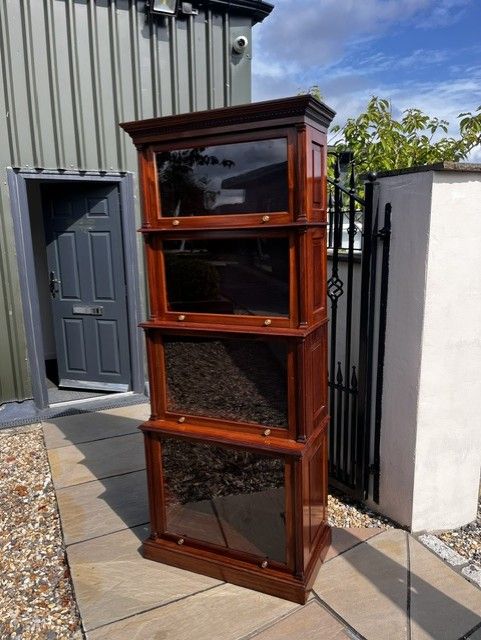
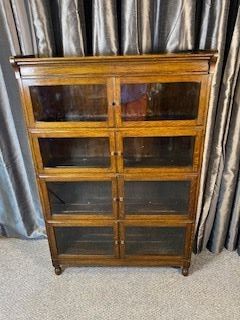
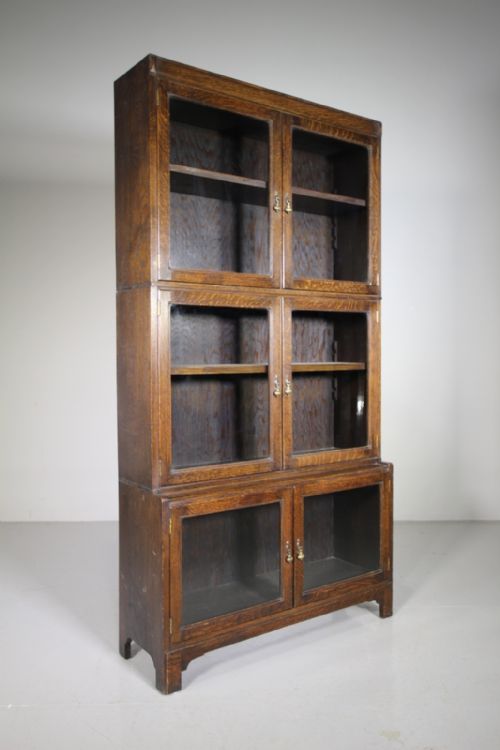
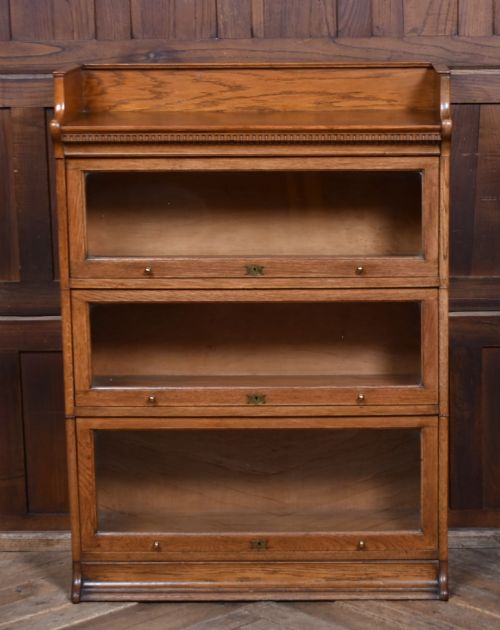
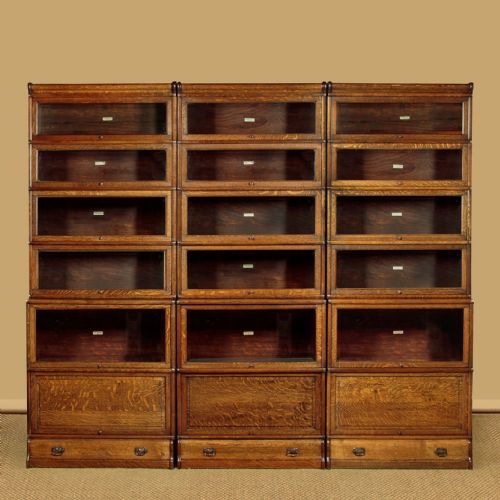
A globe wernicke style cabinet is primarily a sectional bookcase built in tiers, designed so multiple units stack together to form a taller shelving tower. You will encounter these most frequently in oak or mahogany, often fitted with glazed up and over doors that slide back into the carcass above the books.
The pieces on this page span the Edwardian era through the nineteen thirties, reflecting periods such as nineteen hundred, nineteen ten, nineteen twenty, and nineteen thirty. Styles range from straightforward commercial designs to Arts and Crafts, Art Deco, and French influences.
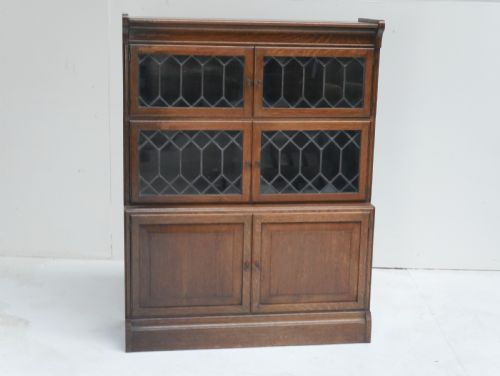
While many take the form of standard four or five section bookcases, variations include narrow towers, double sectional units, and examples incorporating a drawer to the base. They serve equally well in modern studies and traditional living spaces for housing collections of books behind glass protection.
Materials and construction
Construction relies heavily on solid oak and mahogany timbers, paired with glass panels for the doors and brass hardware for the mechanical linkages. Some examples utilise leaded glass or feature a limed finish.
The defining mechanical feature is the stacking modular design, where individual tiers lock together and utilise up and over door mechanisms allowing each shelf to open independently.
Some barrister bookcases included a built-in base drawer, giving lawyers a handy hiding spot for biscuits behind the legal texts.
Assessing quality and craftsmanship
Quality in a sectional bookcase is apparent in the selection of the timber grain, particularly in golden oak or solid mahogany versions, and the precise engineering of the lifting door mechanism. Better examples maintain smooth operation across every tier without sticking.
Maker attribution also influences standing, with pieces produced by established firms carrying distinct hardware or stamps that elevate them above unmarked commercial alternatives.
Lebus·Macey·Heal's·Minty·AMYL·Gunn·Warwick
The Globe Wernicke Style Cabinet Glossary
- Sectional bookcase
- A bookcase built from independent modular tiers that stack vertically. This design allows the shelving unit to grow or separate as needed.
- Up and over door
- A glazed door fitted with a sliding mechanism that lifts upward and recesses into the top of the cabinet compartment. It protects books while remaining operable in tight spaces.
- Barrister bookcase
- An alternative name for a stacking sectional bookcase. The term originates from the portable legal libraries lawyers transported in modular sections.
- Glazed
- Fitted with glass panels, either plain or leaded. This keeps dust away from volumes while maintaining visibility of the spines.
- Base drawer
- An optional lower storage compartment fitted beneath the stacked shelving tiers. It provides extra capacity for small items.
Globe Wernicke Style Cabinet: Frequently Asked Questions
How do the doors open?
The doors use an up and over mechanism where the glass panel lifts slightly and pushes back horizontally into the interior space above the books. This lets you access volumes without swinging a door outward into the room.
Each tier operates independently, so opening one shelf does not disturb the others above or below it.
Can the sections be separated?
Yes, the modular construction means individual tiers lift apart from one another once the locking pins or side brackets are disengaged. This makes transport and reconfiguration straightforward.
You can alter the height of the bookcase by adding or removing sections depending on your available wall space.
What woods were used?
Oak and mahogany are the predominant timbers found across these listings, appearing in both golden oak and solid mahogany variants. Some examples feature specialised treatments like limed oak.
Hardware components such as brass brackets and leaded glass detailing supplement the primary timber construction.
How do I date a piece?
Dating relies on stylistic clues and construction methods spanning the Edwardian period through the nineteen thirties. Arts and Crafts and Art Deco influences help narrow down the decade of manufacture alongside maker marks.
Examining the backboards, brass hardware, and interior labels often provides additional context for the exact manufacturing era.