
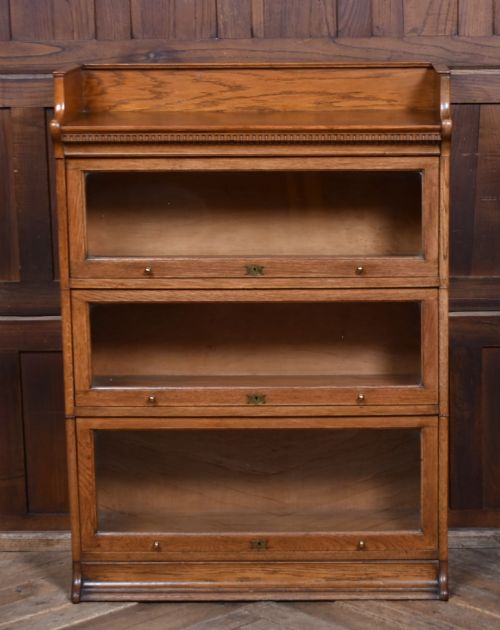


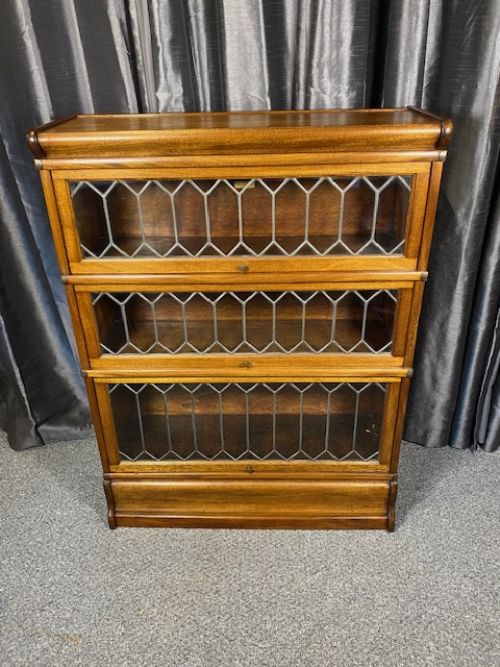


Three Tier Sectional Bookcase
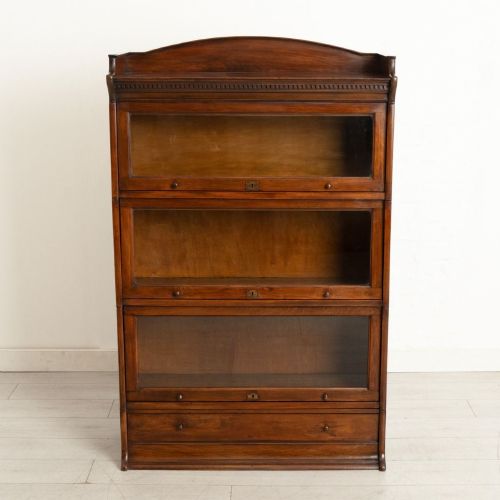
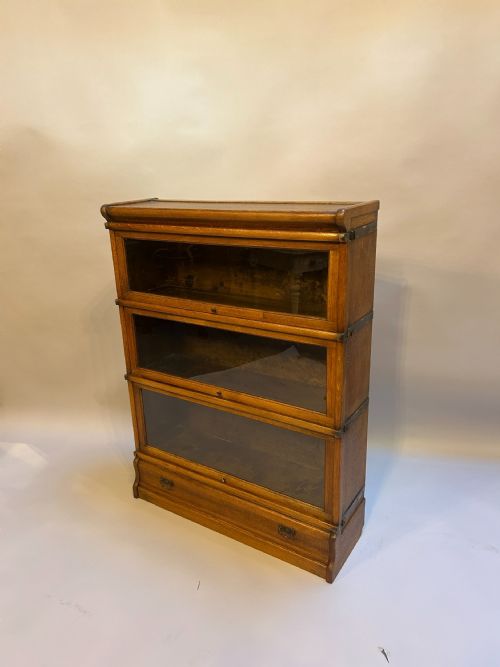
A three tier sectional bookcase offers modular storage with glazed lifting doors, combining practical adaptability with period character.
Three Tier Sectional Bookcase
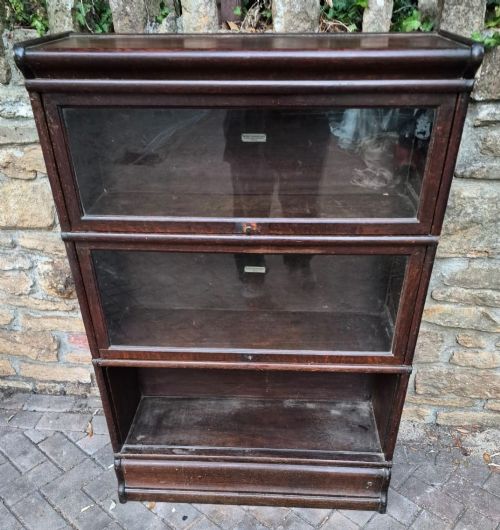
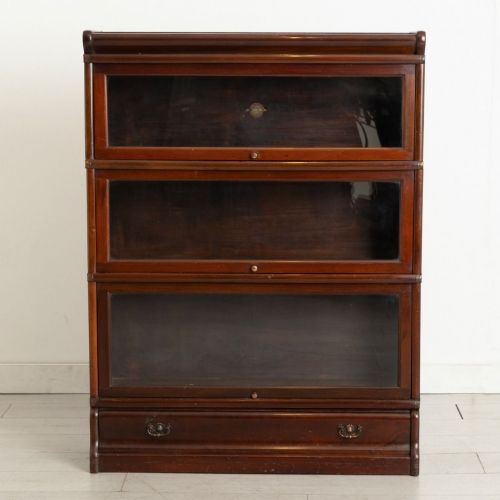
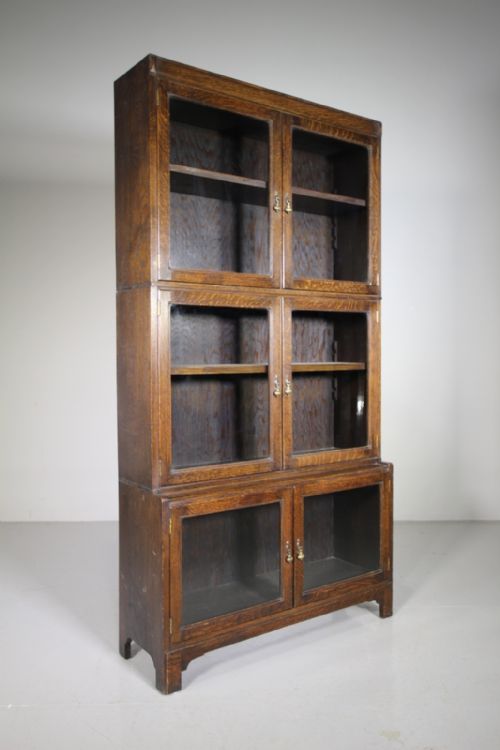
A three tier sectional bookcase consists of modular stacked units designed to house books behind individual glazed lifting doors. These pieces provide flexible vertical storage that can be easily reconfigured or expanded.
Buyers encountering this search phrase will most frequently find examples originating from the Edwardian period through to the 1930s. The selection spans distinct aesthetic movements including Arts and Crafts, Edwardian design, and Art Deco.
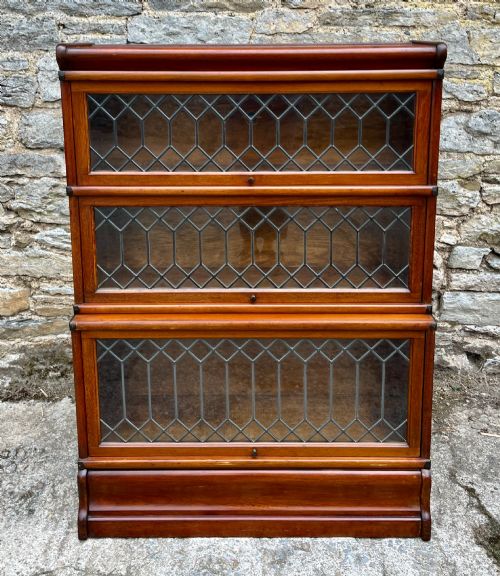
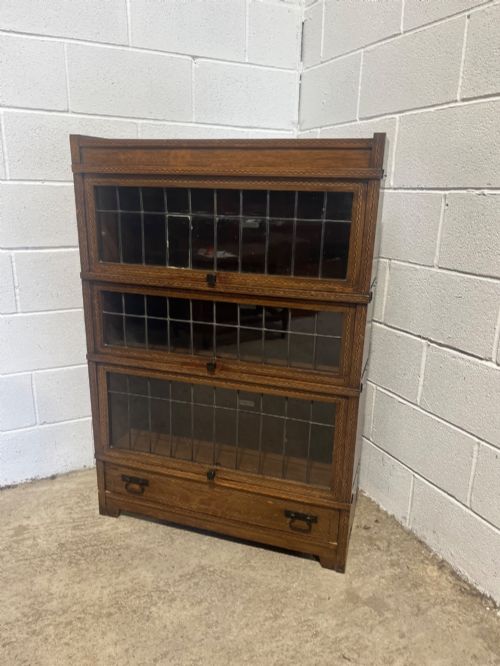
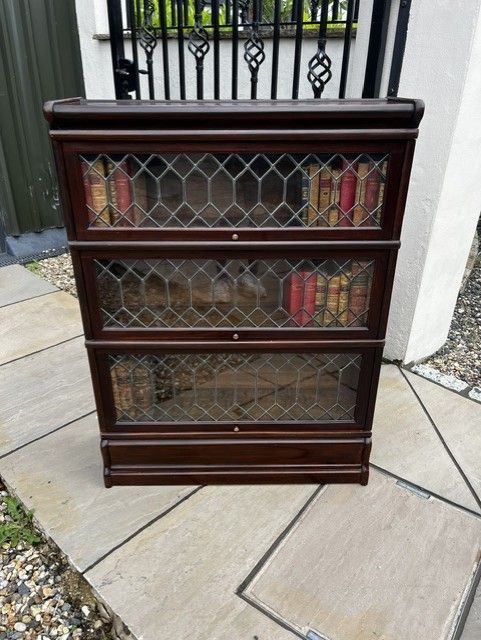
Forms include oak and mahogany constructions, sometimes enhanced with wood inlay or leaded glass. These bookcases bridge the gap between commercial office utility and domestic display furniture.
How they were made
Construction relies upon solid timbers such as oak and mahogany, shaped into modular frames with brass hardware and metal mechanisms for the lifting doors. Wood inlay provides surface ornamentation on select examples.
Glazing takes the form of standard glass or leaded glass panes set within wooden frames, designed to protect books from dust while maintaining visibility. Individual tiers slot together using interlocking wooden or metal fittings.
Listings feature oak and mahogany pieces from the Edwardian period, 1900, 1910, 1920, and 1930, incorporating glass, leaded glass, and brass hardware.
What varies in quality
Quality differences emerge in the selection of primary timbers, such as figured mahogany or quarter-sawn oak, alongside the precision of the joinery. The complexity of the door lifting mechanisms and the presence of decorative wood inlay distinguish finer examples.
Maker attribution plays a role, with established workshops demonstrating superior hardware integration and timber matching across all three stacked sections. The clarity of the glass and the weight of the brass fittings further separate standard production from superior pieces.
Globe Wernicke·Heals·Lebus·Minty
The Three Tier Sectional Bookcase Glossary
- Sectional bookcase
- A modular piece of furniture built from separate stacking units that combine into a single tall cabinet. This design allows the bookcase to be disassembled for transport.
- Barrister bookcase
- A specialised office or study bookcase featuring glazed doors that lift and slide inside the top of each shelf tier. It was traditionally used by lawyers to protect valuable legal volumes.
- Leaded glass
- Glass panes held together within small strips of lead, creating geometric or decorative patterns across the cabinet door. This technique is frequently seen in Arts and Crafts examples.
- Wood inlay
- The insertion of contrasting pieces of wood into depressions within the primary timber surface to create patterns. It appears on select Edwardian and period pieces.
- Quarter-sawn oak
- Timber cut radially from the growth rings, producing a distinct grain pattern known as medullary rays. This method yields stable boards often utilised in high-quality period furniture.
Three Tier Sectional Bookcase: Frequently Asked Questions
Can the sections be separated?
Yes, the individual tiers rest one upon another with a base and a top cornice completing the stack. They lift apart easily for moving.
This modular construction was originally intended to let owners add new tiers as their library grew.
What periods do these bookcases span?
The available pieces primarily date from the Edwardian era through the 1920s and 1930s. Styles reflect the design movements of these decades, including Arts and Crafts and Art Deco.
Oak and mahogany are the dominant timbers across this timeline.
Where were these bookcases used?
They originated largely as functional office furniture for solicitors and professionals who required dust-free storage for heavy reference volumes. Over time, their practicality made them popular for domestic libraries and studies.
The glazed fronts protected fragile paper and bindings from environmental damage.