
Library Glazed Display Cabinet
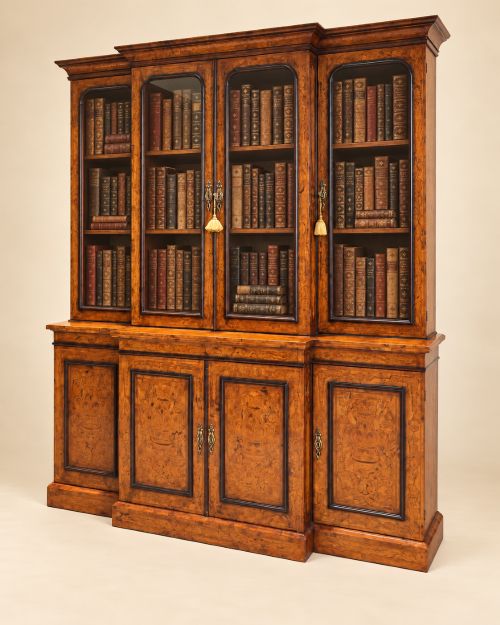
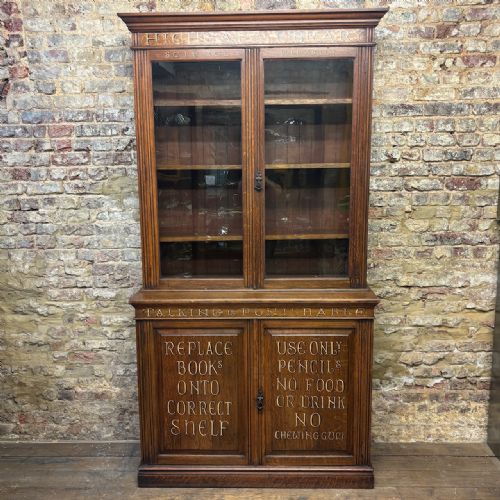
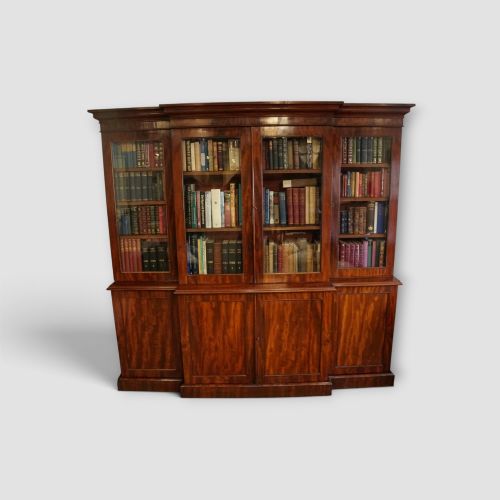
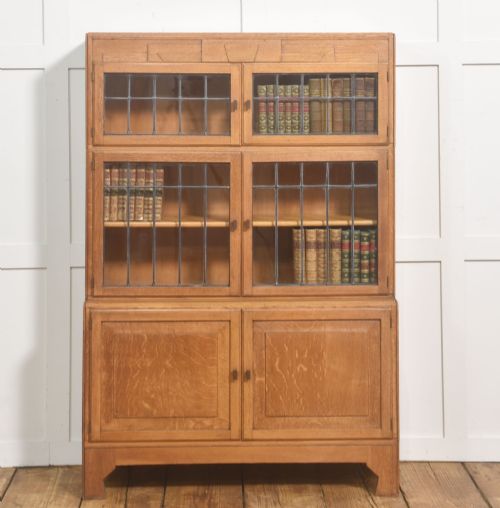
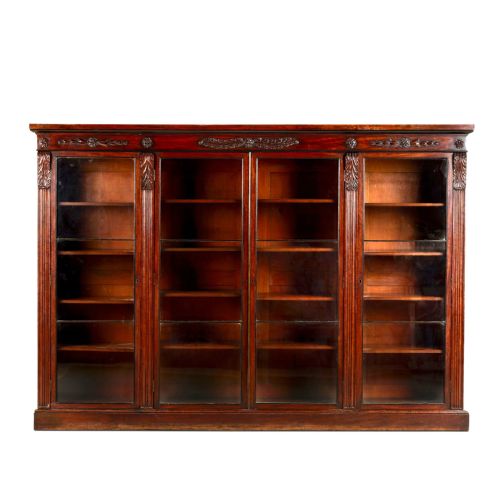
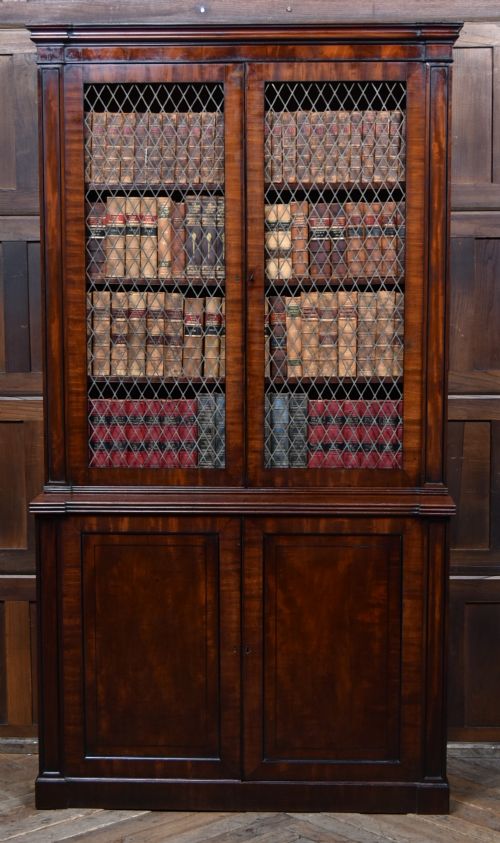
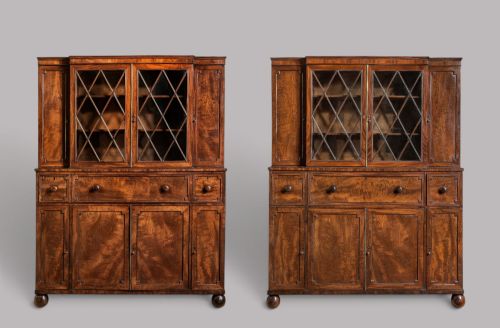
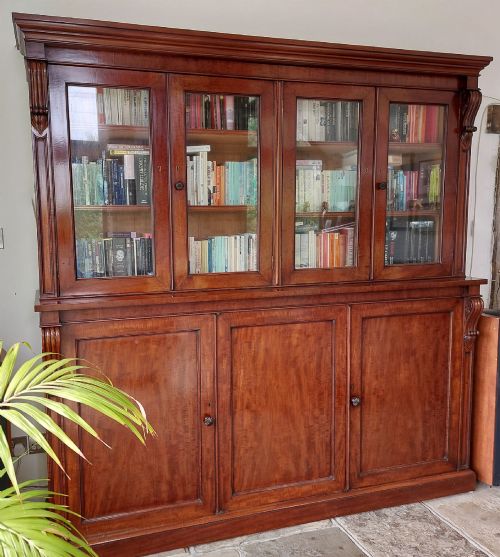
When you search for a library glazed display cabinet, you are looking at substantial timber furniture built to house volumes and display objects behind glass.
Library Glazed Display Cabinet
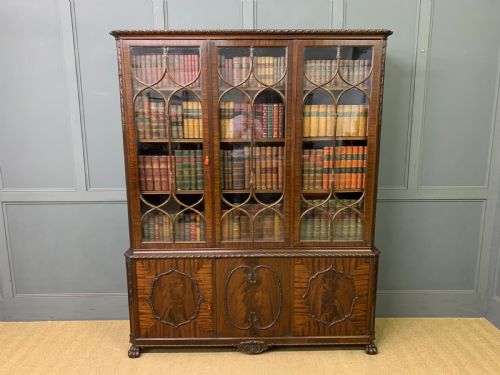
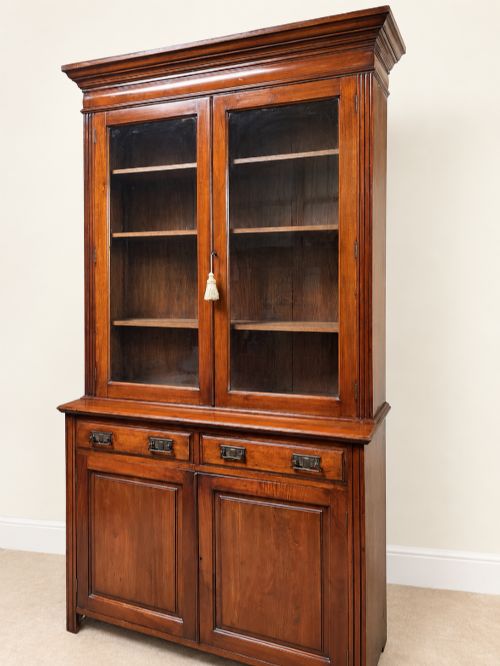
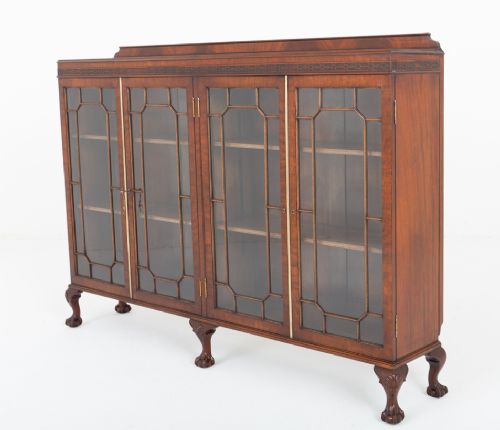
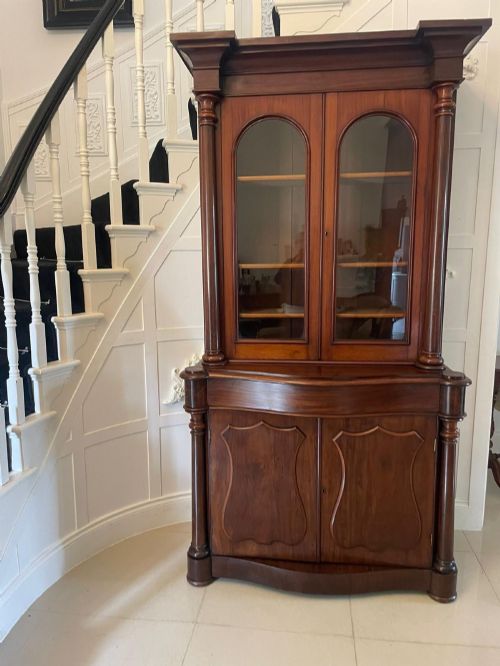
A library glazed display cabinet brings together enclosed shelving and transparent panes to protect books and display objects from dust. These pieces serve as the architectural anchor for a room, combining lower cupboards with upper glass-fronted display areas.
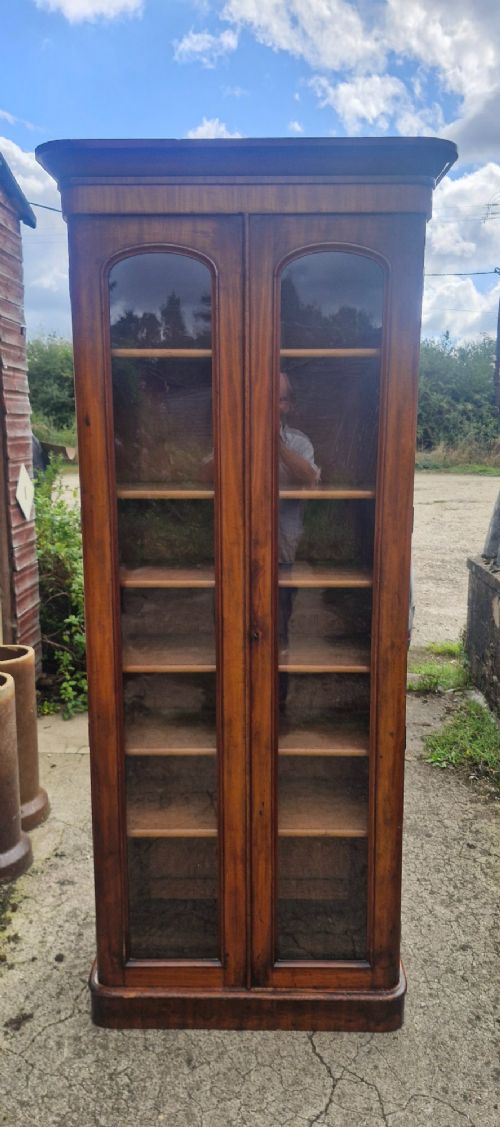
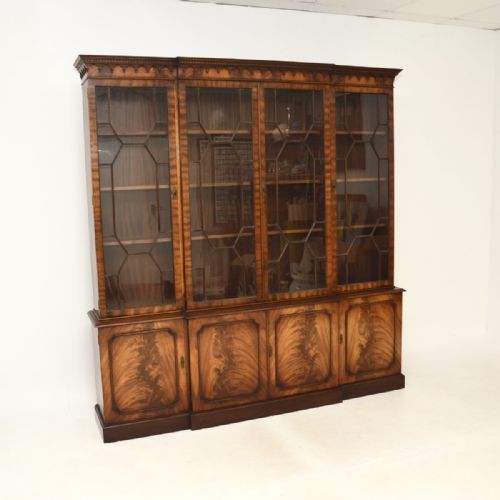
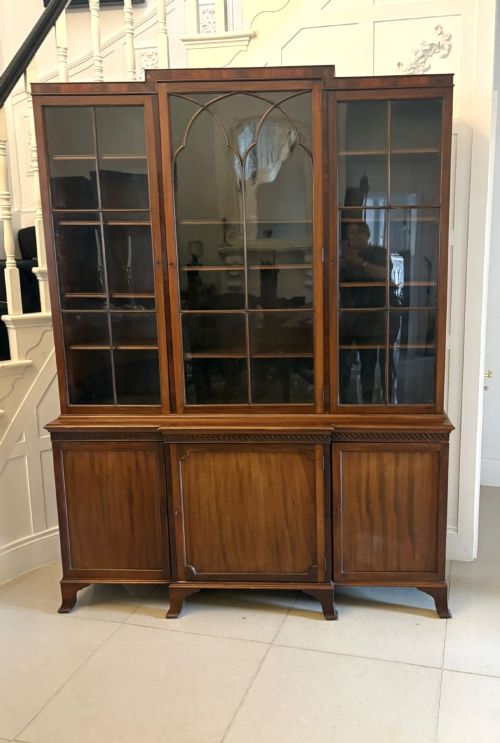
You will most frequently meet Victorian and Edwardian examples on this page, constructed in mahogany, oak, or walnut. Many span large proportions as breakfront units, whilst others appear in slim two-door formats suitable for domestic spaces.
Originating primarily from British workshops, these cabinets draw on Georgian, Regency, and Gothic Revival styles. They range from simple school bookcases to grand breakfront library pieces attributed to makers such as Gillows.
How They Were Made
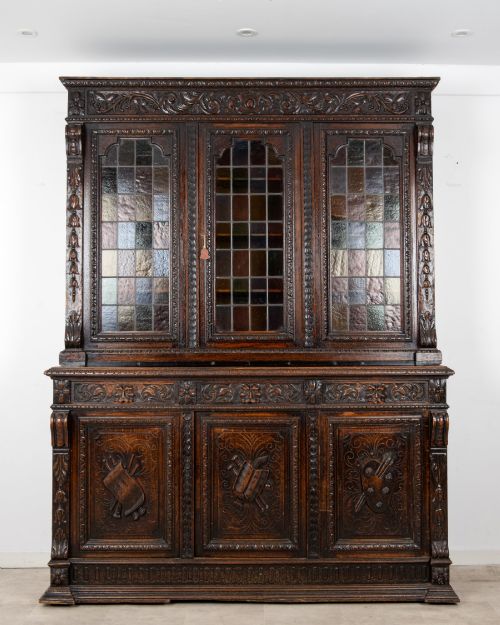
Cabinet makers utilised dense hardwoods such as mahogany, oak, and walnut, often applying flame mahogany veneer to large flat surfaces for visual depth. Glass panes are held securely within wooden or brass-mounted framing, sometimes incorporating lead or stained glass detailing.
Construction methods rely on traditional joinery to support heavy timber shelving, with adjustable brackets appearing in many examples to accommodate varying book sizes. Brass hardware, including locks and hinges, fastens doors while inlaid banding punctuates the timber frames.
Several cabinets retain small manufacturer paper labels stuck inside the door frame, quietly recording their workshop origin.
What Varies in Quality
Timber selection dictates the initial tier of quality, with finely figured mahogany and figured walnut sitting above standard utility oak or pine. The crispness of carved details and the complexity of breakfront proportions separate standard domestic items from grand architectural commissions.
Glass quality also marks the distinction between pieces, with older hand-drawn or leaded panes showing subtle surface undulations. Internal fitting, such as adjustable shelving with finished timber edges and functional brass locks, reveals the level of care invested by the maker.
Gillows·Mercier Frères
The Library Glazed Display Cabinet Glossary
- Breakfront
- A cabinet design where the central section projects forward from the flanking outer wings. This architectural layout creates depth and shadow across the front elevation.
- Astragal
- Moulding profiles used to hold glass panes within a door frame, dividing the glazed area into smaller geometric lights. These slender strips shape the visual rhythm of the bookcase doors.
- Flame Mahogany
- Timber cut from the fork of the mahogany tree, displaying a distinctive flammiform grain pattern. Cabinet makers prize this veneer for symmetrical panel fronts.
- Globe Wernicke
- A sectional bookcase system composed of stacking modular units with glass doors that lift and slide inside the case. This patented design allows individual tiers to be added as libraries grow.
Library Glazed Display Cabinet: Frequently Asked Questions
How do I adjust the shelves?
Most traditional library cabinets use wooden ratchets, metal pilasters, or movable shelf pegs inserted into interior vertical rows. You simply lift the shelf and reposition the supports into the desired slots.
Take care when shifting heavy timber shelves to avoid scratching the internal veneer or painted lining. Ensure the shelf rests evenly on all four supports before replacing any books.
Are the glass doors original?
Original glass often displays subtle bubbles, waviness, or slight thickness variations resulting from historic manufacturing methods. Examining the putty or wooden glazing beads can also reveal whether panes have been replaced over time.
Modern float glass appears perfectly flat and uniform by comparison. Inspecting the edges through the open door rebate helps confirm the age of the glazing.
How do I care for the timber?
Maintain finished mahogany, walnut, and oak by dusting with a dry, soft cloth and applying a quality beeswax sparingly. Avoid placing cabinets near direct heat sources or strong sunlight, which can dry out timber and crack veneers.
Consistent room humidity prevents the wood from expanding or contracting excessively. This protects both the structural joints and the fitted glass doors from warping.