
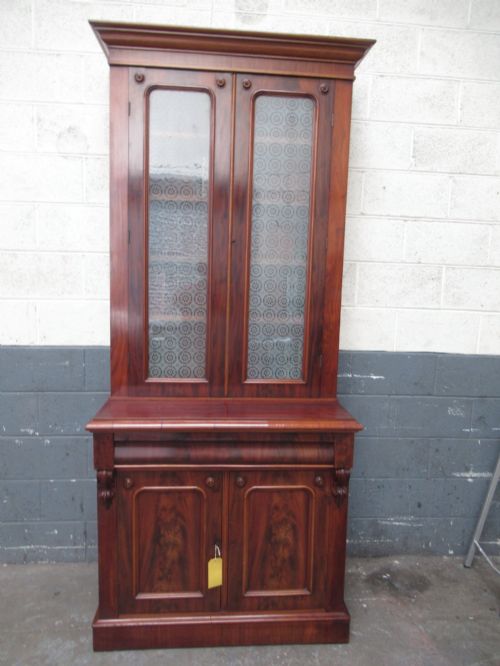
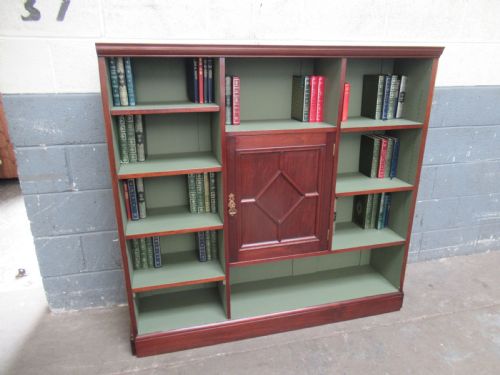
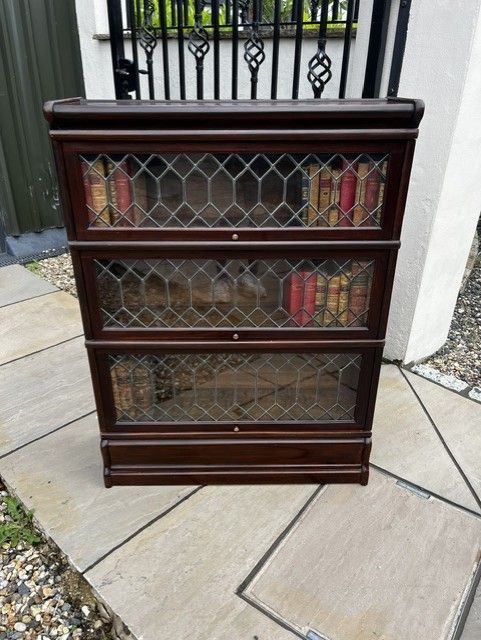
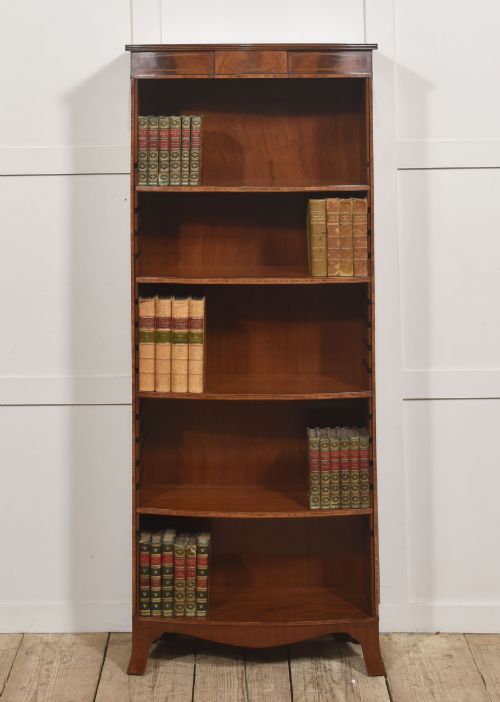
Edwardian Mahogany Library Cabinet
An edwardian mahogany library cabinet combines generous shelf space with glazed display and secure storage for serious volumes.
Edwardian Mahogany Library Cabinet
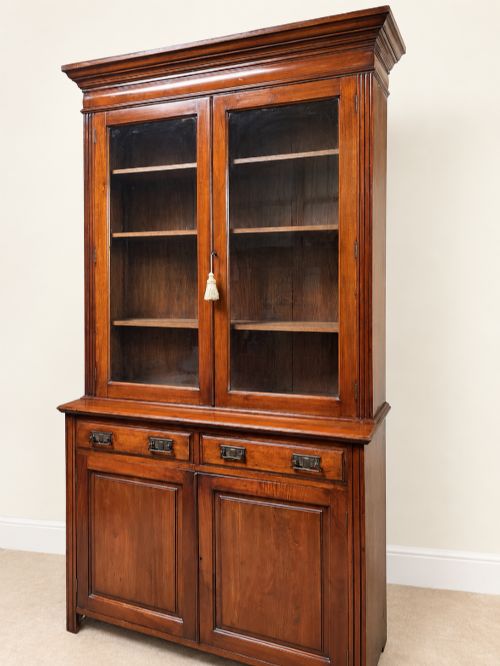
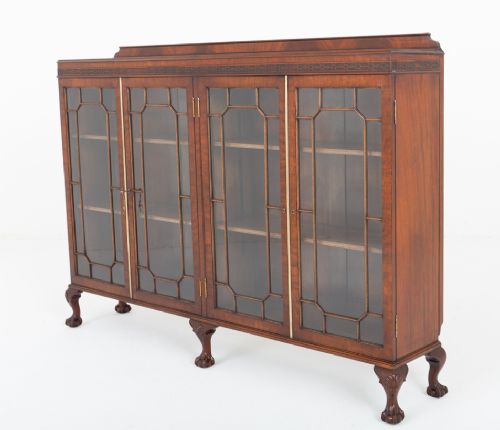
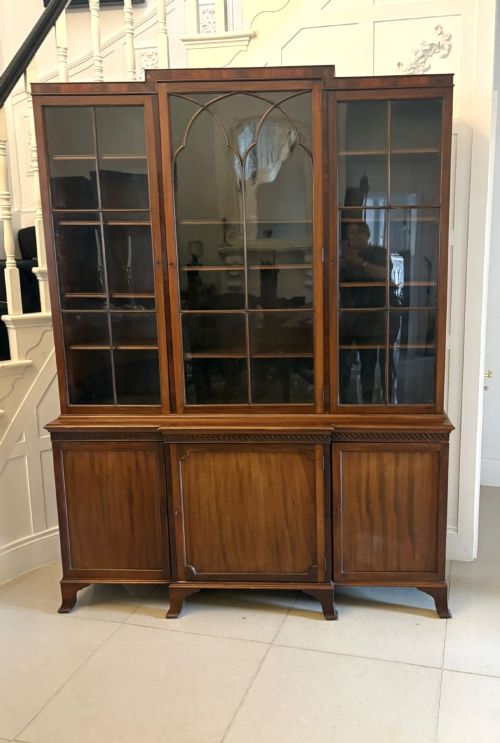
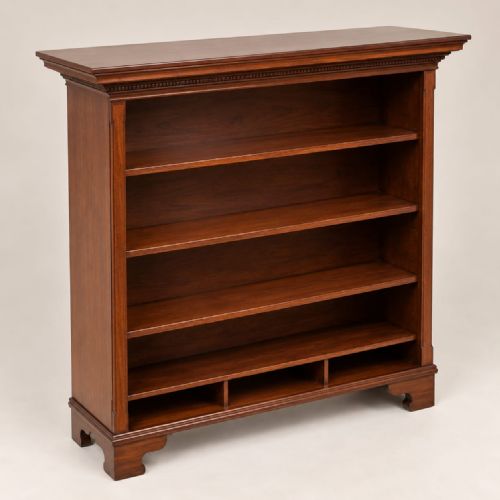
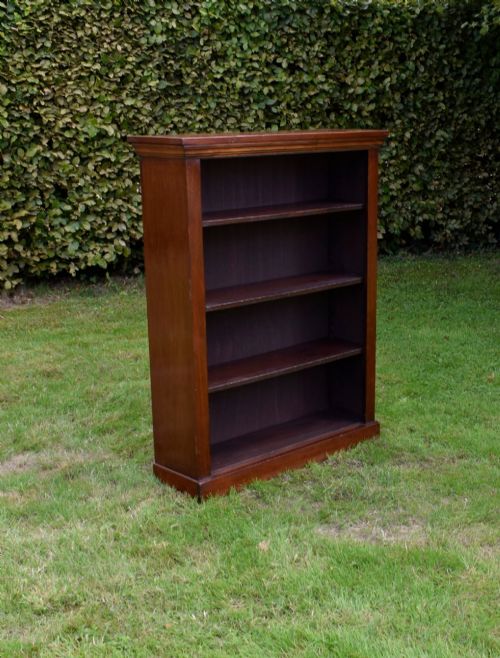
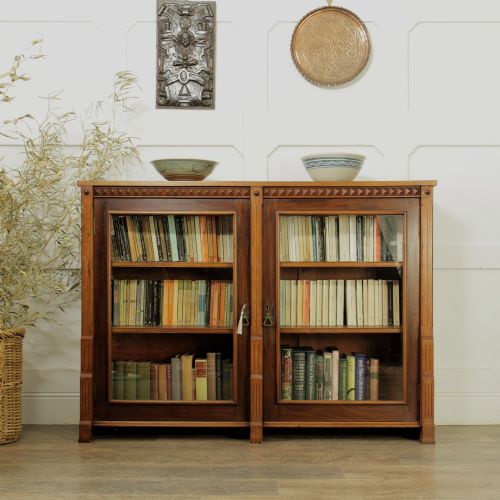
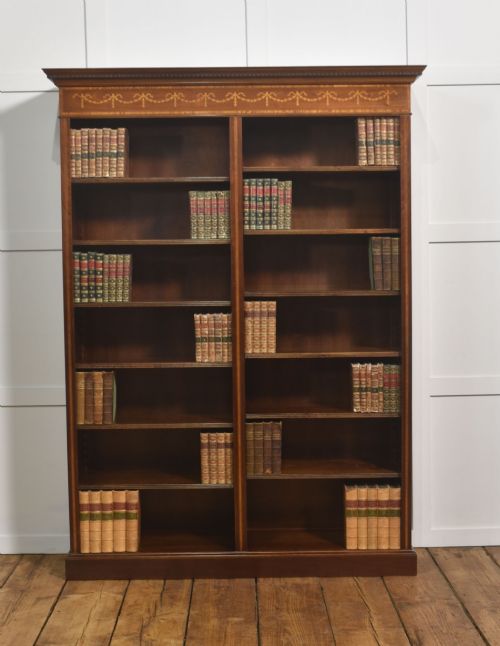
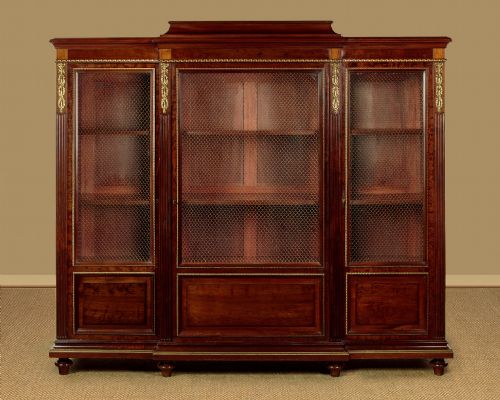
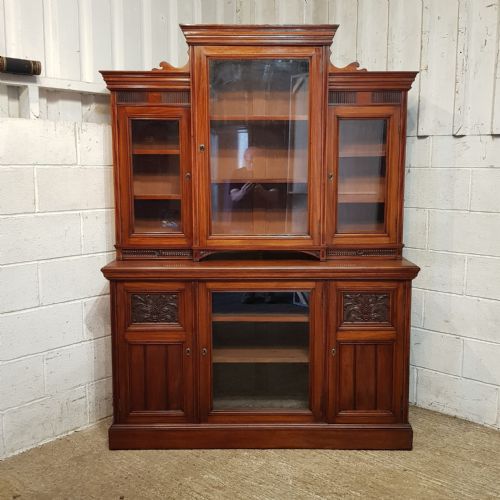
An edwardian mahogany library cabinet is a substantial piece of furniture designed to house books and display treasured objects in a home study or drawing room. You will encounter breakfront formats, glazed double doors, open shelving, and secretaire sections built during the Edwardian period and late Victorian era.
The surviving pieces include large breakfront bookcases, freestanding display cabinets, and sectional barrister bookcases suited to varying room sizes. Mahogany forms the primary structural timber across these functional forms, frequently enriched with glass doors and brass mounts.
How they were made
Cabinetmakers utilised solid mahogany and flame mahogany veneers applied to carcases using traditional joinery methods. Glass panes were fitted into timber frames to protect books from dust while maintaining visibility.
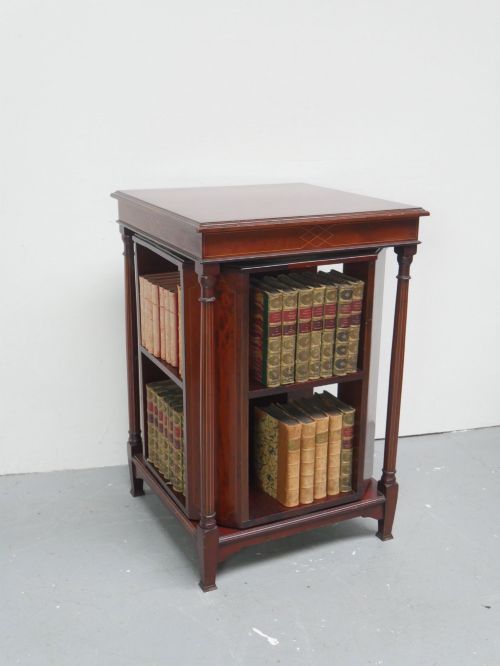
Brass hardware, including castors, handles, and hinges, provided durable functional details. Satinwood inlay often decorated the surfaces of Sheraton Revival pieces, contrasting with the dark red-brown tones of the primary timber.
Listings include mahogany, glass, brass, satinwood, oak, hessian, and flame mahogany veneer across Edwardian and Victorian periods.
What varies in quality
The sophistication of the timber selection distinguishes standard items from exceptional examples, with figured flame mahogany and crisp satinwood inlay marking higher workmanship. The complexity of the architectural breakfront design and the proportion of the glazing bars also indicate the maker's ambition.
Structural integrity depends on the precision of the joinery in large breakfront units and stacking barrister systems. The quality of original brass mounts and the clarity of the glazed doors complete the assessment.
Morison and Co·Wylie and Lochhead·Maple and Co·Robert Strahan·Goodhall Lamb and Heighway·Globe Wernicke
The Edwardian Mahogany Library Cabinet Glossary
- Breakfront
- A cabinet design where the central section projects forward from the flanking wings, creating architectural depth.
- Flame mahogany
- A veneer cut from the fork of the mahogany tree, producing a distinctive flame-like pattern across the wood grain.
- Barrister bookcase
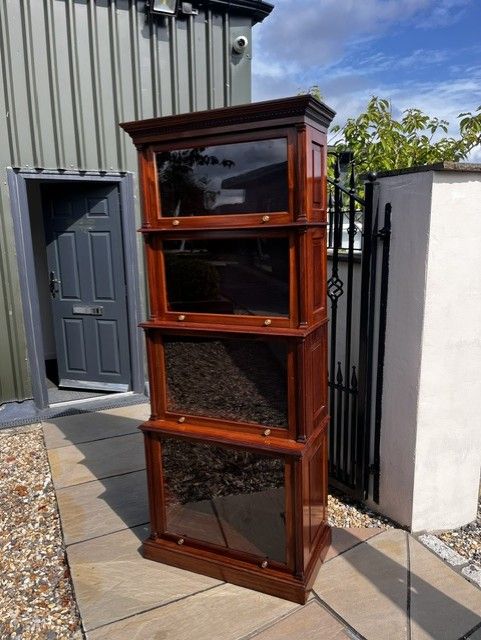
- A sectional bookcase with glass-fronted lifting doors designed to stack vertically.
- Secretaire
- A cabinet incorporating a pull-down writing drawer fitted with small compartments and pigeonholes.
- Satinwood
- A pale yellow exotic timber utilised for contrasting stringing and decorative inlay work.
Edwardian Mahogany Library Cabinet: Frequently Asked Questions
How do I clean mahogany?
Dust regularly with a soft, dry cloth to prevent particle build-up on the polished surface. Avoid silicone sprays which can damage the historic finish.
Apply a traditional beeswax sparingly when the timber appears dry, buffing gently to maintain the natural sheen.
Are shelves adjustable?
Many larger library cabinets feature wooden ratchets or metal shelf supports allowing vertical adjustment. Fixed shelves also appear in specific traditional formats.
Check the interior uprights for slot mechanisms when planning to store oversized volumes.
How do sectional bookcases work?
Sectional barrister bookcases consist of separate stacking modules placed one upon another beneath a cornice and above a base plinth. Each tier contains a glass door that swings upward and slides inside.
Units can be separated for transport and reassembled without permanent fixings.
What is satinwood inlay?
Satinwood inlay involves cutting pale geometric or floral shapes into recesses carved into the darker mahogany surface. This decorative technique became popular during the Sheraton Revival period.
The contrasting light wood highlights borders, cornices, and door panels.