
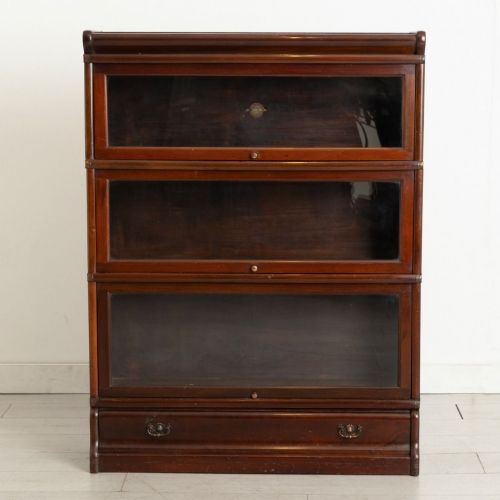
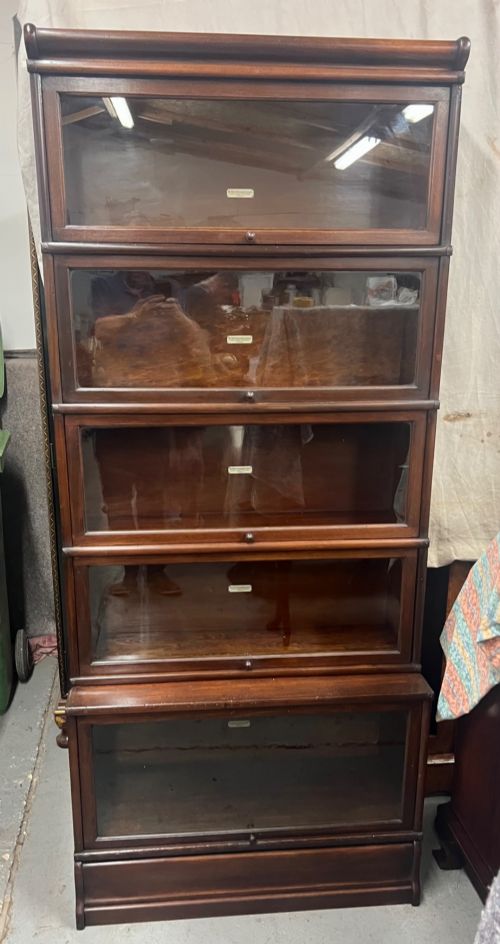


Mahogany Barrister Bookcase
A mahogany barrister bookcase offers modular storage with glazed lifting doors, combining practical organisation with classic cabinet work.
What a mahogany barrister bookcase is
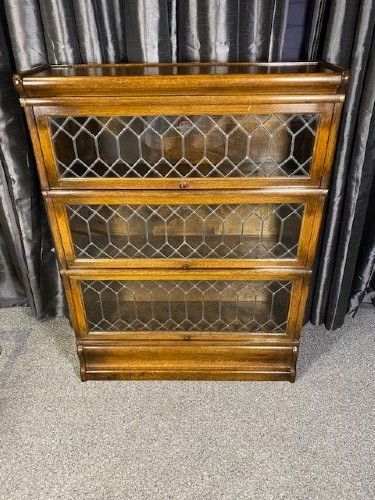
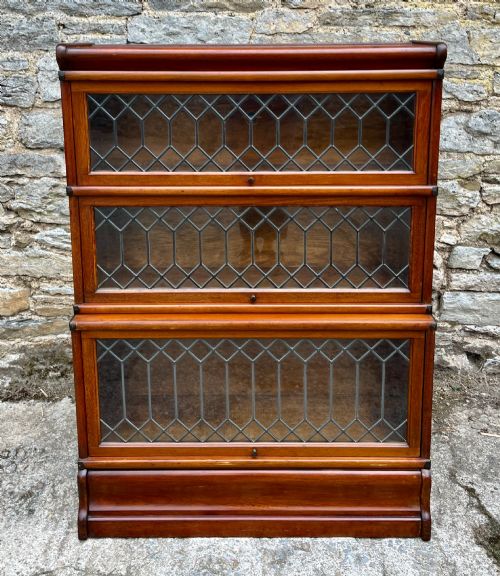
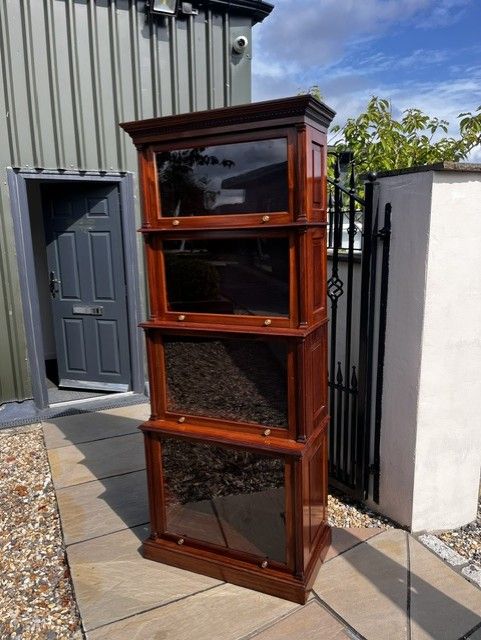
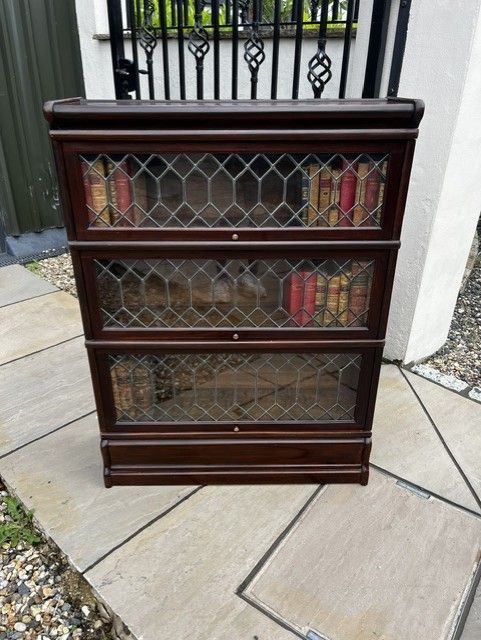
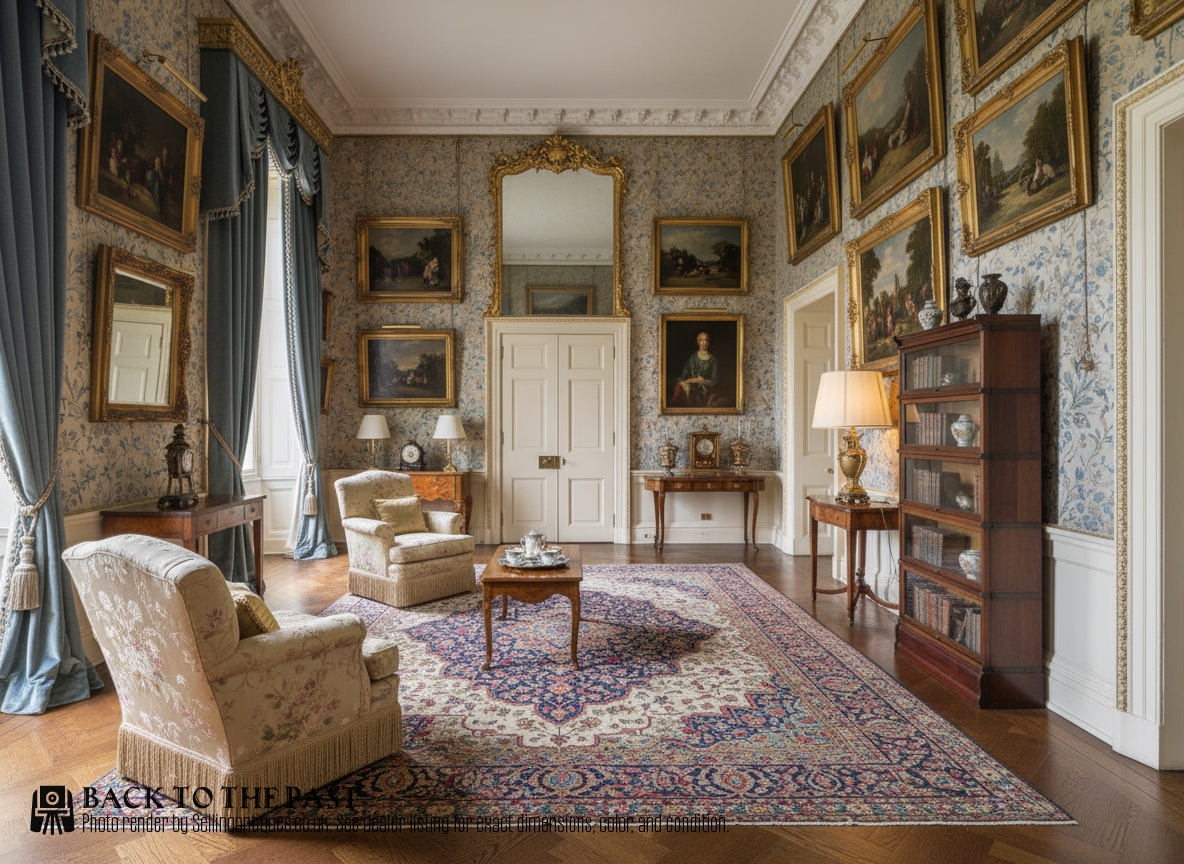
A mahogany barrister bookcase comprises stacked modular tiers designed to hold books while protecting them behind glass doors. These sectional pieces allow owners to add or remove tiers depending on their collection size. Edwardian examples and pieces from the nineteen-tens and nineteen-twenties dominate the selections found here.
The format usually involves multiple distinct sections sitting upon a base and topped with a cornice. Variations include double sectional widths and tall five-tier arrangements suitable for larger rooms. Most iterations use rich mahogany timbers throughout the stack.
Makers such as Globe Wernicke, Minty, William Baker of Oxford, and Gunn produced these sectional bookcases in significant quantities. Their designs served offices and studies where books required frequent access alongside protection from dust.
How they were made
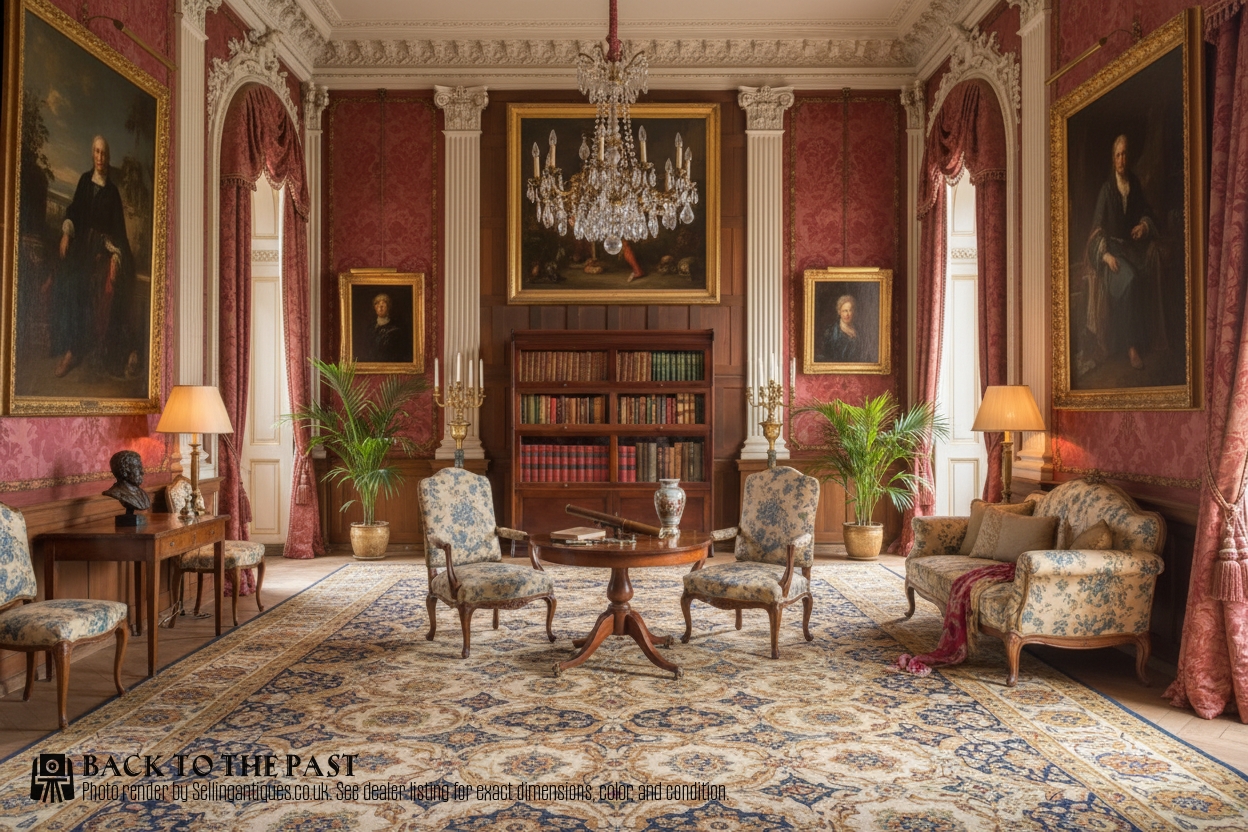
Makers constructed these bookcases using solid mahogany and mahogany veneers over secondary woods, incorporating metal and brass hardware into the lifting mechanisms. The distinctive glass doors operate on scissor actions or side arms that guide each tier smoothly upwards into the recess above the shelf.
Each section forms an independent box with its own glazed front, allowing the tiers to stack securely without permanent fixings. Brass handles, knobs, and connector pins appear frequently across the modular units.
Retail Price Guide 2026
Typical UK retail prices for mahogany barrister bookcase, calculated from the Sellingantiques database of over a million retail prices indexed since 2003. This retail price guide relies exclusively on Sellingantiques data; no external sources or auction records are used, so the figures do not describe the wider market.
Many barrister tiers double as filing cabinets, proving that early offices loved clever stacking tricks just as much as we do.
What varies in quality
Quality rests upon the integrity of the mechanical lifting hardware and the precision of the modular joinery. Tiers that align flush and glide without binding demonstrate superior original manufacture.
The choice of timber figure, the clarity of the glass, and the presence of makers' stamps or brass tags distinguish standard production pieces from finer examples. Maker attribution often signals higher grade cabinet work.
Globe Wernicke·Minty·William Baker And Co Ltd·Gunn·Amyl
The Mahogany Barrister Bookcase Glossary
- Sectional bookcase
- A piece built from multiple stackable modular tiers rather than a single fixed cabinet. This design allows the entire unit to be dismantled easily for transport.
- Cornice
- The moulded decorative projection that sits at the very top of the bookcase stack. It crowns the uppermost tier.
- Base plinth
- The foundational support section upon which the stack of bookcase tiers rests. It often includes a drawer or sits directly on low feet.
- Lead light
- Glass panels held together with lead cording, sometimes found on specialised tiers. This decorative glazing adds visual texture to the bookcase front.
Frequently Asked Questions
Can the tiers be separated?
Yes, the individual sections lift apart from one another once the top cornice and bottom base are unseated. Each tier is a self-contained box that relies on gravity and alignment pins to stay stacked.
This modular construction made moving heavy libraries much simpler for early owners.
What is an Oxford bookcase?
The term refers to sectional barrister bookcases produced by regional makers and retailers based in Oxford, such as Minty and William Baker. These regional firms adapted the modular stacking format with distinct local cabinet-making touches.
They function identically to American imports but often feature British cabinet proportions and timber selections.
How should I clean mahogany wood?
Dust the surfaces regularly with a soft, dry cloth to prevent dirt buildup on the polished timber. Avoid modern silicone sprays, opting instead for traditional beeswax applied sparingly to nourish the grain.
Keep the brass hardware clean using appropriate metal care without letting polish touch the surrounding wood.