

Vintage Lawyer Bookcase
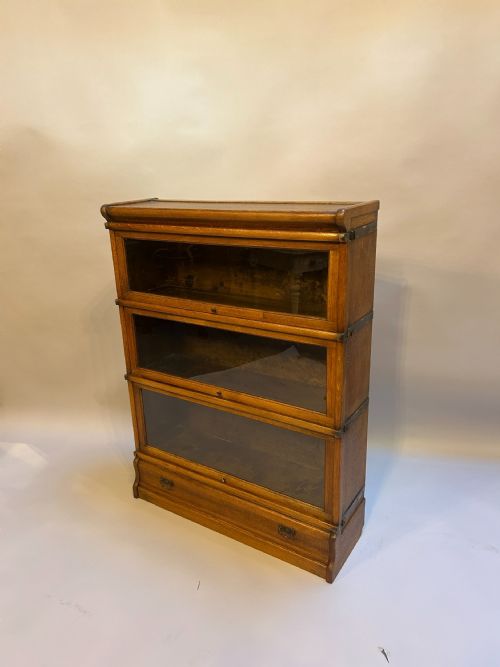
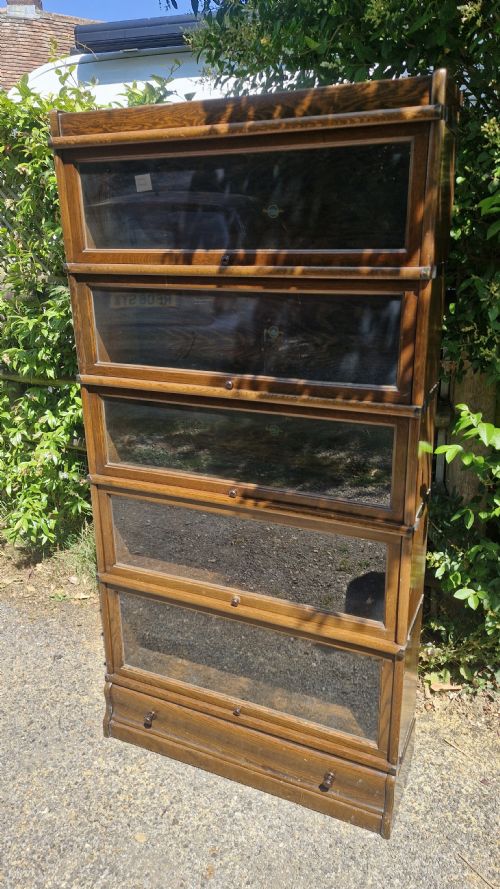
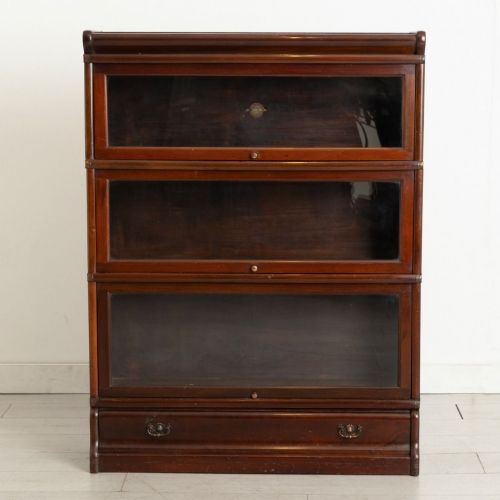
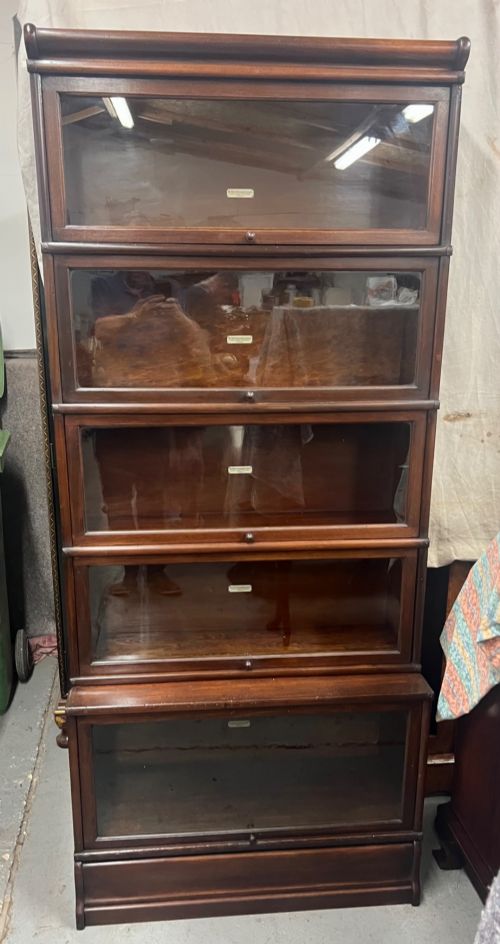
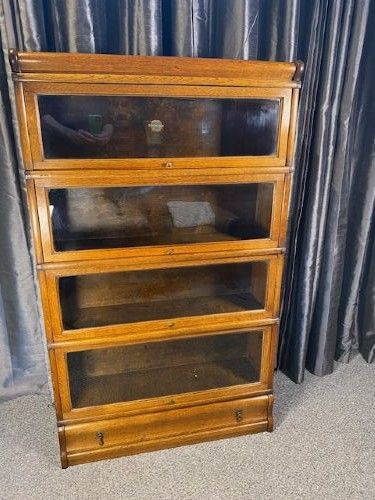
A vintage lawyer bookcase is a modular stacking cabinet designed to protect volumes behind glazed lifting doors.
Vintage Lawyer Bookcase
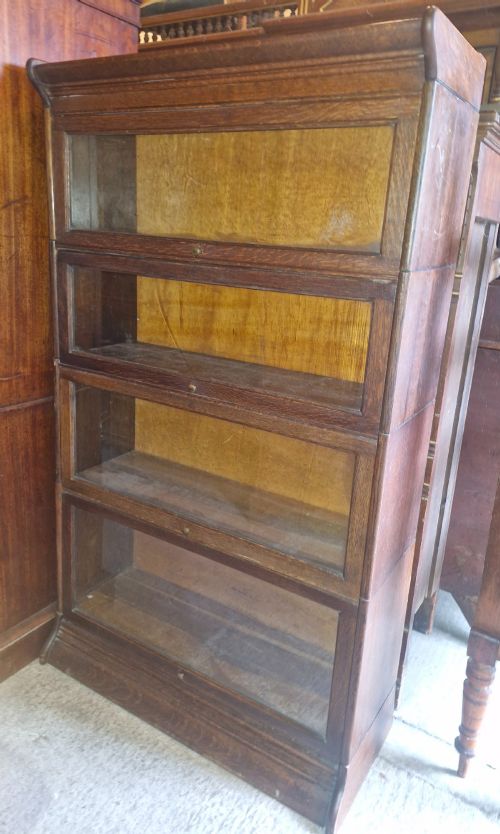
A vintage lawyer bookcase is a modular storage unit built in horizontal tiers designed to stack together securely. These items appear primarily from the Edwardian period and the decades spanning 1900 to 1930.
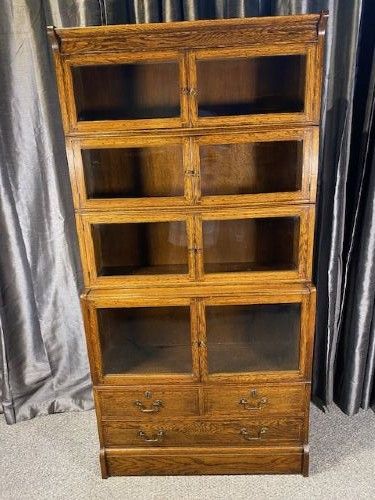
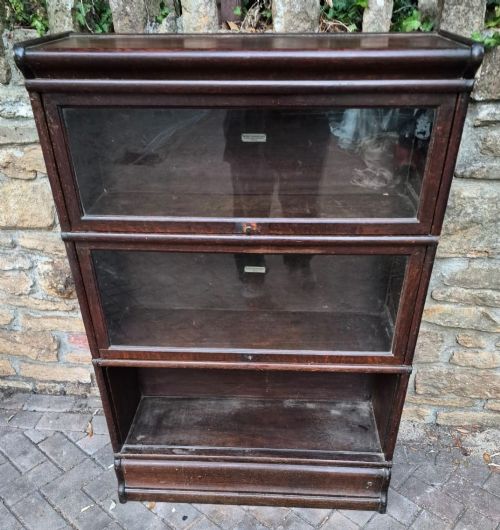
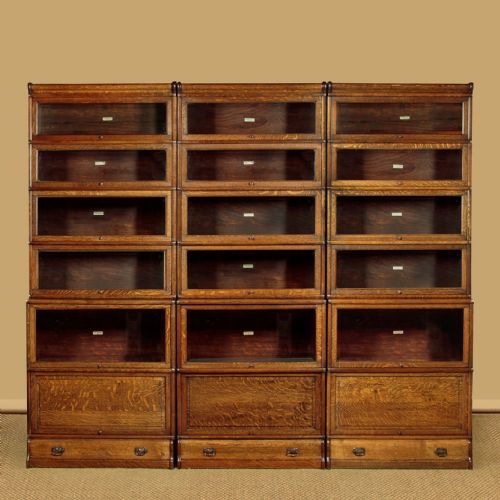
Most examples found here are associated with the Globe Wernicke name, utilising a sectional design that allows sections to be added as libraries grow. Formats range from three-tier and four-tier bookcases to lawyer book troughs and standing cabinets.
How they were made
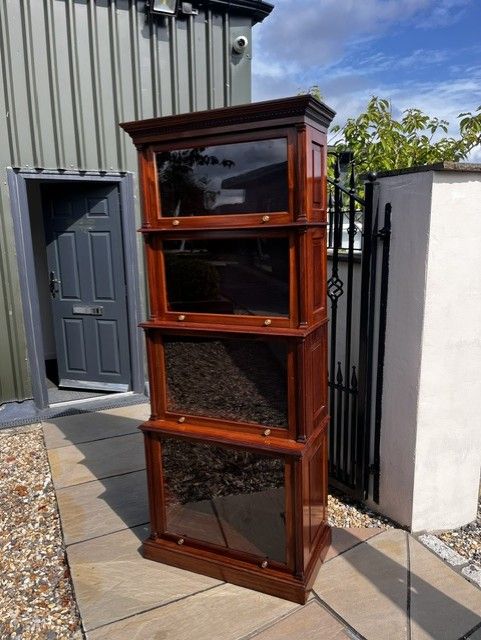
Construction relies heavily on oak and solid mahogany, often finished with flame mahogany veneers or decorative inlays. Metal and brass hardware support the mechanical lifting actions of the doors.
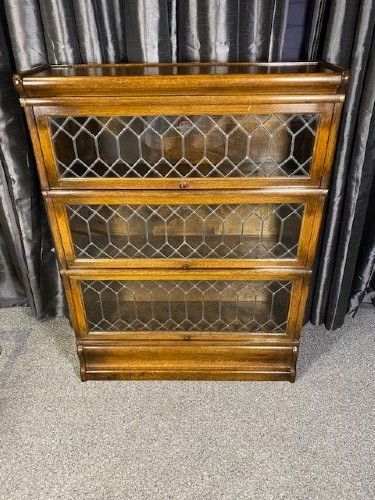
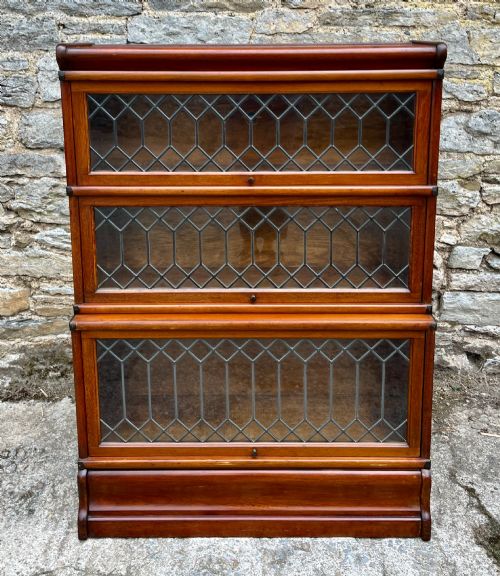
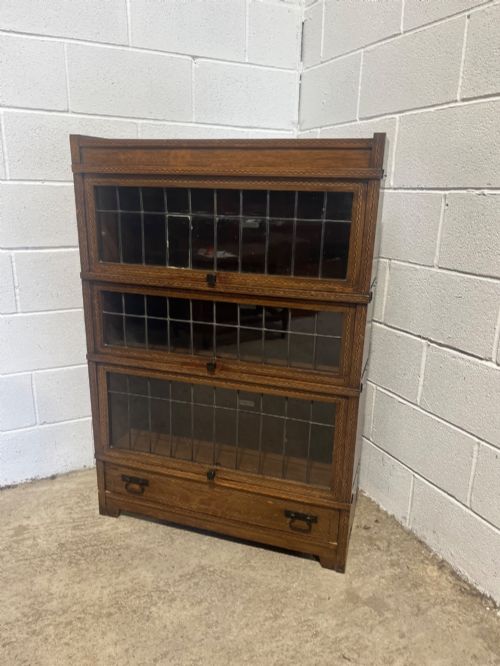
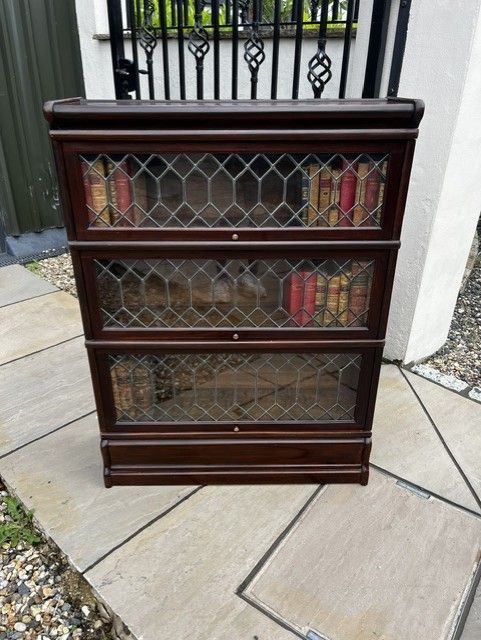
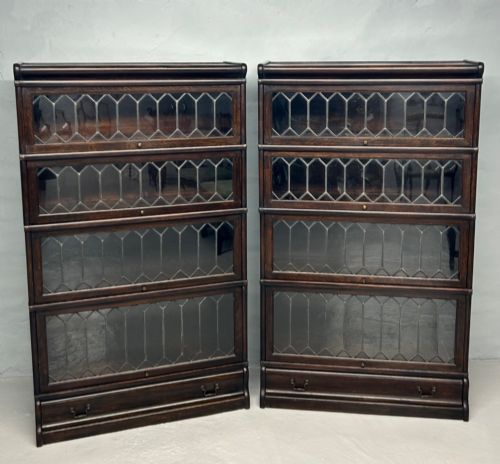
Glazing takes the form of standard glass or leaded glass panes set into wooden frames. Individual tiers incorporate specialised mechanisms that allow the glazed doors to lift and slide neatly into the recess above the books.
Legal paperwork demanded neat storage, resulting in clever folding glass doors designed so busy barristers could slam cases shut without snagging their cuffs.
What varies in quality
Quality separates mass-produced office utility from finer cabinetwork through timber selection and timber figure, such as rich flame mahogany or figured golden oak. The presence of makers' names like Globe Wernicke or Warwick influences desirability.
The precision of the stacking mechanism and the condition of the brass and metal hardware dictate the tactile experience of operating the doors. Heavier leaded glass configurations and solid mahogany construction represent the more substantial end of the range.
Globe Wernicke·Warwick
The Vintage Lawyer Bookcase Glossary
- Sectional bookcase
- A modular piece of furniture composed of several separate horizontal tiers that stack vertically. Each tier houses its own independent glazed door.
- Barrister's bookcase
- Another term for a lawyer bookcase, traditionally used by legal professionals to transport and house travelling libraries. The design protects valuable volumes from dust and moisture.
- Leaded glass
- Small panes of glass joined together by strips of lead, known as cames, forming geometric patterns within the door frame. This technique adds decorative weight to Edwardian and Arts and Crafts examples.
- Flame mahogany
- A veneer cut from the fork of a mahogany tree to produce a distinct, swirling flame-like pattern. It is utilised on high-grade cabinet furniture from the early twentieth century.
Vintage Lawyer Bookcase: Frequently Asked Questions
Are stacking bookcases stable?
Stacking bookcases rely on precision joinery and gravity rather than permanent fixings to hold the tiers together. Each section generally fits into a moulded recess on the tier beneath it, creating a stable vertical column when placed on an even floor.
Taller configurations comprising four or more sections benefit from being positioned against a solid wall to prevent accidental tipping. The heavy solid mahogany or oak construction provides a substantial base weight.
How do I identify Edwardian periods?
Edwardian pieces date from the reign of King Edward VII spanning 1901 to 1910, though the style extends into the 1920s. Characteristics include golden oak timbers, Edwardian Arts and Crafts influences, and inlaid woodwork details.
Listing dates from this era typically cluster around 1900, 1910, and the early decades of the twentieth century. Makers such as Globe Wernicke stamped their modular sections during these productive manufacturing years.
Can I separate the stacking sections?
The modular construction is specifically engineered to allow each tier, along with the top and base, to separate entirely. You simply lift each glazed section straight up off the locating pins or tongue-and-groove joints of the tier below.
This dismantling process makes transporting these large bookcases much simpler. When reassembling, ensure the base sits level on the floor before stacking the heavier glazed sections back in descending order.