

Edwardian Sectional Cabinet
When you want an edwardian sectional cabinet, you are looking at modular stacking bookcases built to house libraries in sections.
Edwardian Sectional Cabinet
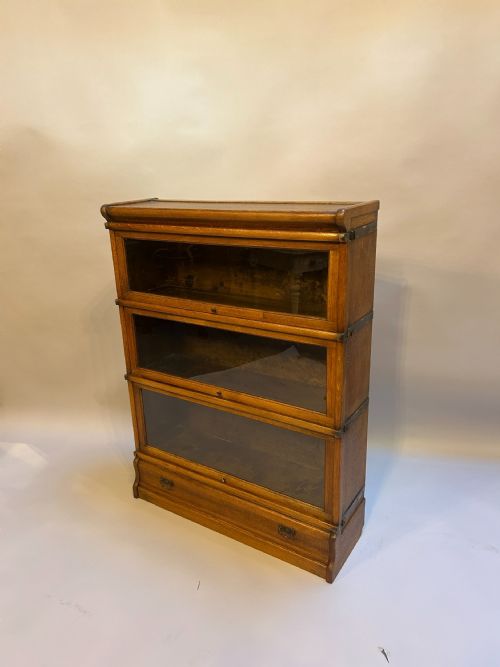
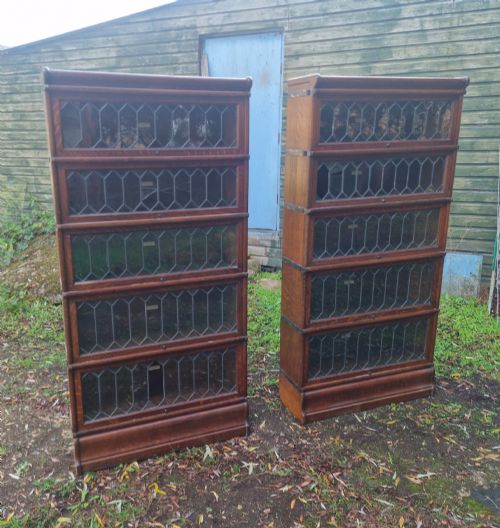
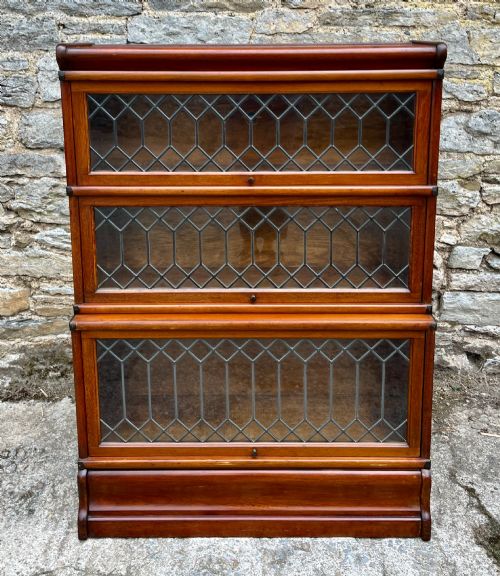
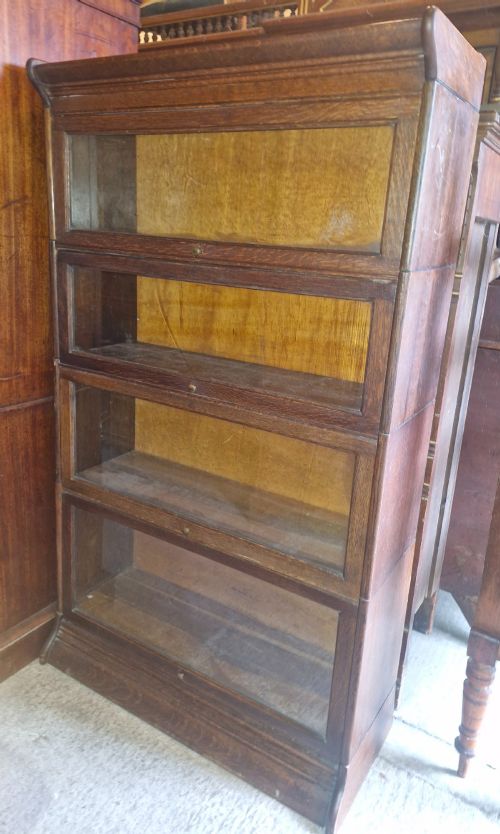
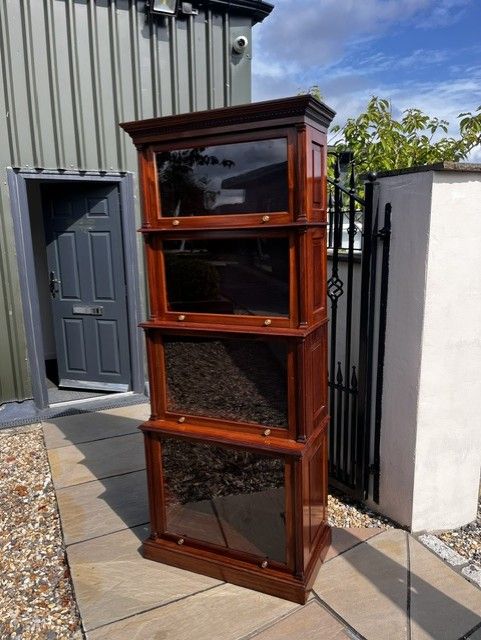
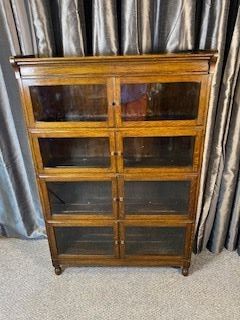
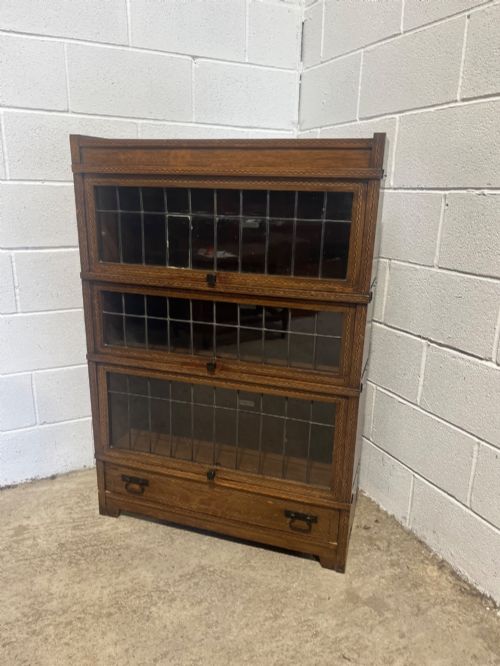
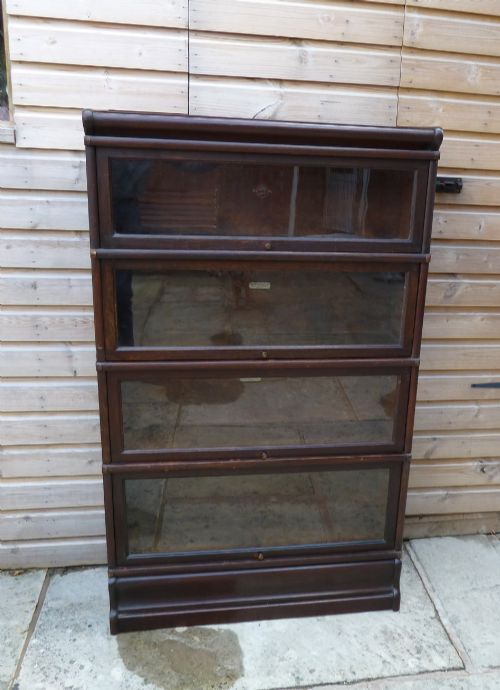
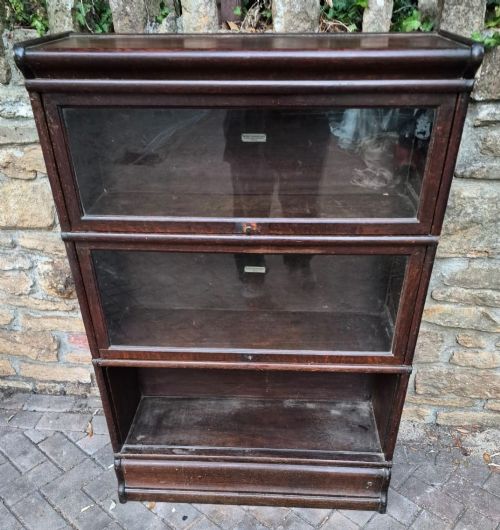
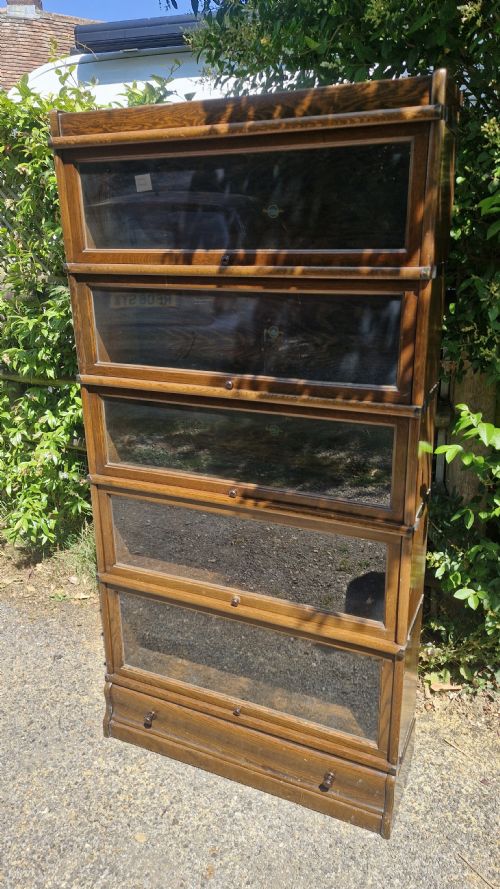
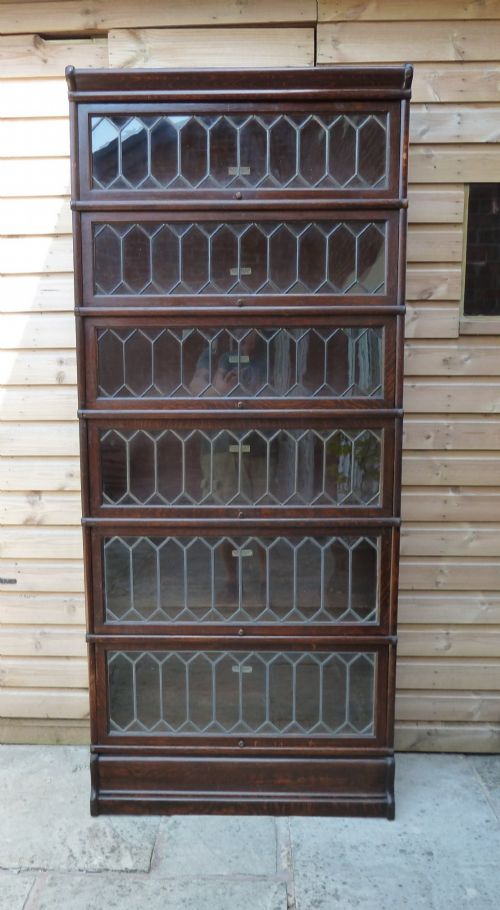
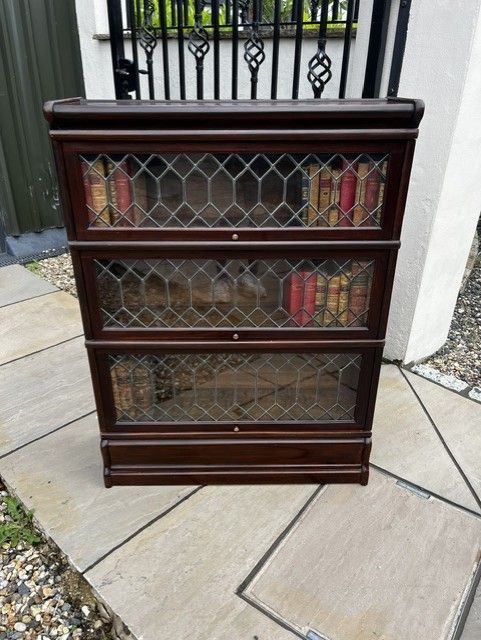
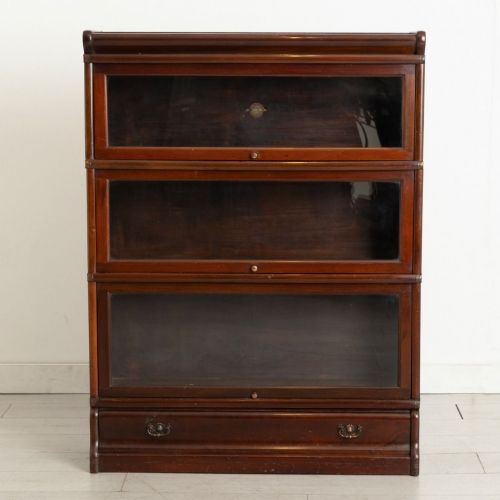
An edwardian sectional cabinet comprises modular tiers that stack together to form a tall bookcase, often known as a barrister bookcase. These pieces appear primarily in oak and mahogany, spanning the Edwardian period and the early decades of the twentieth century.
The format relies on independent glazed sections that lift and slide inward to reveal the shelves within. Oak versions dominate the selection, alongside mahogany and occasional walnut examples.
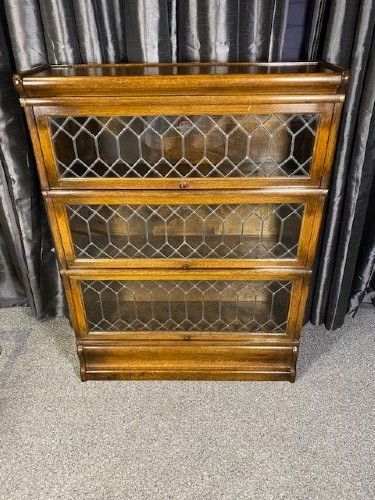
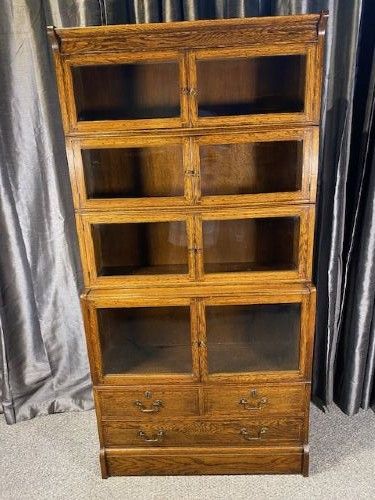
Makers such as Globe Wernicke, Lebus, Minty, Gunn, and AMYL produced these stacking designs for both office and home use. The proportions range from low three tier units to tall narrow bookcases and four or five section layouts.
Materials and construction
Makers utilised solid oak and mahogany for the main carcase and framing, often selecting golden or figured grain. Brass hardware appears on the internal mechanisms and pulls that guide the lifting glass doors.
The glazing involves clear glass or leaded glass panels held together by lead cames within wooden frames. Each tier operates as an independent box with an upward-opening mechanism that allows the door to slide back over the books.
Listings feature oak and mahogany predominantly, spanning the Edwardian era through to 1930.
Variations in quality
Quality rests upon the selection of timber figures, such as quarter-sawn oak rays or rich mahogany grain, paired with robust maker hardware. Simpler style variants lack the refined brass detailing and precise joinery found on branded maker pieces.
The integrity of the lifting mechanism and the clarity of the original leaded or plain glass distinguish finer examples from standard commercial office furniture of the period.
Globe Wernicke·Lebus·Minty·Gunn·AMYL
The Edwardian Sectional Cabinet Glossary
- Sectional bookcase
- A modular bookcase built from separate stacking tiers that can be taken apart or added to.
- Barrister bookcase
- An alternative name for a stacking bookcase designed with glass doors that protect law books.
- Leaded glass
- Glass panes joined together by narrow strips of lead, forming geometric patterns within the cabinet door.
- Quarter-sawn oak
- Timber cut radially to the tree rings, producing a characteristic decorative grain pattern often seen in oak cabinets.
Edwardian Sectional Cabinet: Frequently Asked Questions
How do sectional cabinet doors work?
Each tier uses a metal mechanism with side arms that allows the glass door to swing outward slightly and slide horizontally into the cabinet above the books.
This design keeps volumes protected from dust while offering individual access to each shelf compartment.
Can these bookcases be taken apart?
The tiers lift off one another independently once the base and top cornice are unlatched or simply separated by gravity.
This modular construction made transport straightforward for offices and homes during the early twentieth century.
What wood types are most common?
Oak is the predominant timber found in these stacking cabinets, frequently finished in a golden tone or quarter-sawn grain.
Mahogany units also appear regularly, alongside occasional walnut and limed oak examples from later periods.
How do I identify a maker?
Maker attribution relies on metal tags, stamps, or paper labels usually affixed to the interior shelves or back panels.
Prominent firms like Globe Wernicke and Minty often stamped their names directly into the woodwork or hardware.