
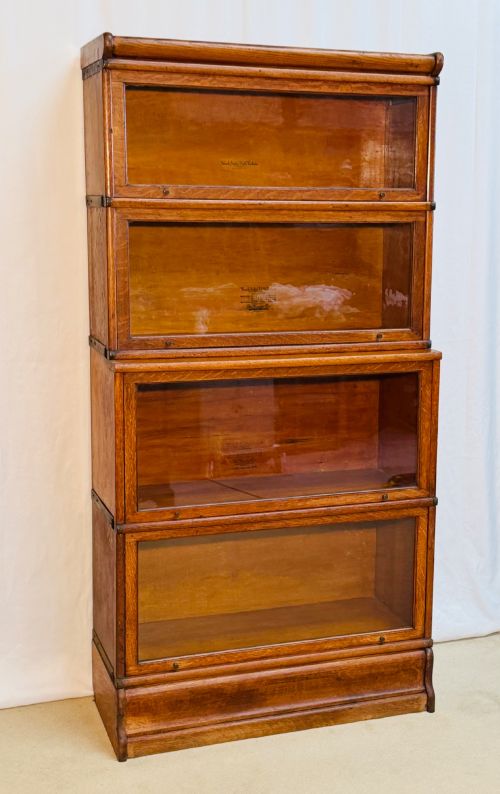
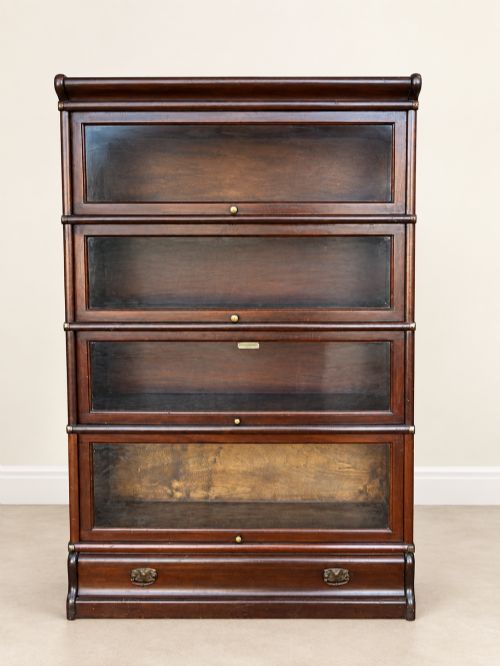
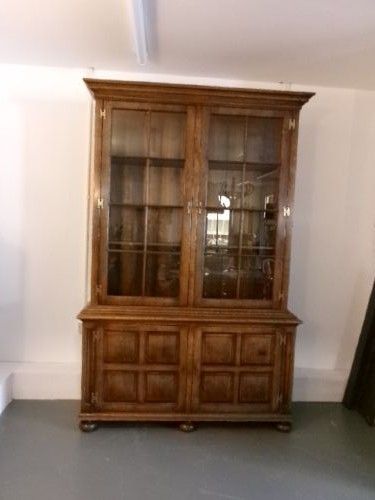
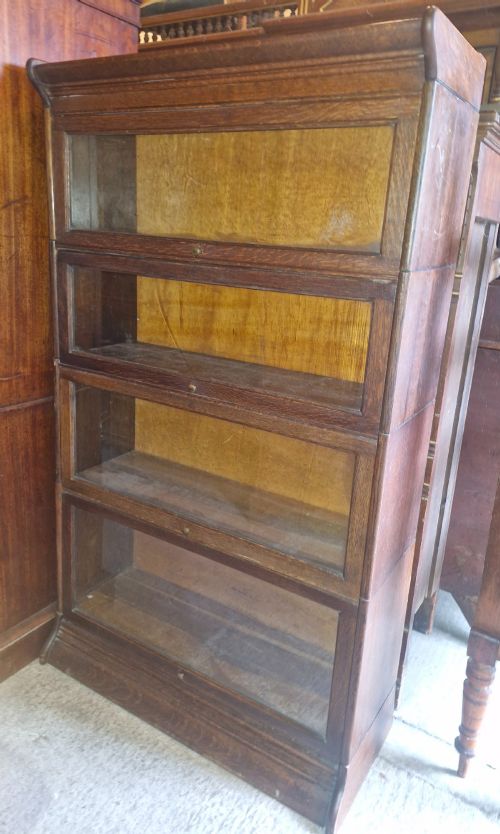
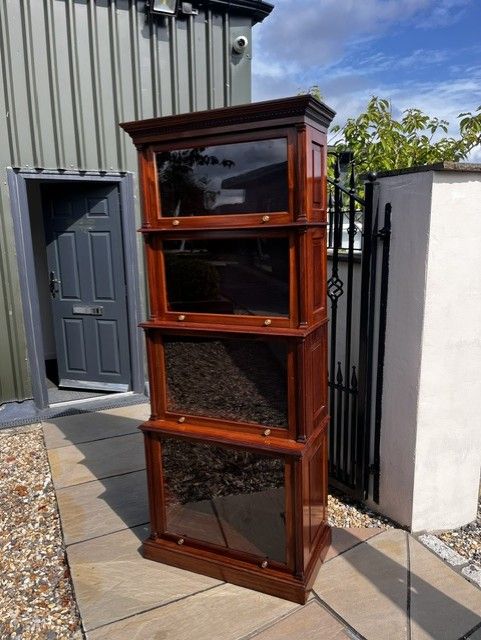
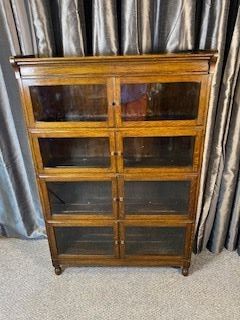
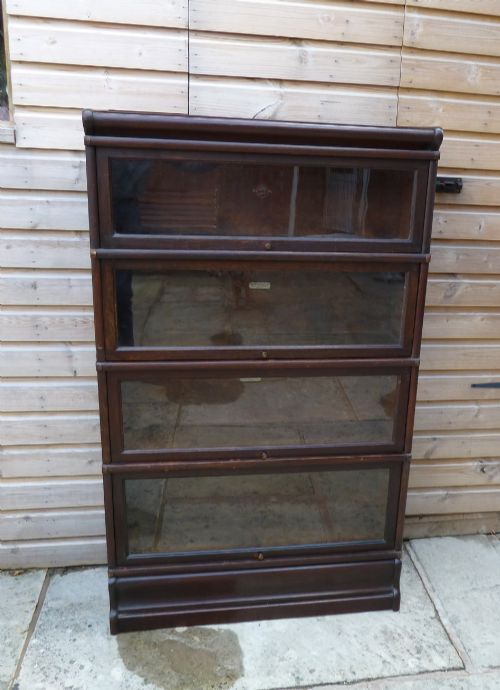
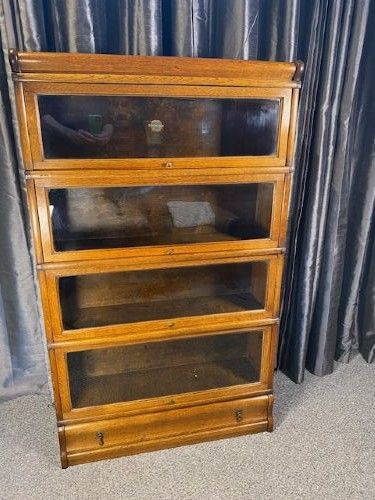


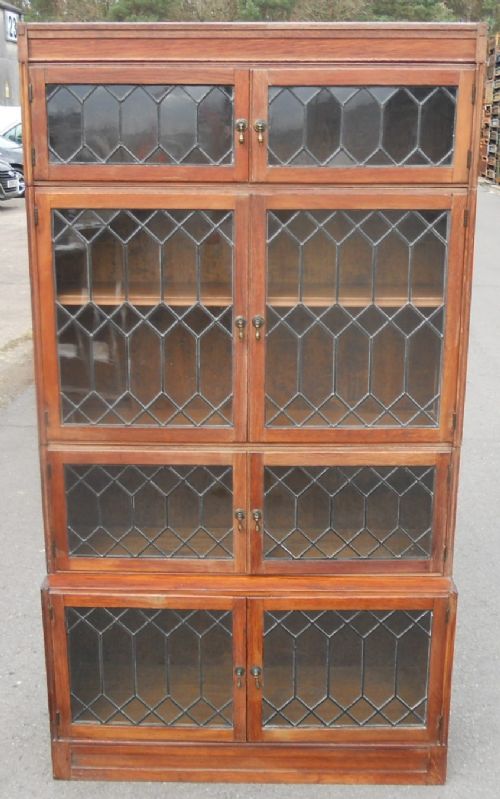
Glazed Bookcase Four Tier
A glazed bookcase four tier is a modular or sectional display cabinet that keeps volumes orderly while offering a clear view of the spines.
Glazed Bookcase Four Tier
A glazed bookcase four tier is a sectional storage piece designed to house books behind individual glass-fronted lifting doors. Buyers searching for a glazed bookcase four tier encounter modular stacking forms dating from the Edwardian era up to 1920, predominantly constructed from oak or mahogany.
The four tier configuration divides the storage into distinct stacked sections sitting upon a base and topped with a cornice. Standing variations also appear alongside modular formats, providing vertical storage solutions for home libraries and studies.
Originating largely from the early twentieth century, these pieces reflect the practical demand for expanding modular furniture that could accommodate growing private book collections. The format remains sought after for its combination of visible display and dust-protection.
How they were made
Construction relies upon solid timber frameworks, principally oak and solid mahogany, joined to form distinct vertical tiers or standing carcass frames. Glass panels are fitted into the lifting or sliding doors using lead or wooden framing to protect the interior contents.
Metal and brass hardware, including specialised stacking mechanisms and pulls, allows the individual sections to interlock securely while remaining detachable for transport. Original condition pieces retain their foundational timber integrity and operational glazed doors without modern replacements.
Early patent mechanisms let lawyers stack their law reports infinitely higher, provided their ceilings cooperated.
What varies in quality
Quality rests upon the selection of timber, distinguishing plain framing from figured golden oak or rich solid mahogany grains. The refinement of the mechanical hardware and the precision of the stacking joints determine the structural integrity across the tiers.
Maker attribution separates standard production items from branded pieces produced by established workshops such as Globe Wernicke, Lebus, or Gunn. Original surface finishes and intact leaded or clear glass panes preserve the historical authenticity of the cabinet.
Globe Wernicke·Lebus·Gunn
The Glazed Bookcase Four Tier Glossary
- Tier
- A single horizontal section or compartment within a stacked sectional cabinet. Each tier operates as an independent box with its own glazed door.
- Sectional
- Furniture built from individual modular units that stack vertically upon one another. This design allows the bookcase to be disassembled into manageable parts.
- Globe Wernicke style
- A modular barrister bookcase design featuring lifting glass doors that recess above the books. The style defines the predominant stacking mechanism seen in early twentieth-century examples.
- Cornice
- The decorative moulding fitted to the very top of the bookcase. It caps the uppermost tier to finish the silhouette.
- Solid mahogany
- A dense tropical hardwood used for premium cabinet construction. It provides a dark, uniform grain distinct from oak.
Glazed Bookcase Four Tier: Frequently Asked Questions
What is a four tier sectional bookcase?
A four tier sectional bookcase consists of four separate wooden boxes stacked on top of each other, usually featuring glass doors that lift and slide inside.
This modular design allows the entire unit to be separated into individual tiers for moving or rearranging.
How do the glass doors operate?
The glass doors on these stacking bookcases typically lift upwards on a scissor-like metal mechanism and slide back into the recess above the shelf.
This clever mechanical action allows easy access to the books without doors swinging outward into the room.
Are these bookcases made of solid oak?
Many examples from the Edwardian period and the nineteen-twenties are constructed from solid oak or golden oak timber.
Some pieces also feature solid mahogany, utilising durable hardwoods designed to bear the weight of heavy volumes.
How do I date an oak stacking bookcase?
Dating relies upon examining the hardware patents, timber finishes, and manufacturer stamps found on the interior sections.
Most surviving modular pieces originate from the Edwardian era through to around nineteen-twenty.