

Oak Barrister Cabinet
An oak barrister cabinet offers modular shelving that protects volumes behind lifting glass doors.
Oak Barrister Cabinet
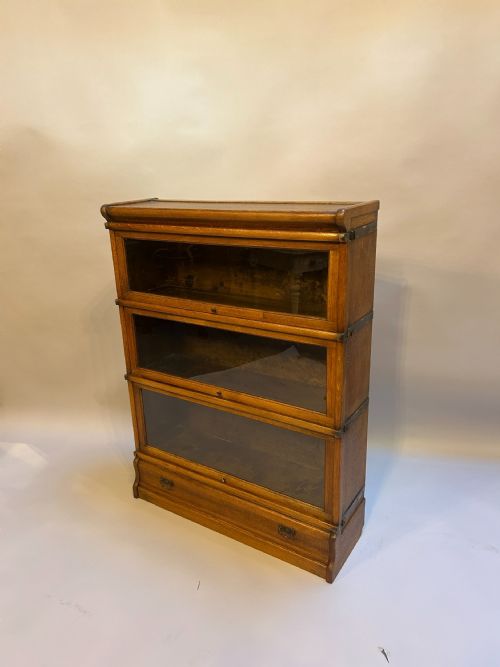
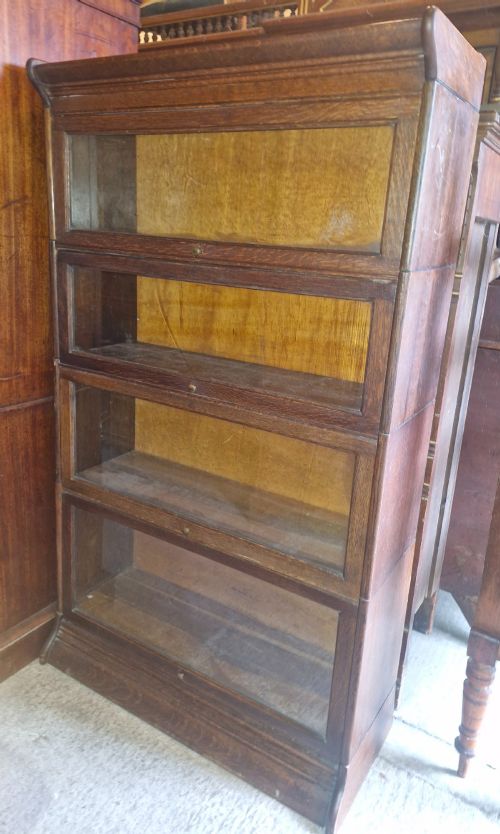
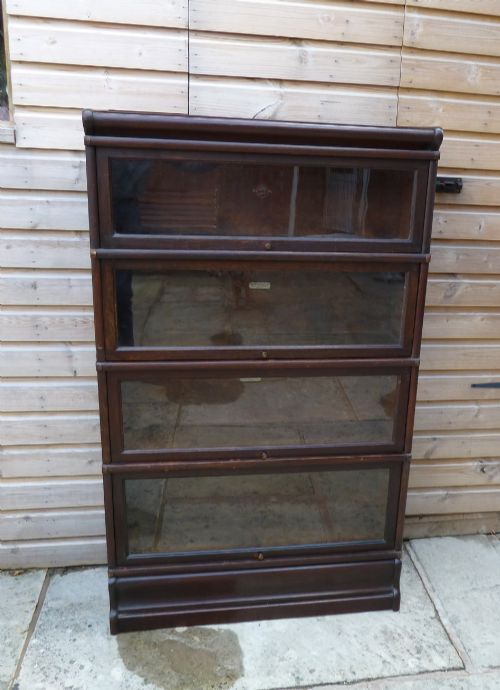
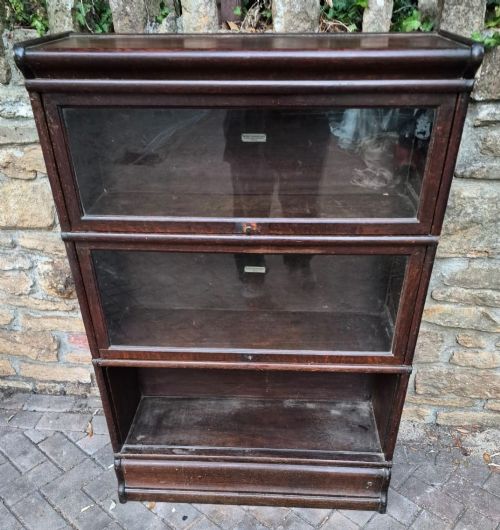
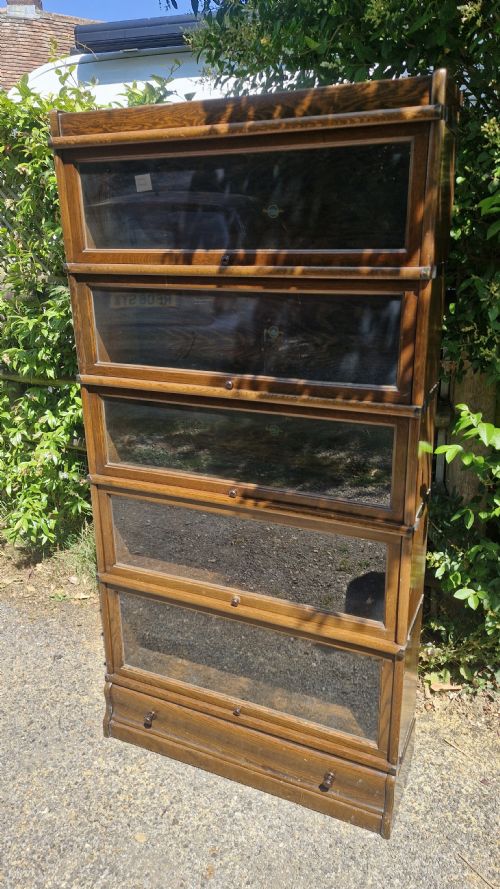
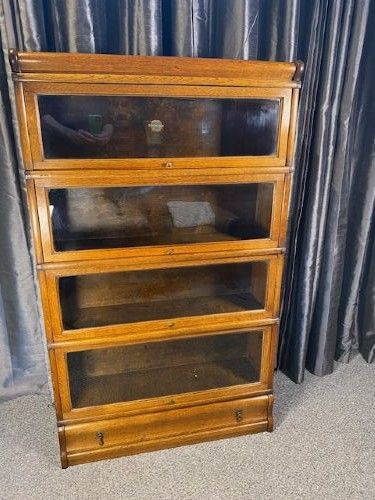
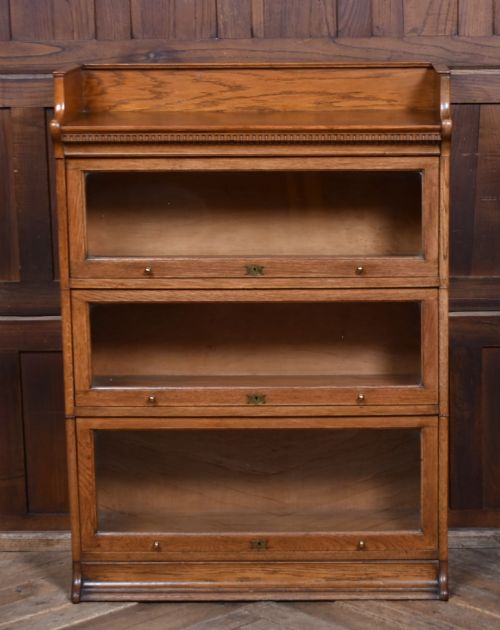
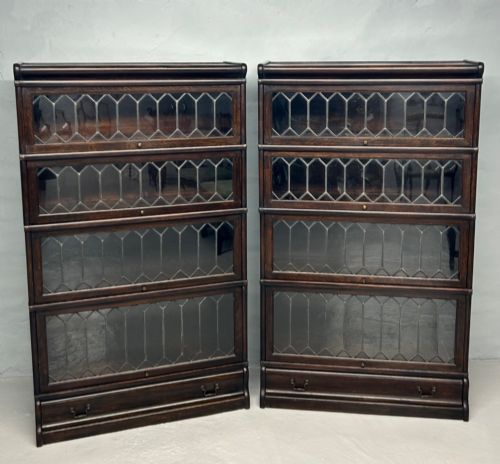
An oak barrister cabinet is a sectional bookcase built in tiers that stack together without permanent fixings. Most examples seen here date from the Edwardian period through to the 1930s, spanning the 1900s, 1910s, 1920s, and 1930s.
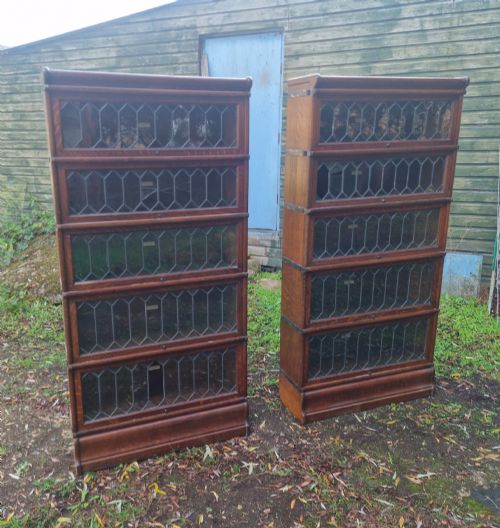
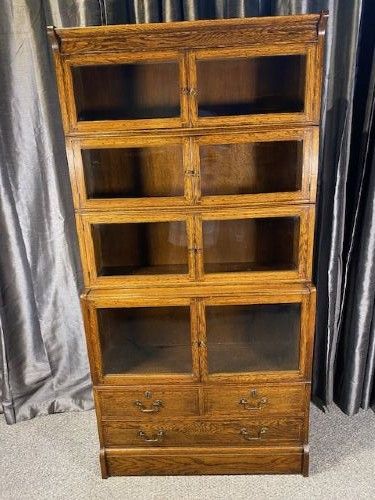
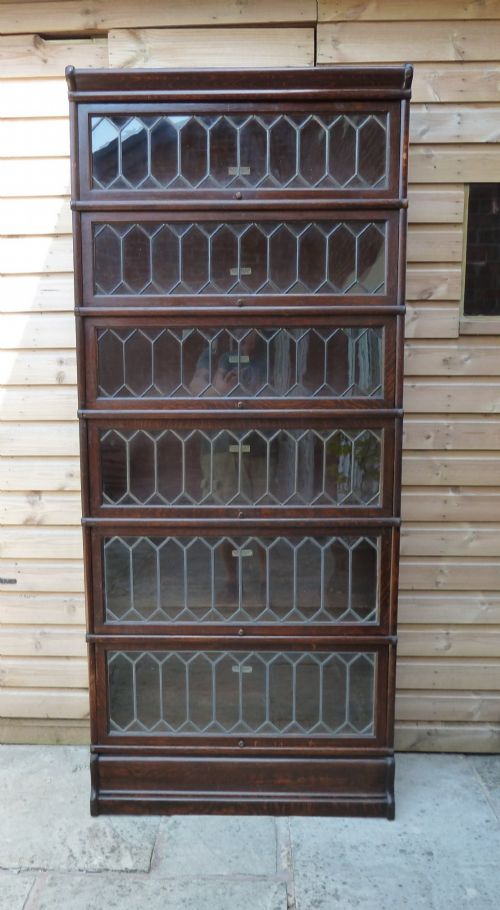
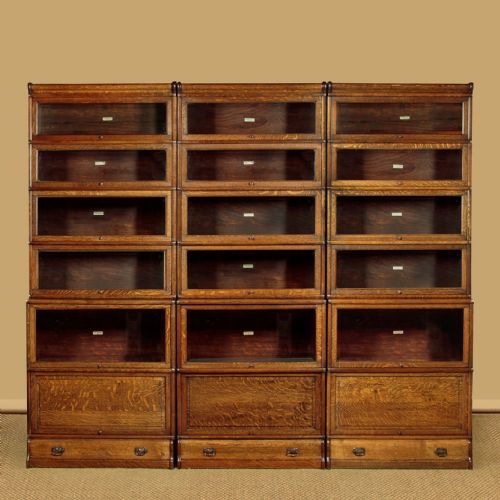
These modular bookcases were designed for offices and studies to keep heavy law books and professional libraries clean and accessible. The forms range from three-section units up to tall five and six-tier stacks, sometimes incorporating filing compartments alongside the bookcases.
The dominant aesthetic reflects Edwardian, Arts and Crafts, and later Art Deco tastes applied to practical office furniture. Buyers find standard upright formats alongside glazed standing bookcases and occasional inlaid variants.
How they were made
Construction relies primarily on solid oak and golden oak veneers over sturdy carcases, combined with glass panels for the doors. Brass hardware typically manages the lifting mechanisms and internal linkages that keep the stacking sections aligned.
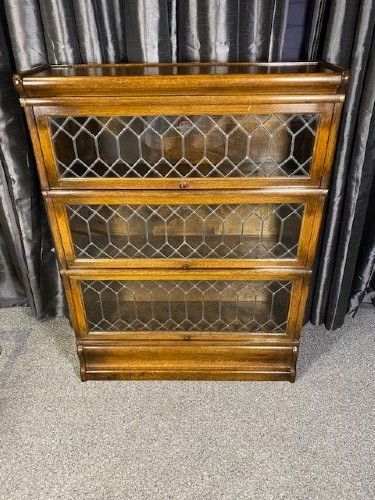
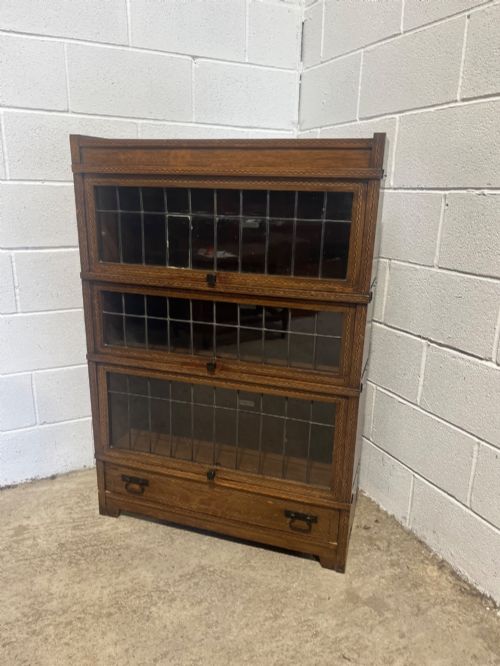
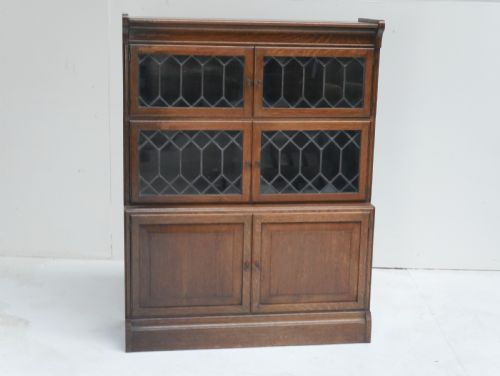
Many examples incorporate leaded glass within the individual tier doors, creating geometric panels held together by cames of lead or metal. Wood inlay appears on select Edwardian pieces to add decorative detail to the otherwise utilitarian office design.
Some barrister cabinets doubled as filing systems, proving lawyers were not the only ones drowning in paperwork.
What varies in quality
Quality in these sectional units depends heavily on the precision of the modular joints and the mechanical action of the lifting glass doors. Maker attribution, such as pieces bearing the marks of Globe Wernicke, Lebus, Minty, Gunn, or Warwick, generally indicates superior joinery and hardware execution.
The choice of materials also divides the standard production pieces from finer examples, with select golden oak finishes, decorative leaded glazing, and subtle wood inlay representing higher tiers of craftsmanship.
Globe Wernicke·Lebus·Minty·Gunn·Warwick
The Oak Barrister Cabinet Glossary
- Sectional bookcase
- A modular shelving unit composed of separate stacking tiers that can be taken apart or built upward. This design allowed expanding libraries to grow one shelf at a time.
- Leaded glass
- Window panes divided into small sections held together by narrow strips of lead or metal. This technique provided rigidity to glass panels used in cabinet doors.
- Arts and Crafts
- A design movement emphasising honest construction and visible material quality. Pieces from this style often shun heavy Victorian ornamentation in favour of clean architectural lines.
- Waterfall
- A descriptive term for sectional cabinets featuring gently rounded or curved tops and cornices. This contour softens the otherwise boxy profile of standard office stacking units.
- Inlay
- The insertion of contrasting woods into the primary oak surface for decoration. It appears on select Edwardian variations of the standard office bookcase.
Oak Barrister Cabinet: Frequently Asked Questions
How do sectional stacking units work?
Each shelf tier is a separate wooden box with its own glass door that lifts and slides inward above the books. The individual sections simply stack on top of a base and sit beneath a top cornice without requiring screws or bolts.
This modular construction allows the entire cabinet to be easily disassembled, moved room by room, or expanded by adding another tier when a book collection grows larger.
Were these cabinets only used by lawyers?
While the name associates them with legal offices and barristers needing dust-free storage for heavy reference volumes, they were widely adopted in domestic studies and general businesses. Their secure, enclosed shelving made them ideal for any professional or home library.
Manufacturers often marketed them for offices, libraries, and filing rooms alike, sometimes combining book tiers with dedicated filing drawers in the same stack.
How can I date an oak sectional bookcase?
Dating relies on stylistic clues, hardware details, and maker marks stamped into the wood or metal brackets. Pieces showing Edwardian Arts and Crafts influences or delicate wood inlay typically point to the 1900s or 1910s.
Later examples from the 1920s and 1930s tend toward simpler golden oak finishes or occasional Art Deco geometric touches, while standard Globe Wernicke production spanned several decades with minor hardware evolutions.
Can I separate the tiers for transport?
Yes, the defining characteristic of these modular bookcases is that every shelf tier, plus the base and top, separates completely. You lift each section off the one below it rather than attempting to move the entire heavy stack at once.
This makes moving even tall five or six-section towers manageable, provided you take care with the loose glass doors during transit.