




Modular Wooden Bookcase
A modular wooden bookcase offers flexible tiered storage, combining segmented timber boxes and glass fronts to adapt effortlessly to growing libraries.
Modular Wooden Bookcase
A modular wooden bookcase comprises distinct stacking sections and shelving units designed to expand vertically or horizontally as collections grow. When searching for a modular wooden bookcase, buyers encounter sectional lawyer designs, stacking barrister cabinets, and adaptable display boxes.
The pieces on this page span the Edwardian period, the 1900s, 1920s, 1930s, 1950s, and the nineteenth century. Common forms include tall narrow bookcases, double sectional units, and campaign cabinets.
Originating from cabinet makers and department stores, these adaptable units bring period character to modern spaces. They serve as practical display solutions for books, ceramics, and curiosities.
How they were made
Construction relies primarily on solid oak and mahogany, alongside plywood and wood veneer surfaces. Metal and brass hardware provide functional mechanisms for stacking doors and lifting frames.
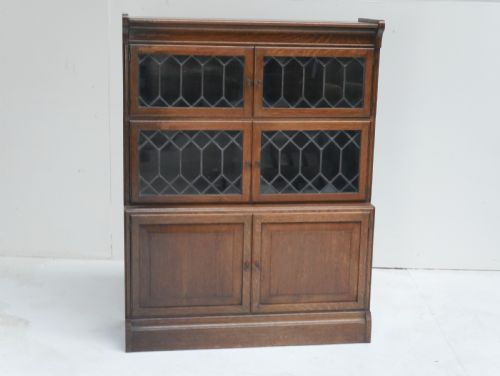
Glass panels are fitted into doors to protect volumes while maintaining visibility, sometimes secured with lead. Selected pieces utilise campaign styling with recessed brass fittings for transit.
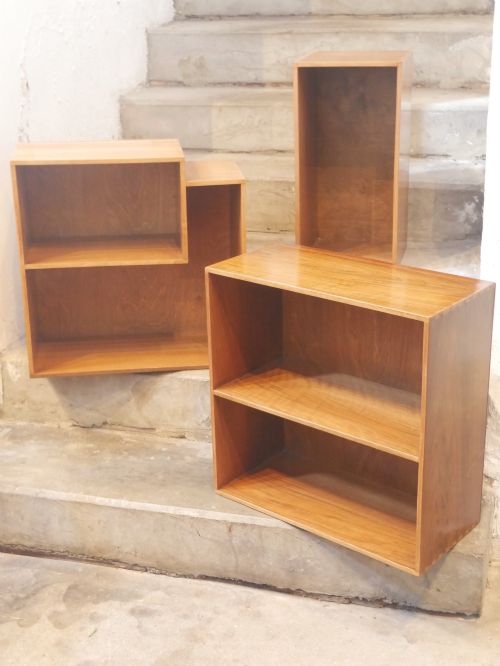
A lovely quirky set of three cabinets travelled from Charing Cross to join the modular ranks.
What varies in quality
The division between standard workshop production and superior cabinet making rests upon timber selection and mechanical precision. Solid mahogany and oak display tight grain patterns and substantial weight compared to veneered alternatives.
Original hardware such as brass brackets and leaded glass glazing denote higher grade manufacturing. Maker attributions, including pieces by Minty or Heal's, distinguish standard modular furniture from distinguished examples.
Minty
The Modular Wooden Bookcase Glossary
- Stacking bookcase
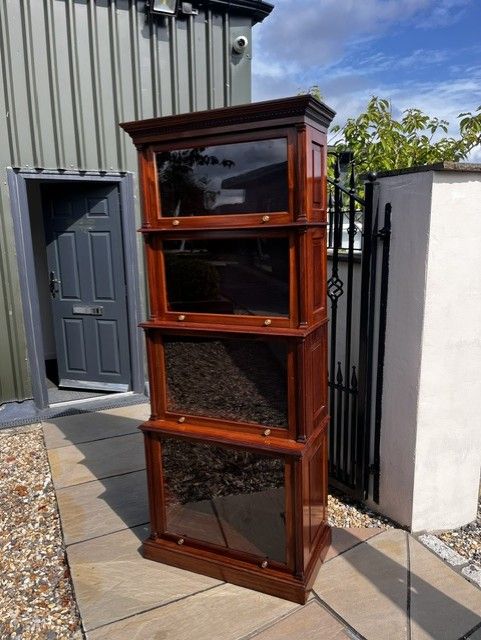
- A modular wooden bookcase made of separate horizontal sections that rest one upon another. This design allows individual tiers to be added or rearranged.
- Barrister bookcase
- A specific type of stacking bookcase featuring glazed doors that lift and slide inward above each shelf. These protected lawyer and office libraries from dust.
- Campaign cabinet
- Portable furniture fitted with recessed brass handles and corner brackets designed for travel. Nineteenth-century examples split into modular sections for ease of transport.
- Sectional bookcase
- Furniture constructed in independent modular tiers rather than a single fixed carcase. This configuration simplifies movement and reassembly in different rooms.
Modular Wooden Bookcase: Frequently Asked Questions
How do stacking bookcases work?
Stacking bookcases utilise independent modular tiers that rest securely on top of one another without permanent fixings. Each section typically includes its own shelf and door mechanism.
This modular construction allows owners to add or remove sections as their library expands or shrinks. The pieces dismantle easily for moving between rooms or properties.
Are barrister bookcases difficult to maintain?
Barrister bookcases require minimal maintenance beyond regular dusting and occasional wood conditioning. The mechanical linkages on the glass doors benefit from light lubrication if movement stiffens.
Keep the timber away from direct heat sources and excessive moisture to prevent the wood or sliding mechanisms from warping. Proper placement ensures the stacking tiers remain level and operate smoothly.
What periods do these bookcases cover?
The available pieces span from the nineteenth century through the Edwardian era into the mid-twentieth century. Styles transition from campaign furniture and Arts and Crafts designs to Art Deco and Mid-Century Modern.
Earlier examples often feature solid mahogany with traditional joinery, while later twentieth-century iterations incorporate oak, plywood, and innovative modular stacking formats.
How do I style a modular bookcase?
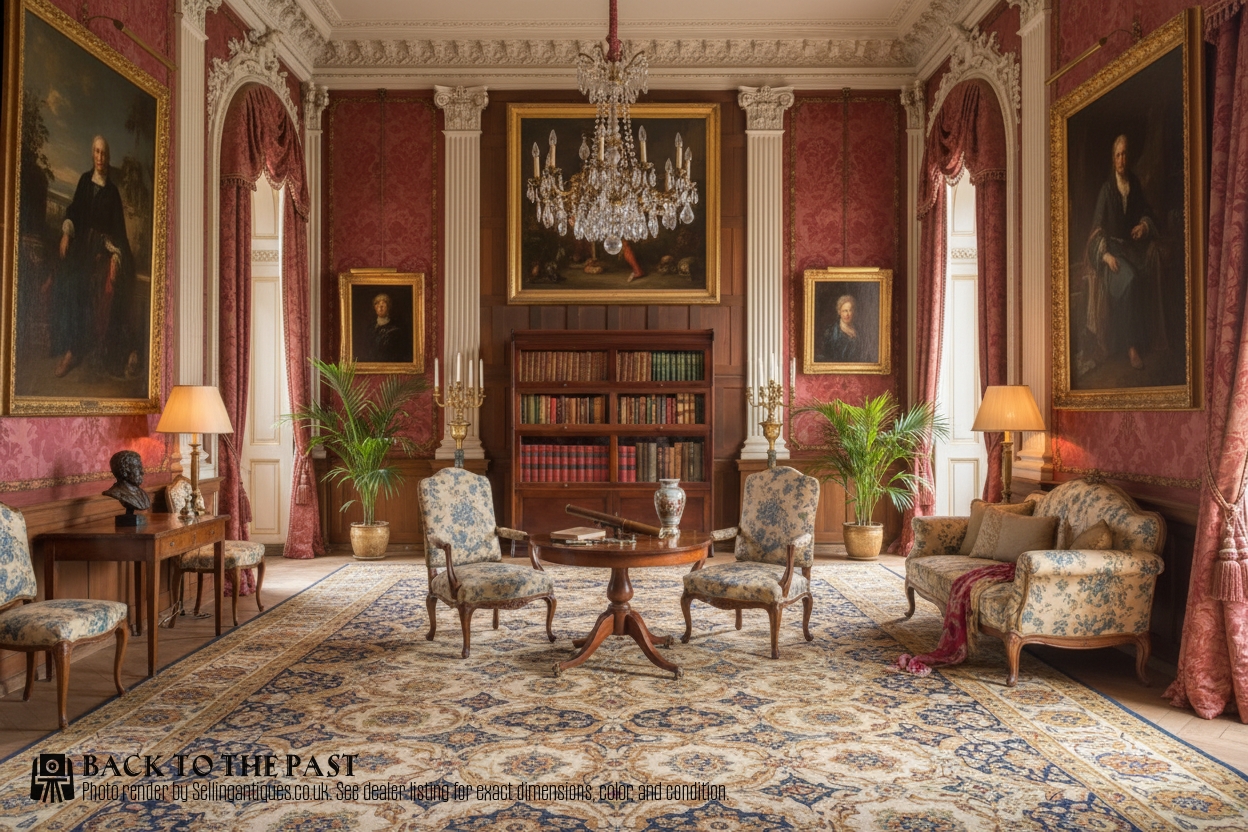
A modular bookcase suits both traditional studies and contemporary living rooms by breaking up vertical wall space with segmented lines. Mix rows of books with decorative objects behind the glass fronts.
The adjustable height of stacking sections accommodates oversized art volumes alongside standard paperbacks, creating a balanced and functional display.