
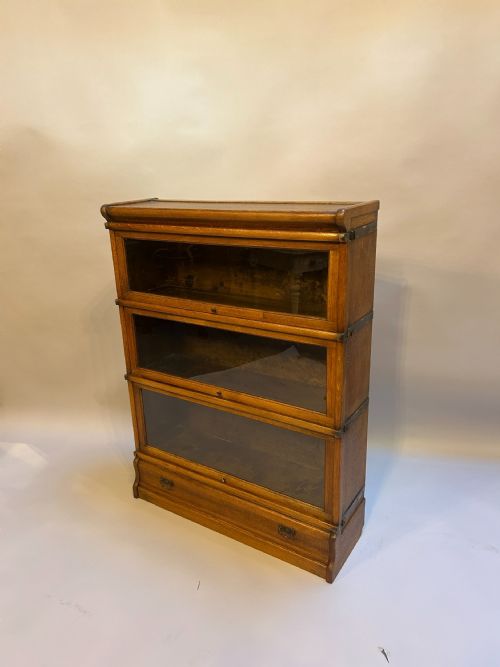
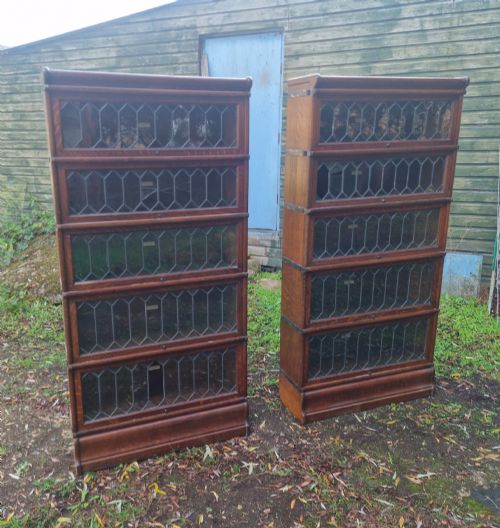
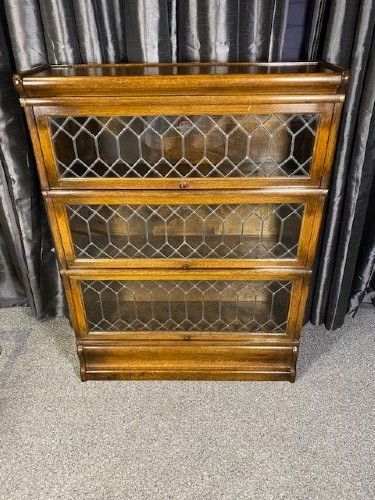
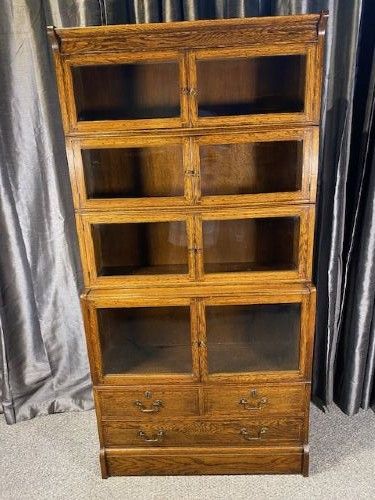

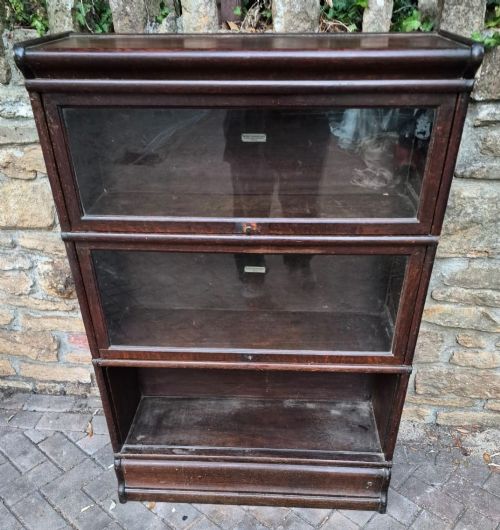
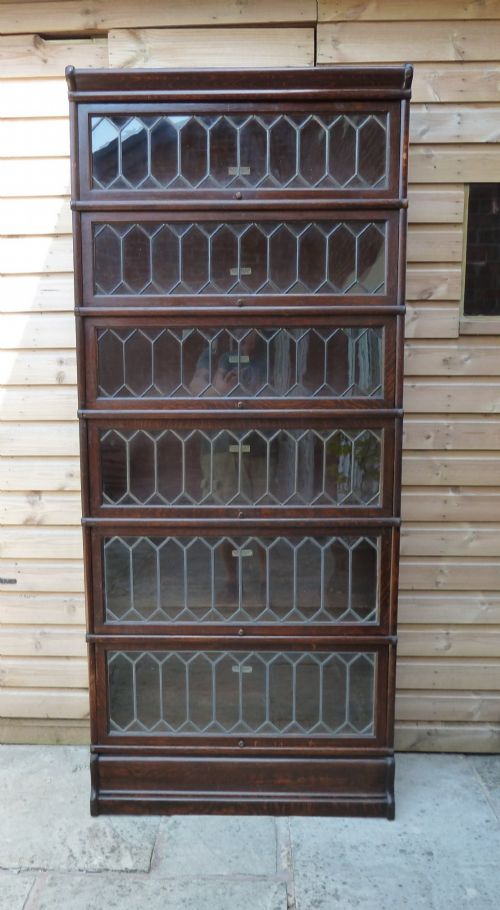
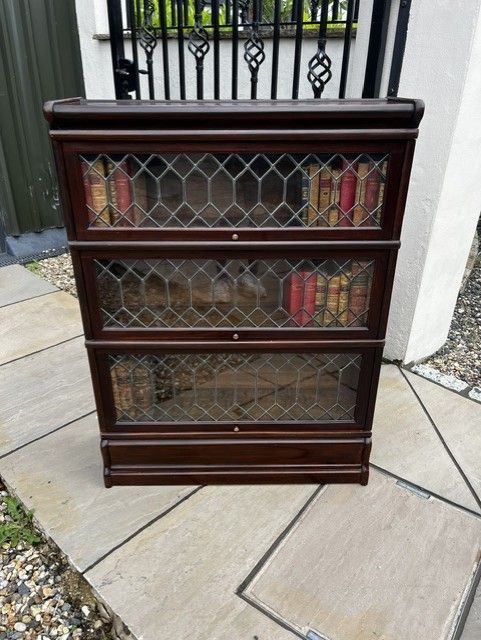
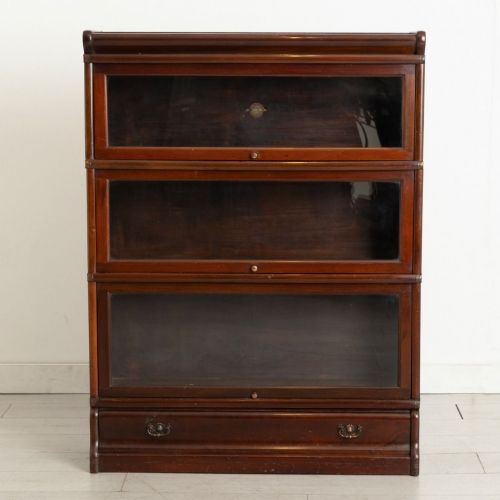
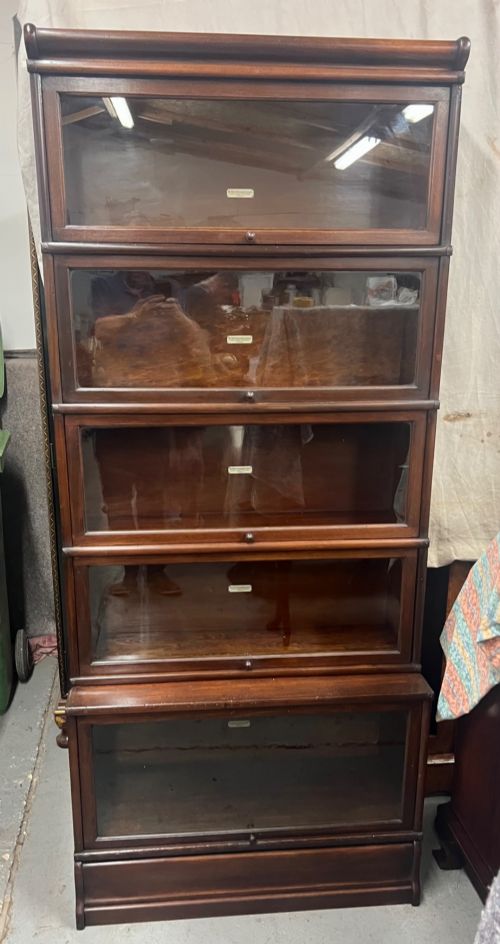
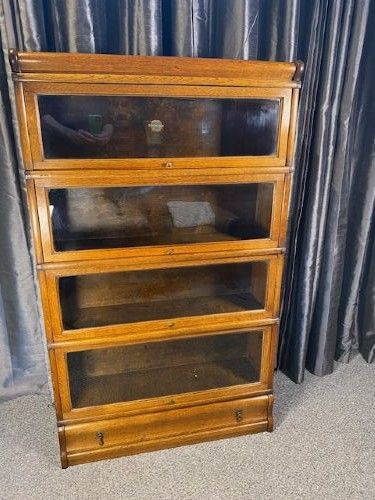
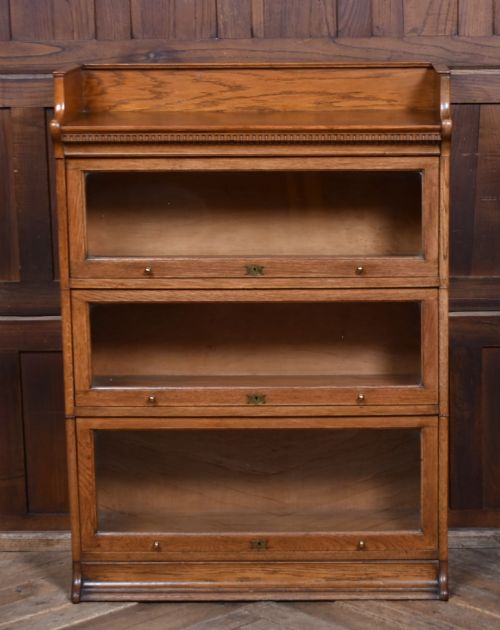
Modular Glass Bookcase
A modular glass bookcase offers adaptable storage through stacked, glazed sections that keep volumes clean while allowing individual tier movement.
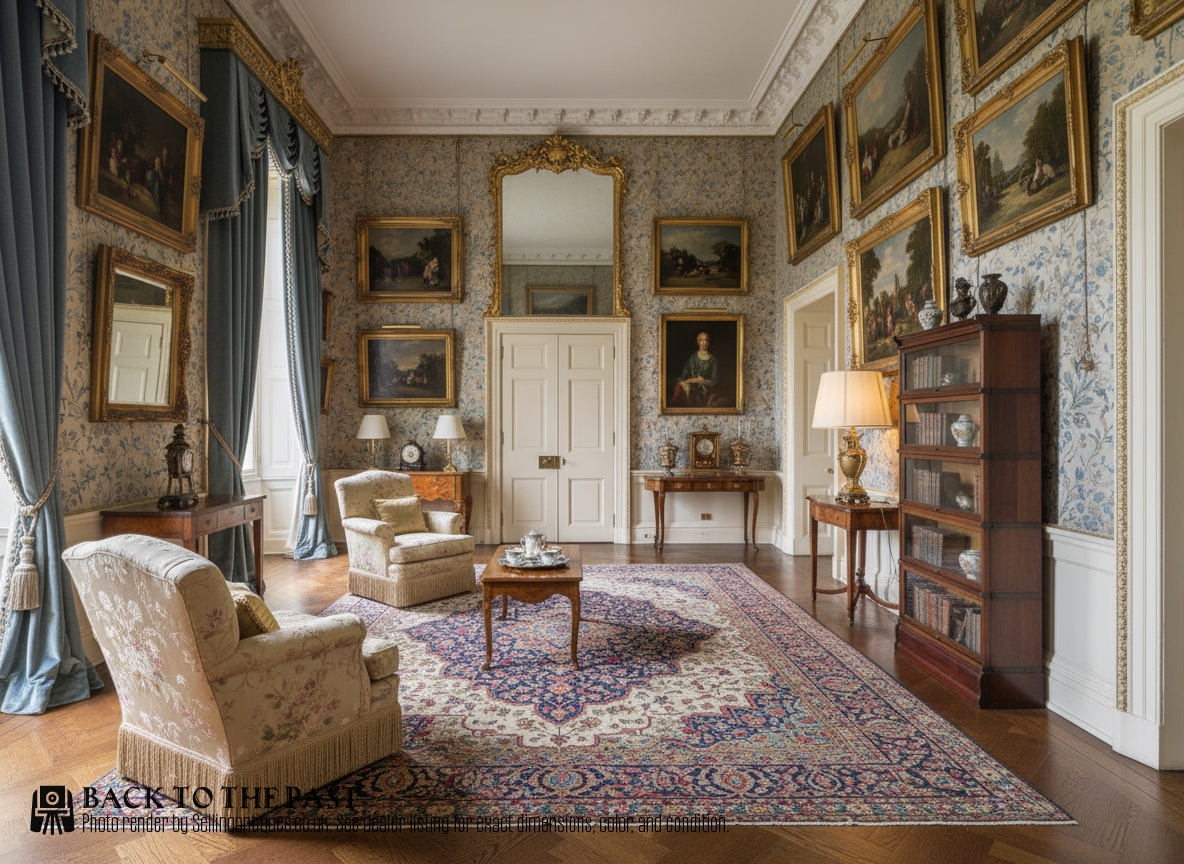
Modular Glass Bookcase
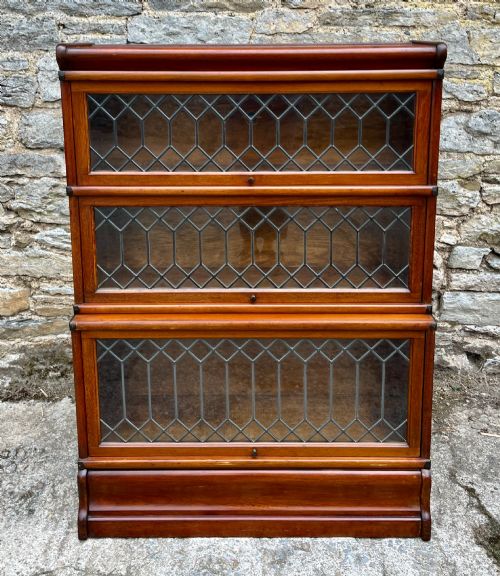
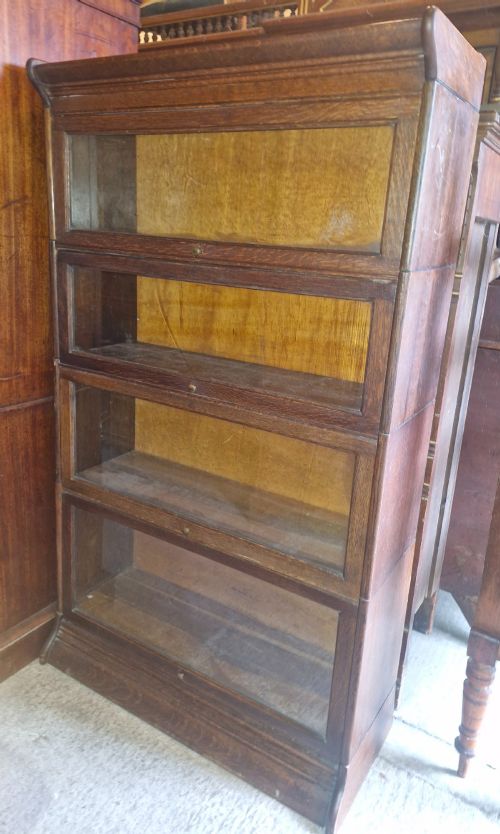
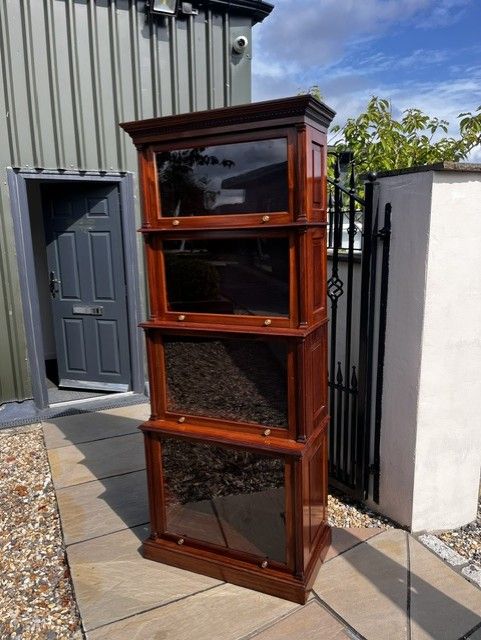
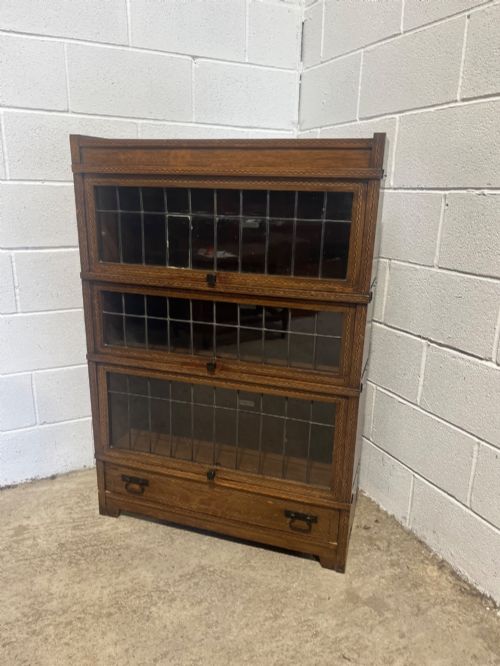
The pieces appearing on this page span the Edwardian period through the nineteen-fifties, drawing heavily upon nineteen-ten, nineteen-twenty, and nineteen-thirty designs. Oak and mahogany form the structural core of these items, accompanied by brass hardware and leaded glass configurations.
Forms range from compact three-tier units to tall six-section office cabinets and narrow shelving configurations. Buyers encounter traditional oak examples alongside walnut, limed oak, and mid-century variants tailored for domestic or professional studies.
Materials and construction methods
Makers constructed the primary frames of solid oak, mahogany, or walnut, utilising sturdy timber to support the weight of stacked compartments. Brass mechanisms, handles, and side straps were fitted to guide the lifting glass doors smoothly within their tracks.
Glazing techniques included plain sheet glass and decorative leaded panels set into timber frames. Sections were engineered to interlock securely using tongue-and-groove joints or specialised metal brackets, permitting individual tiers to separate for relocation.
Some barristers possessed such extensive legal libraries that their stacking bookcases eventually reached ceiling height, requiring a rolling ladder just to reach the morning briefs.
Distinctions in construction and finish
Quality rests upon the precision of the stacking mechanism and the smoothness of the sliding glass door action. Finer examples retain matching timber grain across separate tiers and feature robust brass fittings rather than light plated metal.
Makers known for volume production utilised standardised oak panels, whereas bespoke or specialised workshops employed figured mahogany, inlaid details, and superior leaded glasswork. The integrity of the original finish and the presence of maker markings further distinguish standard utility items from superior workshop output.
Globe Wernicke·Lebus·Minty·AMYL·Gunn·Warwick·Phoenix Gallery
The Modular Glass Bookcase Glossary
- Barrister bookcase
- A stacking sectional bookcase featuring glazed, upward-lifting doors designed for legal offices and studies. This form allows the entire cabinet to grow by adding single tiers as a library expands.
- Sectional bookcase
- A piece built from multiple independent modular units that stack on top of a base plinth and beneath a top cornice. The lack of permanent vertical sides distinguishes this construction from standard shelving.
- Leaded glass
- Small panes of glass joined together by narrow strips of lead into geometric or decorative patterns. This technique strengthens the door frame while adding visual texture to early twentieth-century office furniture.
- Globe Wernicke
- A prominent maker and style originating from a system of interlocking modular lawyer bookcases. The name is frequently applied generally to any stacking bookcase sharing the same patented mechanical door action.
- Cornice
- The decorative moulded projection that sits atop the uppermost tier of a sectional cabinet. It provides a finished architectural cap to the stacked vertical columns.
Modular Glass Bookcase: Frequently Asked Questions
How do the glass doors open?
The glass doors on these sectional units typically feature a metal scissor mechanism or overhead guide tracks. When pushed, the glazed front lifts up and slides horizontally back into the recess above the books.
This clever design keeps the door entirely out of the way while you select a volume, then drops back down into place to protect the paper from dust.
Can the sections be separated?
Yes, the modular design relies entirely on independent stacking tiers that rest one upon another without screws or permanent glue. A base plinth sits at the bottom, individual shelves form the middle, and a cornice caps the top.
You can easily lift each tier apart to move the bookcase to a new room or reconfigure the height to fit your ceiling.
What wood types should I expect?
Oak is the material most frequently encountered, particularly in golden oak finishes typical of early twentieth-century offices. Mahogany and walnut appear regularly alongside limed oak examples from later decades.
Solid timber construction ensures each separate tier bears the weight of heavy books without warping the housing frames.
How do I date a stacking bookcase?
Dating relies on timber selection, hardware design, and maker stamps found inside the cabinet frames. Edwardian and nineteen-ten models often display heavy oak grain and traditional brass pulls, while nineteen-thirty and nineteen-fifty pieces utilise simpler lines and limed finishes.
Checking for maker marks stamped by firms such as Globe Wernicke or Lebus provides a reliable window into the period of manufacture.