

Oak Sectional Cabinet
An oak sectional cabinet brings modular practicality to a room, offering adaptable tiered storage that handles growing libraries with ease.
Oak Sectional Cabinet
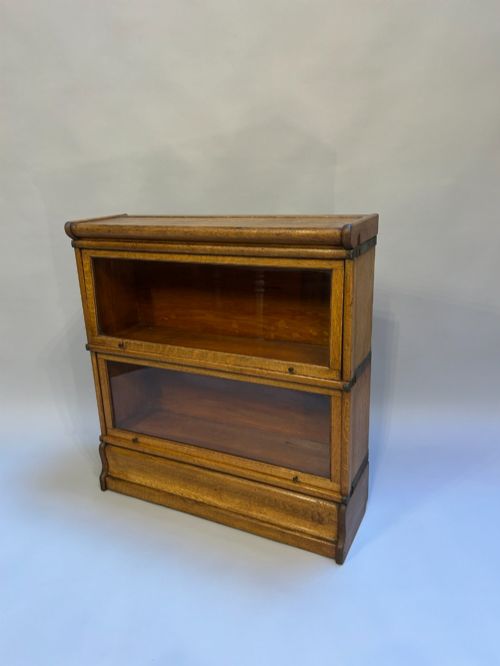
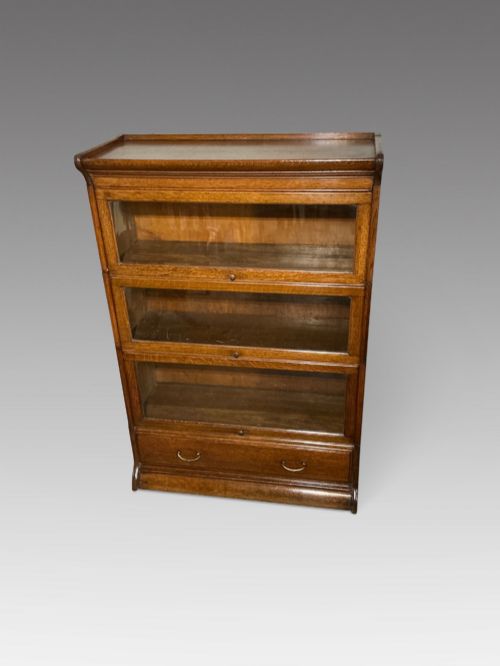
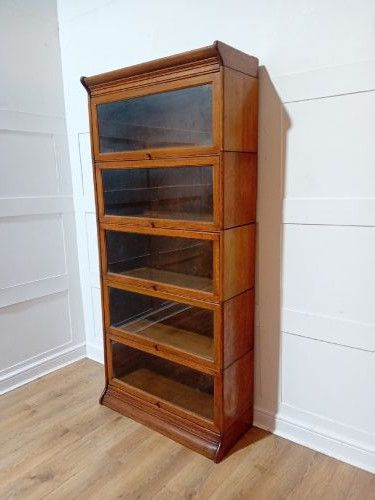
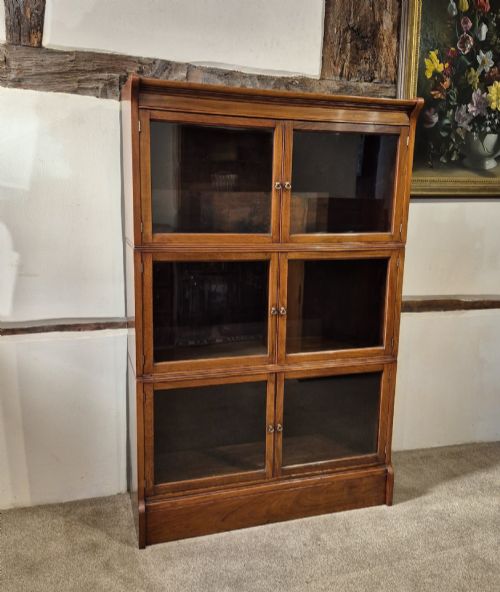
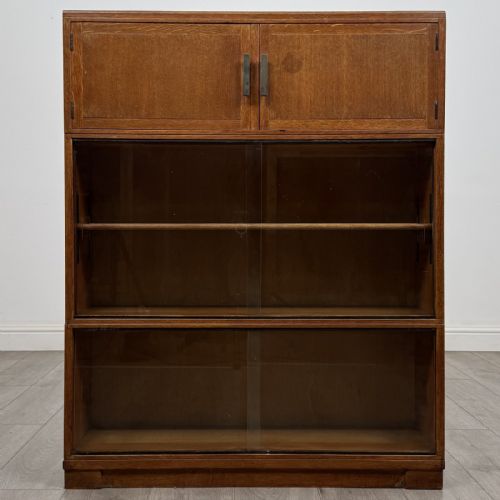
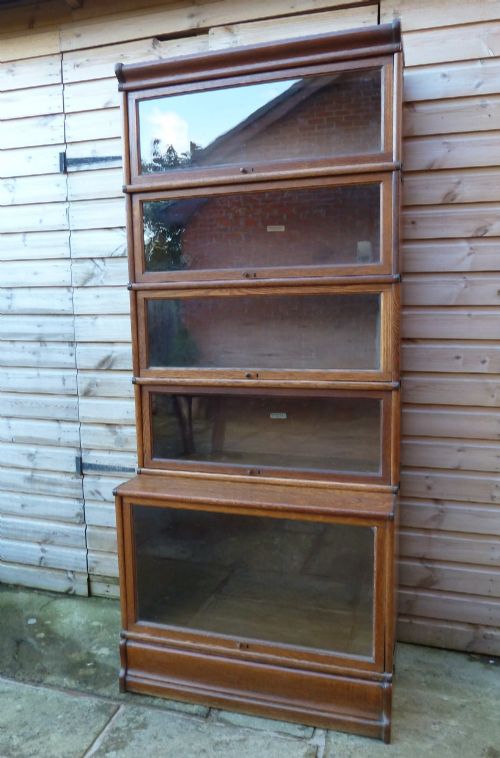
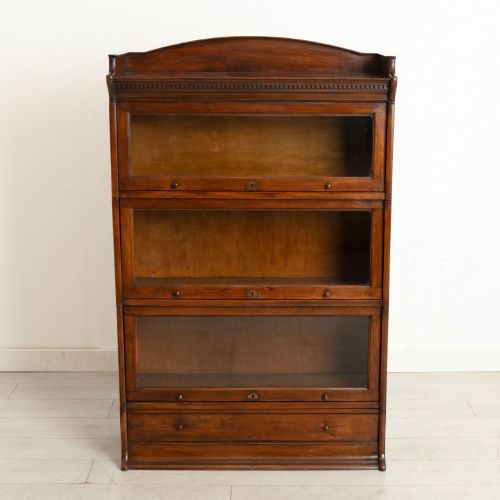
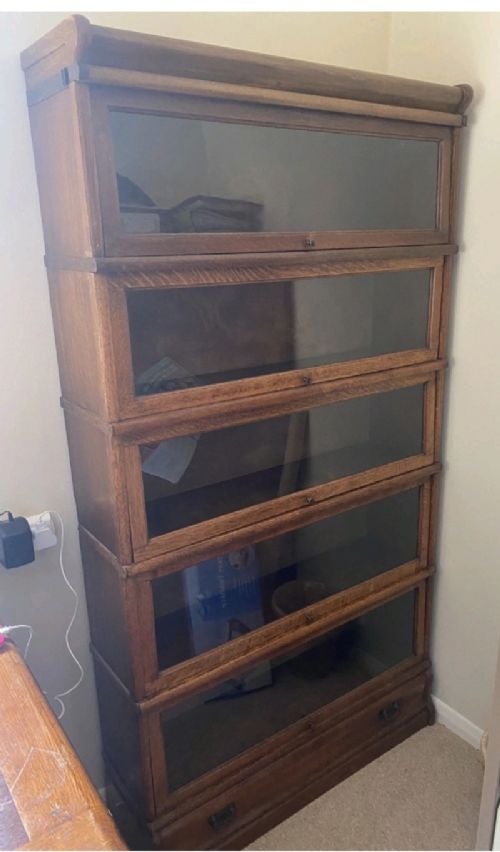
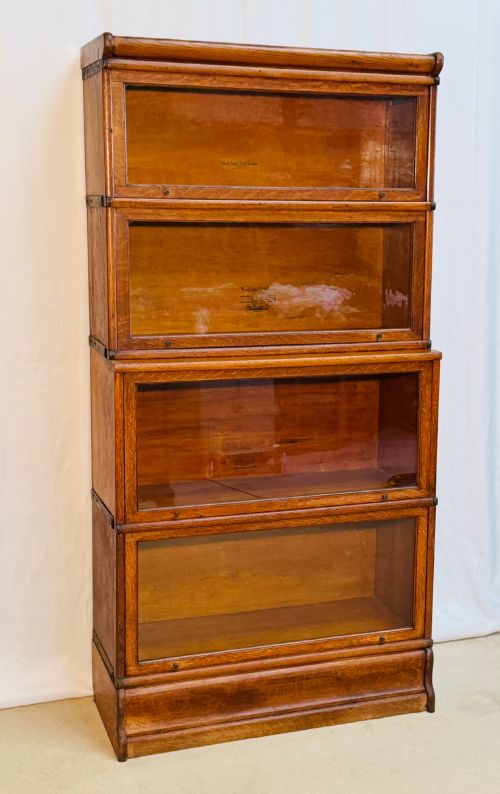
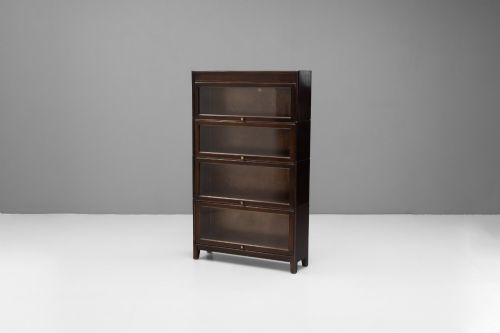
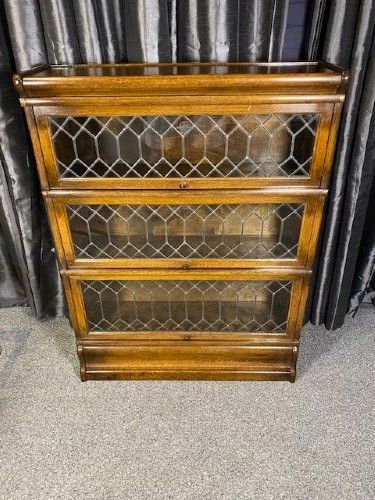
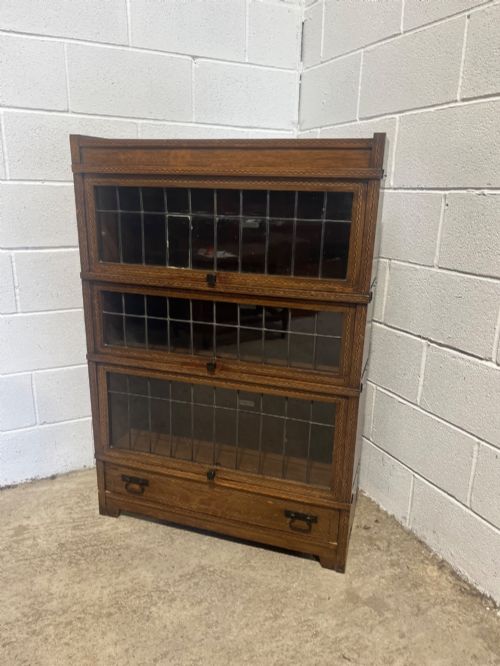
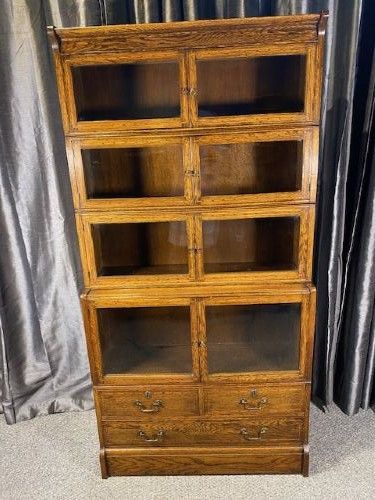
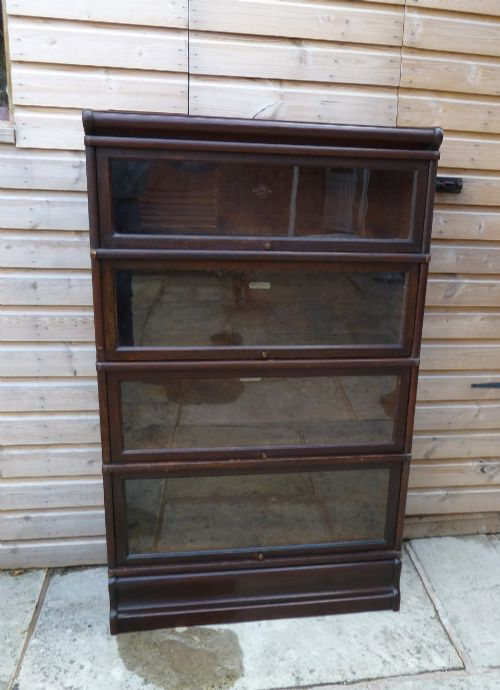
An oak sectional cabinet, often known as a stacking or barrister bookcase, is a modular shelving unit built from separate tiers that sit upon one another. These cabinets appear across periods including the Edwardian era, the 1900s, 1910s, 1920s, 1930s, and into the mid-century modern period of the 1950s. The version you are most likely to meet on this page is a multi-tier glazed bookcase designed for offices or libraries.
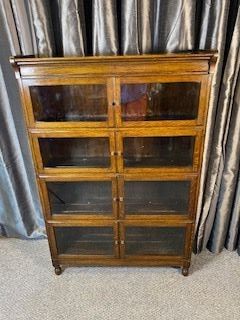
The modular design allows the pieces to be stacked and reconfigured according to storage needs, utilising interchangeable sections of varying heights. Alongside traditional stacking bookcases, the evidence records sectional filing cabinets built on the same principle of modular wooden drawers or compartments. Most examples emerge from prominent makers and retailers specialising in office and domestic library furniture.
Styles range from straightforward Edwardian and Arts & Crafts designs to Art Deco interpretations and limed oak finishes from later decades. While many items function as bookcases and shelving, the underlying construction remains defined by horizontal modular sections enclosed by glass doors.
Materials and construction
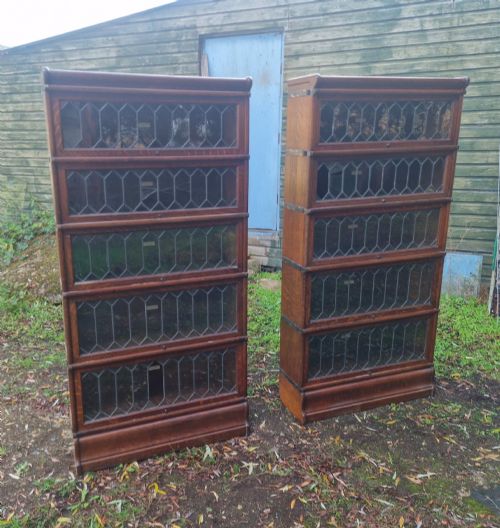
Makers utilised solid and veneered oak as the primary timber, sometimes enhanced with wood inlay for decorative effect. Metal mechanisms, brass hardware, and leaded glass panels were integrated into the doors to allow smooth lifting and forward sliding of the glazed sections.
Individual tiers were constructed as distinct boxes with specialised lifting mechanisms, enabling each shelf section to operate independently while stacking securely on the base and beneath the top cornice.
Oak Sectional Cabinet Retail Price Guide 2026
Typical asking prices for oak sectional cabinet among the pieces listed under this phrase on Sellingantiques today, from the lower quarter to the upper quarter. They describe what is for sale here now, not the wider market.
Listings feature oak sectional cabinets spanning from the Edwardian period through the 1930s and 1950s, incorporating brass, lead, and glass elements.
Markers of quality
Quality rests in the precision of the mechanics and the integrity of the timber framing. Superior pieces feature smooth, reliable door-lifting hardware and unwarped oak frames that allow sections to align squarely without binding.
The presence of maker stamps or badges from established firms indicates higher manufacturing standards. Original leaded glass panels, well-figured golden oak grain, and intact matching cornices and plinths separate standard utilitarian cabinets from finer examples.
Globe Wernicke·Heals·Lebus·Minty·Gunn·Warwick·Phoenix Gallery
The Oak Sectional Cabinet Glossary
- Sectional cabinet
- A modular storage unit composed of individual stacked tiers that can be separated or rearranged. These cabinets were widely adopted for offices and home libraries during the early twentieth century.
- Barrister bookcase
- A specific type of stacking bookcase featuring glazed doors that lift and slide inward above the books. The design protected legal texts from dust while allowing quick access in professional chambers.
- Leaded glass
- Small panes of glass held together by lead cames within the cabinet door frame. This technique adds structural pattern and decorative character, frequently seen in Edwardian Arts & Crafts examples.
- Cornice
- The moulded top section of a cabinet that sits above the uppermost tier. It provides a finished architectural cap to the stacked modular units.
- Limed oak
- A wood finish treatment that creates a pale, whitened grain effect popular during the 1930s. It lightens the natural appearance of the oak timber.
Oak Sectional Cabinet: Frequently Asked Questions
How do sectional cabinets work?
Each tier is an independent wooden box with its own glass door and metal lifting mechanism. The sections simply stack one on top of another between a separate base and top cornice.
This modular construction allows owners to add or remove shelves as their collection of books or papers grows over time.
Are all sections removable?
Yes, the individual tiers lift apart once the top cornice is removed. This modular build made transport easier for offices and home studies in the early twentieth century.
Buyers should check that the alignment pins and side tracks remain intact to ensure the tiers stack securely.
What is the difference between standard and leaded glass?
Standard glass provides clear visibility of the books stored inside each tier. Leaded glass incorporates segmented panes joined by narrow lead strips, adding decorative detail.
Leaded versions often reflect Arts & Crafts influences popular during the Edwardian period.
How do I date an oak sectional cabinet?
Dating relies on stylistic clues, hardware patents, and maker marks stamped into the timber or paper labels inside the sections. Edwardian and 1920s examples often feature rich golden oak and traditional brass knobs.
Later 1930s and 1950s pieces may display limed finishes or simpler Art Deco geometric lines.