
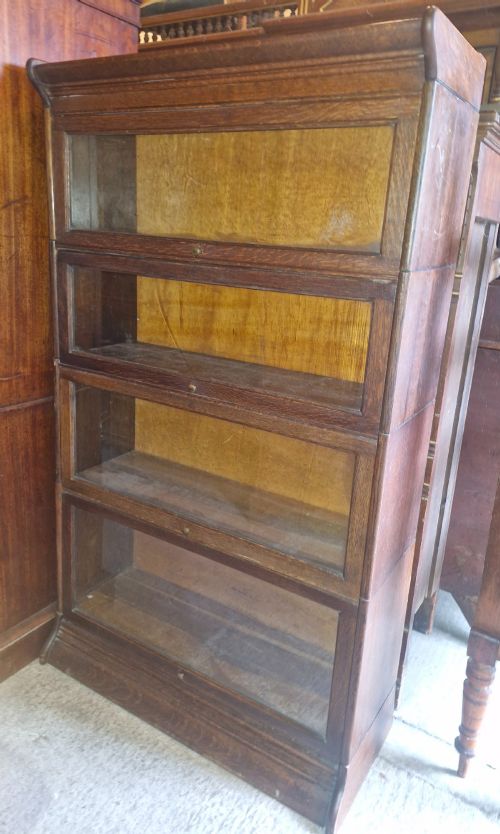
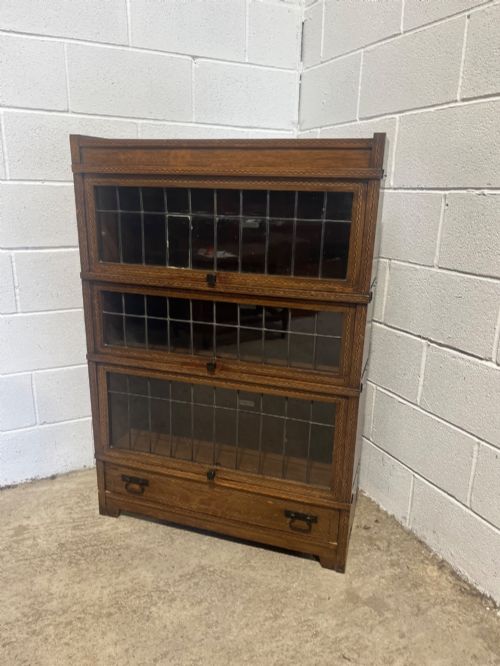
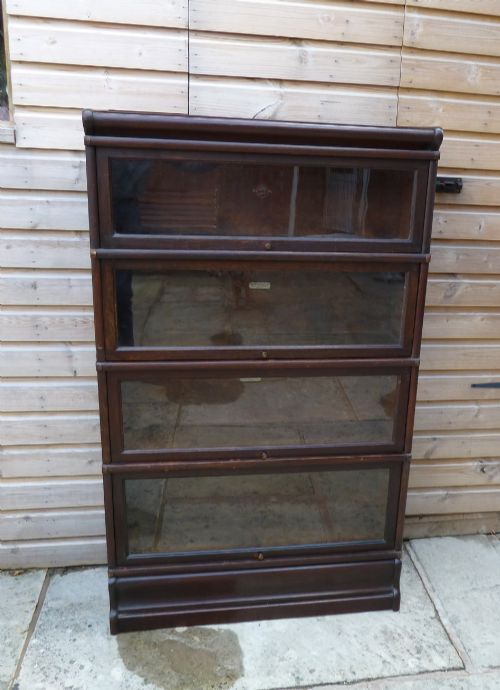
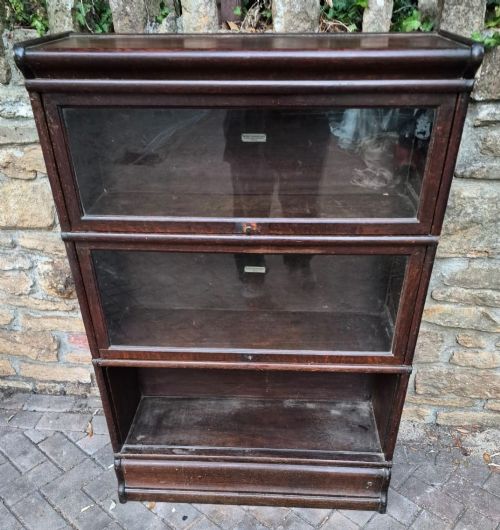
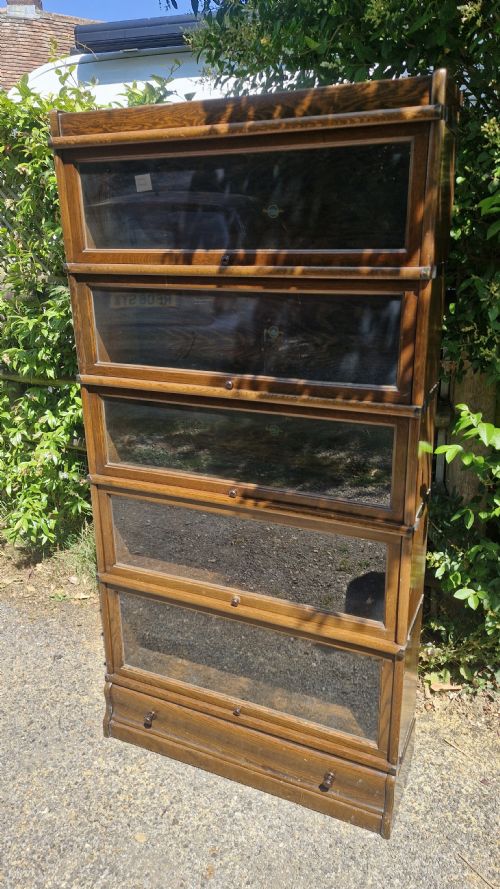
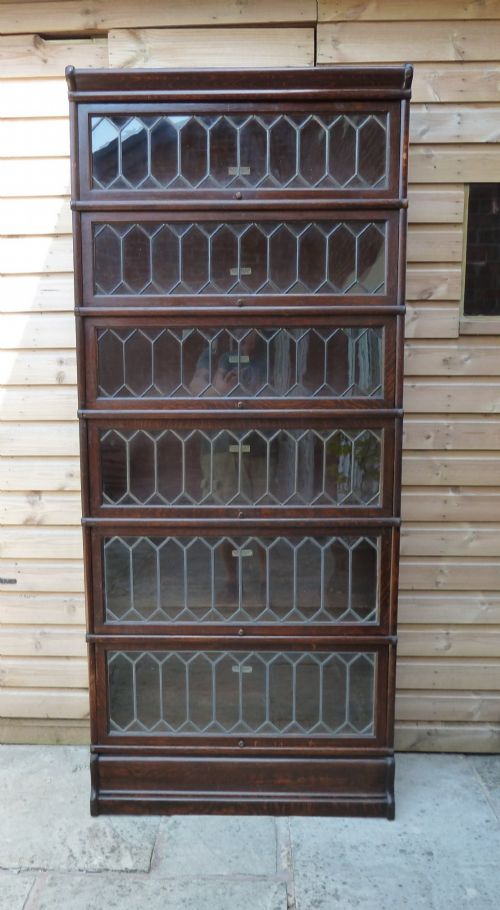
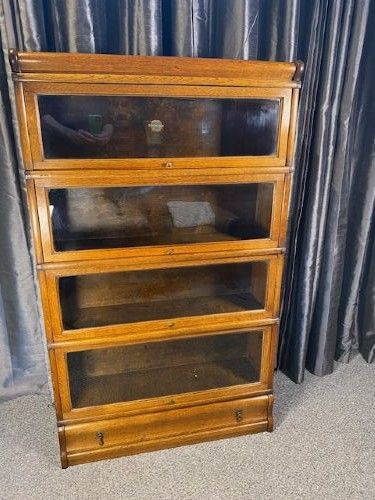
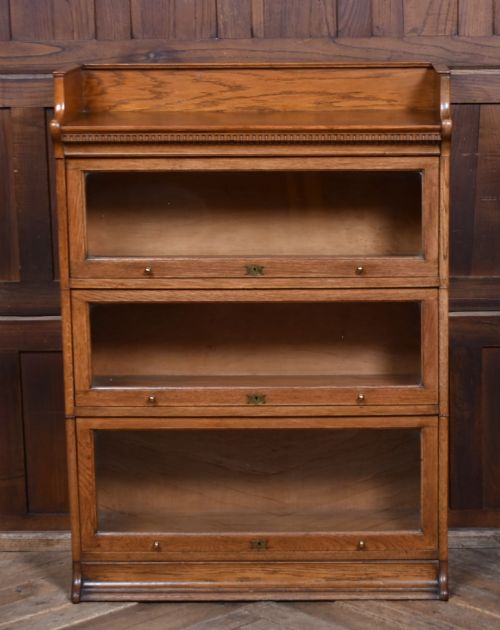

Edwardian Oak Barrister Bookcase
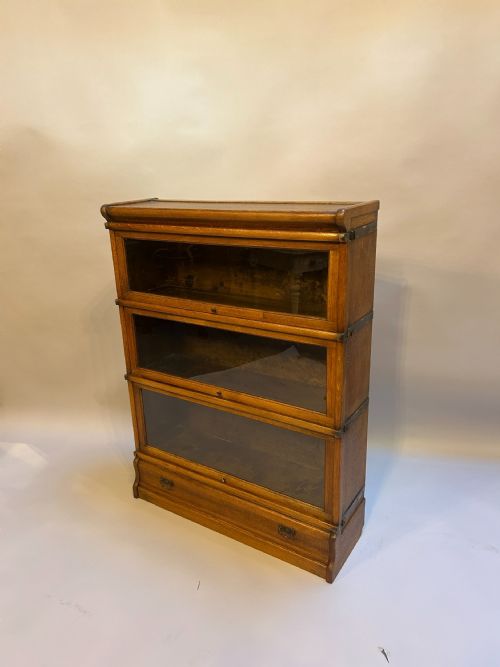
An Edwardian oak barrister bookcase is a modular stacking cabinet that protects working libraries with glass lift-up doors.
Edwardian Oak Barrister Bookcase
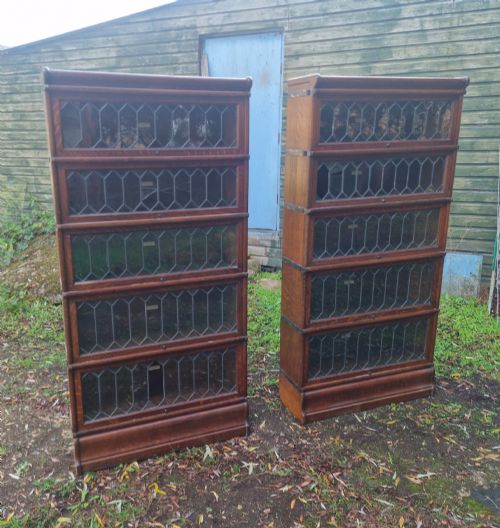
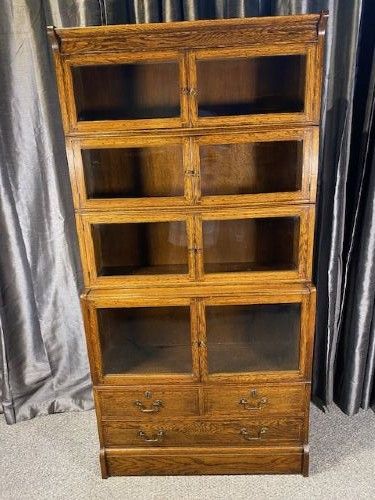
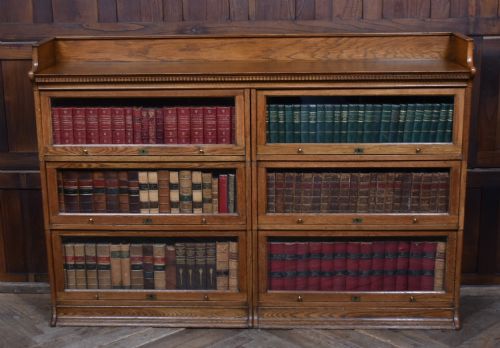
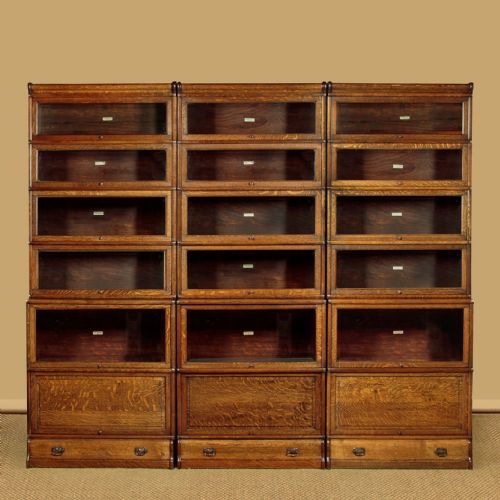
When you search for an edwardian oak barrister bookcase, you are looking at modular, sectional library furniture designed to keep working volumes dust-free in office or domestic settings. These cabinets arrive in horizontal tiers that stack together beneath a separate cornice and above a matching plinth base, allowing libraries to grow vertically one shelf at a time.
The version you are most likely to meet on this page is an Edwardian or early twentieth-century oak example built in multiple stacking sections with glazed upward-opening doors. Many of these modular units emerge from distinct periods spanning from nineteen hundred through to nineteen thirty, showing both straightforward utilitarian designs and Edwardian Arts and Crafts influences.
How they were made
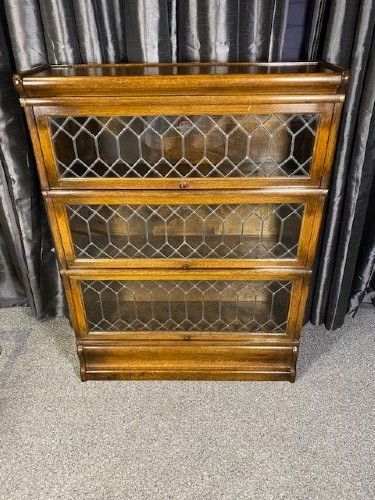
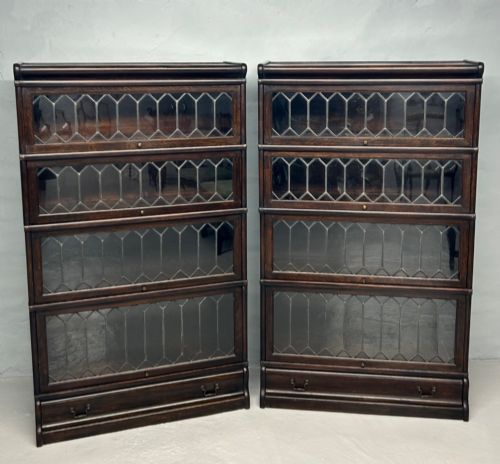
The construction relies heavily on solid oak and golden oak timbers, sometimes enhanced with wood inlay for decorative contrast. Individual sections are framed to house glazed panels, utilising brass hardware and lead or metal cames to hold small panes together in leaded doors.
Each tier functions as an independent box with a mechanism that allows the glass front to lift and slide inward above the books. This modular technique meant offices could expand their shelving vertically without needing to purchase entirely new furniture cabinets.
Early lawyers demanded stacking bookcases so they could move their entire library to court inside the furniture.
What varies in quality
The distinction between upper and lower tiers of the range often lies in the integration of maker attribution and material selection. Pieces bearing the marks of known makers carry distinct hardware and tighter joinery across their modular sections.
Another measure of quality involves the complexity of the glazing, such as leaded glass configurations versus plain panes, alongside the presence of original cornices, plinths, and subtle wood inlay details.
Globe Wernicke·Lebus·Minty·Gunn·Warwick
The Edwardian Oak Barrister Bookcase Glossary
- Sectional bookcase
- A modular bookcase built from multiple interchangeable tiers that stack vertically. This design allows the cabinet to be easily dismantled and moved piece by piece.
- Globe Wernicke
- A prominent style and maker of modular stacking bookcases. These units are defined by their patented door-swing mechanisms that guide glass panels upward and inward.
- Leaded glass
- Window construction where individual small glass panes are joined by lead cames. This technique adds structural rigidity and a decorative pattern to the bookcase doors.
- Cornice
- The moulded projection that sits atop the uppermost stacking tier. It provides a finished architectural cap to the modular assembly.
Edwardian Oak Barrister Bookcase: Frequently Asked Questions
How do barrister bookcase doors work?
The glass doors lift upward on a set of internal metal arms or pins that guide the panel into the top of the section. Once elevated, the door pushes smoothly inward above the shelf to rest flat over the books.
This clever mechanism allows users to browse and retrieve volumes from any individual tier without needing to swing a traditional hinged door outward into the room.
Can stacking bookcase sections be separated?
Yes, the individual tiers lift apart from one another once the top cornice is removed and any internal locking bars are released. Each section is a self-contained wooden box with its own shelf and door.
This modular construction made transport simple for travelling lawyers and offices that needed to reconfigure their libraries as collections grew.
How do I identify an Edwardian piece?
Edwardian stacking bookcases are typically constructed from solid oak or golden oak, often displaying characteristic period hardware and brass fittings. Dating is supported by active production eras seen around nineteen hundred to nineteen twenty.
Makers such as Lebus and Minty stamped their sectional units during this timeframe, aligning with the stylistic traits of the Edwardian Arts and Crafts movement.
Were these cabinets only used by lawyers?
While the term barrister bookcase stems from the portable book collections lawyers carried to court, these modular cabinets were widely adopted in offices, studies, and domestic libraries.
Their practical stacking format appealed to anyone needing to protect heavy reference volumes from dust while maintaining a tidy, organised workspace.