
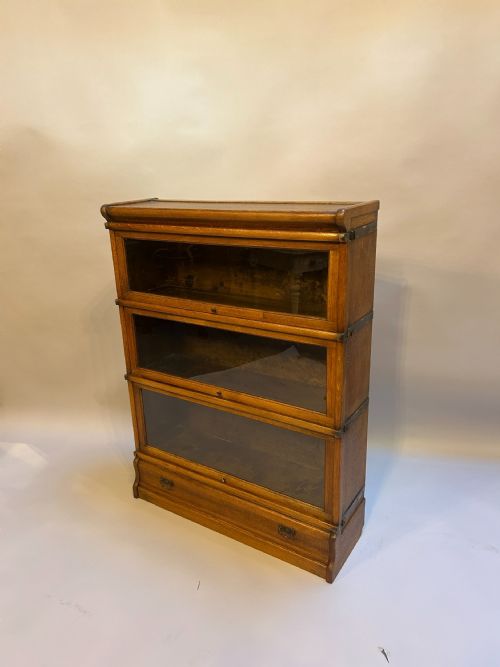
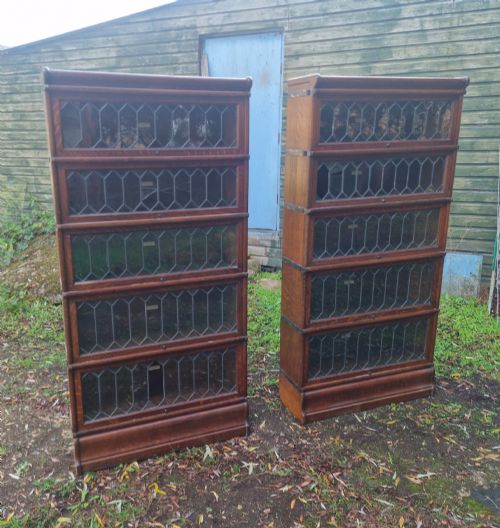
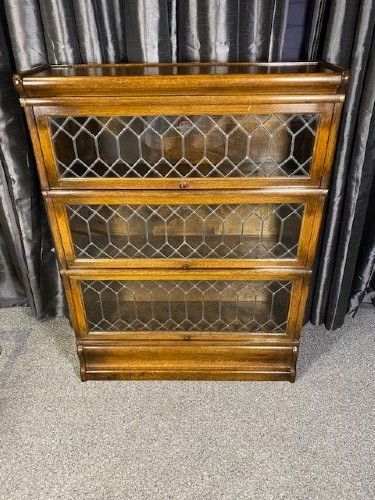
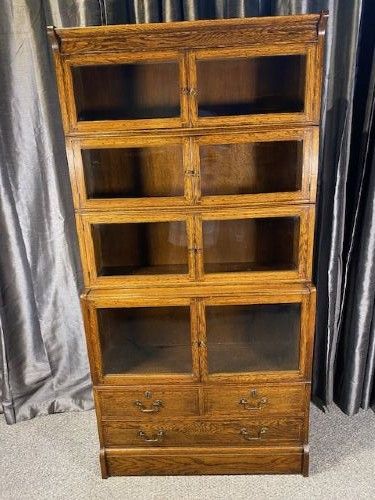
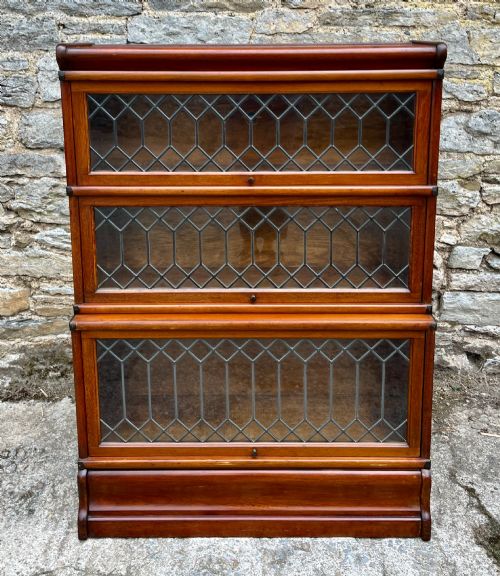
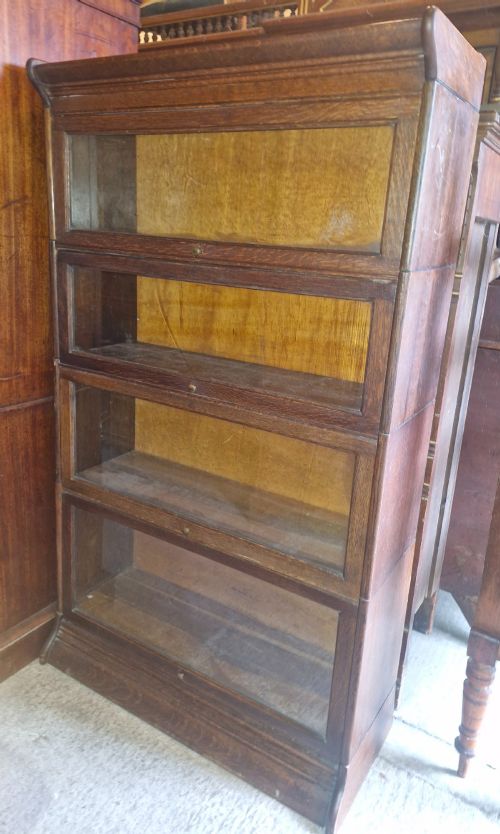
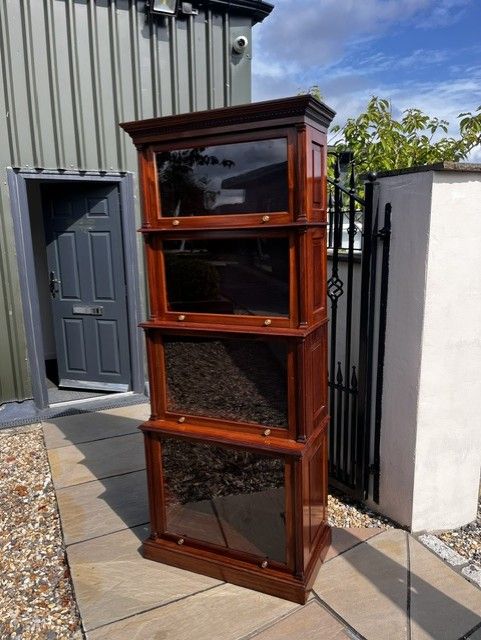
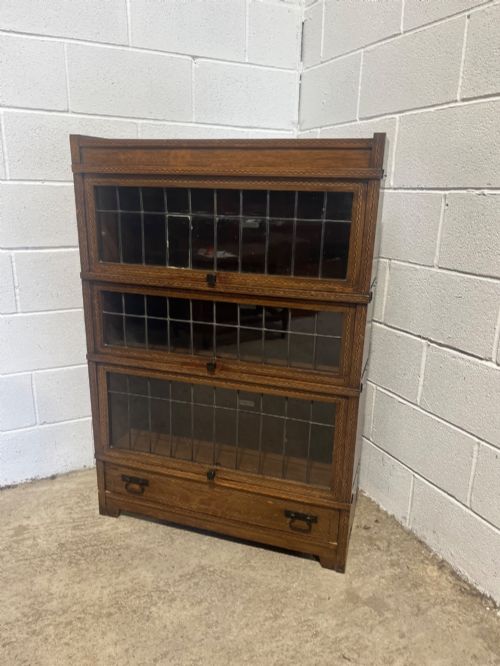

Glazed Barrister Cabinet
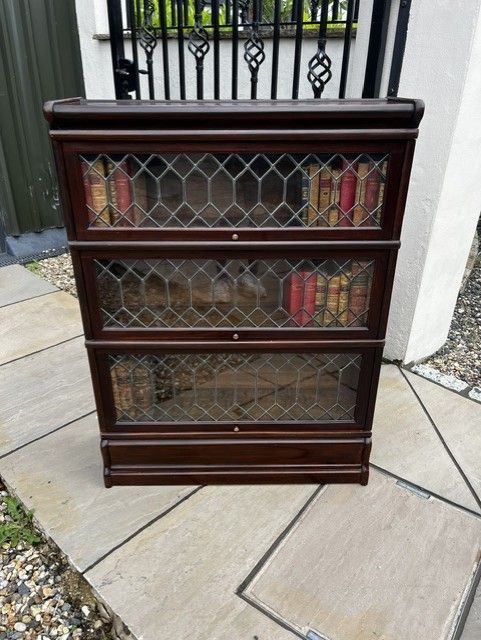
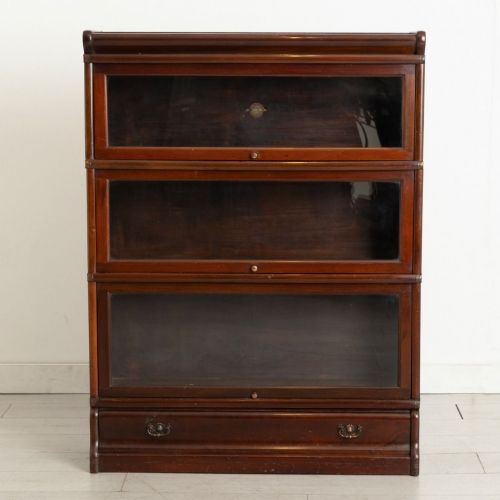
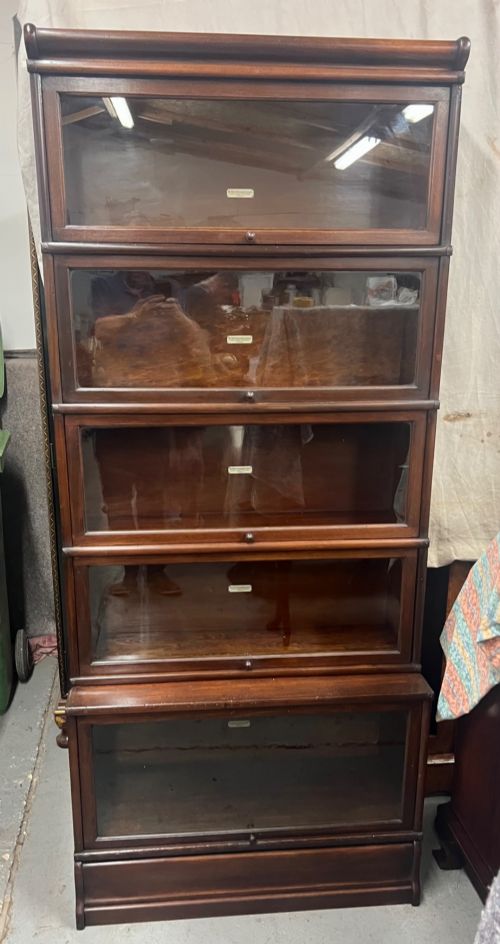
A glazed barrister cabinet brings modular library organisation into a room, offering dust-free shelf space with lift-up glass doors.
Glazed Barrister Cabinet
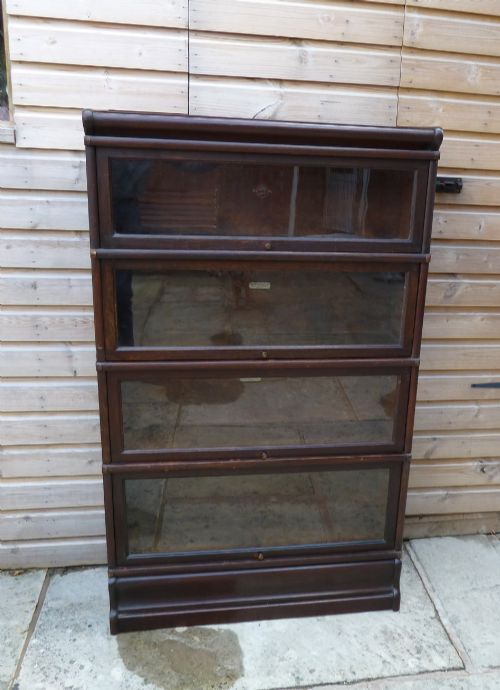
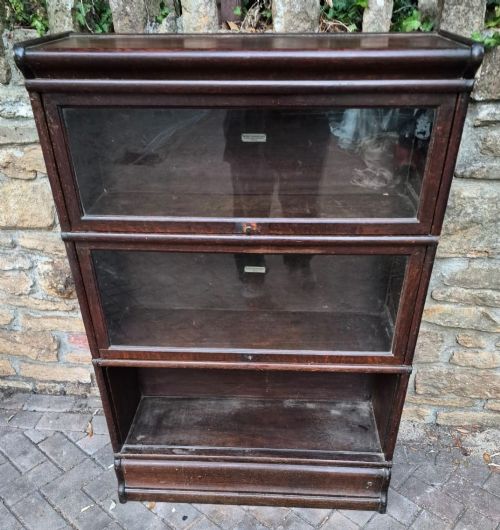
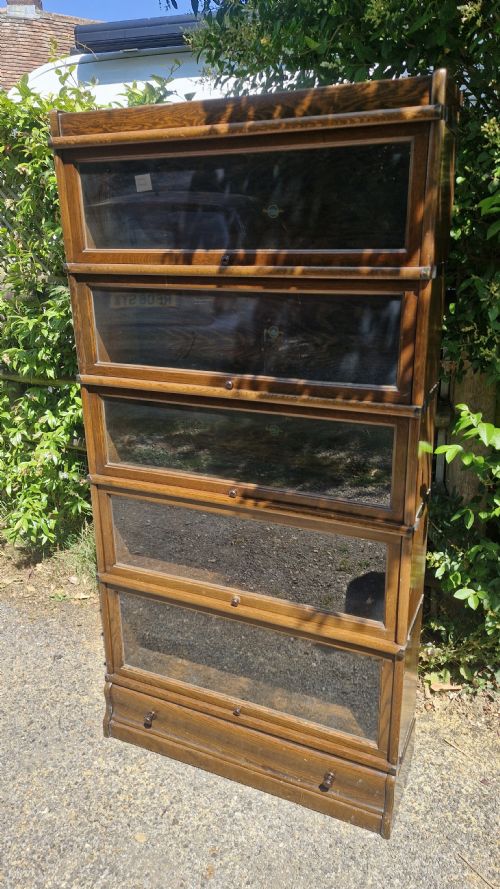
When you search for a glazed barrister cabinet, you encounter sectional bookcases designed to protect heavy volumes behind rising glass doors. The examples on this page span the Edwardian period through the nineteen-thirties, reflecting office and home libraries of the early twentieth century.
Oak and mahogany dominate the offerings, appearing as individual modular tiers that stack together. You will frequently meet pieces with three, four, or five sections, often bearing the marks of major makers who perfected the modular stacking mechanism.
Materials and Construction
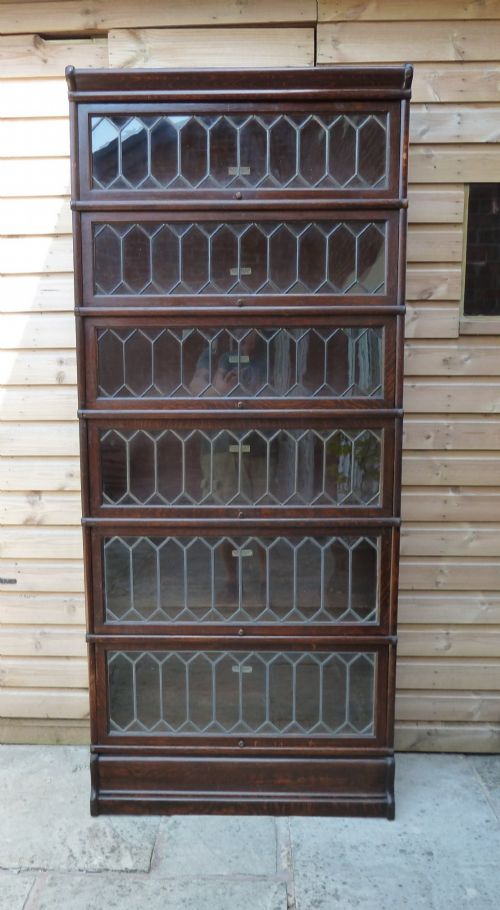
Cabinet makers utilised solid oak and mahogany alongside brass hardware to build these modular units. Glass panels, sometimes held in leaded cames, protect the contents while allowing titles to remain visible.
The defining mechanical feature relies on internal metal scissor mechanisms or side arms that guide each door upwards and into the recess above the books. Modular construction permitted owners to add tiers vertically as libraries expanded.
Early office workers discovered that stacking these glass boxes too high made reaching the top shelf an athletic endeavour requiring a sturdy ladder.
Distinguishing Quality
Quality rests upon the precision of the stacking joints and the smooth operation of the lifting glass doors. Finer cabinets exhibit well-figured solid timber, crisp mouldings, and intact original brass fittings rather than replacement hardware.
Makers known for robust engineering and refined proportions command greater attention among collectors. The presence of legible maker stamps or paper labels inside the sections confirms the origin and elevates the standing of the cabinet.
Globe Wernicke·Lebus·Minty·Gunn·AMYL
The Glazed Barrister Cabinet Glossary
- Sectional bookcase
- A modular piece of furniture built from detachable tiers that stack upon a base and beneath a top cornice. This design allowed libraries to grow one shelf at a time.
- Leaded glass
- Individual panes of glass joined together by lead strips known as cames. This technique creates geometric patterns across the front of the cabinet doors.
- Cornice
- The decorative moulded projection that sits atop the uppermost tier of the cabinet. It finishes the piece visually and caps the stacking column.
- Base plinth
- The lowermost supporting section of the cabinet upon which the stacking tiers rest. It elevates the books above floor level.
Glazed Barrister Cabinet: Frequently Asked Questions
How do the glass doors work?
Each glass door slides forward on metal pins or slides into a track before lifting upwards into the horizontal recess above the shelf. This clever action allows the door to stay out of the way while you select a book.
When you push the door back down, gravity and the guide arms return it flush against the front of the tier to keep dust away from the paper.
Can the sections be separated?
Yes, the modular design means each tier, the base, and the top cornice lift apart independently. This made moving heavy libraries much simpler for early owners and helps transport the cabinets today.
Interlocking wooden lips or metal pins on the edges of the frames keep the separate tiers securely aligned when stacked.
What woods were used?
Makers constructed these cabinets predominantly in oak and mahogany, often selecting quarter-sawn oak to display prominent medullary rays. Walnut and golden oak also appear across Edwardian and later examples.
Solid timber frames house the glass panels, ensuring the modular boxes remained rigid enough to support stacked weight over decades of use.
How do I date a cabinet?
Dating relies on stylistic clues, timber choice, and maker identification marks found inside the sections. Edwardian pieces often feature richer oak patination, while nineteen-thirties models show simpler lines or French influences.
Paper trade labels and stamped maker marks on the wooden carcass provide the most reliable guide to the exact decade of manufacture.