

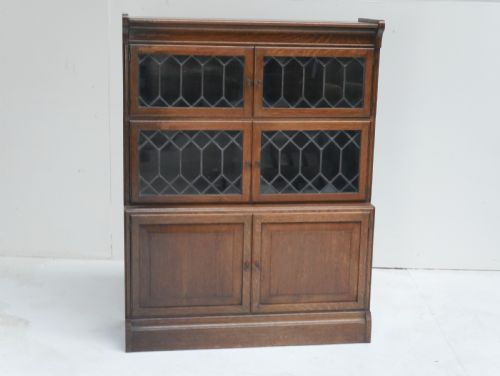


Dark Oak Modular Bookcase
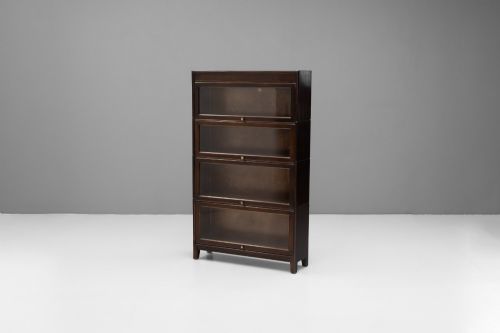
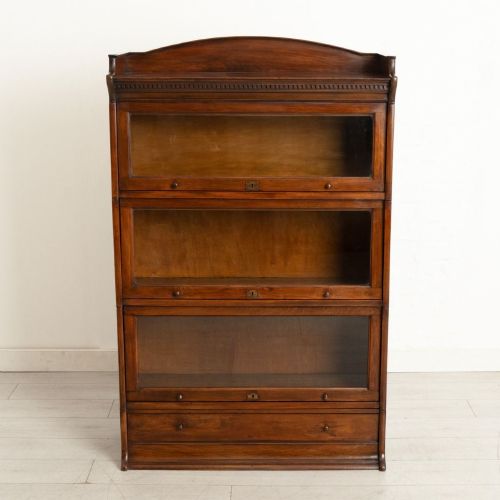
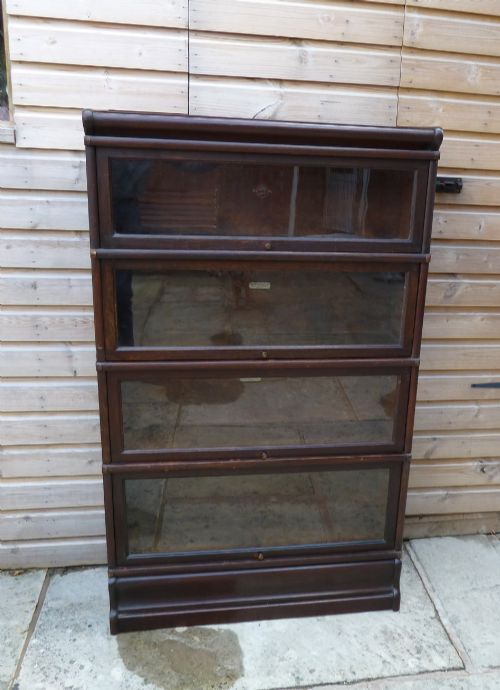
These dark oak modular bookcase sections give your library practical stacking versatility with period character.
Dark Oak Modular Bookcase
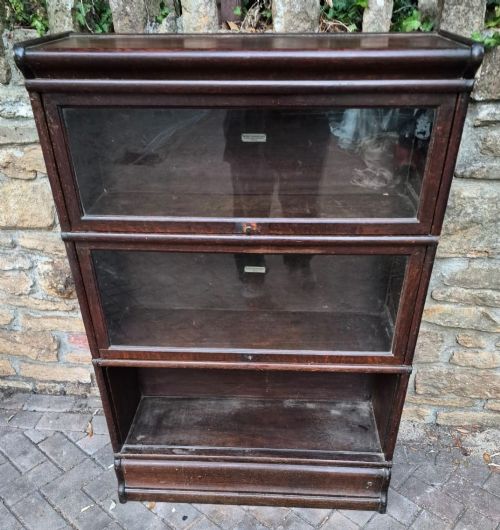
When you search for a dark oak modular bookcase, you are looking at practical stacking furniture designed to protect books behind glazed doors. These pieces date from the Edwardian era through the nineteen-twenties, originating from workshops that specialised in sectional office and library furniture.
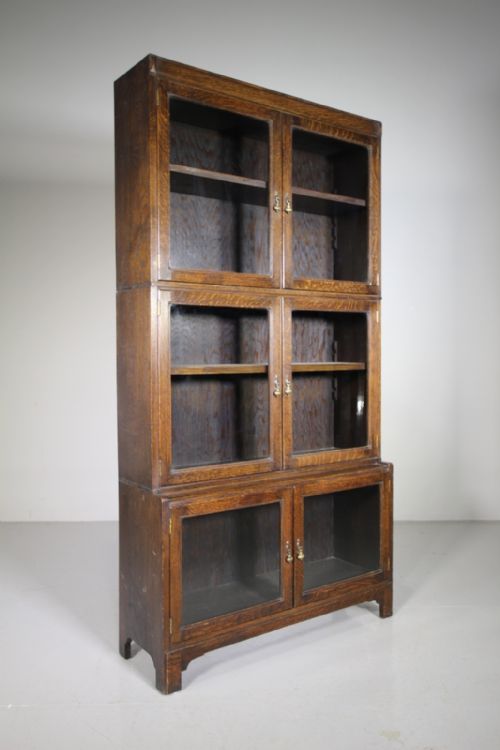
You are most likely to meet Globe Wernicke configurations on this page, alongside stacking variants by makers such as Lebus, Minty, and Warwick. The forms range from narrow single stacks to tall four-tier cabinets equipped with brass hardware.
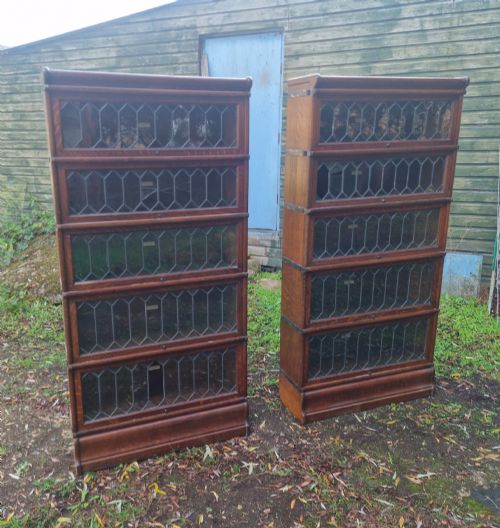
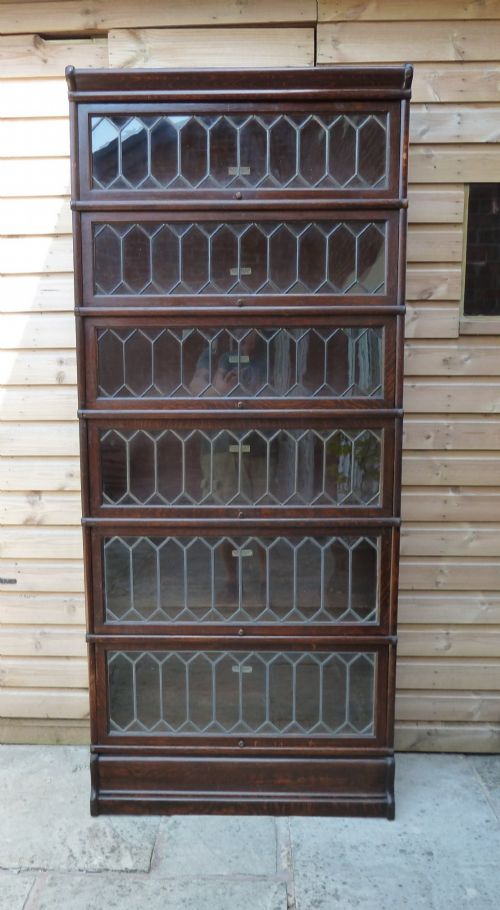
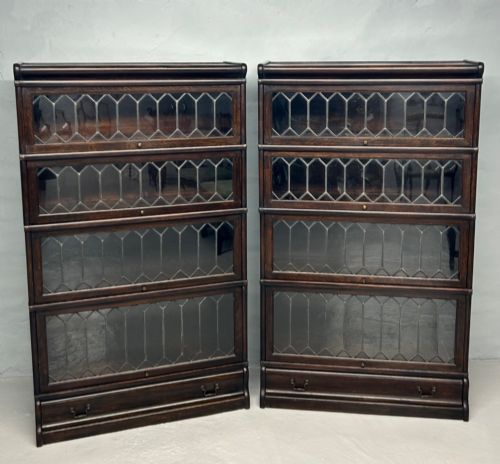
The dark oak modular bookcase appears predominantly in solid oak, often featuring leaded glass panels in the lifting doors. These units allow you to arrange multiple tiers according to your ceiling height and shelving requirements.
How they were made
Makers constructed these modular bookcases using solid oak planks, assembling the individual tiers to stack securely one upon another without permanent fixings. Each tier incorporates a mechanism that allows the glazed door to lift and slide smoothly into the cabinet above the books.
Glass panels are frequently set with lead came to create small panes characteristic of the Edwardian and Arts and Crafts styles. Brass knobs and side straps complete the construction, providing both structural reinforcement and operable handles for each section.
Listings feature solid oak construction spanning the Edwardian period through the nineteen-twenties, incorporating leaded glass and brass hardware.
What varies in quality
The distinction between standard production and finer execution lies in the precision of the stacking mechanism and the weight of the timber. Better examples retain their original brass hardware, unblemished leaded glass, and smooth action in the door lifting arms.
Proportion and scale also separate the items, with narrower or taller custom configurations demonstrating greater utility. The depth of the colour in the dark oak finish and the crispness of the moulding details reflect the original maker's standard of work.
Globe Wernicke·Lebus·Minty·Warwick·Heals
The Dark Oak Modular Bookcase Glossary
- Modular bookcase
- A piece of furniture built from separate, stackable tiers that can be arranged in various combinations. This design allows for easy reconfiguration and transport.
- Barrister bookcase
- An alternative name for a stacking bookcase featuring glass doors that lift and slide inward. The term derives from the utility such cabinets offered legal professionals for transporting and storing reference volumes.
- Leaded glass
- Windowpanes held together by narrow strips of lead called came. This technique creates geometric patterns typical of the Arts and Crafts aesthetic.
- Tier
- An individual stackable section of a modular bookcase. Each tier functions as an independent bookshelf with its own door.
Dark Oak Modular Bookcase: Frequently Asked Questions
How do modular bookcase sections stack together?
Each tier rests upon the base and supports the section above it through interlocking wooden lips or recessed edges. No screws or permanent fixings join the tiers, allowing you to separate them easily for moving.
The top section typically has a finished cornice, while the bottom tier sits on a distinct plinth or base moulding to ground the stack.
How do the glass doors operate?
The glazed doors utilise a scissor mechanism or side metal arms that guide the panel inward and upward into the top of the cabinet. This allows you to retrieve books without swinging a door outward into the room.
When pushed fully back, the door rests horizontally above the shelf space, protecting the volumes inside.
Can I add more tiers later?
Adding tiers depends on finding sections of identical width, depth, and maker specifications from the same period. Even among standard designs, slight variations in timber thickness and moulding profiles can prevent mismatched sections from sitting flush.
It is best to acquire a complete configuration or matching individual tiers from the same manufacturer to ensure structural alignment.
How do I date an oak stacking bookcase?
Dating relies on maker stamps, brass hardware styles, and construction methods characteristic of the Edwardian period and the nineteen-twenties. Early pieces often feature patent dates stamped into the metal brackets or maker plates inside the top tier.
The presence of leaded glass points toward the earlier Arts and Crafts influenced decades, whilst plainer glass configurations often align with later production.