







Leaded Barrister Bookcase
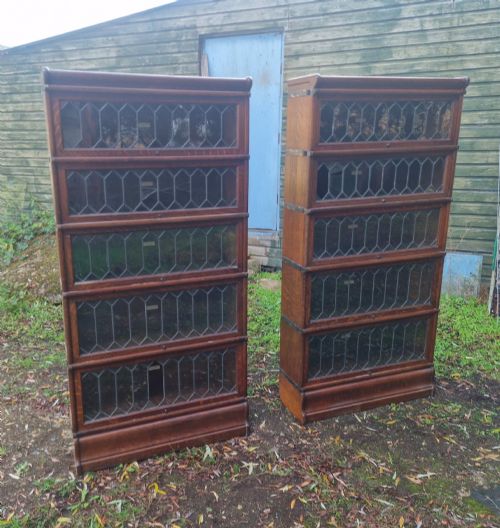
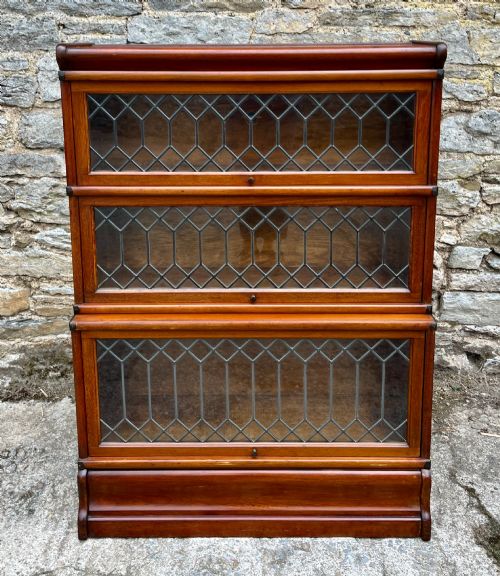
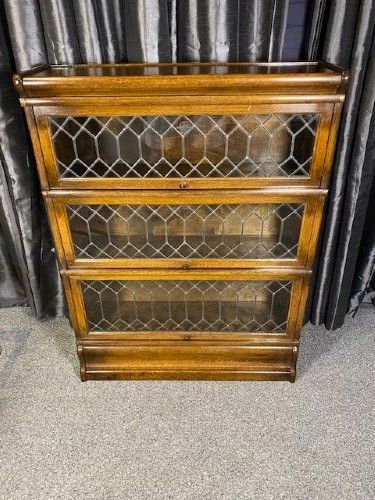
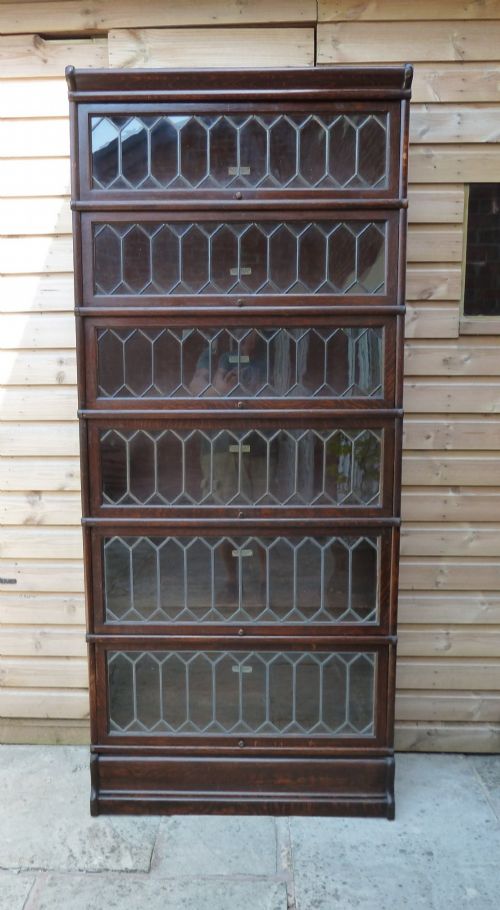
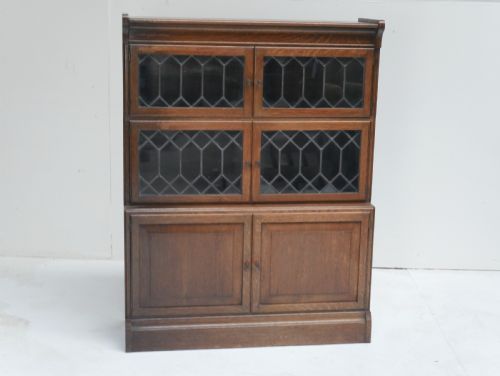
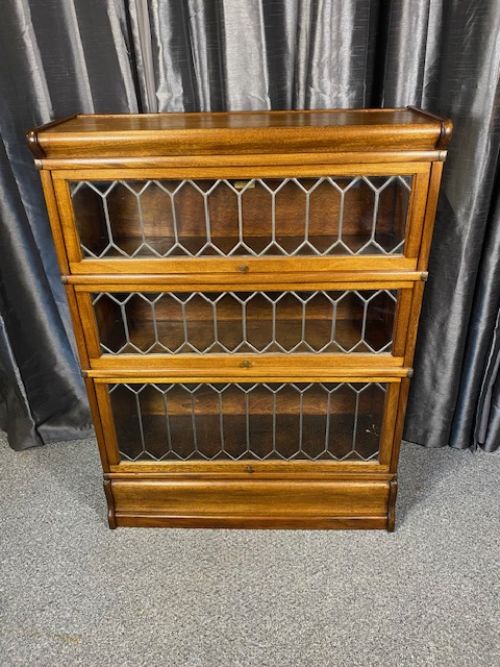
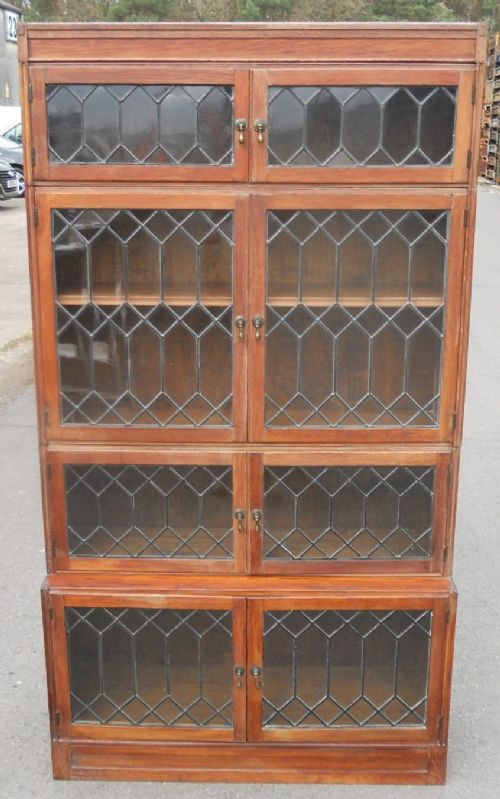
These leaded barrister bookcase sections stack together to protect heavy volumes behind clear glass panes held by lead cames.
Leaded Barrister Bookcase
A leaded barrister bookcase offers modular storage across multiple tiers that lift and slide inward to keep books clean and accessible. These modular cabinets appear primarily in oak and mahogany, often constructed as stacking sections dating from the Edwardian era through the nineteen-thirties.
Most examples originate from prominent makers such as Globe Wernicke, Minty, Lebus, and Warwick. Buyers frequently encounter oak variants featuring leaded glass doors alongside smooth mahogany and walnut configurations.
Materials and construction methods
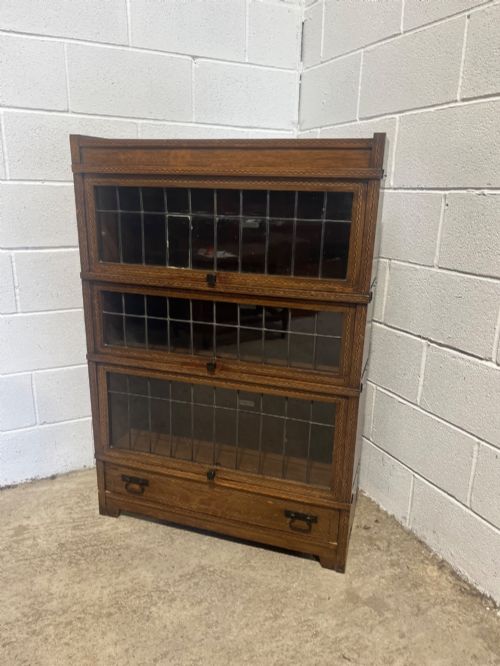
Makers constructed these sectional units using solid oak, mahogany, and walnut timbers, sometimes incorporating wood inlay for decorative contrast. Individual tiers interlock vertically while brass hardware supports the lifting mechanism for each glazed front.
Panels of glass are held together using lead cames to create distinct leaded patterns across the doors. Metal components secure the stacking mechanism, allowing each modular tier to function independently within the cabinet structure.
Leaded Barrister Bookcase Retail Price Guide 2026
Typical asking prices for leaded barrister bookcase among the pieces listed under this phrase on Sellingantiques today, from the lower quarter to the upper quarter. They describe what is for sale here now, not the wider market.
Listings show these sectional bookcases appearing predominantly in oak and mahogany across the Edwardian period and the nineteen-twenties.
Assessing quality in modular bookcases
Quality rests in the precision of the stacking joints and the condition of the internal lifting mechanisms. Sturdier carcases maintain proper alignment across four or more tiers without sagging.
The integrity of the lead cames around the glass panes and the richness of the timber grain distinguish standard production from finer workshop output. Original brass fittings and intact maker stamps further indicate a higher tier of manufacture.
Globe Wernicke·Minty·Lebus·Warwick
The Leaded Barrister Bookcase Glossary
- Barrister bookcase
- A modular cabinet with glass front doors designed for easy removal and storage of legal texts. These pieces stack vertically into multiple self-contained tiers.
- Leaded glass
- Small panes of glass joined together by lead cames to form geometric patterns. This technique strengthens the door frame while providing a distinct decorative appearance.
- Stacking bookcase
- A modular piece comprising several separate wooden sections placed one on top of another. Each tier contains its own shelf and lifting door.
- Came
- A narrow strip of lead with an H-shaped profile used to hold individual pieces of glass together. Cames form the structural grid of leaded windows and doors.
- Wood inlay
- Pieces of contrasting timber fitted into the surface of a larger wooden panel to create patterns. This decorative technique appears on select Edwardian examples.
Leaded Barrister Bookcase: Frequently Asked Questions
How do barrister bookcases work?
Each tier operates independently with a glass door that lifts upward on metal arms and slides into the cabinet above the books. This mechanism allows quick access to volumes while keeping them protected from dust.
The modular design means individual sections can be separated for transport or rearranged when adding new tiers to the stack.
How do I clean leaded glass doors?
Wipe the glass gently using a soft cloth dampened with a mild cleaning solution, taking care not to press too hard against the lead cames. Harsh chemicals can weaken the lead over time.
Keep moisture away from the wooden frames and the moving brass hardware to preserve the finish of the oak or mahogany.
Can I separate the stacking sections?
Yes, the tiers lift apart once the top cornice and base plinth are removed. Each section rests on the one below it using simple interlocking joints rather than permanent fixtures.
This modular construction was designed specifically for easy movement between rooms or offices.
How do I date these bookcases?
Look for maker stamps on the interior woodwork and examine the hardware style, timber selection, and construction methods. Most pieces date from the Edwardian period through the nineteen-thirties.
Oak and mahogany were predominant during this era, often accompanied by patent labels from makers like Globe Wernicke.