

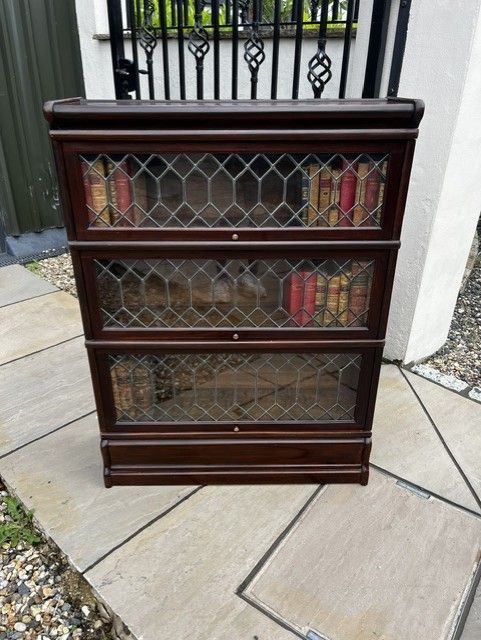
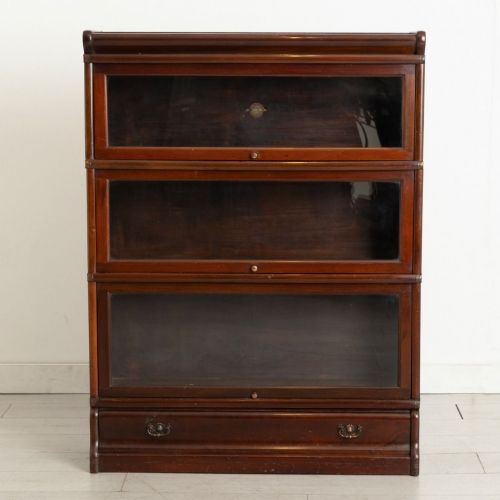
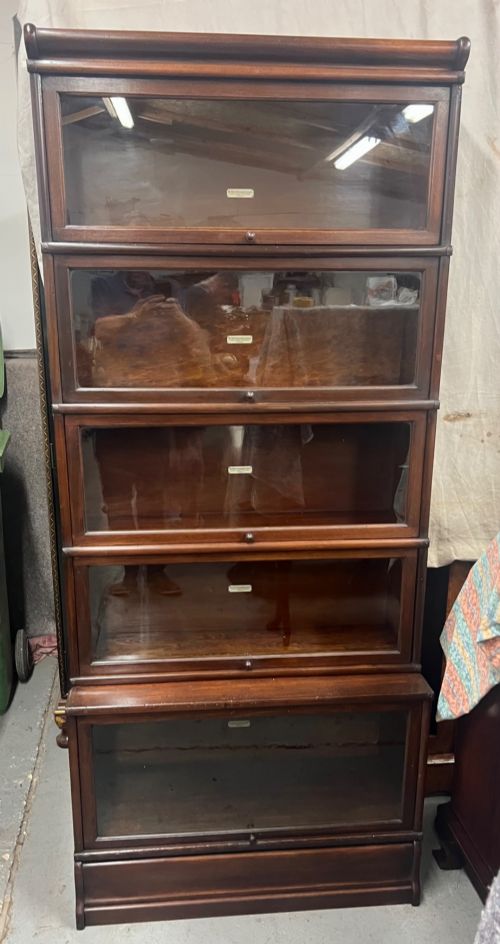
Modular Glazed Cabinet
A modular glazed cabinet offers adjustable storage through stacking sections, combining practical book organisation with visibility.
Modular Glazed Cabinet
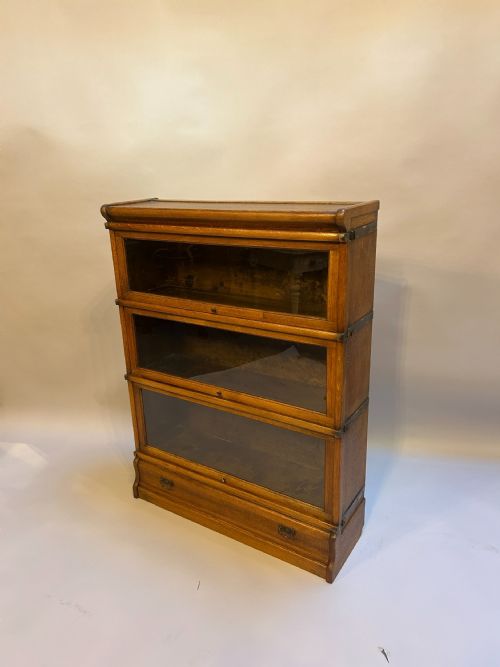
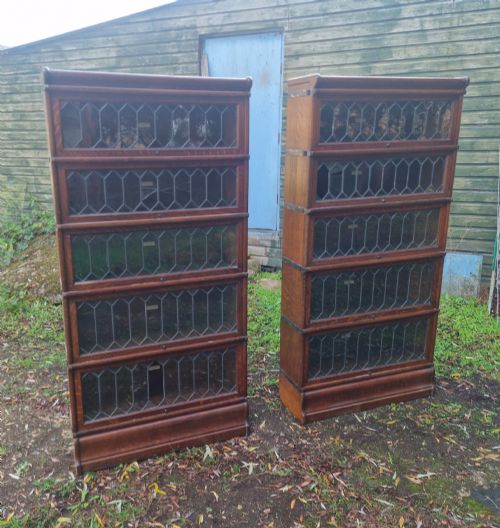
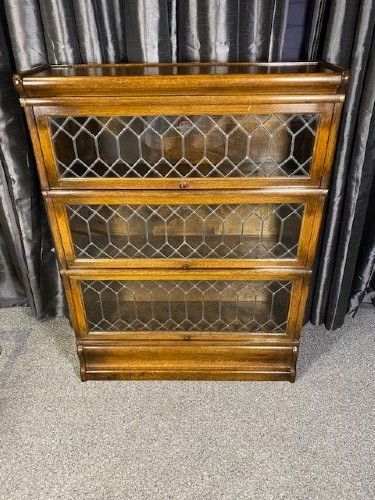
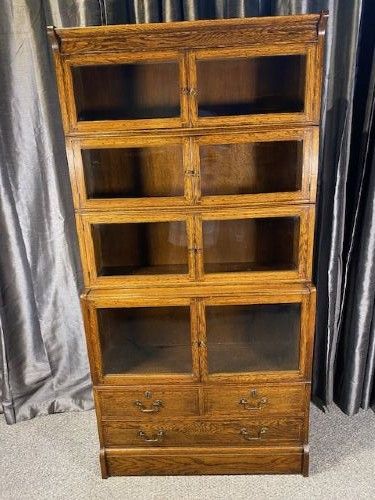
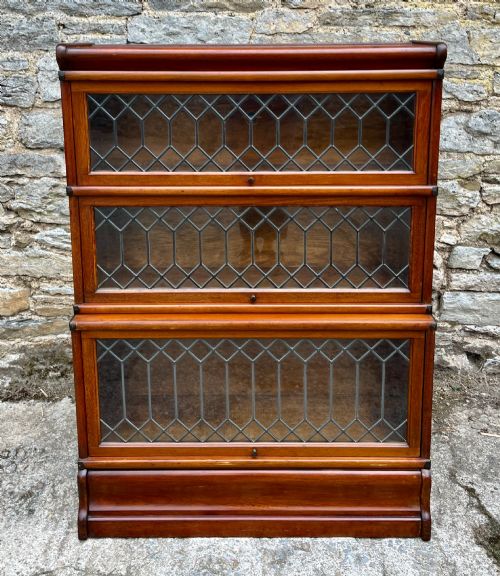
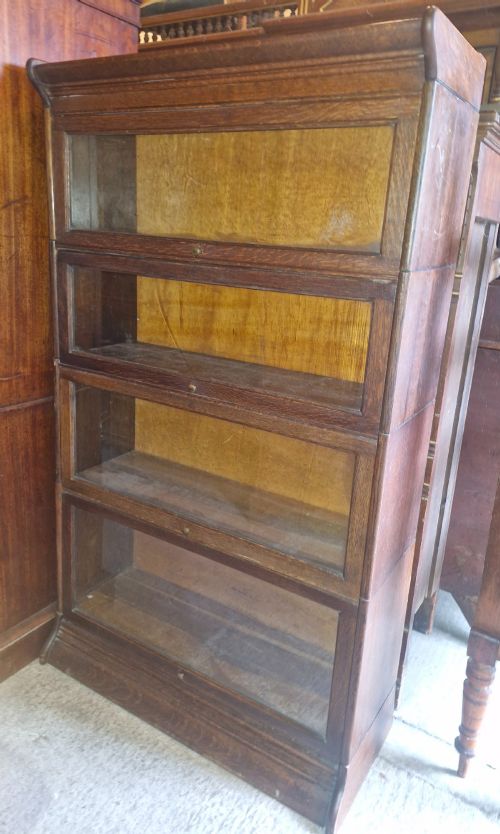
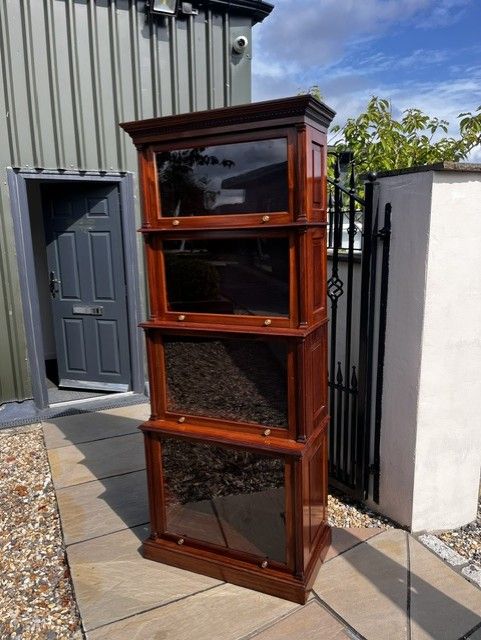
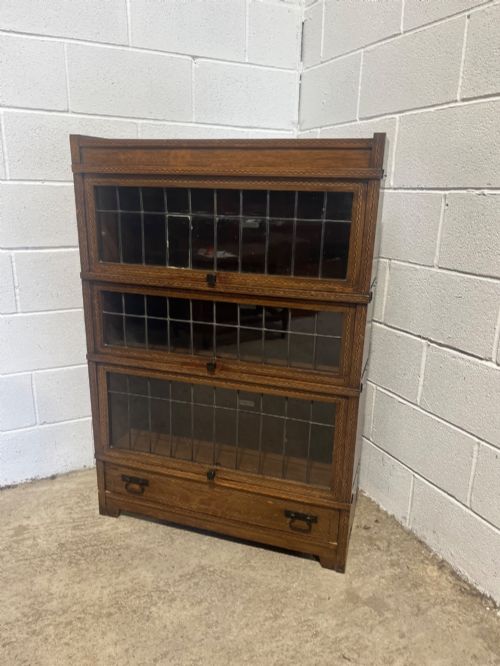
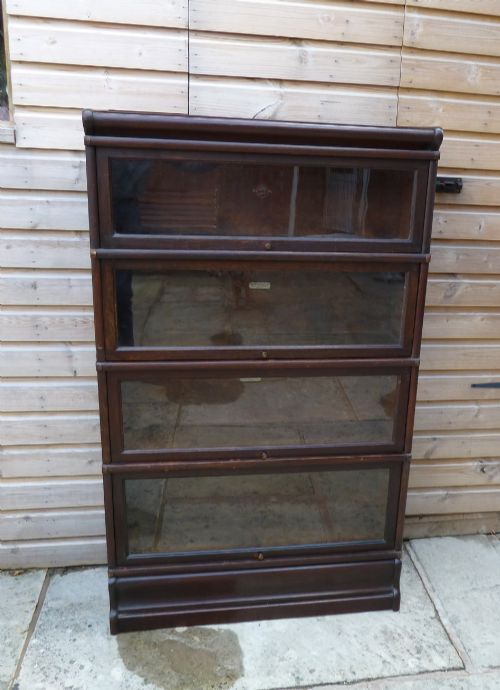
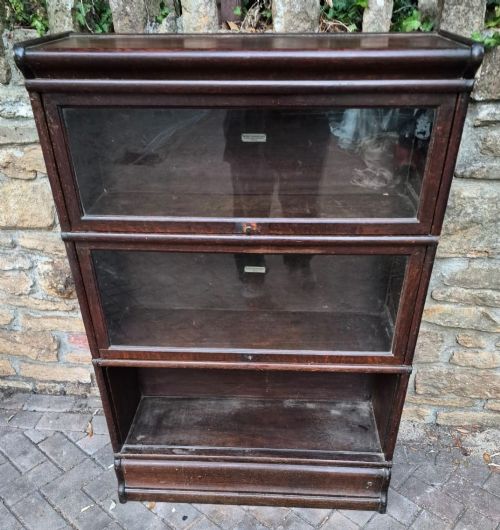
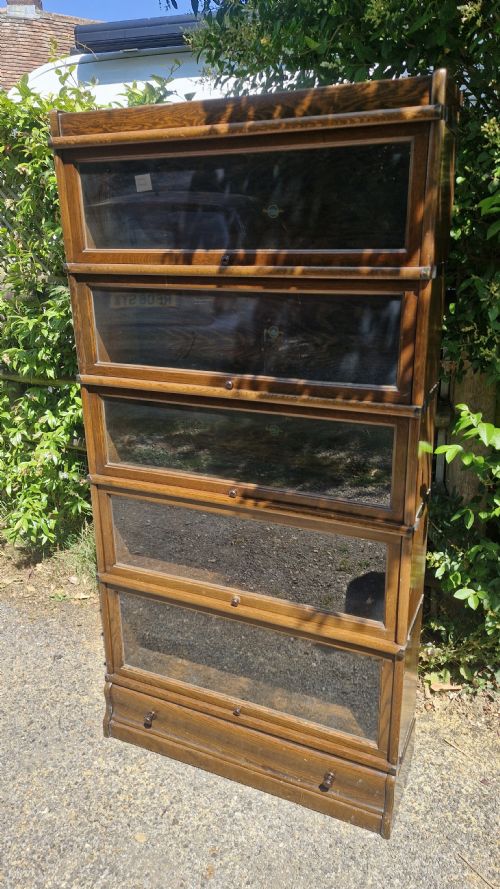
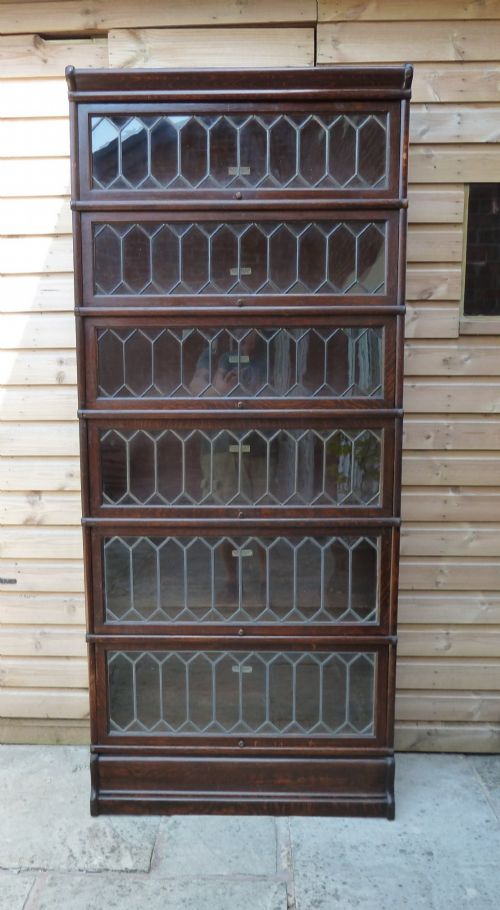
A modular glazed cabinet is typically encountered as a stacking sectional bookcase from the Edwardian period through to the 1930s, designed with individual tiers that separate for transport and rearrangement. These pieces are frequently found in oak and mahogany, often featuring leaded or plain glass lift-up doors.
The form developed primarily for office and legal environments, where large libraries required flexible expansion upwards rather than outwards. Makers such as Globe Wernicke, Minty, Lebus, Gunn, and Amyl produced these units in distinct tiers, allowing owners to add matching sections as collections grew.
How they were made
Construction relies heavily on solid oak, solid mahogany, and walnut, frequently combined with brass hardware for the lifting mechanisms and internal shelf clips. Doors incorporate glass held by wooden frames or lead cames, allowing each tier to protect books while maintaining visibility.
The stacking mechanism depends on interlocking wooden lips or metal pins that align the individual glazed sections safely without permanent fixtures. Back panels and bases complete each self-contained tier, ensuring the cabinet remains stable whether built as a single low unit or a tall four-section tower.
Listings feature oak and mahogany predominantly, spanning the Edwardian era through the nineteen-thirties with Arts and Crafts and Art Deco influences.
What varies in quality
Quality rests upon the integrity of the individual tier mechanisms and the matching grain of the timber across all sections. Matching timber sets maintain uniform colour and figuring from the base up to the cornice, whereas assembled units often display mismatched oak or mahogany tones between tiers.
The sophistication of the brass door-lifting hardware and the crispness of the leaded glass patterns distinguish standard office furniture from finer domestic examples. Original finishes, sound wood joints, and cleanly operating glazed doors separate standard utility pieces from exceptional productions.
Globe Wernicke·Minty·Lebus·Gunn·Amyl·Heal's
The Modular Glazed Cabinet Glossary
- Sectional bookcase
- A piece of furniture built from multiple stackable tiers that rest one upon another. These units allow the owner to dismantle or expand the cabinet vertically.
- Barrister bookcase
- An alternative name for a stacking office bookcase with glazed lifting doors. Lawyers utilised these to transport and store legal volumes directly in chambers.
- Leaded glass
- Small panes of glass joined together by lead cames in geometric designs. This technique strengthens the windows within cabinet doors.
- Cornice
- The moulded projection that crowns the top tier of a stacking cabinet. It provides a finished architectural cap to the modular assembly.
- Base
- The bottom plinth section upon which the stackable tiers rest. It often incorporates a small drawer or stands on bracket feet.
Modular Glazed Cabinet: Frequently Asked Questions
How do the sections separate?
Each tier lifts away from the one beneath it once the locking side panels or brass clips are disengaged. The top cornice and bottom base are separate components that cap the assembled stack.
This modular design meant offices and homes could move or expand their libraries tier by tier without dismantling heavy single-carcase furniture.
Where were they used?
These cabinets originated in professional chambers, study rooms, and offices to protect reference volumes from dust. Domestic libraries later adopted them for general book storage.
Their upright, narrow footprint made them suitable for smaller Victorian and Edwardian rooms where floor space remained restricted.
How do I date a cabinet?
Dating relies on timber choices, maker stamps, and style indicators such as Arts and Crafts brasswork or Art Deco lines. Oak predominated in the Edwardian era, whilst mahogany and walnut appeared across various decades.
Maker marks located inside the shelf lips or on the reverse provide the most precise indication of production periods.
Can I stack extra tiers?
Adding extra sections is possible if the depth, width, and maker match the existing modular tiers. Different manufacturers used incompatible sizing and locking systems.
Ensuring the corner dimensions and timber species align keeps the assembled tower stable and visually unified.