

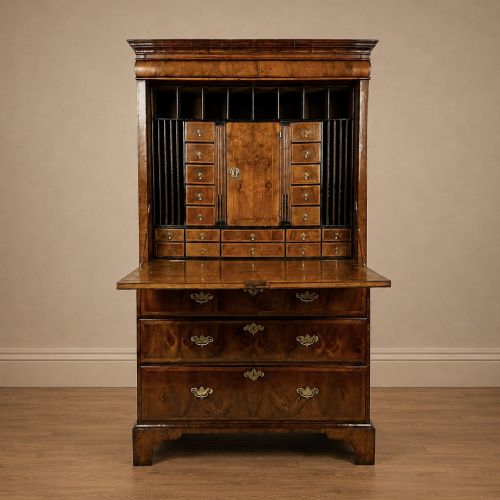
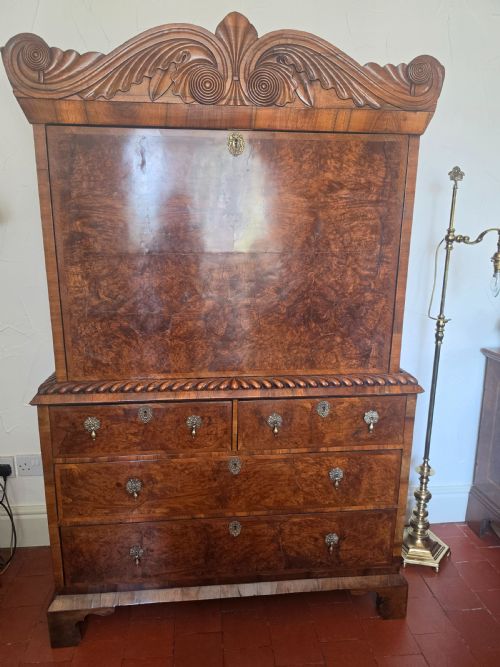


18th Century Escritoire
An 18th century escritoire is a sophisticated writing cabinet designed for correspondence, combining fine cabinet-making with concealed compartments.
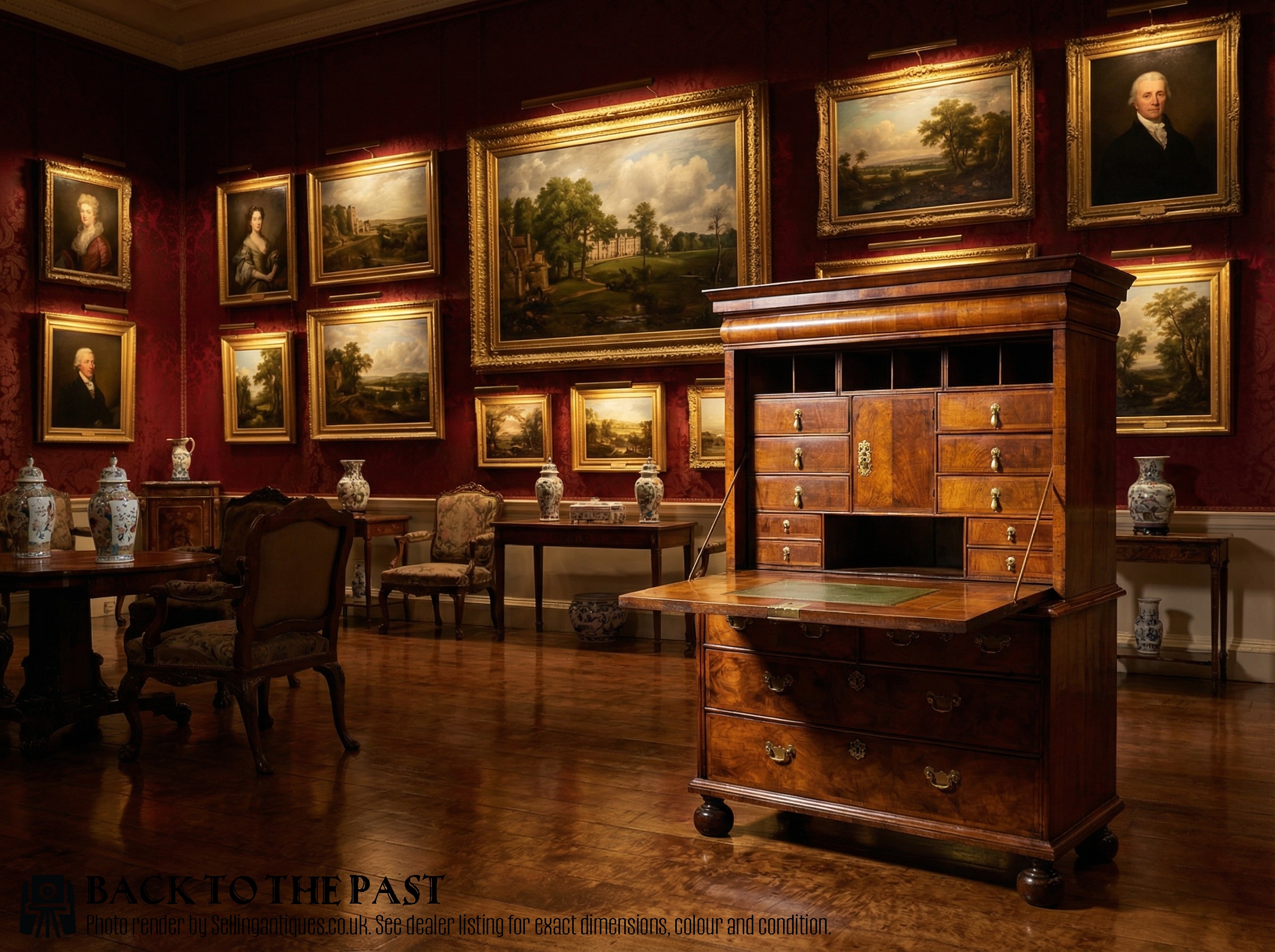
18th Century Escritoire
An 18th century escritoire stands as a sophisticated form of writing furniture designed for private correspondence and the storage of documents. The pieces seen here span the 1700s, Georgian, and Queen Anne periods, reflecting the tastes of early cabinet-makers.
Buyers frequently encounter tall escritoire chests, bureau bookcases, and compact tabletop cabinets within this selection. These pieces primarily originate from English workshops, alongside occasional French examples from the Louis XV era.
The fundamental function of an escritoire involves a drop-front writing surface that conceals an arrangement of small drawers and pigeonholes. This architectural interior remains a defining characteristic across the varied formats available.
Materials and construction
Cabinet-makers relied heavily on walnut, burr walnut, and figured walnut veneers applied to secondary woods such as oak and mahogany. These timber choices provided rich, undulating grain patterns that defined the aesthetic of the period.
Brass hardware, including drop handles, escutcheons, and hinges, functioned both as structural support and visual ornamentation. Wood inlay was frequently utilised to accentuate drawer fronts and framing borders.
The writing surfaces often incorporated inset leather panels to provide a smooth, durable medium for quill and ink. Joinery techniques ensured stability across large fall-front doors and heavy carcass frames.
18th Century Escritoire Retail Price Guide 2026
Typical asking prices for 18th century escritoire among the pieces listed under this phrase on Sellingantiques today, from the lower quarter to the upper quarter. They describe what is for sale here now, not the wider market.
Recorded object types include standard escritoires, bureau bookcases, secretaire chests, and tabletop cabinets with revolving tabernacles.
Variations in quality
The sophistication of the internal drawer configuration dictates much of the distinction between standard examples and superior pieces. Elaborate architectural pigeonholes, secret compartments, and revolving tabernacles indicate greater workshop investment.
The selection and matching of burr walnut or figured walnut veneers determine the visual impact of the exterior surfaces. High-grade execution involves continuous grain patterns wrapping symmetrically across the primary facade.
The integrity of the original brasses and the precision of the wood inlay contribute to the sustained standing of an escritoire. Subtleties in proportion and the crispness of the mouldings separate standard regional production from master craftsmanship.
The 18th Century Escritoire Glossary
- Escritoire
- A writing cabinet featuring a fall-front flap that conceals drawers and pigeonholes. It evolved during the late seventeenth century into a refined piece of executive furniture.
- Burr walnut
- A prized timber harvested from the irregular growths of walnut trees, yielding highly decorative swirling patterns. Cabinet-makers sliced this wood into thin veneers for prominent cabinet surfaces.
- Bureau bookcase
- A tall combination piece uniting a sloping desk or escritoire base with glazed shelving above. This form dominated elite libraries throughout the Georgian era.
- Tabernacle
- A central architectural shrine or compartment housed within the interior of a cabinet. These miniature enclosures often featured concealed spring releases.
- Escutcheon
- A protective brass plate surrounding a keyhole that prevents the surrounding wood from splintering. On these pieces, they formed part of the decorative scheme.
18th Century Escritoire: Frequently Asked Questions
How do I use an escritoire today?
An escritoire functions effectively as a compact writing desk or a statement storage cabinet in a study or living room.
The drop-front flap provides a practical surface for laptop use or correspondence, while the internal compartments organise modern stationery.
Were these cabinets used for letters?
These pieces were built specifically for reading, writing, and storing private correspondence during an era before widespread postal services.
The numerous small drawers and pigeonholes allowed owners to sort letters, legal documents, and personal journals securely.
How do I distinguish Queen Anne from George II styles?
Queen Anne pieces frequently display softer curves, cabriole legs where applicable, and understated walnut veneers dating from the early seventeen hundreds.
George II examples often introduce heavier architectural cornices, more pronounced mahogany usage, and structured proportions influenced by Palladian design.
Why do some escritoires have revolving tabernacles?
A revolving tabernacle provided a secure, central hiding place for the most valuable documents within the cabinet interior.
This mechanical feature allowed the inner shrine to pivot, revealing hidden spaces behind the main drawer block.
Are these pieces made of solid walnut?
Most surviving examples utilise walnut or burr walnut veneers applied over stable secondary timbers like oak or pine.
This technique prevented the expensive decorative woods from warping while allowing makers to create symmetrical grain patterns across large surfaces.