


Walnut Secretaire Chest
A walnut secretaire chest combines the practical storage of a drawer unit with a concealed writing surface for study and correspondence.
Walnut Secretaire Chest
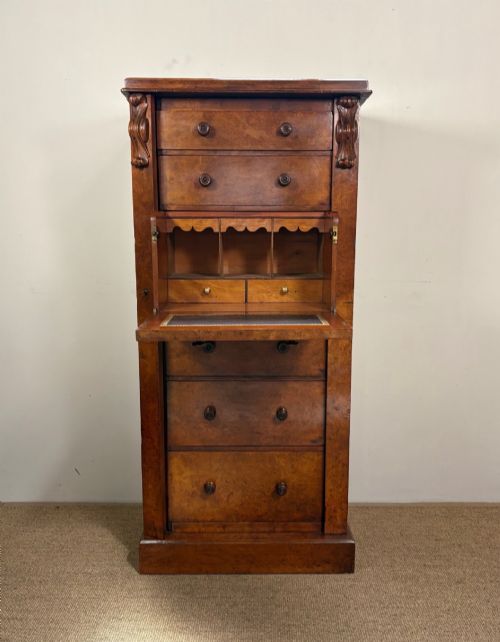
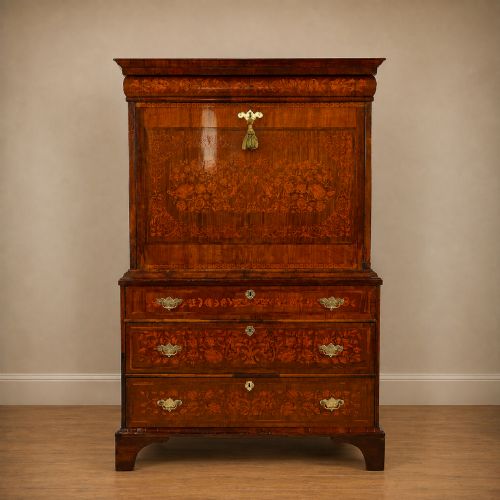
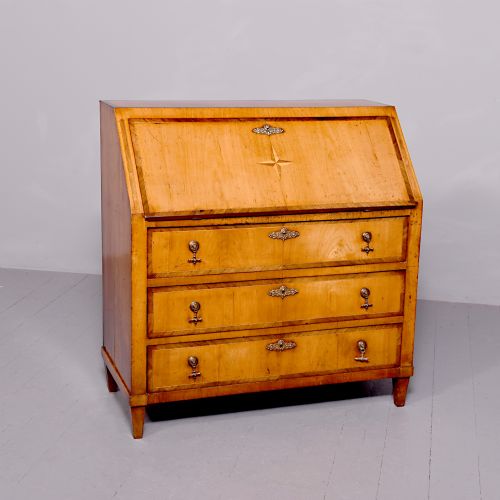
A walnut secretaire chest provides a dedicated writing drop-front or internal drawer fitted with pigeonholes alongside standard chest configuration. This page displays examples originating from the eighteenth and nineteenth centuries, including tallboys and Wellington variants.
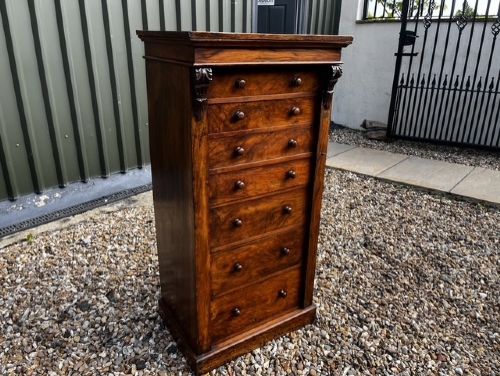
Early periods favour Queen Anne and George I aesthetics with figured timber and crossbanding. Later nineteenth-century Victorian interpretations frequently take the form of vertical Wellington chests featuring locking side stiles.
Materials and Construction Methods
Craftsmen applied figured burr walnut or straight-grained veneers onto secondary woods such as oak and pine. Brass hardware, including drop handles and escutcheons, secures the drawer fronts and internal compartments.
Writing surfaces frequently incorporate leather or baize inserts framed by pigeonholes and small accessory drawers. Inlays of satinwood and rosewood decorate the facades of specific Georgian and continental pieces.
Listings span the eighteenth, nineteenth, and twentieth centuries, incorporating Georgian, Victorian, and Art Deco design movements.
Assessing Craftsmanship and Condition
Superior examples display continuous grain matching across drawer fronts and intact marquetry work without significant veneer lifting. The structural integrity of the secretaire drop-front mechanism depends on robust internal hinges and drawer runners.
Original timber patination and untouched brass fittings elevate the standing of eighteenth-century and Victorian items. Later restorations or replaced secondary timbers alter the uniform integrity of the piece.
Gregory & Co. of London
The Walnut Secretaire Chest Glossary
- Secretaire
- A piece of furniture incorporating a writing drawer or drop-front desk compartment. This feature distinguishes writing chests from standard drawer units.
- Wellington chest
- A tall, narrow chest of drawers secured by a hinged vertical locking bar on one side. These pieces date predominantly to the Victorian era.
- Escritoire
- An alternative term for a writing cabinet or desk. Eighteenth-century versions often feature an upper cabinet section above the writing flap.
- Burr walnut
- Wood harvested from walnut tree growths, producing swirling grain patterns prized for decorative veneer work. Cabinet makers utilised this material on primary display surfaces.
Walnut Secretaire Chest: Frequently Asked Questions
What is a walnut secretaire chest?
A walnut secretaire chest is a case furniture piece combining standard drawer storage with an integrated writing surface. The primary writing section drops down or pulls out to reveal compartments for stationery.
These hybrid items served domestic and administrative functions in period homes. They offer compact workspace solutions without occupying the footprint of a standalone desk.
How do I date an antique secretaire chest?
Dating relies on architectural proportions, handle hardware, and secondary framing timbers. Eighteenth-century pieces often display feather banding and bracket feet.
Victorian iterations, particularly Wellington chests, utilise heavy drawer construction and locking side pilasters. Burr walnut veneers appear across multiple centuries but differ in background timber choices.
Where were secretaire chests used in the home?
Secretaire chests functioned primarily in private studies, bedrooms, and drawing rooms for managing correspondence. The lockable writing compartment kept personal documents secure.
Tallboy and chest-on-chest variants provided extensive vertical storage in chambers with limited floor space. The surface supported desk accessories and lighting.
How do I maintain antique walnut surfaces?
Preservation requires stable indoor humidity away from direct sunlight and heat sources. Natural wax applications maintain the timber lustre without sealing the grain.
Leather and baize writing inserts benefit from gentle dusting and protection from moisture. Avoid chemical sprays that degrade nineteenth-century polishes.