




Early 18th Century Secretaire
An early 18th century secretaire combines fitted writing compartments with secure drawers, offering collectors exceptional cabinetwork and period character.
Early 18th Century Secretaire
An early 18th century secretaire appears in several distinct forms across this selection, ranging from compact kneehole desks to taller secretaire cabinets and bureau bookcases. These case pieces combine a dedicated writing compartment with multiple drawers for storage, serving as functional writing furniture for the home. Buyers encounter forms associated with the Queen Anne, George I, and early George II periods, reflecting the prevailing furniture designs of the era.
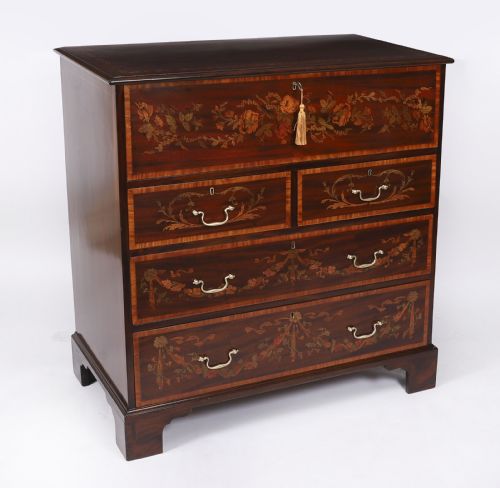
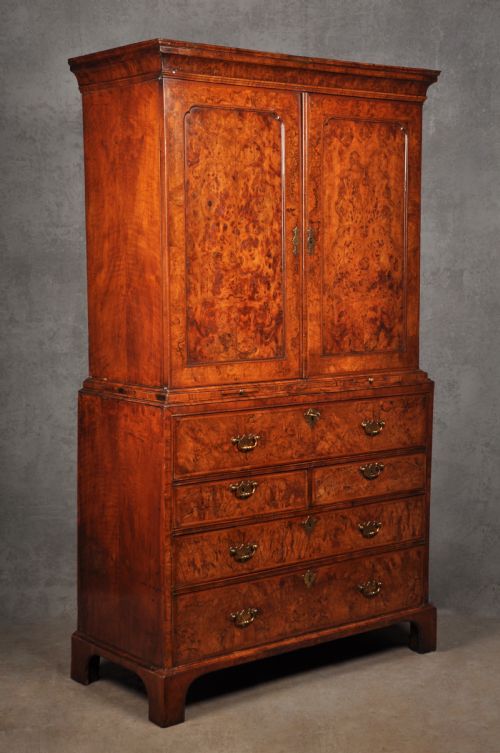
The walnut tradition dominates these examples, frequently utilising figured grain patterns and burr walnut veneers to create decorative surfaces on the fall-fronts and drawer facings. Mahogany, oak, satinwood, and marquetry inlay also appear across the listings, showing the shift in cabinetmaker preferences as the century progressed through the Georgian and Sheraton eras. Each form retains the architectural proportions and bracket feet typical of early 18th-century case furniture.
How they were made
Cabinetmakers constructed the carcases of these pieces using solid oak and softwoods as a foundation, applying fine veneers of walnut, burr walnut, and mahogany to the exterior surfaces. Figured veneers were carefully matched and arranged to create symmetrical patterns on the front elevations, particularly across the fall-front writing flaps and principal drawer fronts. Marquetry inlay appears on select examples, demonstrating precise cutting of contrasting timber and metal elements into the primary surface.
Brass hardware, including drop handles, escutcheons, and hinges, was cast and fitted by hand to secure the doors, drawers, and fall-fronts. The writing compartments inside these secretaires feature small drawers, pigeonholes, and secret compartments assembled with traditional dovetail joints. Glass panels are integrated into the upper bookcase doors where the form demands, held in place by wooden astragals.
The listings show walnut as the dominant timber for these secretaires, appearing alongside mahogany and satinwood across 18th-century forms.
What varies in quality
The quality of an early 18th century secretaire rests largely on the choice and handling of the timber. Pieces featuring richly figured burr walnut or high-grade mahogany veneers display a depth of grain and warmth of colour that sets them apart from plain examples. The symmetry and precision of the veneer matching across drawer fronts and fall-fronts indicate the skill of the original workshop.
Construction details within the interior fitments also distinguish finer pieces from simpler ones. The complexity of the internal configuration, including secret drawers and sliding compartments, reflects the ambition of the maker. Furthermore, the retention of original brass hardware and the crispness of any marquetry inlay contribute significantly to the standing of an individual cabinet.
The Early 18th Century Secretaire Glossary
- Walnut
- A dense hardwood prized for its rich grain, used extensively for veneers and solid furniture components during the Queen Anne and early Georgian periods. It provides a warm brown tone that deepens with age.
- Burr walnut
- A veneer derived from the growth excrescences of the walnut tree, showing highly figured and swirling grain patterns. Cabinetmakers used it on primary surfaces to create decorative panel effects.
- Secretaire
- A desk or cabinet featuring a pull-out drawer or drop-front flap that conceals a writing surface and small pigeonholes. This form allowed private correspondence and document storage within a larger case piece.
- Marquetry inlay
- The technique of applying decorative patterns made from small pieces of wood, ivory, or metal to a timber carcase. It creates pictorial or geometric designs across the surface of the furniture.
- Bracket foot
- A low furniture foot that projects outward from the corner of a case piece, shaped in a curve or mitred at the corner. It serves as a stable support characteristic of early 18th-century cabinetry.
- Kneehole desk
- A compact desk with a central recess for the user's legs, flanked by banks of small drawers. This form was developed during the late 17th century and remained popular throughout the early Georgian era.
Early 18th Century Secretaire: Frequently Asked Questions
What is an early 18th century secretaire?
An early 18th century secretaire is a piece of furniture designed for writing and storage, featuring a concealed writing surface behind a fall-front or drawer. These examples date from the reigns of Queen Anne and the early Georgian monarchs.
They combine practical document storage with decorative veneering, typically executed in walnut or mahogany. The internal fittings include small drawers and pigeonholes for correspondence.
How were secretaires used?
These pieces served as private desks for writing letters, managing household accounts, and storing important documents. The drop-front or pull-out drawer provided a stable writing surface when needed.
Once closed, the secretaire locked away the writing materials and papers, keeping private matters secure. The upper sections of taller variants often housed books or displayed valuables.
Where should I place a walnut secretaire?
Walnut furniture requires stable environmental conditions away from direct sunlight and heat sources to prevent the veneers from drying out or lifting. Placing the piece in a principal room allows the figured grain to be appreciated while maintaining consistent humidity.
Allowing sufficient clearance for the drop-front to open fully ensures the desk remains practical to use. Positioning it away from exterior damp walls preserves the structural integrity of the oak and softwood carcase.