

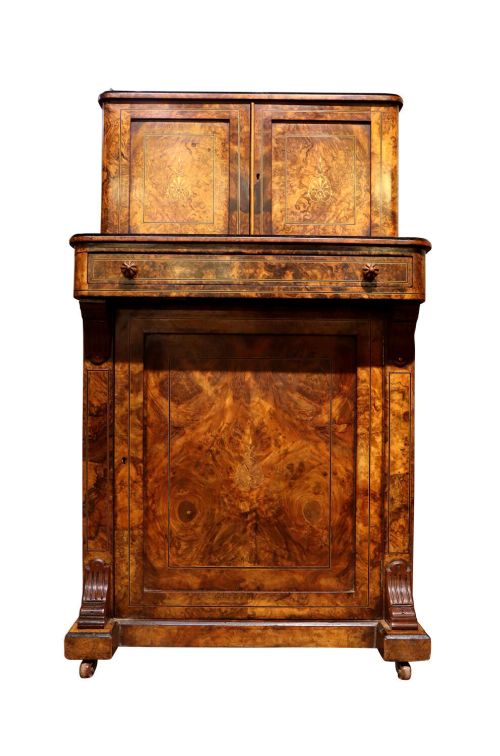
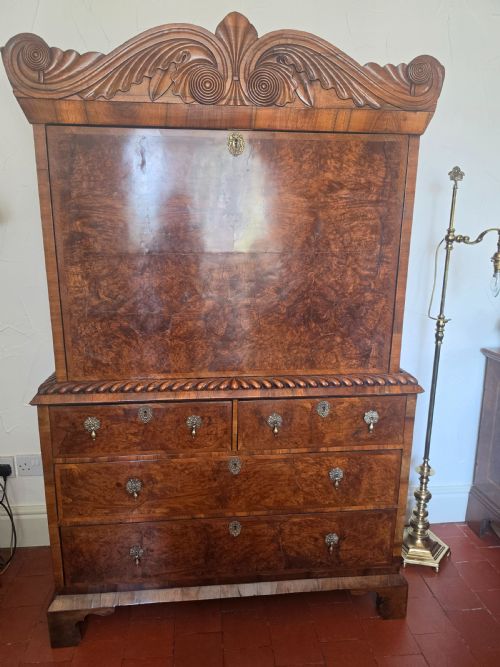


Burr Walnut Escritoire
A burr walnut escritoire offers exceptional figured timber and secret compartments, providing a commanding focal point for any study.
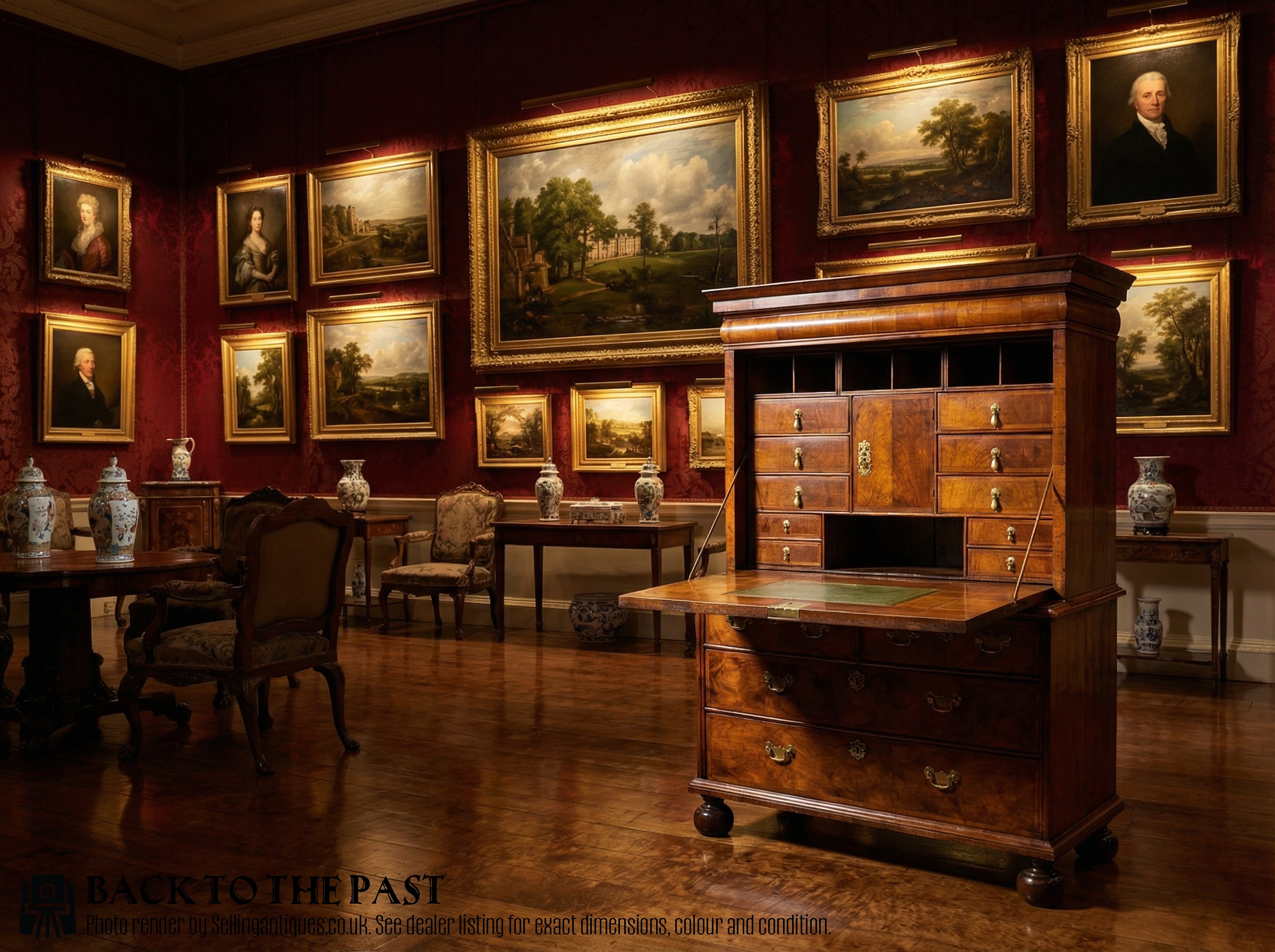
What a burr walnut escritoire is
A burr walnut escritoire is a sophisticated writing cabinet designed to conceal correspondence and valuables behind a fall front or drop-down desk leaf. These pieces belong primarily to the William and Mary, Queen Anne, and eighteenth-century periods, alongside later nineteenth-century interpretations.
The form typically combines a top section housing fitted drawers with a lower chest configuration, resting on bracket feet or bun feet. Buyers encounter examples dating from seventeen hundred onwards, including specific desk and bureau chest forms.
How they were made
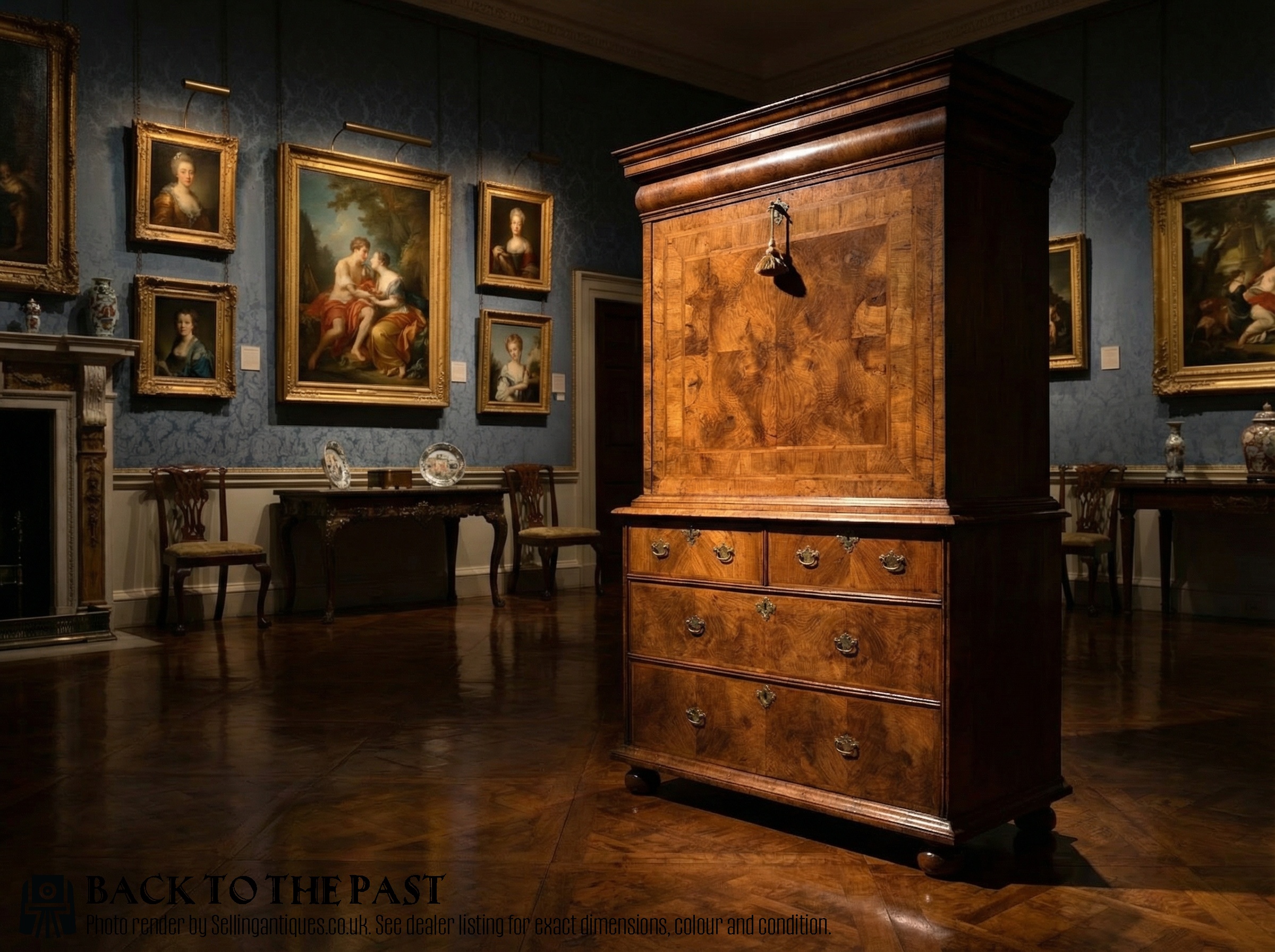
Cabinetmakers constructed these writing cabinets using solid oak and softwoods as foundational framing, overlaid with highly figured walnut veneers. Selected burr veneers provided the swirling, organic grain patterns across the primary surfaces.
Brass hardware such as escutcheons, drop handles, and hinges secured the drawers and fall front, whilst interior pigeonholes and small drawers utilised fine secondary timbers.
Retail Price Guide 2026
Typical UK retail prices for burr walnut escritoire, calculated from the Sellingantiques database of over a million retail prices indexed since 2003. This retail price guide relies exclusively on Sellingantiques data; no external sources or auction records are used, so the figures do not describe the wider market.
Some secret compartments require pulling hidden pins or sliding false drawer bottoms to reveal the walnut-lined hiding spots.
What varies in quality
The excellence of a burr walnut escritoire rests primarily on the symmetry and richness of the veneer matching across the front facades. Finer examples display continuous grain wrapping around the drawer fronts and carcass edges.
The complexity and execution of the internal nest of drawers dictate the upper tiers of craftsmanship, alongside the originality of the brass furniture and supporting timber feet.
The Burr Walnut Escritoire Glossary
- Escritoire
- A writing cabinet featuring a hinged fall front that drops to reveal a writing surface and small compartments. This term shares origins with French vocabulary for writing.
- Burr walnut
- A specialised timber harvested from the tree's growth warts or excrescences, producing intricate, swirling grain patterns. Cabinetmakers sliced this wood into thin veneers for decorative surfaces.
- Fall front
- A hinged writing flap that closes vertically to conceal the interior desk fittings. It locks securely to protect private correspondence.
- Secretaire
- An alternative designation for a writing chest or cabinet. It frequently appears interchangeably with escritoire in period descriptions.
Frequently Asked Questions
What is a burr walnut escritoire?
A burr walnut escritoire is a tall writing cabinet featuring a drop-down writing flap and numerous internal compartments. It combines decorative timber veneers with practical storage.
These pieces date predominantly from the late seventeenth and eighteenth centuries, serving as both desks and secure storage for letters.
How do I date an escritoire?
Dating relies on examining the underlying construction timbers, such as oak or secondary woods, alongside the style of the brass hardware and feet. Cabinet proportions also shift between the William and Mary and later Queen Anne periods.
Turned bun feet and intricate feather-banding typically point towards earlier eighteenth-century craftsmanship, whereas later nineteenth-century pieces display distinct secondary wood choices.
Where should I place an escritoire?
An escritoire suits a study, drawing room, or hallway where its figured walnut grain can be appreciated up close. It functions effectively as a focal piece against a flat wall.
Keep the cabinet away from direct sunlight and strong heat sources to protect the delicate burr walnut veneers from drying out.
How do I care for burr walnut?
Maintain burr walnut by dusting gently with a dry, soft cloth and avoiding silicone-based polishes. Maintaining stable room humidity prevents the thin veneers from lifting.
Occasional application of traditional beeswax nourishes the timber and preserves the historic sheen of the surface.