



Walnut Escritoire
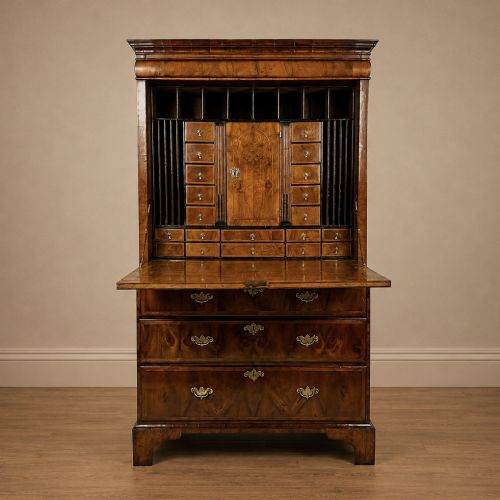
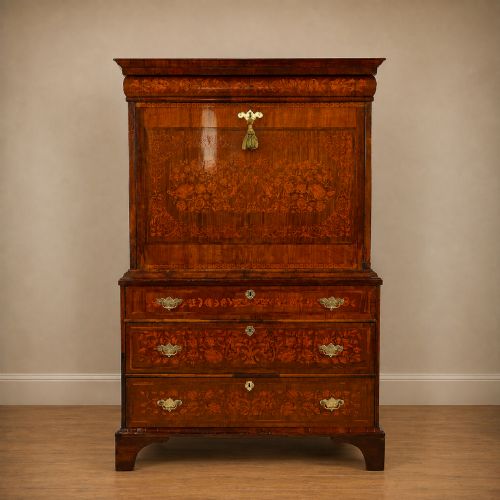
When you choose a walnut escritoire, you acquire a sophisticated writing cabinet that conceals fitted drawers behind a drop-front panel.
Walnut Escritoire
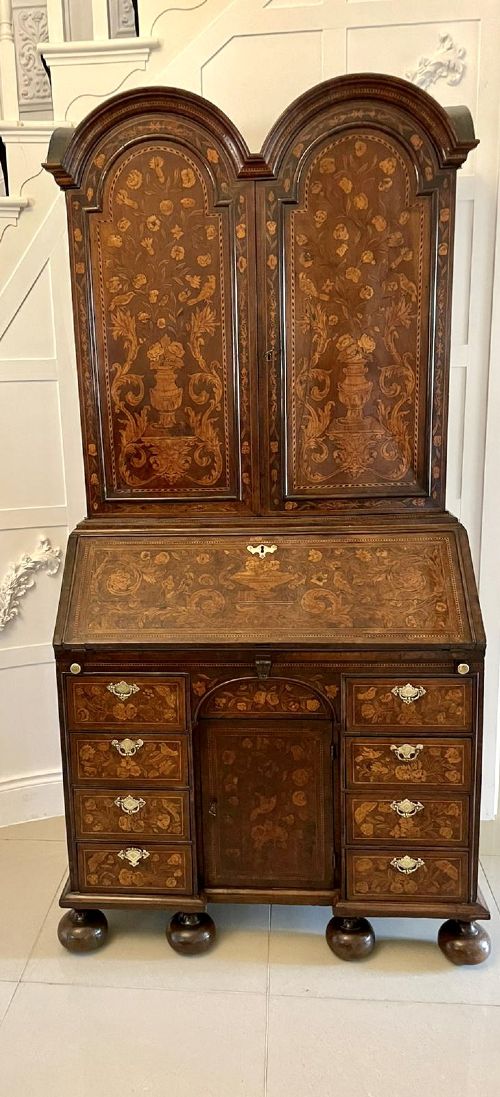
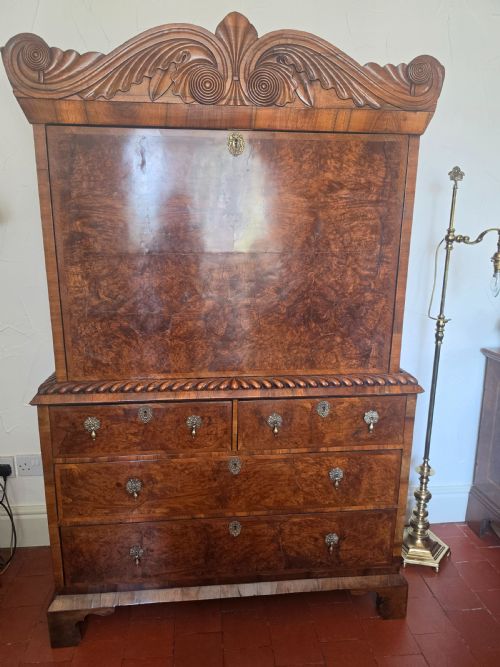
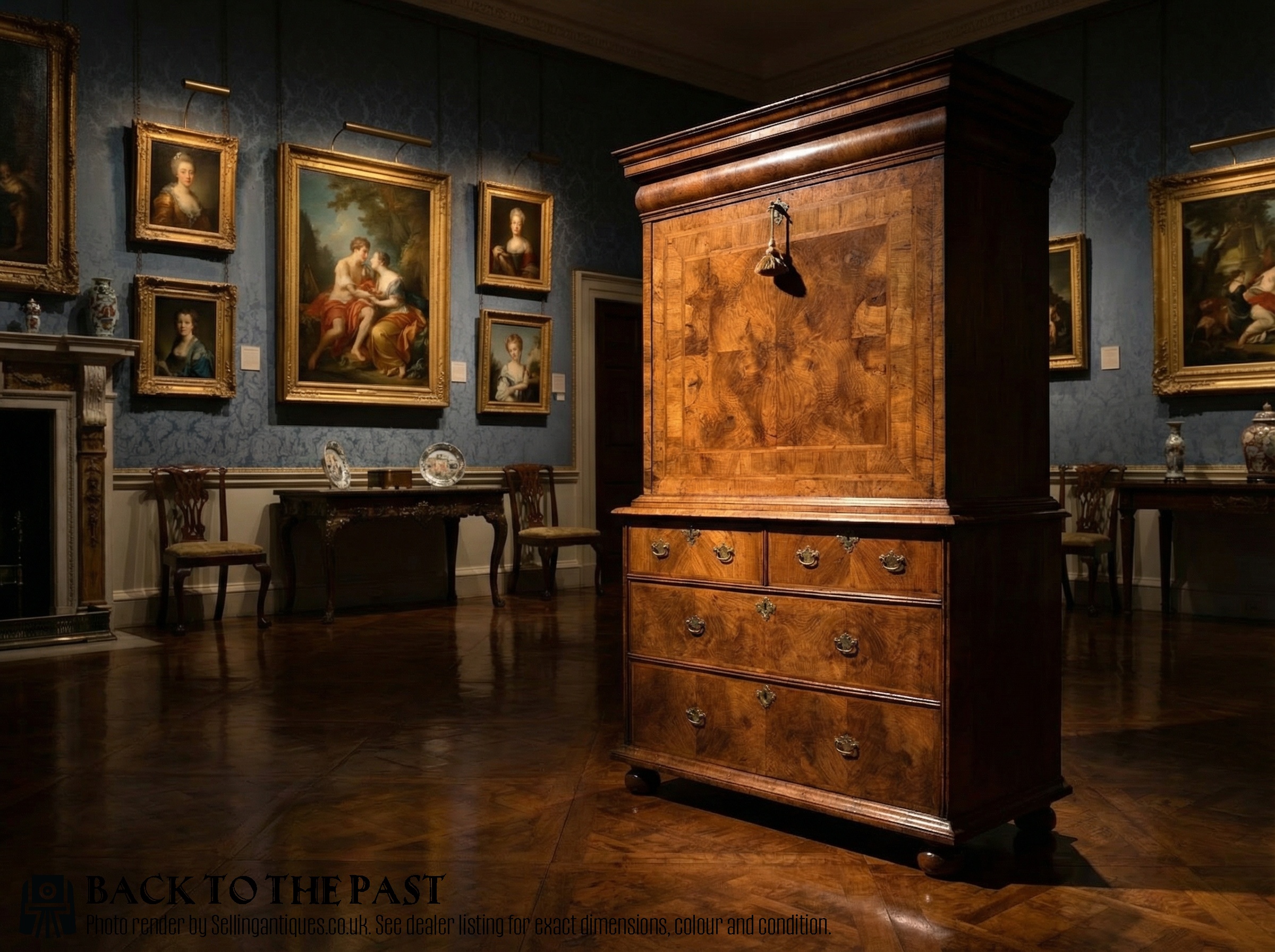
A walnut escritoire is a dedicated writing cabinet featuring a fall-front or drop-front writing surface that opens to reveal internal compartments and small drawers. These pieces range from early English examples dating to the seventeenth century, often associated with the William and Mary or Queen Anne periods, through to later nineteenth-century French and Victorian interpretations.
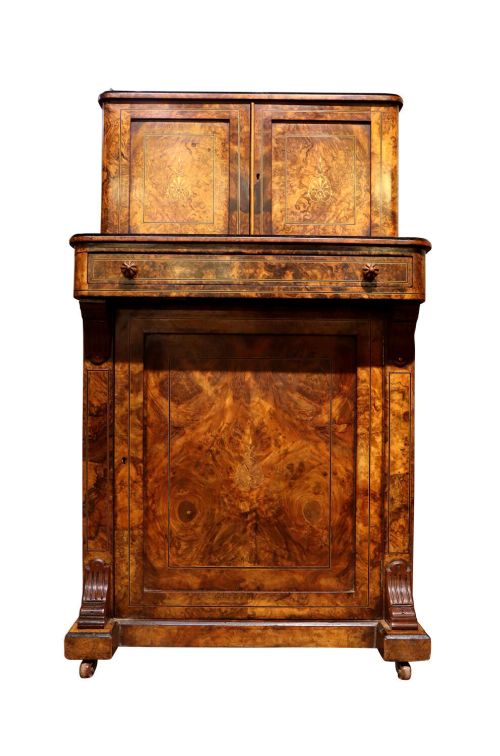
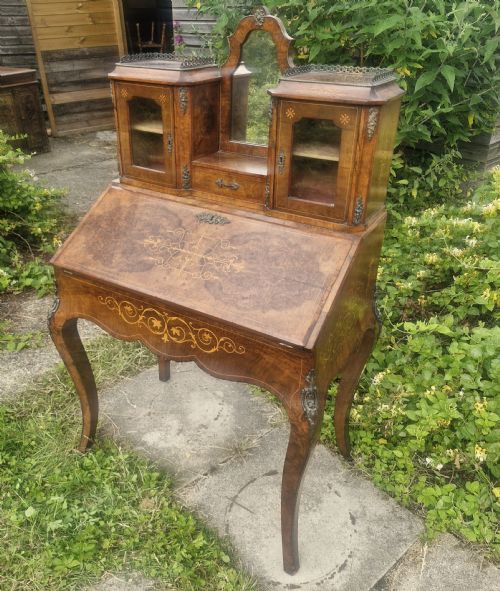
The version most commonly met on this page is the compact table-top or chest-form escritoire, alongside related writing furniture such as the bonheur du jour and lady's writing desk. Buyers frequently encounter pieces displaying figured veneers, floral marquetry inlay, and structured interior compartments designed for correspondence and storage.
How they were made
Cabinet makers utilised solid oak and pine for internal carcases and drawer linings, applying thin veneers of walnut and burr walnut to external surfaces. Oyster veneers, cut transversely from smaller branches to create circular growth-ring patterns, appear alongside intricate floral marquetry inlay.
Hardware played a functional and decorative role, with brass drop handles, escutcheons, and occasional ormolu mounts securing the doors and drawers. French and continental examples often integrated tambour fronts, cylinder mechanisms, or specialised fitted writing compartments.
Listings feature walnut escritoires spanning the seventeenth, eighteenth, and nineteenth centuries, alongside styles such as William and Mary, Queen Anne, and Victorian.
What varies in quality
The primary distinction rests on the selection and matching of the timber veneers, where highly figured burr walnut and balanced oyster patterns command greater visual depth than plain grain. The intricacy of the interior arrangement, including secret compartments and well-fitted small drawers, signals the care taken during construction.
Proportion and execution of the marquetry or brass inlay dictate the overall refinement of the piece. Untouched surface patination and original hardware preserve the historical integrity that separates standard regional workshop output from finer cabinet work.
Gregory & Co. of London
The Walnut Escritoire Glossary
- Escritoire
- A writing cabinet featuring a fall-front writing surface that conceals drawers and pigeonholes when closed. This form developed significantly during the late seventeenth and early eighteenth centuries.
- Burr walnut
- A specialised timber veneer harvested from tree growths, producing swirling, highly decorative grain patterns. Cabinet makers prized this material for principal display surfaces.
- Oyster veneer
- Circular slices cut across smaller branches of walnut, arranged to create repeating patterns resembling oyster shells. This technique characterises late seventeenth-century William and Mary furniture.
- Marquetry inlay
- Decorative patterns formed by fitting contrasting pieces of wood veneer into a prepared ground. Floral and geometric designs frequently appear on eighteenth and nineteenth-century writing furniture.
- Bonheur du jour
- A light lady's writing desk featuring a small cabinet or set of shelves upon the writing surface. These pieces emerged in France during the eighteenth century and remained popular through the Victorian era.
Walnut Escritoire: Frequently Asked Questions
What is an escritoire?
An escritoire is a tall or table-top writing cabinet characterised by a hinged drop-front panel that serves as a writing desk.
Inside, the fall-front conceals an arrangement of small drawers and pigeonholes designed for stationery and letters.
How were escritoires used?
These cabinets served as private desks for correspondence, keeping documents and writing materials securely enclosed behind locked doors.
The drop-front provided a stable writing surface when lowered, folding away to maintain a tidy room when not in use.
How do I date a walnut escritoire?
Dating relies upon construction methods, timber choice, and hardware styles, with seventeenth-century pieces often showing oyster veneers and oak carcases.
Later nineteenth-century examples display different decorative revivals, including French ormolu mounts and varied marquetry techniques.
Where should I place an escritoire?
An escritoire suits studies, drawing rooms, or bedrooms where its compact footprint provides functional desk space without overwhelming the floor area.
Keep such timber pieces away from direct sunlight and heat sources to protect the walnut veneers from drying out.